Robot vacuums are worth it for many households, but not because they completely replace a regular vacuum.
Their biggest advantage is automation. A robot vacuum can clean your floors several times a week—or even every day—without requiring you to stop what you are doing and vacuum manually. That makes them especially useful for homes with pets, kids, hard floors, or a lot of daily foot traffic.
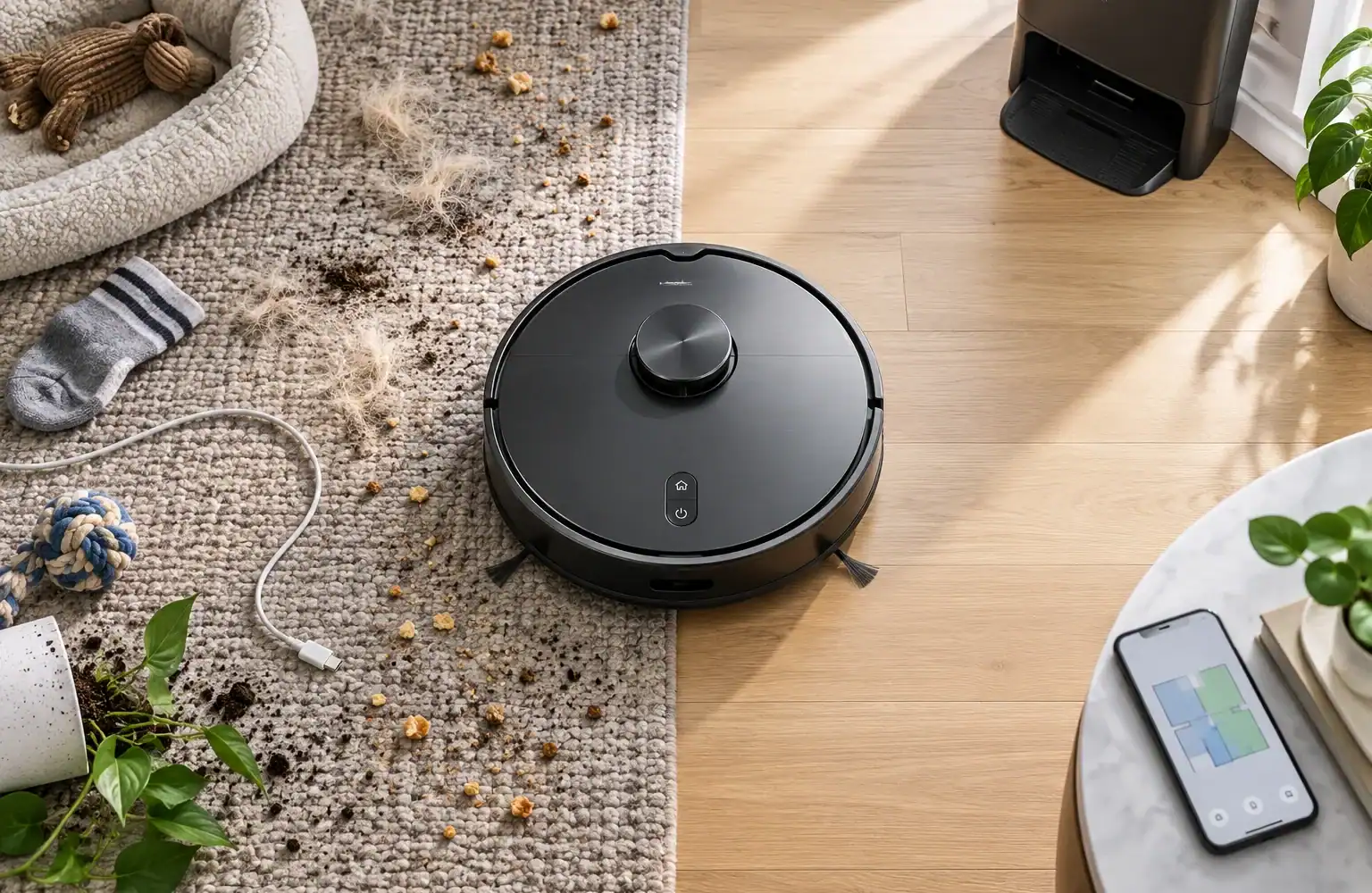
Modern robot vacuums are also much more capable than earlier models. Many now include LiDAR mapping, obstacle avoidance, self-emptying docks, carpet detection, and automatic mop washing. Independent testing also shows that cleaning performance, navigation, and carpet cleaning have improved significantly in recent years.
However, a robot vacuum is still not a completely hands-off replacement for every type of cleaning. You may still need a traditional vacuum for stairs, deep carpet cleaning, furniture, corners, and occasional deep cleans.
So the real question is not simply, “Do robot vacuums work?”
It is:
Will a robot vacuum remove enough routine cleaning from your week to justify the cost?
For many people, the answer is yes.
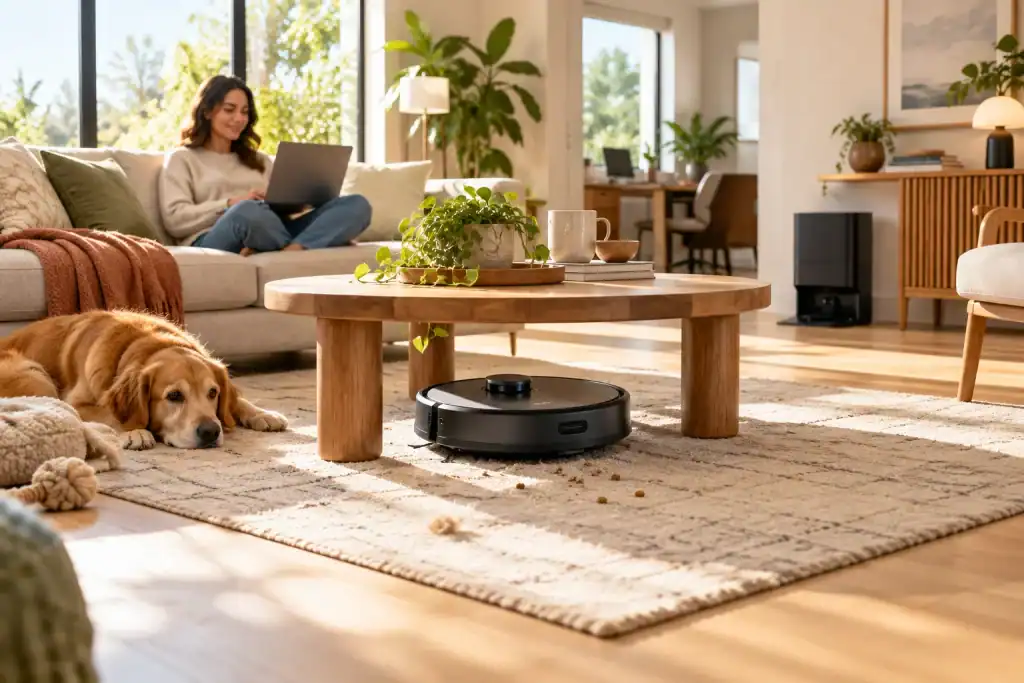
Are Robot Vacuums Actually Worth It?
A robot vacuum is usually worth it if you already vacuum frequently and would benefit from automating most of that routine cleaning.
The value comes less from cleaning better than you can and more from cleaning more consistently than most people do.
You might vacuum manually once or twice a week. A robot vacuum can potentially run every day while you work, sleep, cook, or leave the house.
That difference in cleaning frequency matters.
Instead of waiting for pet hair, crumbs, dust, and debris to build up before doing a larger cleaning session, the robot removes smaller amounts more frequently.
Independent testing supports this idea. Vacuum Wars, which says it has tested more than 200 robot vacuums, found that modern models have improved significantly in carpet cleaning, navigation, mopping, and automation. Its best deep-carpet cleaning result increased from 76% on older robots to 96% on newer models.
RTINGS also notes that current robot vacuums can provide strong cleaning performance across both hard floors and carpet, while features such as self-emptying docks and LiDAR mapping are now appearing even on less expensive models.
That does not mean every robot vacuum is equally good.
A cheap model with poor navigation and no obstacle detection may require much more supervision than a modern premium model. Your flooring, pets, floor clutter, and expectations all affect whether buying one makes sense.
A useful way to think about it is:
A robot vacuum is most valuable when it replaces a chore you already do often.
If you vacuum 30 to 60 minutes every week, automation can be meaningful.
If you live in a small apartment and only vacuum for 10 minutes every couple of weeks, the benefit may be much smaller.
What Does a Robot Vacuum Actually Replace?
One of the biggest mistakes people make is expecting a robot vacuum to replace every other vacuum in the house.
In most homes, that is not what it does best.
A robot vacuum is better viewed as a maintenance-cleaning tool.
It can take over many of the repetitive jobs that cause floors to look dirty between deeper cleanings.
A robot vacuum can often replace:
- daily or near-daily pickup of dust and crumbs
- frequent pet-hair cleanup
- routine cleaning of hard floors
- light cleaning of rugs and low-pile carpet
- vacuuming under beds, sofas, and other low furniture
- some routine mopping, depending on the model
It usually does not fully replace:
- vacuuming stairs
- cleaning sofas and upholstery
- cleaning inside vehicles
- deep-cleaning heavily soiled carpet
- reaching every corner or tight edge
- cleaning large spills
- occasional manual deep cleaning
This distinction is important because it changes how you judge whether the purchase is worthwhile.
If your expectation is:
“I want to reduce how often I pull out my full-size vacuum.”
A robot vacuum can be very useful.
If your expectation is:
“I never want to clean anything manually again.”
You will probably be disappointed.
Even sophisticated models still have limitations. Vacuum Wars notes that modern robots are not completely maintenance-free and that even strong obstacle-avoidance systems can still miss objects left on the floor.
6 Reasons a Robot Vacuum Can Be Worth It
1. It Cleans More Often Than Most People Do
This is probably the biggest benefit of owning a robot vacuum.
A regular vacuum only cleans when someone uses it.
A robot vacuum can run on a schedule.
For example, you could have it clean the kitchen and living room every morning after everyone leaves the house, then clean the entire floor every other day.
That consistency helps prevent dirt from accumulating.
This is especially useful for households with:
- pets that shed every day
- children who drop crumbs
- high foot traffic
- hardwood floors that show dust easily
- people who wear shoes indoors
The result is not necessarily that each cleaning session is better.
The advantage is that there are far more cleaning sessions.
A good manual vacuum may remove more embedded dirt in one pass, but if the robot cleans six times between your manual cleaning sessions, your floors may stay cleaner overall.
2. It Can Save a Surprising Amount of Routine Cleaning Time
Robot vacuums do not eliminate cleaning time completely, but they can convert a large portion of active cleaning into unattended cleaning.
Consider a simple example.
If you currently vacuum:
3 times per week × 20 minutes = 60 minutes per week
That is:
52 hours per year
Now imagine a robot handles most of those routine sessions, while you still manually vacuum occasionally.
Even if it only eliminates two-thirds of your normal vacuuming time, that could still mean dozens of hours each year that you are no longer pushing a vacuum around your home.
The exact savings will vary by household, so it is better to calculate your own number than rely on a generic claim.
Ask yourself:
How many minutes do I currently spend vacuuming each week?
Then multiply that number by 52.
That gives you a much more practical way to judge whether the cost of automation is worthwhile.
3. Robot Vacuums Can Be Especially Useful for Pet Hair
Pet owners are one of the groups most likely to notice the benefit of frequent automated cleaning.
Dogs and cats do not shed once a week.
They shed continuously.
That makes pet hair a perfect example of a cleaning problem where frequency matters almost as much as raw cleaning power.
Instead of waiting until fur collects around furniture or spreads across the floor, a robot can pick it up every day.
RTINGS notes that good robot vacuums can handle daily pet-hair accumulation very well on hard floors, although performance on carpet varies more between models. Brush design, carpet agitation, and resistance to hair tangles all make a difference.
This is an important distinction.
A robot vacuum can be excellent for pet owners without necessarily being excellent at removing deeply embedded pet hair from thick carpet.
If you have mostly hard flooring, the benefit may be substantial.
If your home is covered in thick carpet and your dog sheds heavily, you may still need a stronger manual vacuum for deeper cleaning.
4. It Can Clean Places You May Ignore
Robot vacuums are especially good at repeatedly cleaning areas that people often skip.
For example:
- under beds
- under sofas
- beneath cabinets
- around dining tables
- underneath some dressers
Low-profile robots can enter these spaces much more easily than many upright vacuums.
This does not sound dramatic, but it can make a noticeable difference over time.
Dust, hair, and debris often accumulate under furniture because those areas are inconvenient to clean manually.
If the robot can reach them every few days, less buildup occurs in the first place.
5. Mapping and Scheduling Make Cleaning More Flexible
Modern robot vacuums are no longer limited to wandering randomly around a room until the battery runs low.
Many current models use LiDAR or other navigation systems to map a home and clean in a more systematic pattern.
Depending on the model, you may be able to:
- clean a specific room
- clean only one zone
- avoid certain areas
- schedule different rooms at different times
- increase suction on carpet
- run extra passes in dirtier areas
RTINGS notes that LiDAR-based mapping, sophisticated hazard avoidance, and multifunction docking stations are now common features among capable current-generation machines.
This matters because automation becomes much more useful when you can control where and when the robot cleans.
For example, you might schedule the kitchen after breakfast, the living room in the afternoon, and bedrooms only twice a week.
That is much more practical than running the entire home every time.
6. Self-Emptying Docks Remove One of the Biggest Annoyances
Early robot vacuums had a major weakness:
Their dustbins were small.
That meant the robot might clean automatically, but you still had to empty it frequently.
Self-emptying docks changed that.
When the robot returns to the dock, the base can automatically remove debris from the robot’s internal dustbin and store it in a larger bag or container.
Some manufacturers claim their docks can go many weeks between bag changes under suitable conditions. For example, iRobot states that its Clean Base system for the Roomba j7+ can hold debris for up to 60 days, while Roborock advertises up to 65 days of automatic dust storage on certain Qrevo Curv models. These are manufacturer maximums, so real-world results will depend on how much dirt, hair, and debris your household produces.
More advanced docks can also:
- wash mop pads
- dry mop pads
- refill the robot’s water tank
- clean portions of the dock itself
Roborock’s current Qrevo Curv system, for example, combines automatic dust emptying with mop washing, warm-air drying, water refilling, and carpet-related mop lifting.
For people who want automation rather than simply a smaller vacuum cleaner, the dock can make a bigger difference than a modest increase in suction power.
The Downsides of Robot Vacuums
Robot vacuums have improved substantially, but they still involve compromises.
Understanding those limitations before buying is one of the easiest ways to avoid disappointment.
They Still Need Maintenance
“Automatic” does not mean “maintenance-free.”
You may still need to:
- remove hair from brushes
- clean sensors
- replace filters
- replace side brushes
- replace dust bags
- refill clean water
- empty dirty water
- clean the dock
- occasionally rescue the robot when it gets stuck
How much work this involves depends heavily on the model.
A basic robot with a charging dock may require frequent dustbin emptying.
A premium all-in-one dock may reduce day-to-day work dramatically, but the dock itself still needs periodic cleaning.
The better description is:
Robot vacuums are more hands-off, not completely hands-free.
Floor Clutter Can Still Cause Problems
Cables, socks, toys, shoelaces, pet bowls, and small objects can interfere with a robot vacuum.
Obstacle avoidance has become much better, but it is not perfect.
Vacuum Wars found that even strong current systems can still miss certain objects.
Some models use cameras or other sensors specifically to recognize objects such as cords, shoes, and pet waste. iRobot, for example, says its PrecisionVision Navigation can identify obstacles including charging cords, shoes, and solid pet waste.
That can reduce the amount of “pre-cleaning” you need to do.
But if your floor is constantly covered with toys, clothes, or cables, a robot vacuum may require more preparation than you expect.
Carpet Is Still Harder Than Hard Flooring
Robot vacuums can work well on carpet, but carpet remains a more difficult surface.
Debris can settle deep inside carpet fibers, and thicker carpet creates more resistance for the robot.
RTINGS notes that even some strong current models can struggle with fine debris embedded deep in carpet. Pet-hair performance also varies significantly between machines.
As a general rule:
- Hard floors: usually the easiest
- Low-pile carpet: generally suitable
- Medium-pile carpet: often fine with a capable model
- High-pile or shag carpet: more challenging
- Deeply embedded debris: often better handled by a full-size vacuum
Some modern robots compensate with carpet detection, automatic suction increases, or mop lifting.
Roborock’s current Qrevo Curv series, for example, can automatically lift its mop pads and chassis on carpet to help keep the carpet dry and reduce interference from longer fibers.
But even with these improvements, a robot vacuum should not be assumed to replace deep carpet cleaning.
So, Are Robot Vacuums Worth It in 2026?
For many households, yes.
A good robot vacuum will not completely replace a traditional vacuum, and it will not eliminate every cleaning task. You may still need to vacuum stairs, deep-clean carpets, clean furniture, and perform occasional manual touch-ups.
But that is not really where the value comes from.
The biggest advantage of a robot vacuum is that it can handle a large portion of the repetitive floor cleaning that would otherwise require your time.
Instead of waiting until dust, crumbs, pet hair, and debris become noticeable, the robot can remove smaller amounts every day or several times a week.
That can make a surprisingly large difference in how clean your home feels.
A robot vacuum is especially likely to be worth it if you:
- have pets that shed regularly
- have mostly hard floors or low-pile carpet
- vacuum several times per week
- want to reduce routine household chores
- have furniture the robot can clean underneath
- are willing to pay more for features such as mapping, obstacle avoidance, and a self-emptying dock
It may be less worthwhile if you:
- live in a very small space
- rarely need to vacuum
- have a home dominated by stairs or thick carpet
- leave a lot of cables, toys, or clutter on the floor
- expect the robot to replace every other cleaning tool you own
The easiest way to decide is to think about how much time you currently spend maintaining your floors.
If vacuuming is already a frequent chore, automating most of it can be genuinely useful.
If vacuuming barely takes any time in your household, spending hundreds of dollars to automate it may not make much sense.
Ultimately, a robot vacuum is not valuable because it vacuums better than you can.
It is valuable because it keeps cleaning when you would rather be doing something else.
And for many households in 2026, that is enough to make one worth buying.

Ethan Miller
Ethan Miller writes about home improvement, interior design, cleaning, and everyday living at Home & Living Daily. He shares practical tips and simple ideas to help readers create more comfortable and functional homes.