A 10×10 kitchen remodel can cost well into five figures, but there is no single price for a 100-square-foot room. For perspective, Sweeten’s June 2025 guide gives a broad $10,000 to $25,000 example, while USA Cabinet Store’s 2026 guide lists $18,000 to $35,000 for a basic scope and $35,000 to $70,000 for a mid-range project. These are different providers’ planning guides, not interchangeable quotes or one combined national average.
The important distinction is what you are buying. A cosmetic refresh, new cabinets in the same layout, and a remodel that moves services can occupy the same small room while producing very different bills. Start there before deciding whether an online number fits your kitchen.
What does “10×10 kitchen” mean in the offer?
In cabinet advertising, a 10×10 layout is often a comparison arrangement of selected cabinets. It lets you compare a cabinet line or finish, but it may not match your room’s cabinet inventory. Ask for the exact included units, their dimensions, and the exclusions.
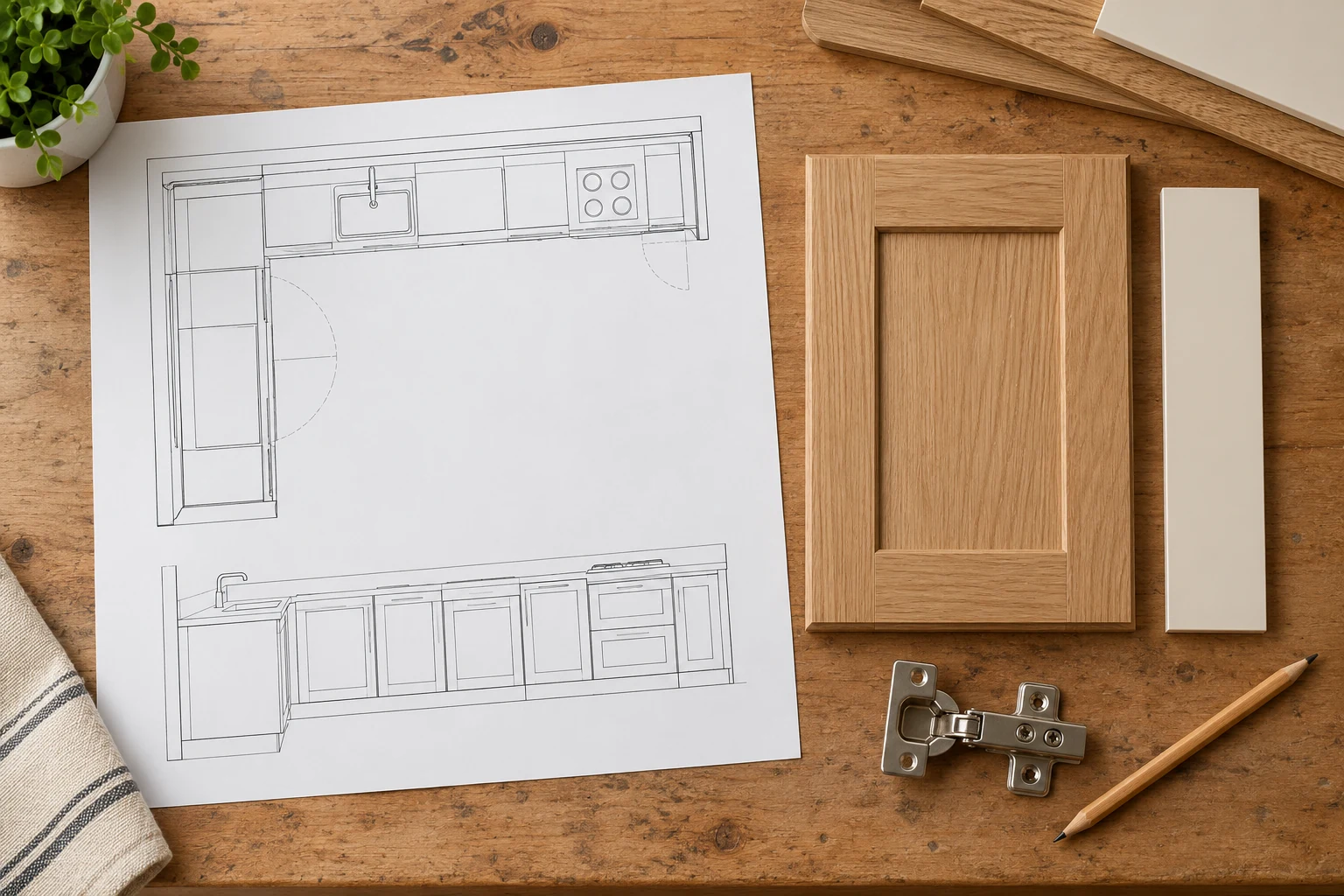
Your kitchen may need different drawer bases, corner storage, tall cabinets, end panels, fillers, moldings, or finished sides. Delivery, assembly, installation, hardware, and tax may be separate. An attractive cabinet-package price does not establish the price of countertops, appliances, demolition, or the trades.
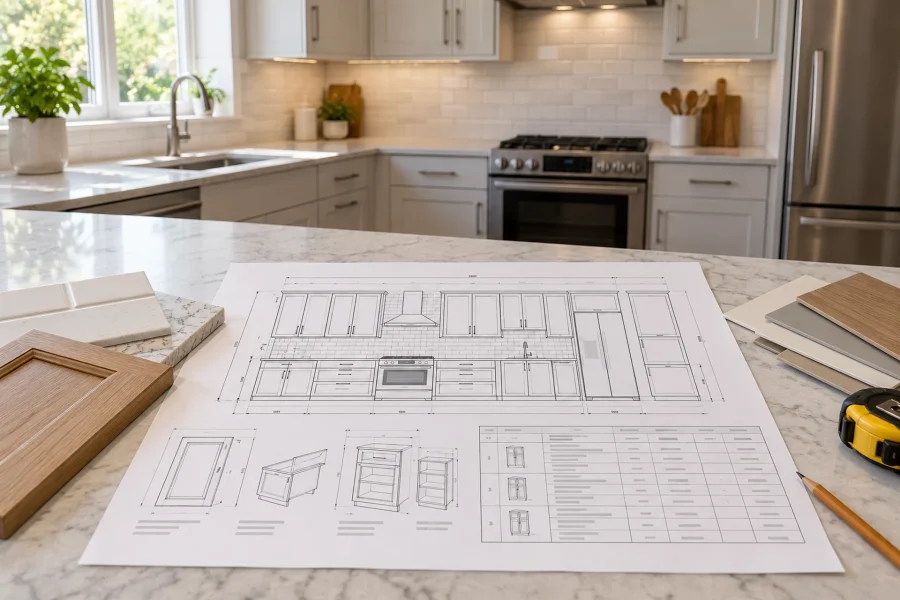
Room dimensions also leave out wall conditions, appliance openings, doors, and windows. Get a measured cabinet plan and a complete parts list before treating a package as the purchasing budget.
Choose the scope before choosing a price target
Write what stays and what changes. If you keep sound cabinets, usable appliances, and the existing layout, you are pricing a different project from replacing every major component. A new layout may add plumbing, electrical, ventilation, wall, or floor work even when the kitchen remains small.
| Project | Define it clearly | Common budget blind spot |
|---|---|---|
| Targeted refresh | Selected finishes or hardware, with sound components retained | Preparation, repairs, and whether the retained parts really suit the plan |
| Replacement in the existing layout | Named cabinets, counters, appliances, and finishes | Installation, reconnection, trim pieces, and disposal |
| Layout or service changes | Moved fixtures, appliances, walls, or openings | Trade work, approvals, hidden conditions, and restoration |
A small floor area can reduce material quantities without removing setup or trade visits. The job still needs someone to disconnect, install, reconnect, and check the relevant components. That is why shrinking a large-kitchen budget in direct proportion to floor area is unreliable.
Build one complete scope ledger
Use a list of project categories rather than a compulsory percentage split. Some estimates already include installation in the cabinet or counter price, while others put it under labor. Count each piece of work once.
- Cabinets and hardware: the complete inventory, assembly, delivery, installation, and finishing pieces.
- Countertops and backsplash: measured surfaces, fabrication, edges, cutouts, installation, and wall preparation.
- Appliances: exact models, delivery, disposal, connections, and any service changes they require.
- Room work: demolition, floor and wall repair, flooring, painting, lighting, and ventilation.
- Project costs: design, required permits and inspections, protection, cleanup, and agreed management responsibilities.
Then mark every allowance and exclusion. “Plumbing included” should say whether it means reconnecting at the existing location or changing supply and drain lines. “Appliances by owner” should say who receives delivery, checks fit, and provides installation.
Ask about repair pricing for conditions that cannot be established until removal. That might include a damaged cabinet base, uneven substrate, or old work that affects the new installation. Set an approval process before that uncertainty becomes a hurried decision during construction.
Leave room for changes without disguising them as a quote
Here is a hypothetical budget exercise, not a market estimate: suppose the defined contract is $24,000 and appliances you buy separately are $3,000. The committed scope totals $27,000. If you choose to hold an additional $4,000 reserve, the working cash budget is $31,000. The reserve is not automatically owed to the contractor, and it does not establish that $4,000 is sufficient for every house.
Keep upgrades separate from concealed-condition repairs. Choosing a more expensive countertop is a discretionary change; repairing an unsuitable base may be necessary for the selected work. Recording them separately makes it easier to decide what can be deferred.

Where a smaller kitchen can save money
Retaining a workable layout avoids some new service routes and can simplify coordination. Keeping suitable components can also reduce scope, but check their condition and compatibility first. Saving a cabinet run is less useful if it prevents the appliance or countertop installation you actually need.
Request a base proposal and priced alternatives for the visible upgrades. A simpler cabinet finish, fewer specialized accessories, or a different counter specification gives you a concrete trade-off. “Use cheaper materials” does not tell you what changes in function, maintenance, or appearance.
Be cautious about adding an island just because it appears in a package illustration. Appliance doors and passing space can use most of a compact room. Our small-kitchen island guide covers clearance checks and alternatives such as carts or peninsulas. A piece that fits the budget but blocks the room is an expensive mistake.
Can you remodel a small kitchen for $5,000 or $10,000?
Those budgets may fit a carefully limited update, depending on local prices and what stays. They should not be assumed to cover replacement of every cabinet, counter, appliance, finish, and trade connection. Ask contractors to identify a feasible scope within the limit rather than quietly omit necessary work to make the headline fit.
The useful budget describes your finished kitchen, including the parts supplied outside the main contract. Once the scope and specifications match, price comparisons become meaningful. Until then, a lower number may simply be a smaller promise.

Ethan Miller
Ethan Miller writes about home improvement, interior design, cleaning, and everyday living at Home & Living Daily. He shares practical tips and simple ideas to help readers create more comfortable and functional homes.