
Weatherproof your home by keeping rainwater on a working path away from vulnerable areas, repairing unwanted air leaks, and improving insulation where it is deficient. Do those jobs in the order the house needs. Sealing a draft is useful, but it will not repair failed roof flashing or dry insulation that is already wet.
Separate water entry from drafts and heat loss
A cold window, a moving curtain, and a stain after rain can appear in the same room for different reasons. Note when each happens. Wind-related discomfort suggests an air-leak investigation; moisture following a storm needs a water-entry investigation. Condensation on a cold surface is another possibility and may involve indoor humidity.
Take photos and keep a simple location record. Avoid applying sealant to every visible joint before understanding how the assembly drains. Water may enter above the stain and travel before becoming visible.
Follow rainwater from roof to discharge
From the ground, look for displaced roof materials, damaged flashing, sagging gutters, separated downspout joints, and water spilling where it should be contained. Arrange safe access for cleaning or repairs; a roof inspection does not require you to climb onto a wet roof.
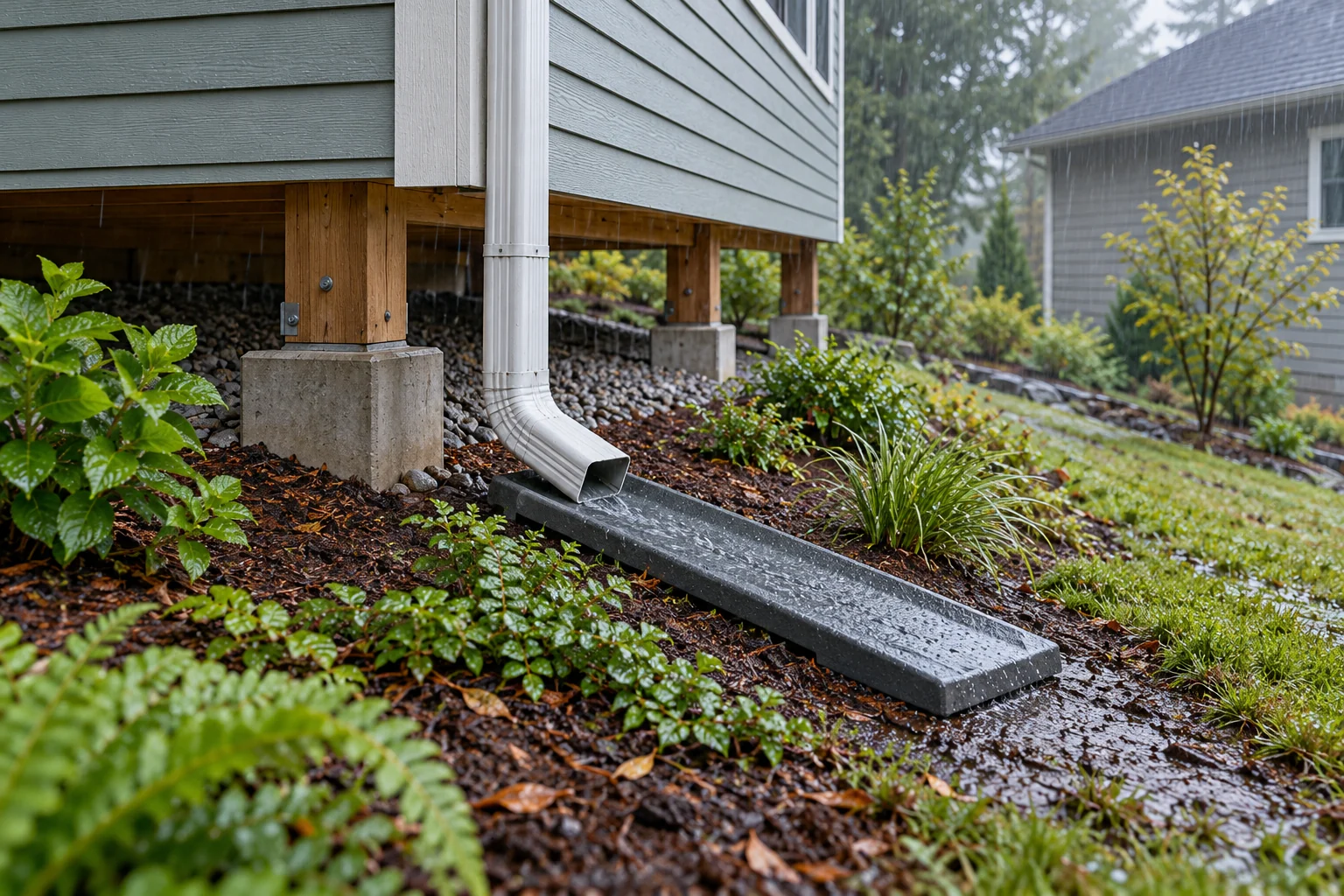
Check where downspouts discharge. An extension should direct water to an appropriate destination without creating erosion, a trip hazard, or a problem for a neighboring property. A short splash block beside the foundation may not resolve a wider grading or drainage issue.
Inspect accessible trim, siding transitions, and areas around openings for failed materials or recurring wetness. Exterior coatings protect suitable surfaces, but paint is not a replacement for flashing or a drainage detail. Soft wood, repeated leaks, displaced masonry, or uncertain concealed damage call for evaluation before cosmetic repairs.
Repeat the observation during ordinary rain from a safe indoor or sheltered position. Water overflowing a clean gutter may have a different cause from a blocked outlet. The point is to locate the failure, not to diagnose every roof component from a distant photograph.
Use the right seal for the joint
Doors and operable windows need seals that tolerate movement. Inspect worn, missing, or flattened weatherstripping and replace it with a compatible profile. Measure the gap and check the original arrangement before buying a thick self-adhesive strip. Excess thickness can prevent closing or latching.

For suitable stationary gaps, select a sealant that matches the materials, joint movement, exposure, and application conditions. The South Carolina Energy Office’s caulking guidance distinguishes stationary joints from the moving components that need weatherstripping. Follow the selected product’s surface preparation, temperature, and curing instructions.
Leave window weep holes, siding drainage paths, and required vents functional. Do not seal an emergency escape window shut. If you cannot tell whether an opening is a defect or an intentional drainage or ventilation feature, establish that before filling it.
Accessible door seals are a manageable small project. Gaps near flues, electrical equipment, recessed lights, and fire-rated assemblies have additional requirements. Ordinary expanding foam is not a universal repair material for those locations.
Treat insulation and ventilation as part of the same assessment
Insulation resists heat flow; air sealing limits unwanted airflow. They work together but are not interchangeable. Adding material over a leaky attic connection can leave the air path active, while a tight door seal does not correct missing wall insulation.
The Department of Energy’s consumer guide to air sealing explains that a professional assessment can locate leaks and identify appropriate work, including health, safety, and code considerations. That is especially useful when the uncomfortable room’s cause is not obvious.
Resolve active leaks and unsuitable wet or contaminated materials before adding insulation. Preserve the ventilation required by the actual roof or wall assembly. A vented attic and an unvented roof do not use the same details, and one national insulation value cannot specify every climate and construction type.
Our home insulation improvement guide explains how to assess coverage, air paths, and access before selecting materials. Use that deeper assessment when a few accessible seal repairs do not address the discomfort.
Make seasonal checks reflect local conditions
- Before the wet season: check gutters, downspout discharge, known leak locations, and vulnerable exterior joints.
- Before heating or cooling demand rises: check moving seals, service access, and any previously identified insulation work.
- After significant weather: look for changed roof materials, new stains, overflow, or loose exterior components when conditions are safe.
- After a repair: confirm that doors operate normally, drainage remains open, and the original symptom improves under comparable conditions.
A home needs controlled ventilation even as unwanted leaks are reduced. Weatherproofing is successful when the water, air, and thermal-control details work together. If one repair simply moves the problem elsewhere, return to the path the water or air is taking before adding another layer of sealant.

Ethan Miller
Ethan Miller writes about home improvement, interior design, cleaning, and everyday living at Home & Living Daily. He shares practical tips and simple ideas to help readers create more comfortable and functional homes.