To fill a raised garden bed, first work out how much usable growing soil your plants need and whether their roots can reach the ground below. For a low, open-bottom bed, a suitable topsoil-and-compost mix is usually simpler than a stack of separate layers. A tall bed can accommodate some lower organic fill, but only if you leave enough stable growing medium above it and accept that the contents will settle.
The most useful saving comes before you order: measure the bed, choose the filled depth, and buy the right material for that setting. A cheap load of unsuitable soil is expensive to remove.
Check what is underneath the bed
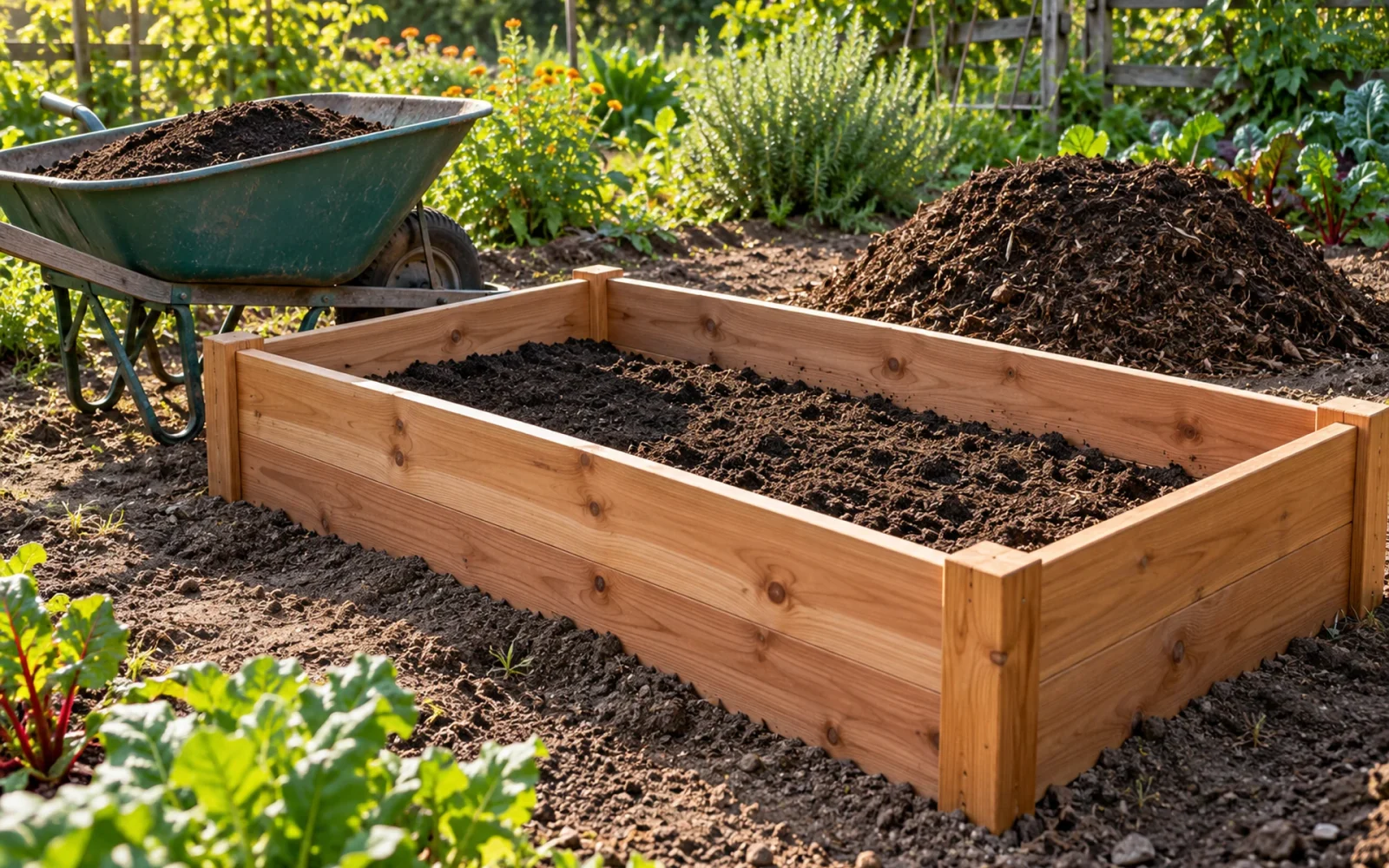
An open-bottom frame over workable garden soil adds height to an existing root zone. An elevated planter with a built-in floor contains the entire root zone. Those are different growing environments, even when both are sold as raised beds.
- Over garden ground: remove persistent weeds and assess the soil beneath the frame. If it is suitable for growing, avoid putting an unnecessary barrier between it and the new mix.
- Over compacted or poor ground: investigate drainage and soil quality before filling. Adding a box does not make a waterlogged site drain away.
- On a hard surface or legs: follow the bed maker’s drainage and load requirements. A container-style growing mix may be more appropriate than a heavy mineral-soil recipe.
Do not assume that the frame height tells you the full available rooting depth. Our guide to choosing raised-bed depth explains that decision before you commit to the fill volume.
Calculate the volume you actually plan to fill
Use the bed’s inside measurements. Multiply length by width by filled depth, with all three dimensions in feet:
Cubic feet = length × width × filled depth. Cubic yards = cubic feet ÷ 27.
For example, a bed measuring 4 by 8 feet inside, filled to a depth of 12 inches, needs 4 × 8 × 1 = 32 cubic feet, or about 1.19 cubic yards. That is 16 bags containing 2 cubic feet each before allowing for the supplier’s coverage variation or subsequent settling. If you fill that same footprint 18 inches deep, the volume becomes 48 cubic feet, about 1.78 cubic yards.
These figures describe the chosen fill space, not the nominal outside size of the product. Leave room below the rim for watering and any mulch you intend to use. If lower filler will occupy part of a tall bed, calculate the upper growing-medium volume separately rather than subtracting a guessed number of bags.
Compare delivered bulk prices with bagged material using the same volume. Ask about minimum loads, delivery, where the truck can unload, and whether the product is a finished raised-bed blend or only one ingredient.
Choose the growing mix before choosing filler
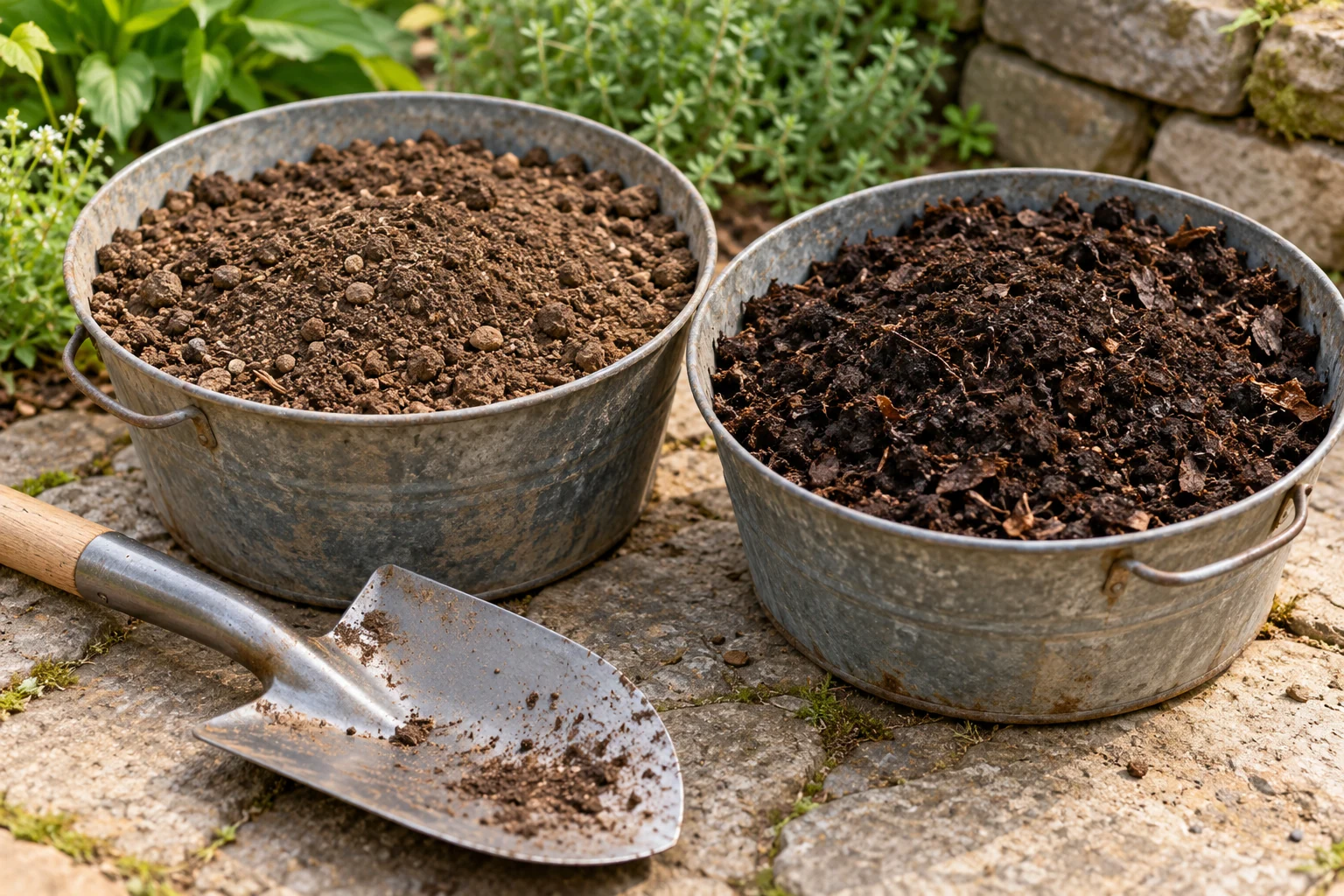
A good fill needs to support roots, retain useful moisture, and allow excess water and air to move through it. Compost contributes organic matter, but that does not mean an entire bed should be filled with compost alone. Equally, the word “topsoil” does not guarantee a loose, clean, fertile product.
The University of Maryland Extension’s raised-bed soil guidance changes its recommendations with the site. For a bed over compacted soil, it describes compost-to-purchased-topsoil mixtures of 1:2 or 1:1 by volume. It gives different options for beds on hard surfaces. Those are site-based recipes, not a requirement that every bed contain the same proportions.
Ask a bulk supplier what is in the blend, whether the compost is mature, and whether soil-test information is available. Inspect a sample if possible. Large amounts of rubble, glass, weed roots, or undecomposed material are reasons to ask more questions. For vegetables, use a known source rather than free soil from an unidentified excavation.
If you are mixing ingredients yourself, blend them through the intended growing zone. A distinct cap of compost over a heavy lower layer is not the same as an evenly blended root medium. Save fertilizer decisions for the mix’s existing nutrient content, a soil test, and the crops you will grow.
When does filling the bottom with branches make sense?
Lower woody or leafy material is an option in a deep, ground-connected bed where the alternative is buying a large volume of soil below the roots you plan to support. It is a design choice with consequences, not a mandatory raised-bed step.
Keep that material beneath a sufficiently deep, continuous growing zone. Long carrots, large transplants, and established perennial crops should not encounter a shallow soil cap over bulky branches. Decide on the root space first; whatever depth remains is the space you can consider for lower fill.
Use clean, untreated plant material of known origin. Do not bury treated timber, painted wood, plastic packaging, household rubbish, or invasive weed roots. Raw kitchen waste also makes a poor shortcut for a bed you intend to plant immediately. It introduces fresh decomposition and can attract animals.
As organic material decomposes, the fill can subside unevenly. That makes this approach less convenient for permanent planting or a gardener who wants to avoid later topping up. For a shallow bed, it often makes more sense to use growing mix throughout than to sacrifice useful root depth to filler.
Fill, moisten, and check the surface again
- Finish the base preparation. Check drainage, weed removal, and any bed-specific liner or hardware before a load of soil makes them inaccessible.
- Add the chosen fill. Distribute material evenly into corners. Blend the growing-medium ingredients rather than leaving isolated pockets.
- Moisten gently as needed. Break dry clumps and allow water to penetrate. Do not stamp the bed down like a paving base.
- Let the material settle. Recheck the level after watering, especially around the sides and above any lower organic fill.
- Adjust before planting. Top up low areas with the appropriate growing mix and retain watering space below the rim.
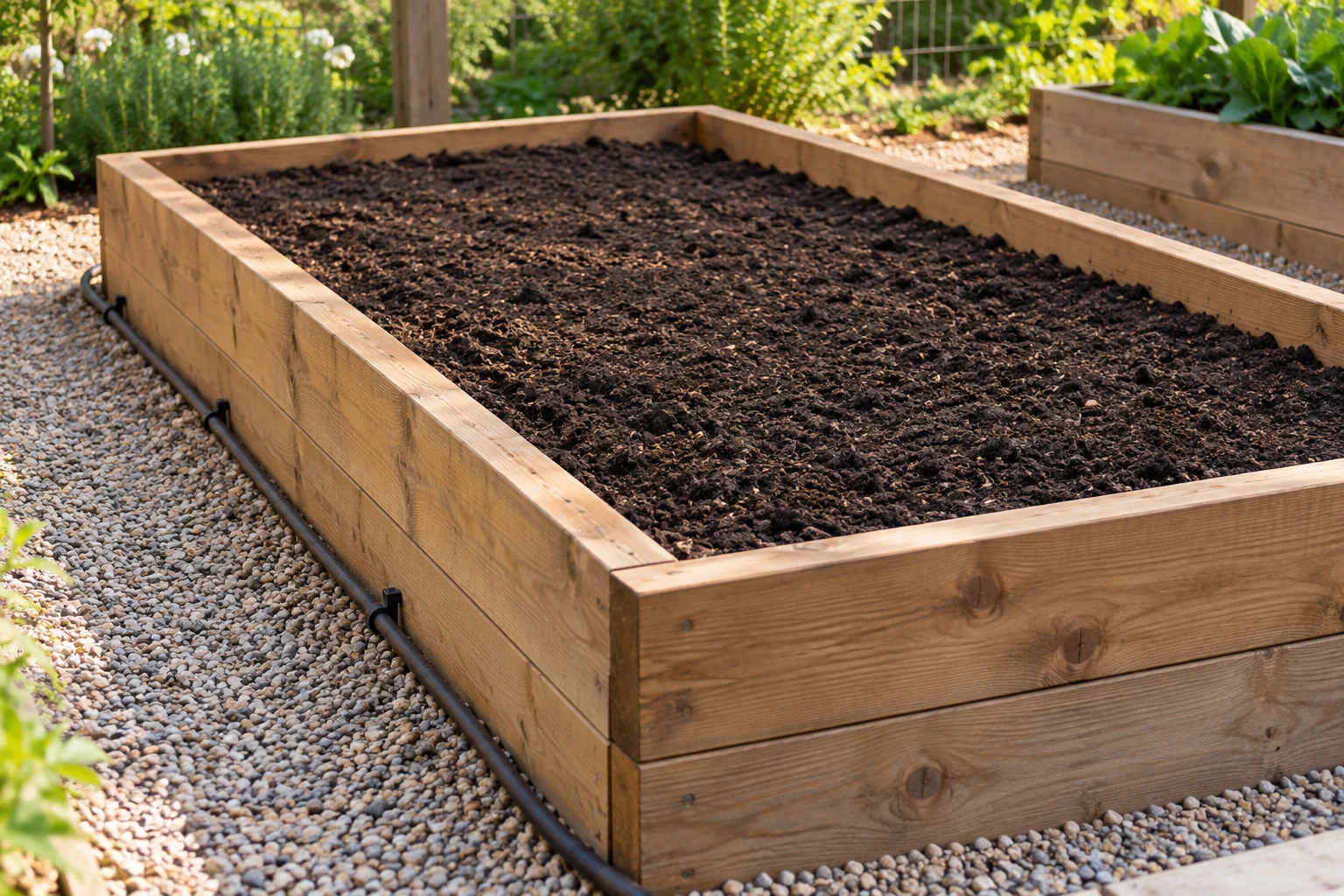
A gravel layer is not a substitute for a drainage plan, and permanent landscape fabric is not automatically needed under every bed. Choose either only for a specific, justified purpose that suits the bed and site. If water already collects where the bed stands, resolve that problem before ordering more fill.
For the next season, inspect the soil level and condition before adding anything. Some topping up may be needed, particularly in a bed with decomposing lower material. Additions should respond to the bed you have, rather than repeating the original filling recipe every year.

Ethan Miller
Ethan Miller writes about home improvement, interior design, cleaning, and everyday living at Home & Living Daily. He shares practical tips and simple ideas to help readers create more comfortable and functional homes.