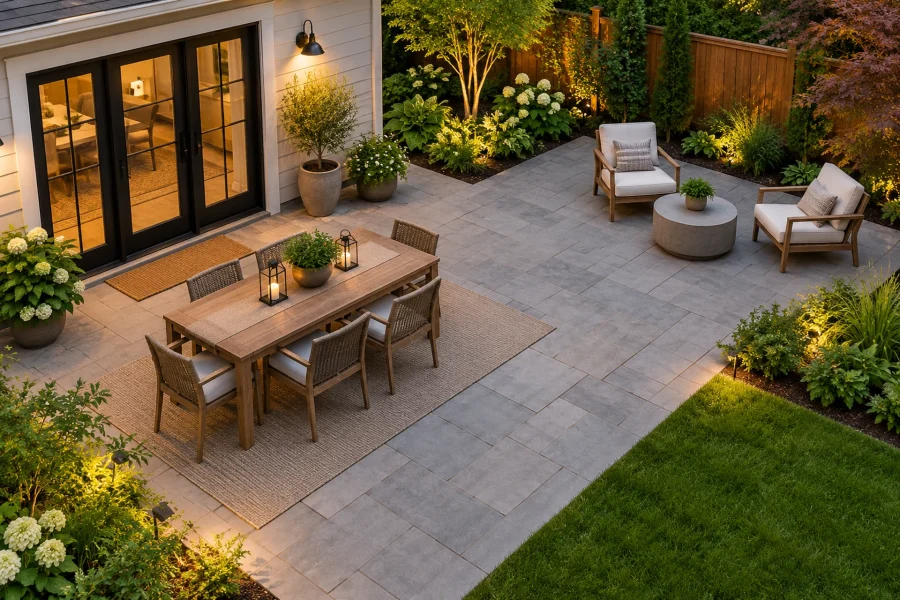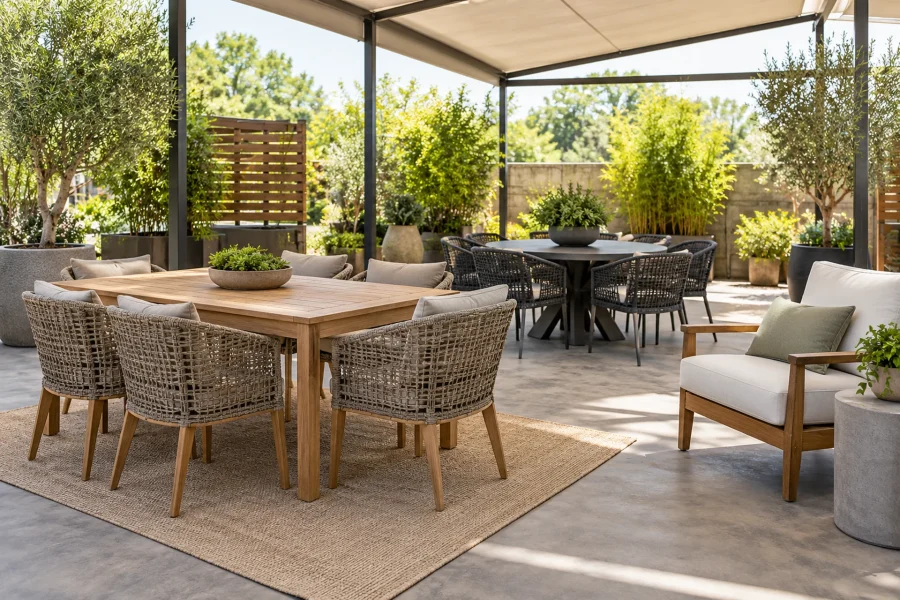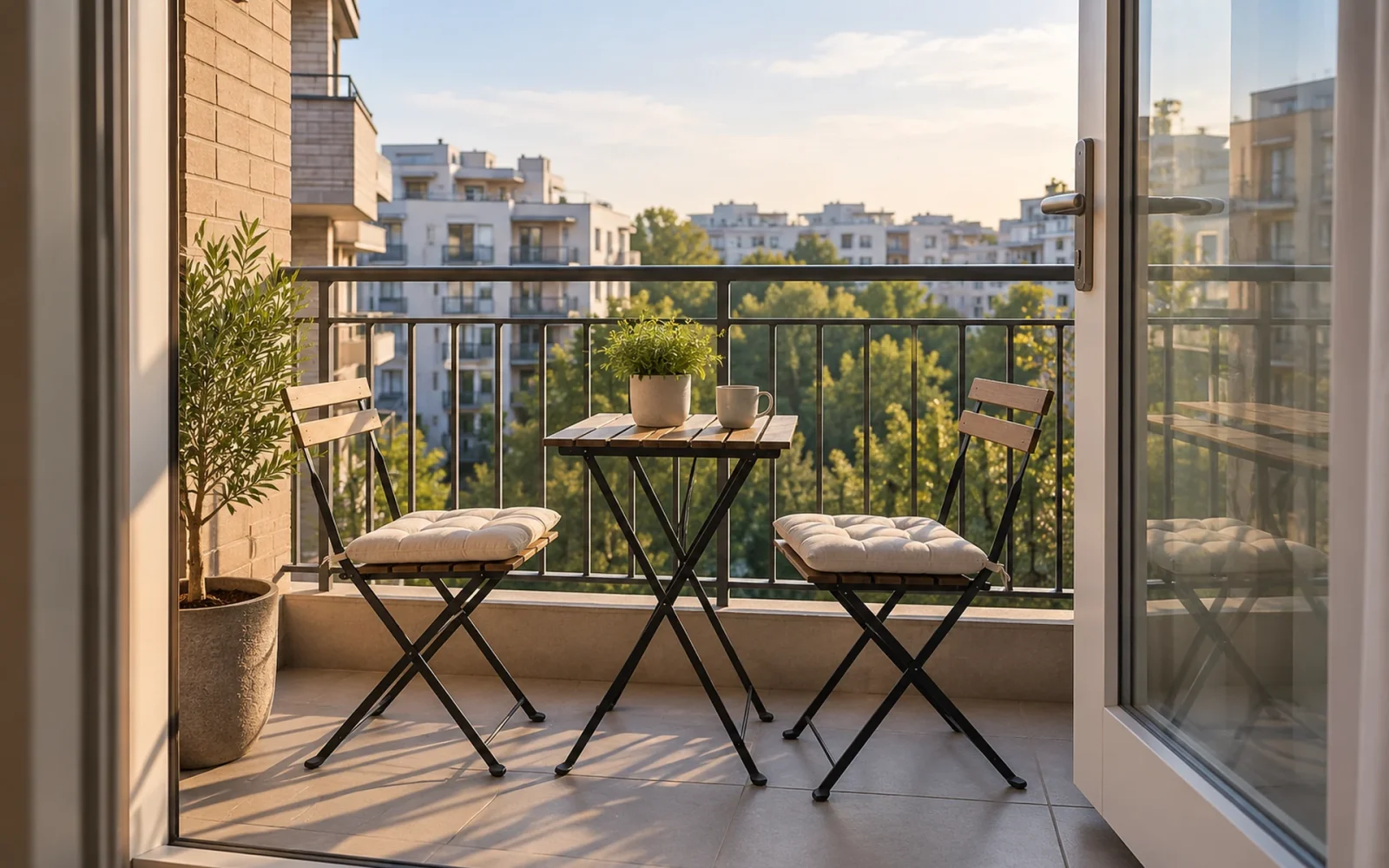
To design a small balcony, choose one everyday activity, measure the space with the door open, and fit furniture around the people using it. A chair that looks compact in a shop may still block the doorway once someone sits down. Test the layout before buying the decorative extras.
The aim is a balcony you can step onto and use comfortably. A reading seat, a place for coffee, or a few well-chosen plants may be enough. Trying to fit a lounge, dining area, garden, and storage room into the same narrow rectangle usually makes every activity harder.
Pick the use you would miss most
Think about an ordinary weekday rather than an imagined party. Would you go outside alone to read, eat breakfast with someone, or spend ten minutes tending plants? That answer determines which item deserves the floor space.
- Reading or relaxing: prioritize one comfortable seat and a small surface within reach.
- Coffee for two: prioritize two usable seats and a table that holds what you actually bring outside.
- Growing plants: prioritize suitable light, access for watering, and a small number of manageable containers.
You can add a secondary use if it does not compromise the first. A folding spare chair might suit occasional company; permanently squeezing in an extra armchair may not.
Measure the occupied layout
Record the inside width and length, door opening and swing, threshold, fixed services, and drainage points. Note anything that must stay accessible. Ask the building manager or owner about permitted furnishings, attachment methods, and loading before planning large containers or fixed screens.
On a simple sketch, mark the space that cannot be occupied by furniture. Do not treat that area as available just because the door is usually closed in photographs.
Then mark the footprint of each proposed item with removable tape suitable for the surface, or use cardboard templates in calm conditions. Include chair arms and angled legs, not only the seat width. Sit in a similar chair and check the space your knees and feet need. Pull the chair back as if you are getting up.
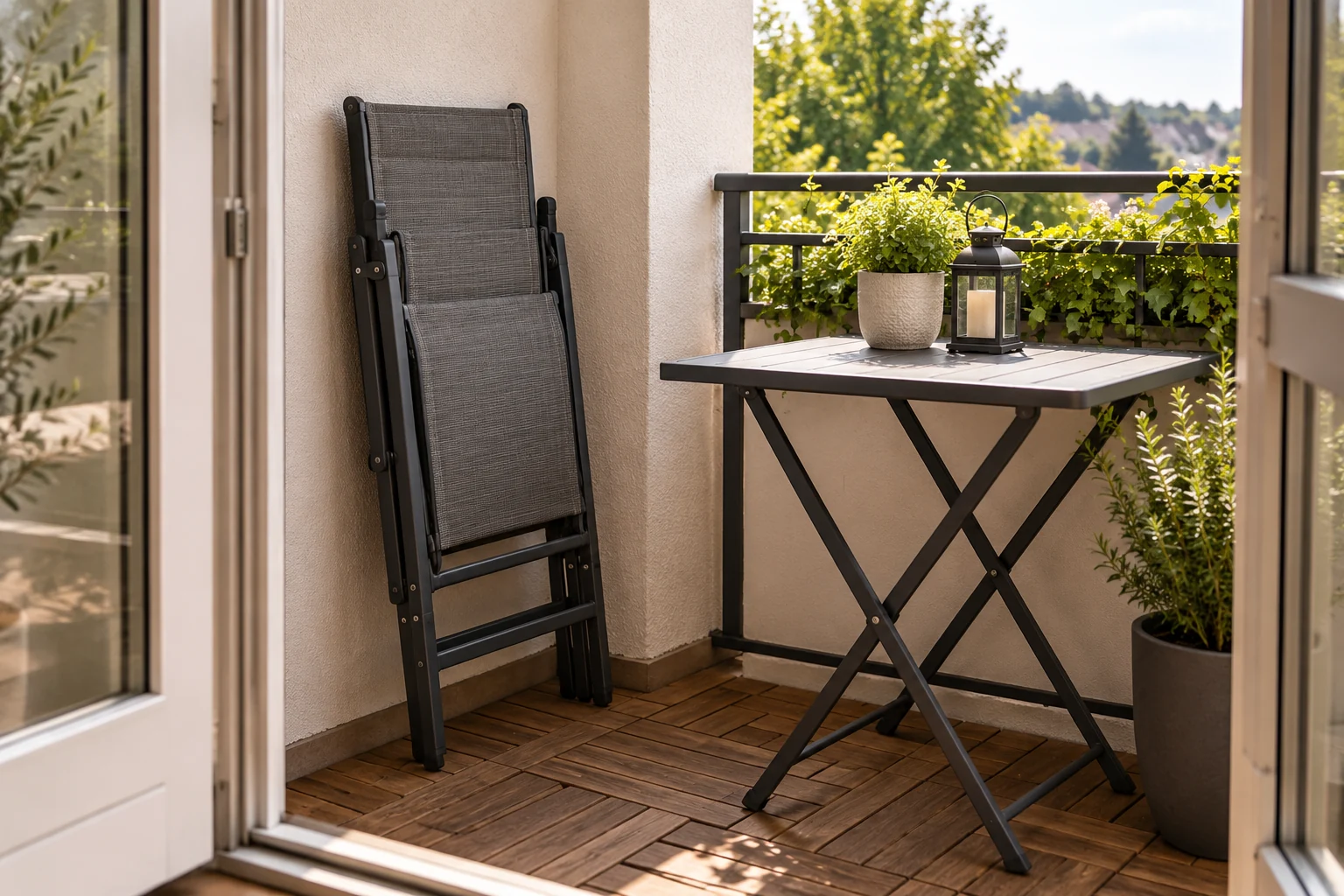
Try carrying a breakfast tray through the door and reaching the plants without moving everything. Required access clearances depend on the building and its rules; a furniture sketch is not a substitute for those requirements.
Three layouts worth testing
A seat at the short end
A single chair facing along the balcony can make a narrow space feel less crowded than two chairs facing each other. Put a small table beside it rather than in front of your knees. This arrangement suits a balcony whose best view is reached by looking lengthwise.
Check whether the chair’s back or recline extends into the doorway. If the balcony is too shallow for a lounge chair, an upright outdoor chair with a comfortable cushion may fit the activity better.
A compact two-person table
A small round or square bistro table can suit coffee or a light meal, provided both seats remain usable. Test it with plates and cups. A decorative tabletop that only holds one mug may not support breakfast for two.
Folding chairs let you remove the second seat when it is unnecessary. Decide where that chair lives when folded. Leaning it across the doorway simply moves the obstruction.
A bench along one wall
A shallow outdoor bench may use a long edge well, with a small movable table beside it. Compare its actual seat depth and back angle with the balcony width. Deep lounge seating can consume a narrow balcony even when it is called a “compact sofa.”
If a bench includes storage, check that you can open the lid with the furniture in place and that it is designed for seating. Keep climbable furniture and containers away from the guardrail, particularly where children use the space.
Buy for comfort and storage before decoration
Spend time choosing the main seat. If it is uncomfortable, plants and lights will not make you use it more often. Try the sitting height, cushion support, and table reach where possible.
Choose outdoor-rated materials and a care routine that fits your exposure. A covered balcony still receives wind-driven rain and dust. Check how cushions will dry, where they will be stored, and whether covers can be secured without blocking drainage.
Keep the color choices simple enough to connect with the adjoining room. You do not need matching furniture to achieve that. Repeating one color or material can make a few useful pieces feel intentional.
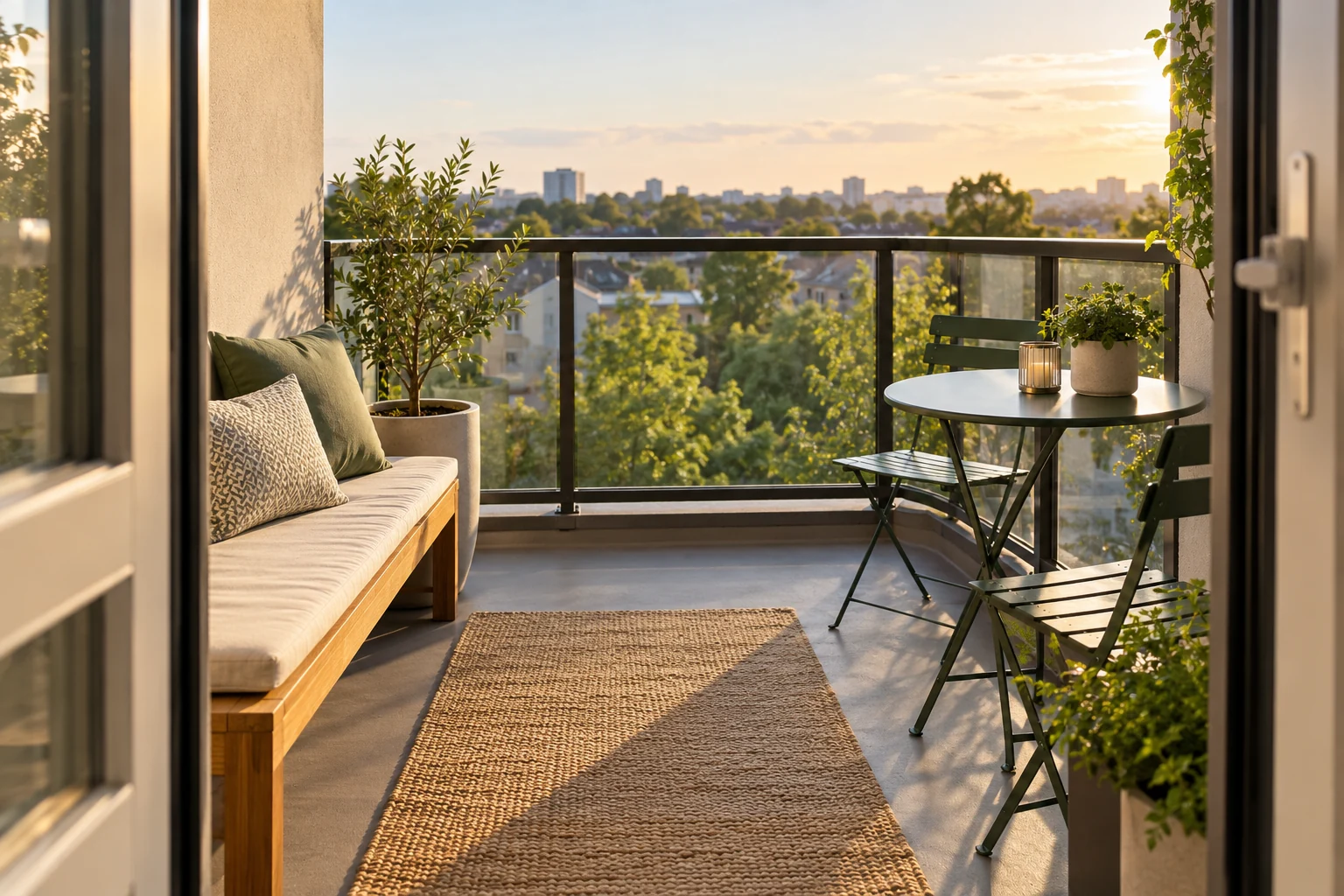
Add plants and privacy where they earn their space
Start with a few containers that fit the balcony’s sun and wind. Position them where you can water and inspect them without leaning over the railing. Consider the weight of the container, wet growing mix, and plant together; there is no single load allowance that applies to every balcony.
Our guide to starting a balcony garden covers the growing decisions in more detail. For a layout focused on seating, plants should fit around the usable space rather than displace it.
If a neighboring balcony overlooks one side, test targeted screening before enclosing the whole railing. Screens catch wind and need an approved fixing or support system. Do not attach planters, shelving, hanging seats, or fabric to rails and walls without confirming the structure and permission.
One outdoor-rated light can be more useful than a complicated installation. Choose a permitted fixture or portable light, and avoid cables across the doorway. A lantern-style battery light can add atmosphere without introducing an open flame.
Live with the basic layout before covering the floor
Use the seat and table for several days before adding rugs, tiles, or more objects. Check whether rainwater still drains, whether the door catches anything, and whether you can sweep the corners.
Any floor covering should suit the existing surface and building requirements. Keep outlets and drainage routes clear, and allow access to inspect underneath. Removable does not automatically mean approved, damage-free, or suitable over a balcony waterproofing system.
If you still find yourself rearranging furniture every time you step outside, remove one item and test again. A successful small balcony supports its main activity without a setup routine that makes you stay indoors.

Ethan Miller
Ethan Miller writes about home improvement, interior design, cleaning, and everyday living at Home & Living Daily. He shares practical tips and simple ideas to help readers create more comfortable and functional homes.