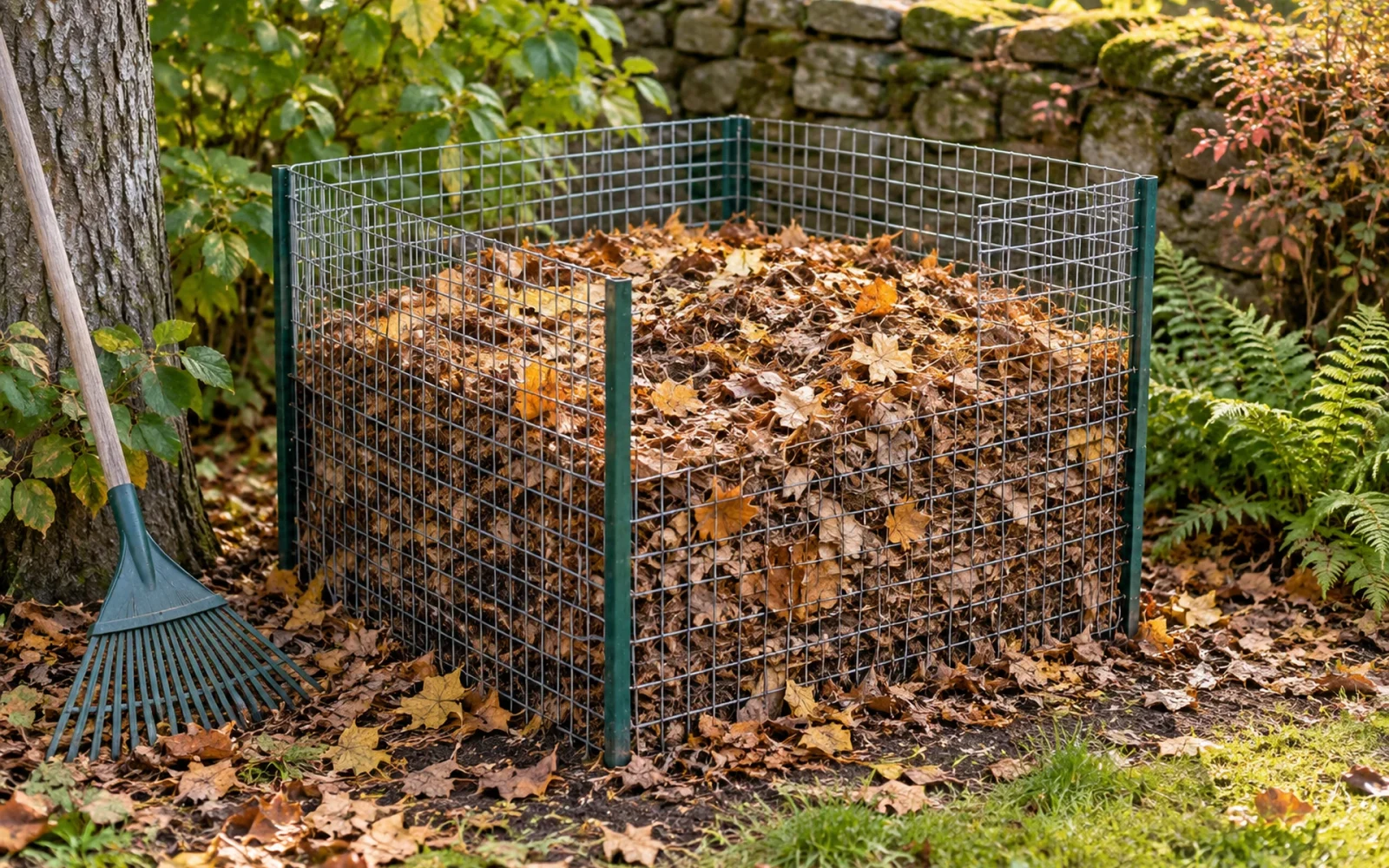
Compost leaves by collecting clean material, loosening or coarsely shredding it, and keeping it damp enough to decompose without compressing it into a wet mat. For a mixed compost batch, combine leaves with suitable nitrogen-rich ingredients. If you mainly have leaves and want a slower, low-input process, make leafmould instead.
The choice matters. A leaf-only enclosure and a managed mixed compost pile do not need to follow the same recipe or finish on the same schedule.
Choose mixed compost or leafmould
Mixed compost: leaves provide a carbon-rich ingredient alongside suitable greens such as vegetable trimmings or modest amounts of untreated fresh grass. Manage the mixture’s air, moisture, and structure as a batch.
Leafmould: leaves decay largely on their own, with moisture and time. The RHS leafmould guide describes it as a useful soil conditioner and notes that many leaf heaps take around two years. Leaf type, preparation, and conditions change the pace.
For a household with bags of autumn leaves but few greens, keeping a leafmould enclosure and reserving some dry leaves for the main compost bin can be more sensible than trying to make every bag into a hot batch.
Sort the leaves before they enter the pile
Remove litter, plastic, wire, and other debris. Use a source whose treatment history you reasonably understand. Curbside collections can contain rubbish or material you would not deliberately add to compost.
If plants have significant disease or pest problems, follow appropriate local disposal guidance instead of assuming a home pile will treat them. Keep aggressive weed roots and seeded weeds out of an ordinary leaf batch.
Leaf thickness and toughness affect breakdown. Thick leathery leaves and needles can persist longer than thin soft leaves, so consider separating slow material if you need a finer product sooner. Avoid a blanket rule that all leaves from one familiar group are either instantly suitable or forbidden.
Make smaller pieces, not leaf pulp
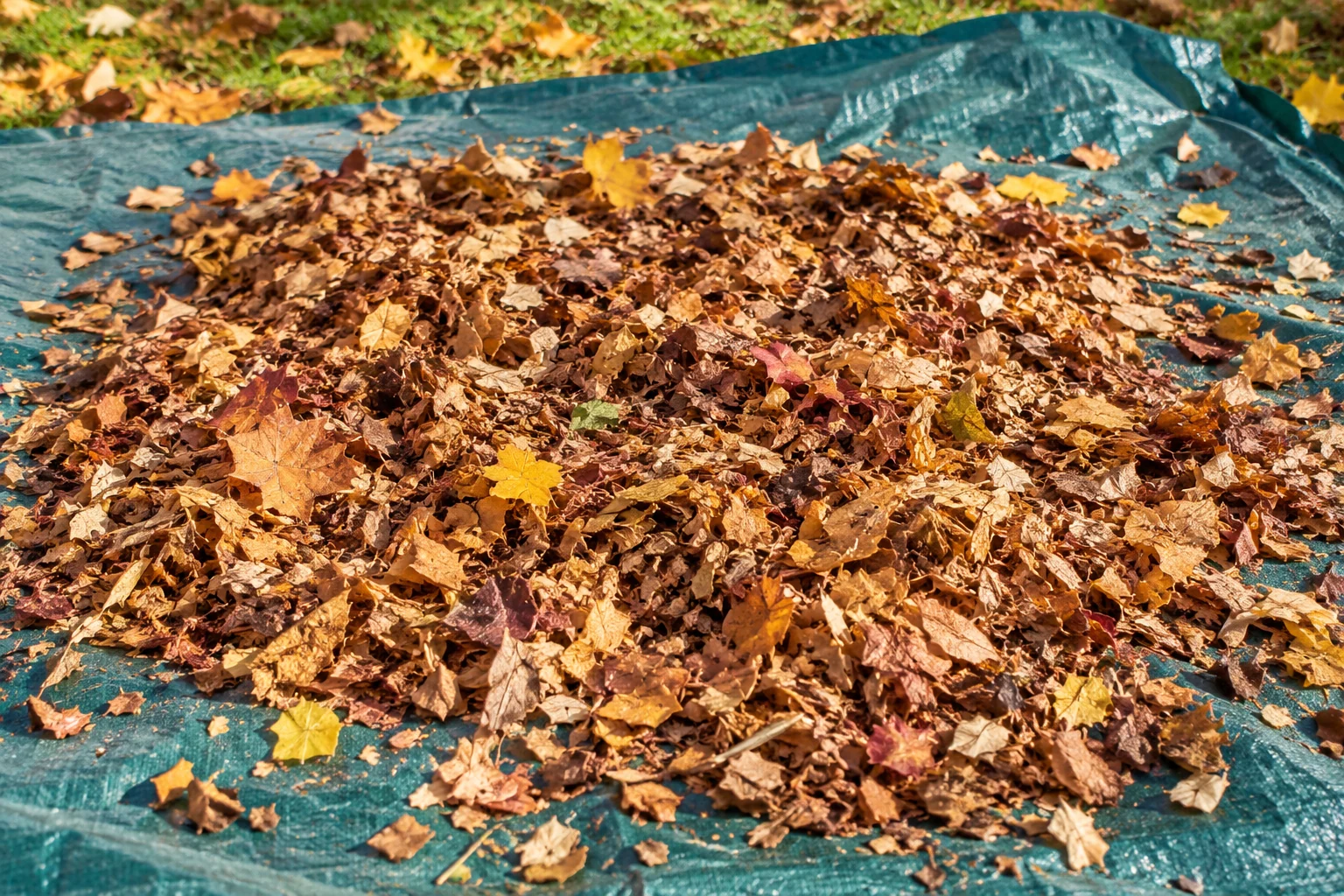
Coarse shredding can make bulky or tough leaves easier to mix and increase the exposed surface. Use equipment according to its instructions, with stones and debris removed. Do not improvise a tool inside a container that was not designed for it.
Finer is not always better. Very small wet fragments can pack together. Colorado State Extension highlights the risk of finely chopped leaves compressing and limiting oxygen. The practical target is material that wets and mixes reasonably while retaining spaces for air.
If you cannot shred, whole leaves can still decay. Loosen them, expect a slower or less uniform process, and check for compressed layers rather than considering the project impossible.
Build a loose, evenly damp mixture
For mixed compost, add prepared leaves with suitable greens, distributing the ingredients rather than creating a thick layer of wet grass under a thick layer of leaves. Break apart clumps as you go.
A volume recipe is only a starting point because dry leaves vary in size and packing. Do not interpret a chemical carbon-to-nitrogen ratio as instructions to add thirty buckets of leaves for every bucket of scraps.
Moisten dry leaves gradually as you mix. Water can run around a dry center without soaking it evenly, so inspect inside the mass. Aim for damp material without puddles or free liquid. A hose left running over the top does not establish the right condition throughout.
Keep the batch accessible for inspection and mixing. If using an enclosure, make sure its opening and height suit the work you can comfortably do. A huge pile you cannot reach or turn is a different management choice from a small active batch.
Correct a mat or dry center by opening it
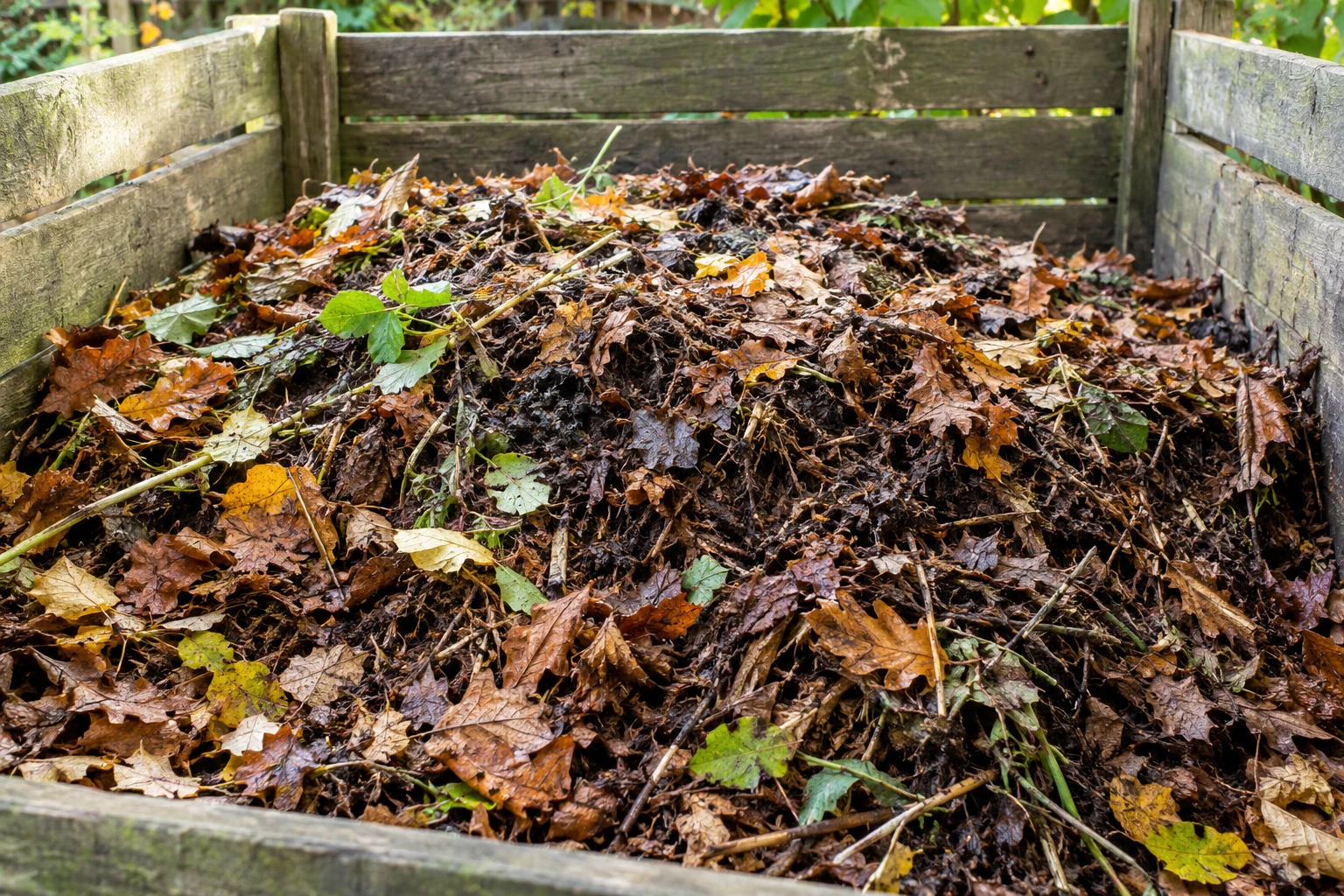
Wet, stuck-together sheets: lift and separate them, redistribute with suitable differently textured material, and investigate incoming rain or poor drainage. Turning without breaking the sheets may leave the same wet pockets intact.
Dry, crisp material inside: moisten gradually while opening and rebuilding the pile. Check again later to see whether the leaves actually absorbed water.
Very slow leaf-heavy mixed compost: check moisture and air first. If the mixture lacks suitable greens, add a modest amount and observe. Do not pour in an unidentified fertilizer or manure simply to chase heat.
Slow leafmould: patience may be appropriate. It is not failing merely because it does not behave like a hot mixed pile. Keep it from drying completely or becoming a compacted waterlogged block.
Judge the product and keep a reserve
Mixed compost should finish as a more uniform, earthy material with most soft inputs broken down. Allow it to cure before sensitive plant use. A few tough fragments can be screened out and returned to another batch; screening does not establish maturity by itself.
Leafmould becomes darker and more broken down with time. Use it for a purpose appropriate to its condition rather than treating every stage as a complete potting mix or fertilizer.
Store some clean dry leaves under protection for later kitchen-scrap additions. That reserve often provides more year-round value than processing the entire autumn collection at once.

Ethan Miller
Ethan Miller writes about home improvement, interior design, cleaning, and everyday living at Home & Living Daily. He shares practical tips and simple ideas to help readers create more comfortable and functional homes.