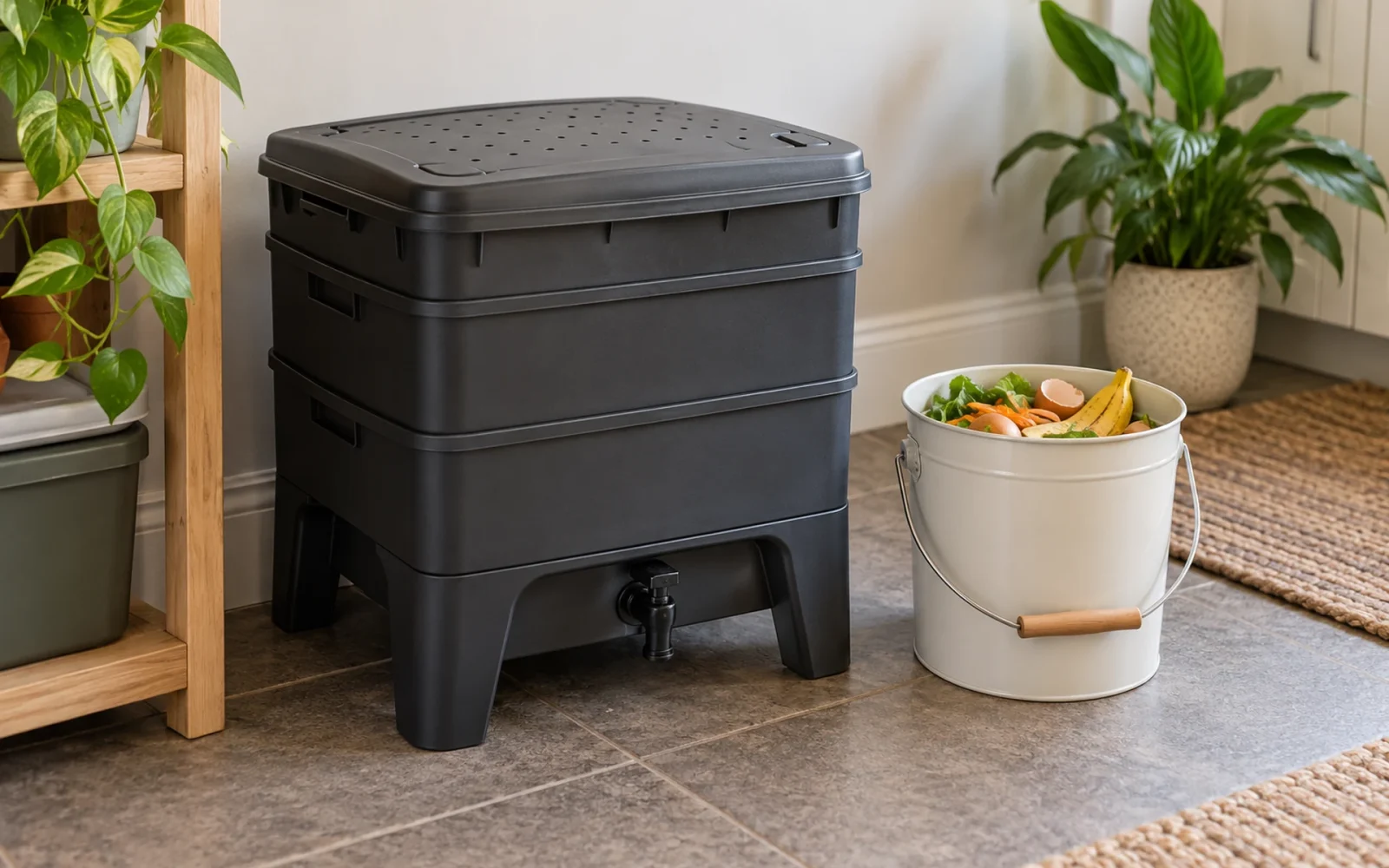
You can manage food scraps indoors, but choose the method by what it produces and where that material will go. A worm bin can make vermicompost in a suitable indoor environment. Bokashi ferments scraps that still need a second decomposition stage. A countertop collection pail stores scraps for a separate composting system or collection service.
Do not buy a container simply labeled “compost bin” and assume it can turn a household’s food waste into finished compost in a closed kitchen cupboard.
Start with the destination for the output
Before choosing equipment, decide what happens after it fills. Will you use a modest amount of finished material in plants? Can you access an outdoor compost system? Does a local service accept the inputs you plan to collect?
This question is especially important in an apartment. A fermentation bucket can fit under a counter, but its contents still need somewhere appropriate to finish. A few houseplant pots are not necessarily enough space to process a continuous stream of fermented kitchen waste.
| Method | What happens indoors | What you still need |
|---|---|---|
| Worm composting | Worms and other organisms process suitable scraps in moist bedding | Air, suitable conditions, conservative feeding, and eventual harvesting |
| Bokashi | Food scraps ferment in an airtight system with an appropriate inoculant | A planned second decomposition stage |
| Scrap collection | A pail or chilled container holds waste temporarily | Regular transfer to an accepted composting destination |
| Grinding or dehydrating appliance | Some machines dry and reduce scraps | Confirmation of what the output is and how it must be processed or handled |
A small worm bin can be a biological indoor system
Worm composting uses suitable composting worms in a ventilated container of damp, loose bedding. It is not an ordinary pot of soil with a few garden worms added.
Choose a location with stable conditions, away from direct heat and sun, with access for inspection. Make sure the bin can breathe and that any catch tray can be checked. Protect the floor and keep the setup accessible enough that feeding does not become a forgotten cupboard task.
Begin with a small amount of suitable fruit and vegetable scraps, adding more only as the system processes the previous portion. Keep feeding areas covered with bedding and observe moisture and odor. A newly established population may not handle all your household scraps, so keep a second disposal or collection route available.
Detailed worm-bin construction, bedding, and harvesting belong to the specific bin design. For method selection, the key question is whether you want to maintain a living system and check its condition regularly.
Bokashi handles a different stage
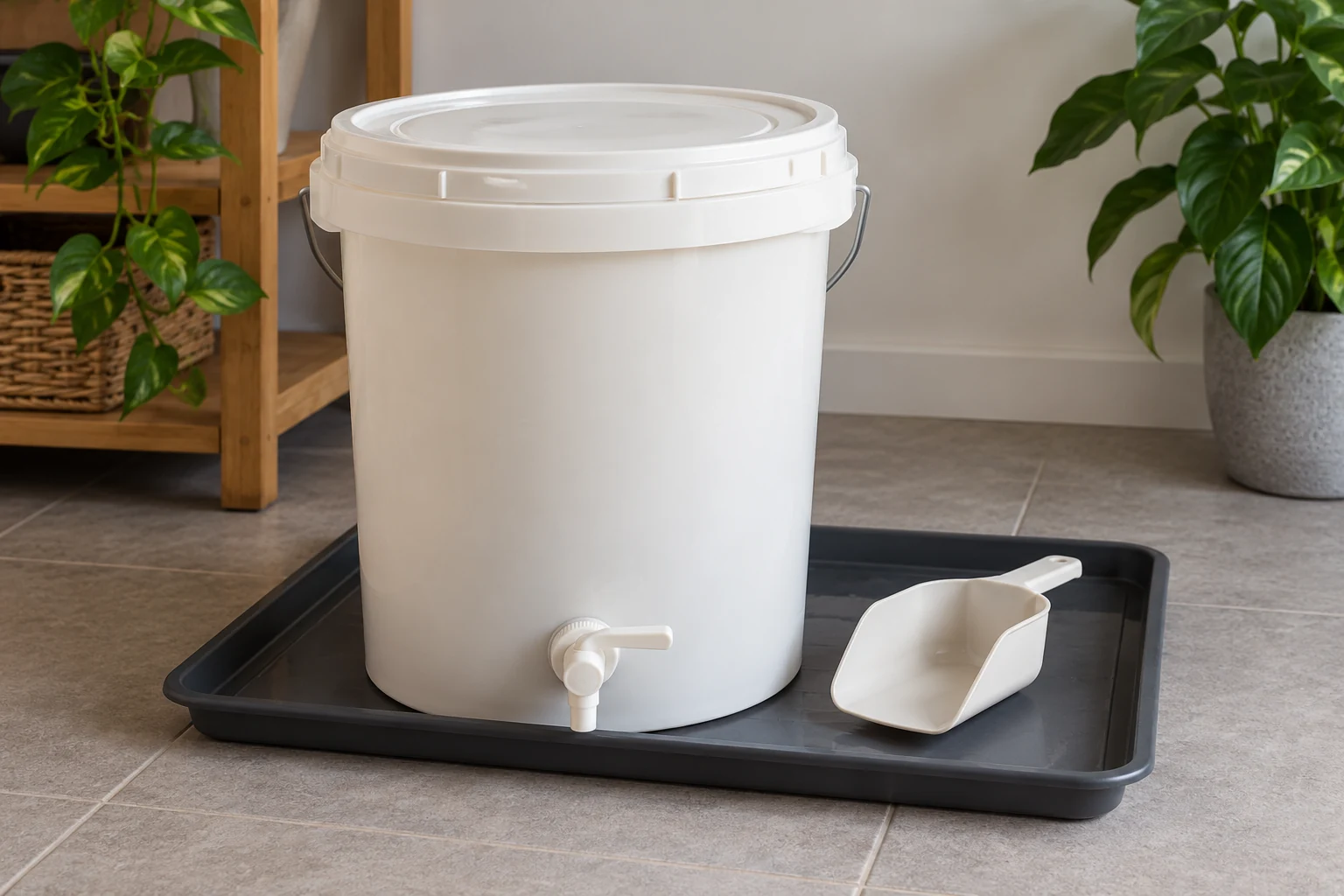
Bokashi uses a suitable inoculated material and an airtight container to ferment food waste. The RHS explanation of bokashi makes clear that this alone does not produce fully broken-down compost. The fermented material needs further processing in an appropriate composting or soil system.
Follow the kit’s input, layering, closing, drainage, and finishing directions. If one bucket is fermenting after it fills, you may need another collection or fermentation container for new scraps. Include that space in your plan.
Do not put fresh fermented contents around houseplant roots as though they were mature compost. Nor should liquid drained from the bucket automatically be treated as a general-purpose plant feed. Use verified instructions for the specific system and destination.
A collection pail can be the most convenient choice
If you have access to a reliable outdoor bin, community drop-off, or collection program, indoor collection may be all you need. Check the destination’s accepted materials, including whether liners, cooked food, or particular packaging are permitted.
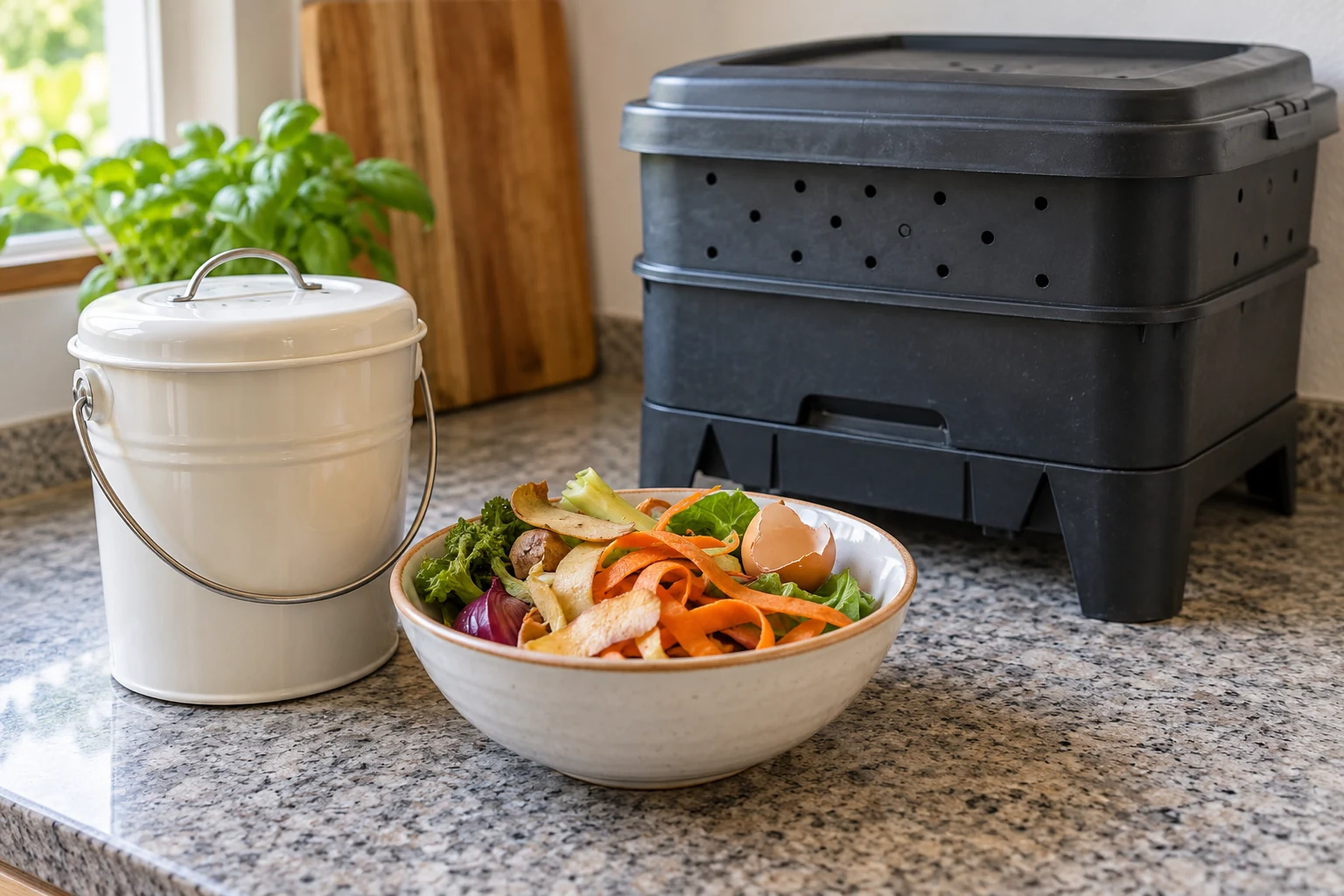
Choose a washable container with a manageable capacity. Empty it before scraps accumulate in liquid, and clean the lid and rim as well as the bottom. Chilled or frozen storage can suit a transfer routine where space and the receiving program allow it.
A filter may reduce some smells, but it does not turn stored scraps into compost or remove the need to empty the container. Do not add scented products to compensate for a pail that is left too long.
Check what an appliance actually produces
The EPA distinguishes grinding and dehydrating appliances from composting: they can produce a dried food-scrap mixture rather than biologically stable compost. That material may need to enter a composting system afterward.
Other appliances use different processes, so read the specific operating and output instructions. Ask whether the result is ready for the proposed plant use, needs curing or blending, or is intended for collection. Marketing language and a soil-like appearance are not enough to decide.
Include capacity, consumables, electricity, cleaning, and where the output goes in the comparison. A fast cycle is only useful if it fits the rest of your household routine.
Choose a system you can keep within capacity
For one week, note the approximate volume and type of scraps you generate. Then choose a modest starting system and a backup route. A worm bin that receives a manageable amount or a pail emptied on time is more practical than forcing every scrap through an overloaded indoor container.
If the method leaves you with material you cannot finish or use, change the destination plan before adding more equipment. Indoor composting works best when collection, processing, and use are connected from the beginning.

Ethan Miller
Ethan Miller writes about home improvement, interior design, cleaning, and everyday living at Home & Living Daily. He shares practical tips and simple ideas to help readers create more comfortable and functional homes.