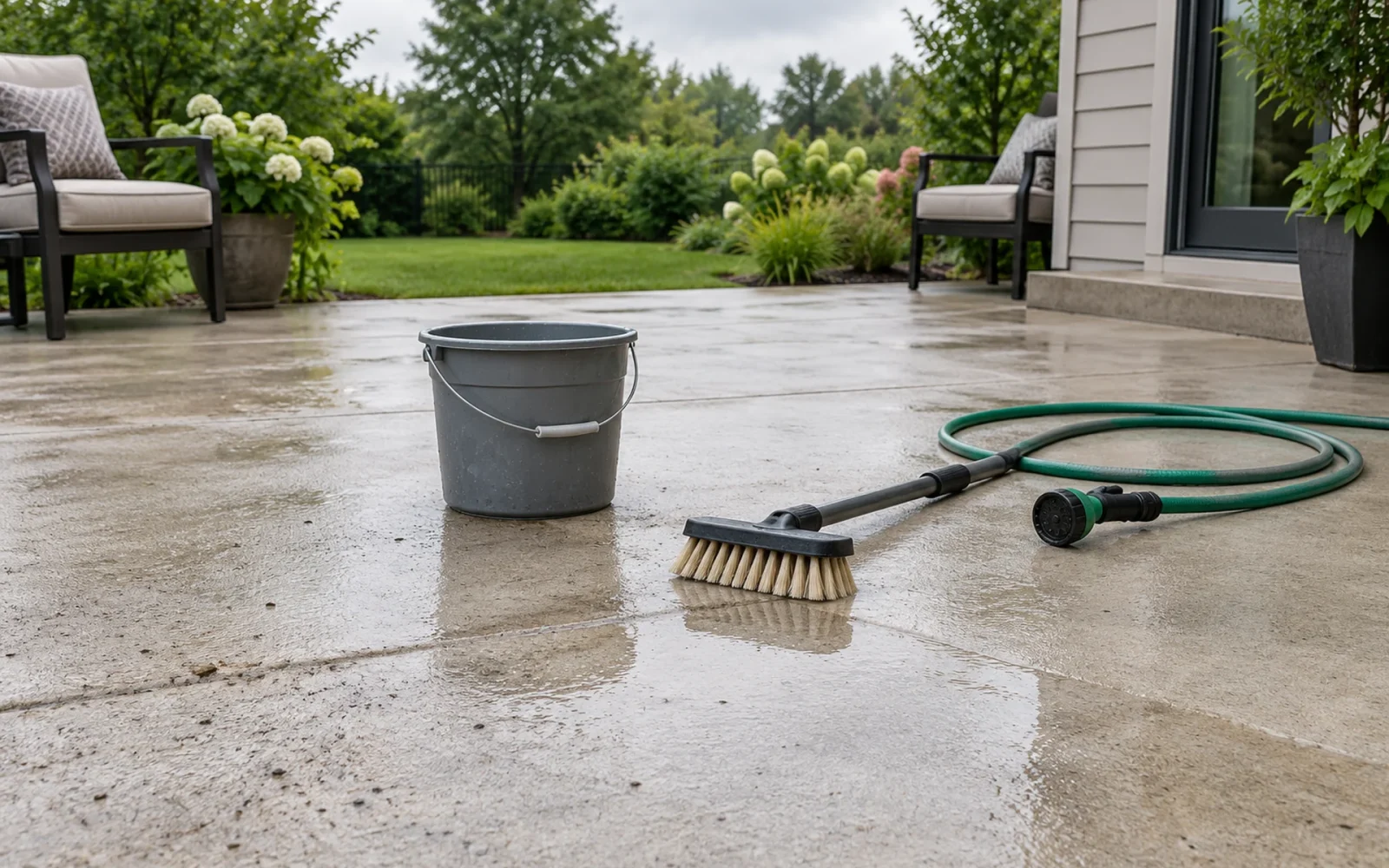
To clean a concrete patio, clear and sweep the surface, test a cleaner compatible with the concrete and any sealer, then scrub and rinse manageable sections. For ordinary dirt, a brush and garden hose are often enough. Save stronger chemicals and pressure washing for a problem that actually requires them.
Before choosing a cleaner, check whether your patio is plain concrete, colored or stamped concrete, or a coated surface. The slab may be durable while its decorative finish is easier to damage.
First decide whether you are looking at dirt or damage
Inspect the patio dry. Photograph stubborn patches and note where they occur: below a metal chair, beside the grill, beneath a planter, or along a damp shaded edge. The location often gives you a better lead than the color alone.
Loose grime, leaf marks, grease, and surface growth need different treatments. Flaking sealer, exposed aggregate, a chalky deposit, or an etched patch may not improve with more scrubbing. Stop and identify those conditions before treating them as ordinary stains.
If the patio is stamped, stained, painted, recently installed, or sealed, find the installer or product care instructions. Do not assume a method suitable for an old broom-finished slab is suitable for a decorative coating.
Gather a simple wash kit
Use a broom, a bucket, a nonmetal brush suitable for the finish, a garden hose, and the chosen cleaner. Wear the protection specified on the cleaner label, and choose footwear with grip on a wet surface. Remove cushions and delicate objects from the area before they catch splashes.
A mild, compatible detergent can handle general soil. A product labeled for your concrete and finish gives you a defined dilution and contact time. More concentrate is not automatically more effective; it may make rinsing harder or affect the coating.
Avoid treating vinegar as a default “natural” patio cleaner. Simple Green’s concrete-cleaning guidance explains that acid can attack the cement binder. An acid treatment intended for a specific masonry problem is a different job from an ordinary wash.
Sweep, spot-test, then wash one section
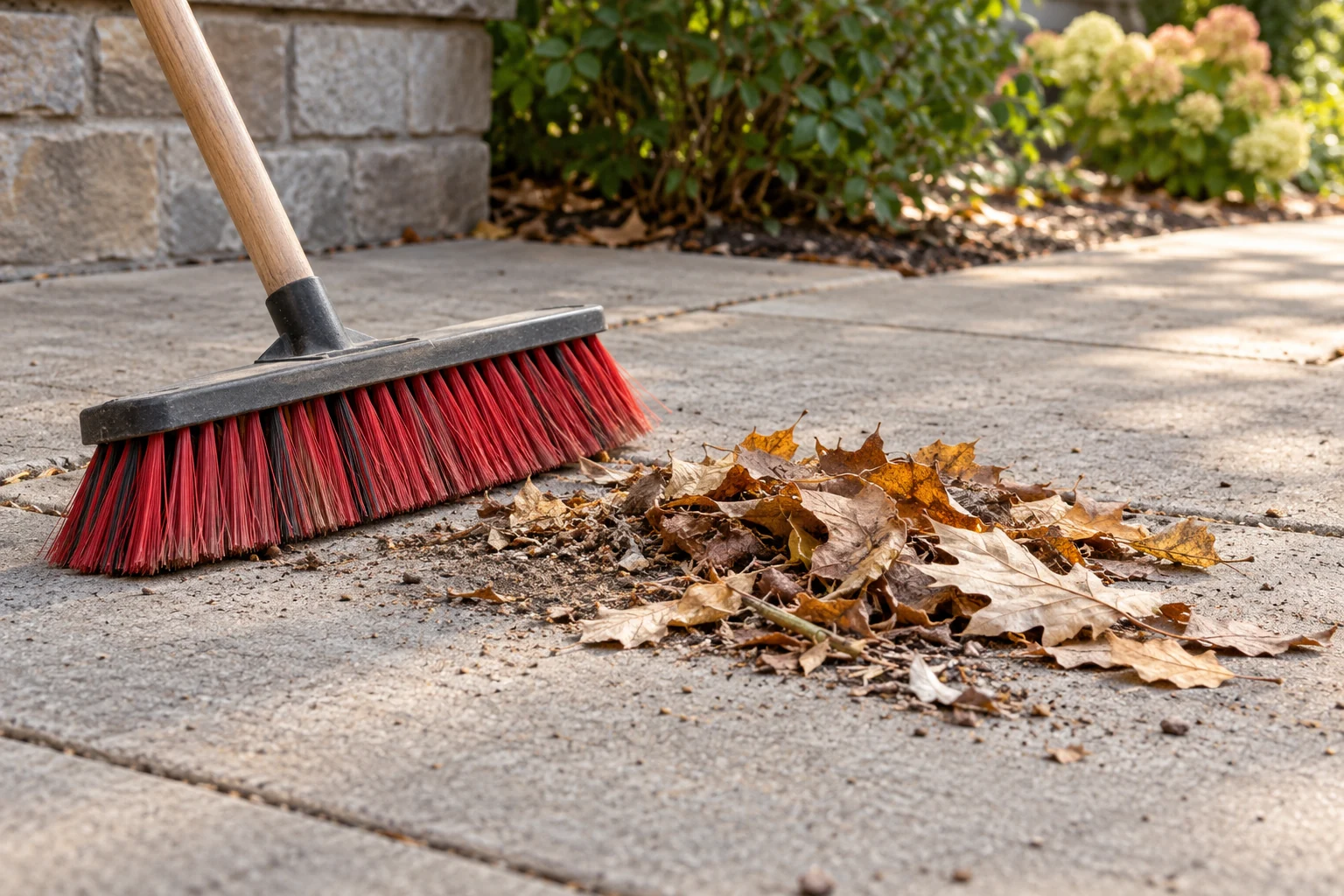
- Clear the whole surface. Move furniture, pots, mats, and anything that could trap water. Note heavy items you cannot move safely and work around them without flooding their bases.
- Sweep thoroughly. Collect leaves, grit, and loose dirt rather than washing them toward a drain.
- Choose a test patch. Use a discreet area with the same finish as the main patio. Follow the cleaner’s dilution, application, dwell, and rinse directions.
- Inspect after it dries. Look for a change in color, sheen, or texture. A wet patch can hide a finish problem that becomes obvious later.
- Wash in sections. Apply the tested method to an area you can scrub and rinse before the cleaner dries on the surface.
- Rinse away residue. Manage the dirty water so it does not carry cleaner into planting, ponds, or storm drains. Follow the label and local disposal requirements.
Choose mild weather if you can. A very hot slab can dry the solution before you finish a section; rain can dilute it or move it beyond the working area. Keep people and pets clear until the cleaning and rinsing are complete.
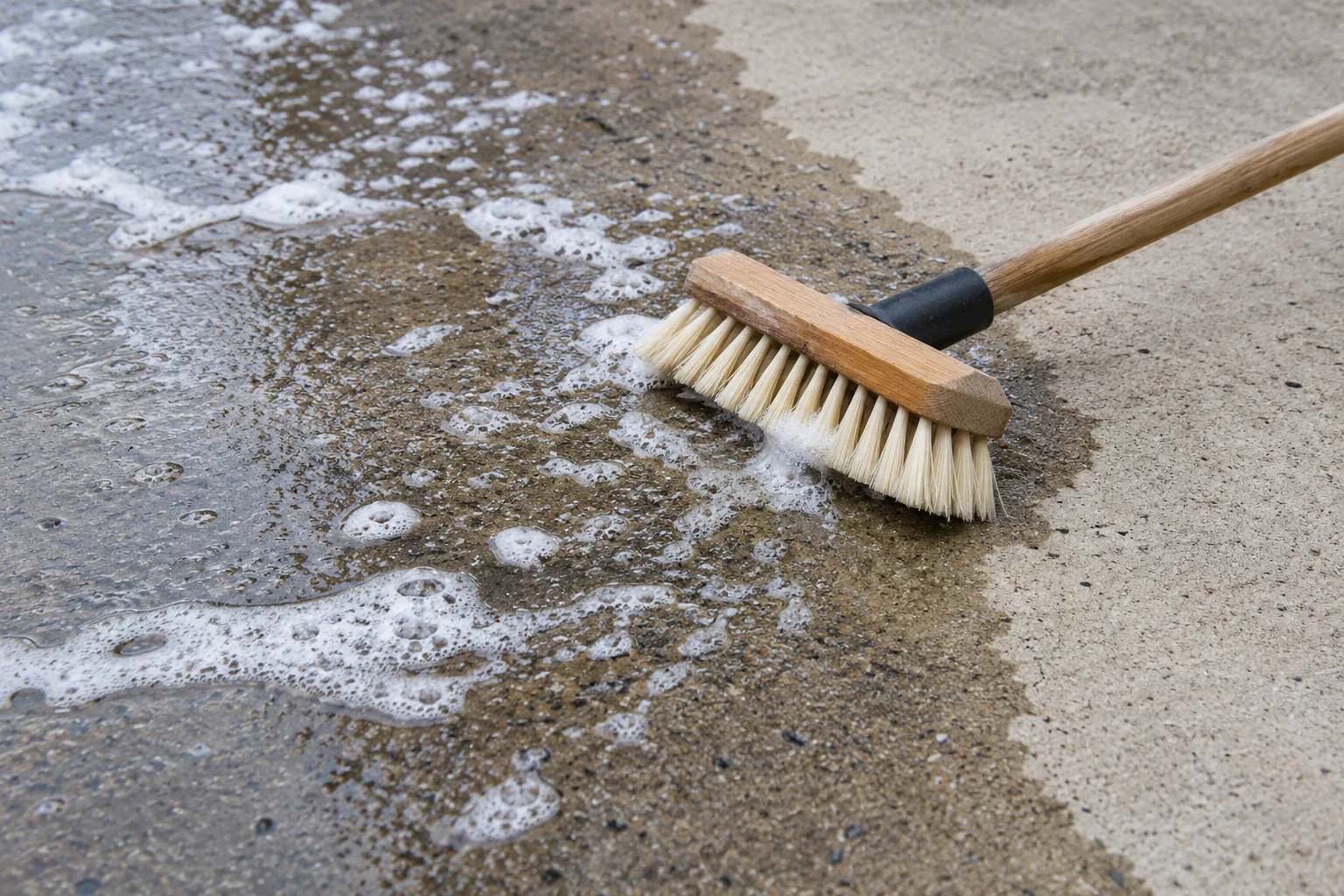
On a large patio, work toward a sensible exit so you do not repeatedly walk through the wet section. Check for detergent residue around chair feet and against walls, where rinse water can leave it behind.
Treat the mark that remains, not the whole patio again
Oil or grease: blot a fresh spill and lift any remaining surface material before adding water. For an established mark, choose a concrete-compatible degreaser that also suits the sealer. Follow its directions and judge the result dry. An old absorbed stain may need more than one correctly performed treatment.
Rust: move the metal object causing it and choose a rust remover explicitly suitable for that concrete finish. A general bathroom descaler is not a safe substitute simply because it removes rust elsewhere.
Leaves or organic marks: sweep away the source, then use a suitable treatment if the normal wash did not remove the discoloration. Expect results to vary with how long the material stayed on the surface.
Green or slippery growth: use a product intended for the surface and growth, following its label. Also address the persistent moisture or debris that lets the patch return. Cleaning alone does not fix a leaking planter or a drainage problem.
Never mix cleaners, including bleach with vinegar, acids, or ammonia-containing products. If you change products, follow their directions for rinsing and any required waiting period. Do not layer several household recipes onto an unidentified stain.
Should you use a pressure washer?
It can help on a suitable, sound surface, but power washing can also leave stripes, expose aggregate, or remove a decorative finish. The machine’s maximum pressure is not a cleaning target, and a single PSI recommendation cannot account for nozzle, distance, flow, or the condition of your patio.
Brickform distinguishes routine cleaning from aggressive surface preparation. Tools and techniques used to remove a coating should not be treated as routine care for a finish you want to keep.
If your installer permits pressure washing, follow the surface and equipment instructions, test discreetly, keep the spray moving, and stop if texture or coating changes. Avoid directing a concentrated jet at cracks, joints, damaged edges, doors, or electrical fittings. For a decorative patio with an unknown sealer, professional assessment may be cheaper than repairing a damaged pattern.
Let the patio dry before deciding on sealer
Once the surface dries, compare the test and problem areas with your earlier observations. Is a remaining patch still grime, or is it worn coating or permanent discoloration? Repeating a stronger wash without that distinction can make the contrast worse.
Resealing is a separate maintenance decision. Check compatibility with the existing sealer, surface preparation, weather, and moisture requirements for the proposed product. Do not seal a damp patio just because cleaning has finished, or apply another coating over one that is failing.
For regular care, remove fallen leaves before they stay wet, keep drainage routes clear, and deal with spills promptly. That reduces how often the patio needs a full wash and gives you a chance to catch small surface problems early.

Ethan Miller
Ethan Miller writes about home improvement, interior design, cleaning, and everyday living at Home & Living Daily. He shares practical tips and simple ideas to help readers create more comfortable and functional homes.