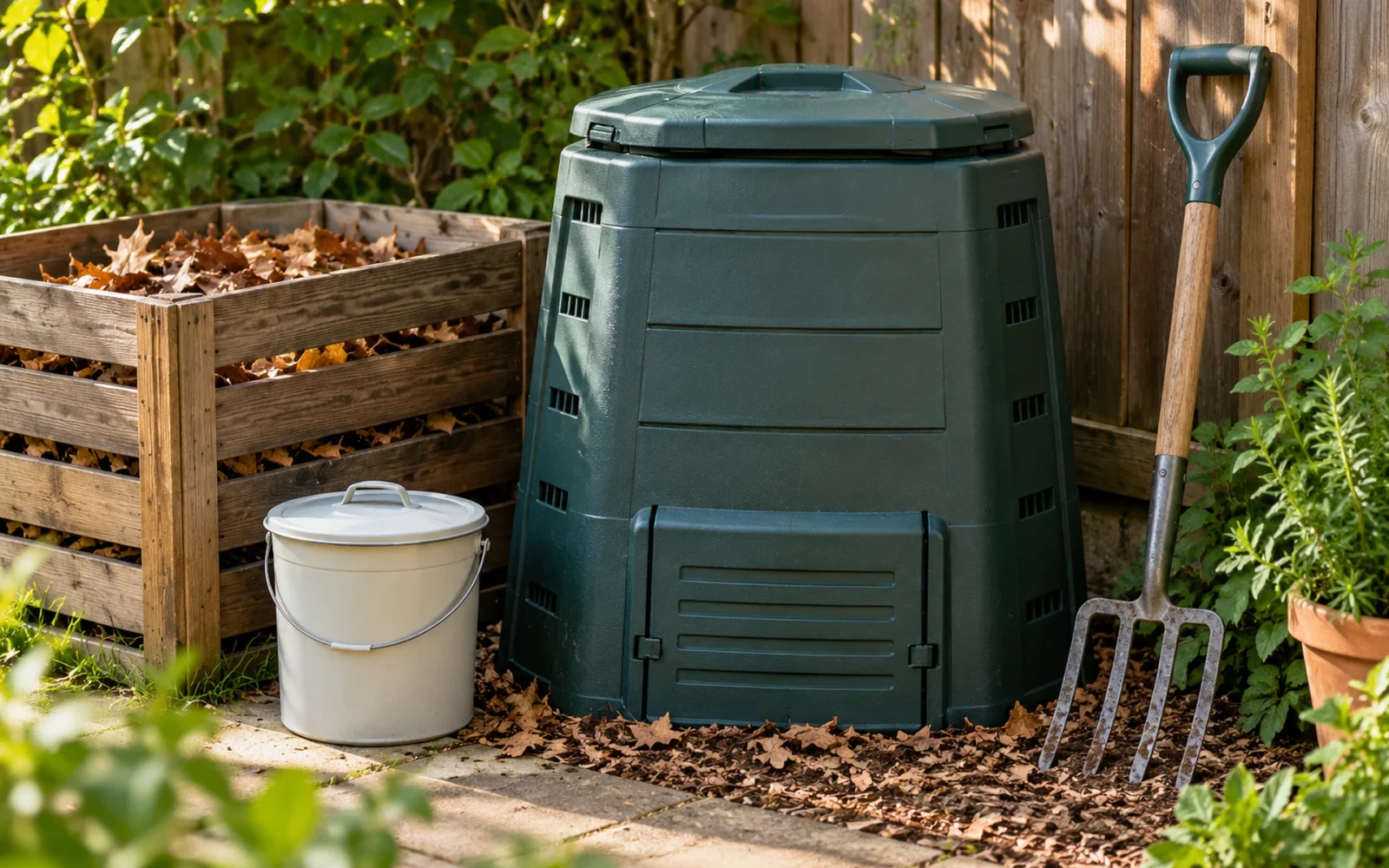
Healthy compost generally has a mild earthy smell. Strong sour, rotten, or ammonia-like odors usually mean the inputs or conditions need attention. Check moisture, compaction, recent additions, and where the smell is coming from before adding anything to fix it.
A temporary smell from fresh trimmings is different from a persistent odor spreading from a wet pile. And a countertop pail of stored scraps is not the same thing as an active compost system.
Find the container that needs attention
Inspect the kitchen pail, outdoor pile or tumbler, and any liquid collection area separately. The source can be a film left around a lid, food sitting in a puddle, or a dense pocket inside an otherwise reasonable pile.
For a collection pail, empty it to the appropriate destination, clean and dry it according to its care instructions, and shorten the storage interval. A carbon filter does not stop scraps decomposing or remove the need to clean the rim.
For active compost, open a small area and inspect the material itself. Are the ingredients loose or compressed? Does it drip, or contain a dry center beneath a wet top? What changed before the odor appeared?
Use the smell as a clue, alongside the material
| What you notice | What to investigate | Useful first correction |
|---|---|---|
| Sour smell with a heavy wet mass | Too much moisture, compressed food, poor airflow | Pause wet additions, loosen the mass, and mix in suitable dry browns |
| Rotten or sulfur-like odor | Airless pockets, standing water, unsuitable inputs | Inspect inside and improve structure and moisture conditions |
| Ammonia-like odor after lots of grass or other greens | A nitrogen-heavy mixture, often with compaction | Add appropriate carbon-rich material and redistribute the ingredients |
| Rotting-food smell near the surface | Exposed food or more scraps than the system can process | Correct the feeding amount and incorporate or cover suitable scraps |
Smell alone cannot prove a diagnosis. University of Maryland Extension’s troubleshooting guidance links unpleasant odors with excess moisture or greens and recommends suitable browns and aeration. It also identifies ammonia as a reason to check the carbon balance.
Recover the pile in a controlled sequence
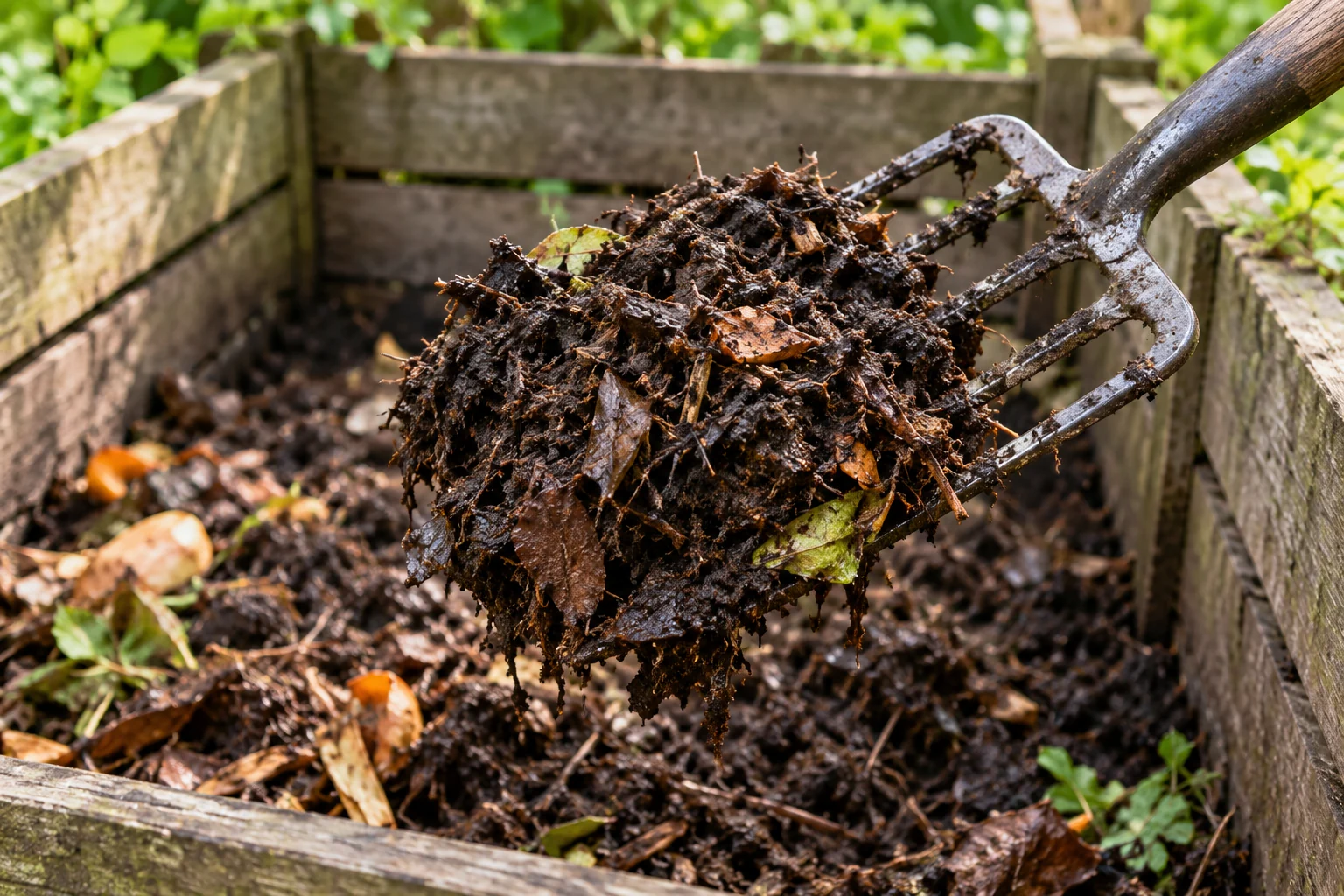
- Pause the additions causing overload. Hold the next wet scraps or grass clippings in another appropriate route while you inspect.
- Check for unsuitable contents. Remove an accessible problematic input where appropriate. Do not spread a batch containing unknown chemicals or pet waste as ordinary garden compost.
- Break apart dense pockets. Open matted grass, compressed paper, or food clumps so a correction can reach the inside.
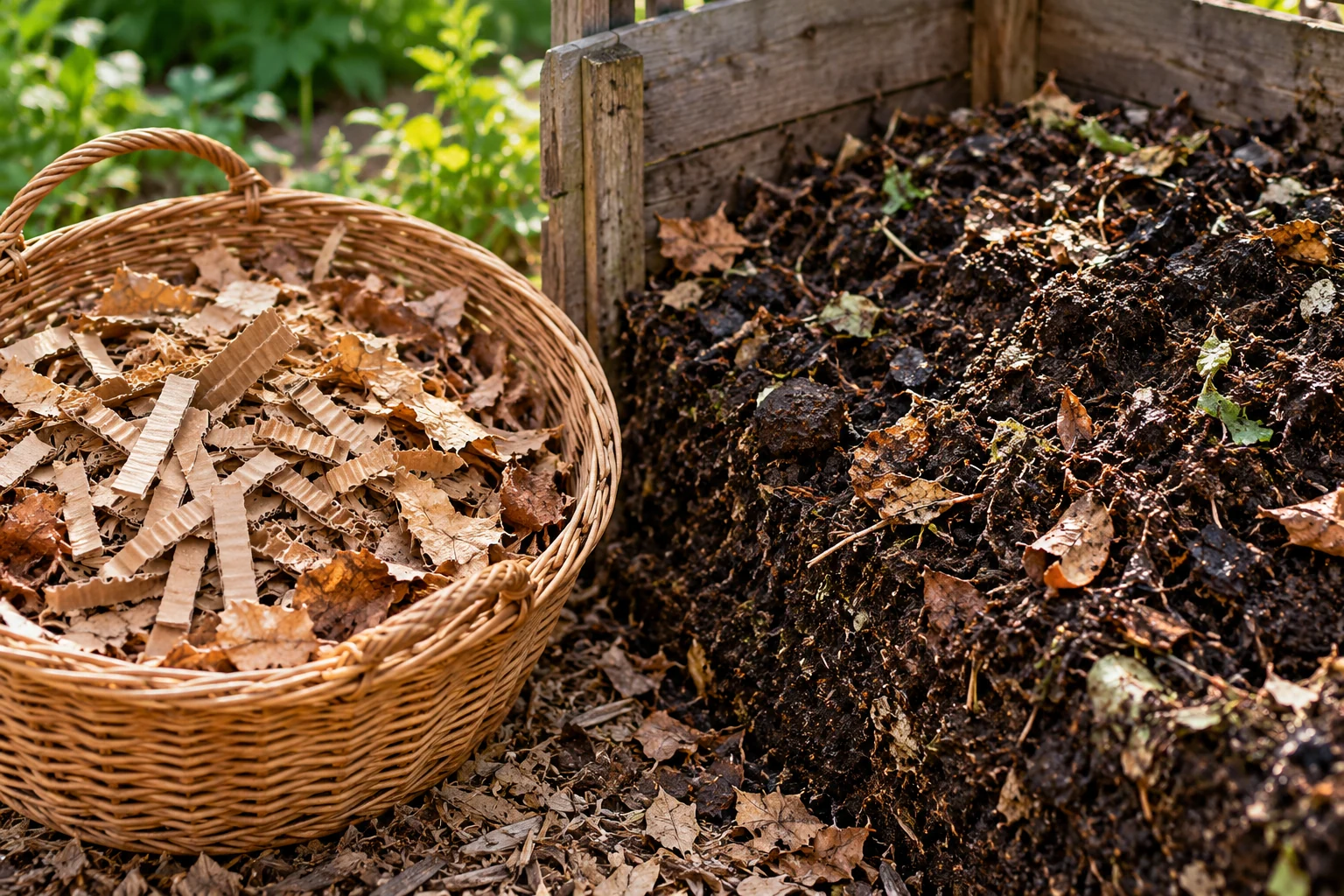
- Add appropriate dry material gradually. Shredded plain cardboard, dry leaves, or other suitable browns can help absorb moisture and improve the mixture.
- Mix through the affected material. A dry cap over a soggy center may hide the problem without fixing it.
- Recheck conditions. Observe moisture, texture, and odor before deciding whether another correction is needed.
A wet pile and a dry slow pile should not receive the same intervention. Do not add water just because turning is part of your usual compost routine.
Check where the extra water comes from
Heavy rain, a leaking lid, a downspout, poorly drained ground, or very wet inputs can keep recreating the problem. Correct that source as well as the material already inside.
A cover can reduce unwanted rain while the system still needs ventilation. Sealing an aerobic pile airtight to contain the smell can make the underlying air problem worse. A tumbler also needs its vents and drainage arrangements kept clear according to the manual.
Manage any leachate appropriately. Do not assume drainage from unfinished scraps is a useful liquid fertilizer simply because it came from a compost container.
Why deodorizing powders miss the main job
Vinegar, essential oils, scented products, and a sprinkling of household powder do not create the air spaces or ingredient balance a wet compacted pile needs. They can also introduce another unknown into the mixture.
Choose a process correction first. The same principle applies indoors: clean and empty a collection pail rather than adding perfume, and adjust worm-bin bedding and feeding rather than treating it as a rubbish container.
Prevent a repeat without chasing a perfectly odorless bin
Keep dry browns available, distribute ingredients rather than dumping thick layers, and check moisture after unusual weather or a large addition. Match the feeding amount to the working system.
Cover suitable fresh food rather than leaving it exposed, and close the container as its design requires. Ordinary biological material can have a noticeable smell at close range; the useful goal is a well-managed system without persistent strong off-odors.
There is no reliable number of hours in which every bad smell disappears. The response depends on the cause and how thoroughly you corrected it. If the odor persists, inspect another part of the pile and the incoming materials before adding a second round of remedies.

Ethan Miller
Ethan Miller writes about home improvement, interior design, cleaning, and everyday living at Home & Living Daily. He shares practical tips and simple ideas to help readers create more comfortable and functional homes.