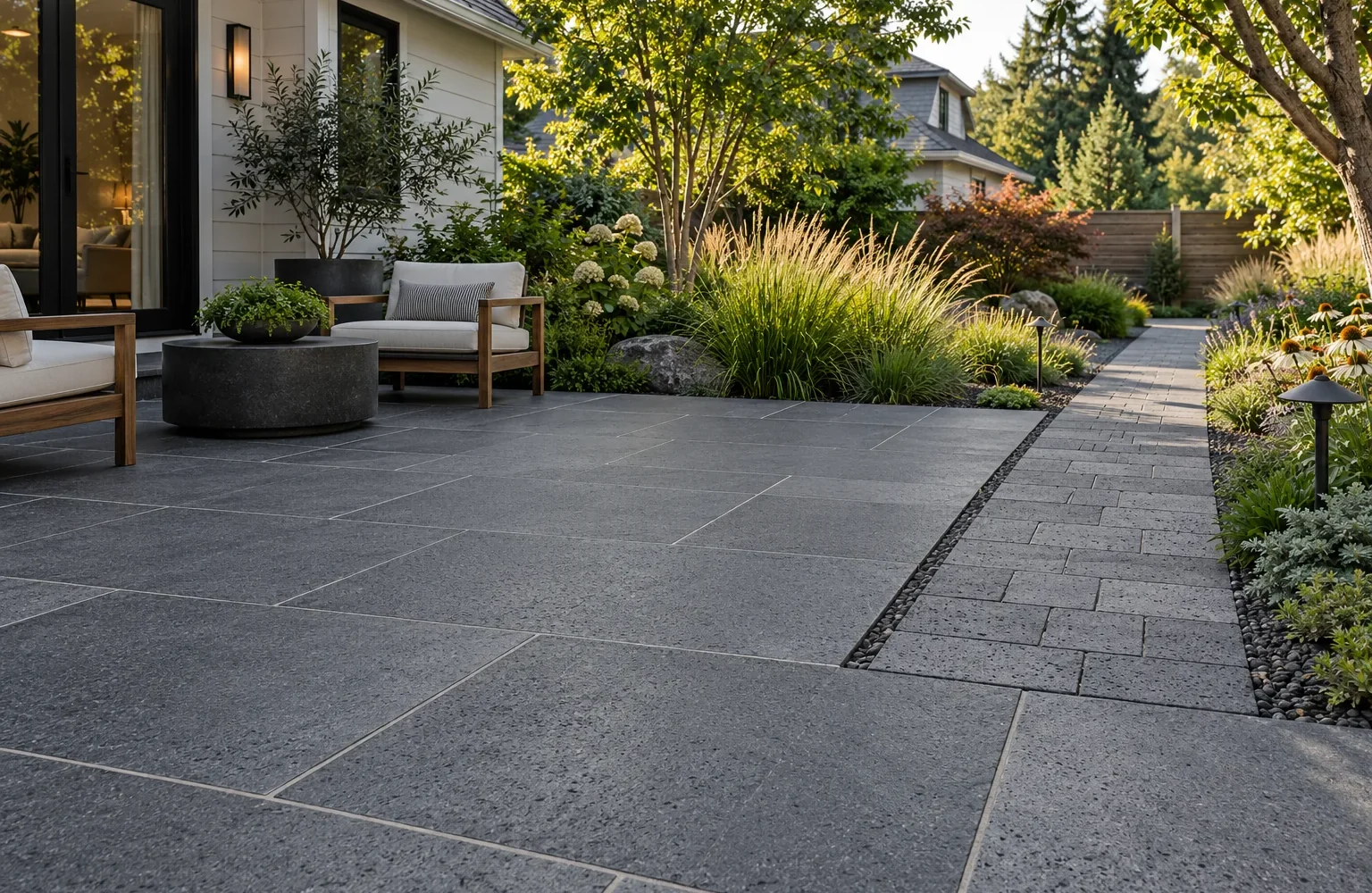
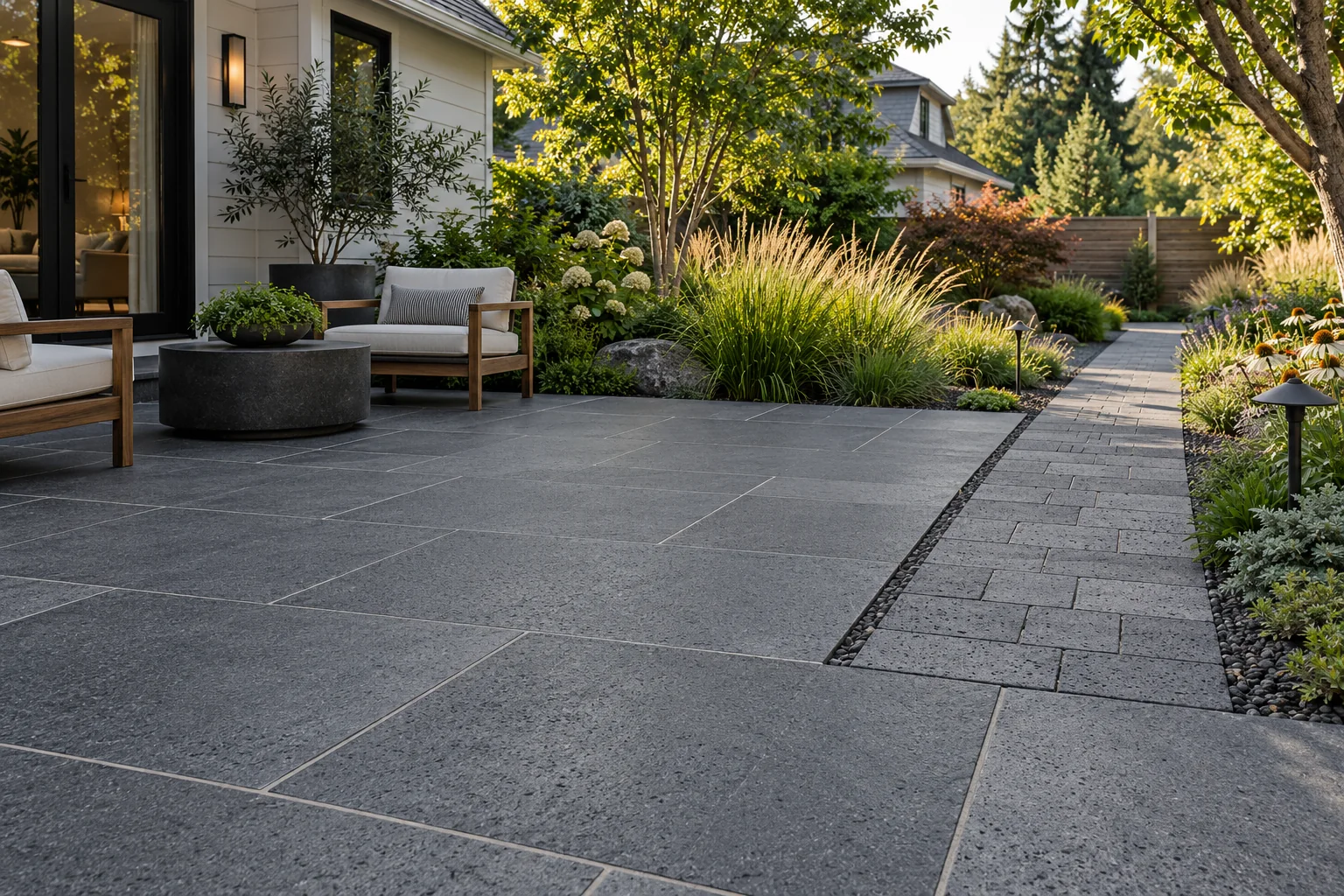
For a patio, choose outdoor-rated lava stone (usually sold as basalt or volcanic stone) in a finish and format that suit furniture, drainage, and the installation base. For a walkway, put traction, even edges, and reliable footing first. The stone itself does not change between those uses; the format, surface finish, layout, and site preparation do.
“Lava stone” is not one uniform product category. Some sellers use it for dense basalt, while others use it for glazed volcanic tiles or specific manufactured finishes. A polished sample may look beautiful but be a poor wet walking surface, and a stone that works in a mild climate may not be suitable where water freezes. Compare the exact product data sheet and intended installation method before ordering.
Patio and Walkway Lava Stone: What Changes?
Both areas need exterior-suitable stone and a stable installation. The difference is what the surface must do most often: a patio supports stationary furniture and gathering, while a walkway carries repeated foot traffic along a predictable route.
| Decision | Patio priority | Walkway priority |
|---|---|---|
| Surface texture | Comfortable beneath chairs and bare feet, while still suitable when wet | Dependable traction in the actual weather and footwear conditions |
| Piece size | Larger slabs can create a calmer field and fewer joints if the base supports them | Manageable pavers or slabs that stay level and are easy to replace |
| Layout | Plan around furniture, door thresholds, and outdoor dining zones | Plan a clear route with consistent width, firm edges, and minimal trip points |
| Drainage | Move water away from the home and avoid ponding below furniture | Prevent low spots that hold water, algae, or winter ice |
| Wear and maintenance | Expect chair movement, grill grease, food spills, and planter marks | Expect concentrated traffic, soil, leaf litter, and more frequent cleaning |
First, Confirm What the Seller Means by Lava Stone
Basalt is a fine-grained igneous rock formed from cooled lava, but “lava stone” can also be used commercially for distinct products, including glazed lava. Their colors, porosity, thicknesses, finishes, and tested performance can differ. Do not transfer one product’s claims to another stone simply because both are described as volcanic.
Ask for the quarry or product name, exact finish, thickness, recommended use, and current technical sheet. For outdoor paving, useful evidence can include absorption and density, abrasion or strength data for the intended traffic, freeze-thaw results where relevant, and a slip-resistance test for the actual finish. The Natural Stone Institute lists separate test methods for properties such as absorption, abrasion, freeze-thaw durability, and dynamic coefficient of friction; ask which data apply to the exact product you are buying.
How to Choose Lava Stone for a Patio
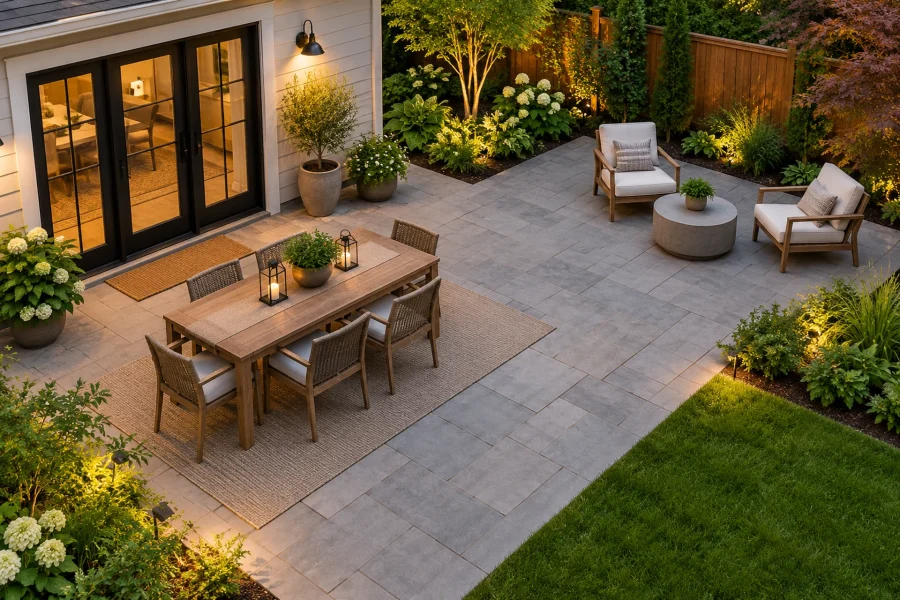
Patios are broad, relatively open surfaces. Larger pieces can make a dining or seating area feel continuous and reduce the number of joints, but the paver still needs adequate thickness and support for its format. A thin tile intended for a bonded assembly is not automatically interchangeable with a thicker paver set on an aggregate base or pedestal system. Follow the product’s stated use and installation details.
Think about how the surface will feel where you actually use it. A deep, sharp texture can catch chair feet and collect debris; a very smooth finish can be uncomfortable to trust when wet. Bring home full-size samples and test them underfoot when dry and damp. If the patio includes a pool, outdoor shower, or frequently wet dining area, ask for slip data for the installed finish and conditions rather than relying on a general “non-slip” label.
Plan the pattern around the house and furniture. Square or rectangular modules are easy to align with a wall or threshold, while mixed sizes can suit a more informal garden setting. Use enough joints and movement accommodation for the selected system, and keep the layout from creating narrow slivers at doors or edges. Coordinate any transition to wood decking, concrete, or indoor flooring before installation begins.
How to Choose Lava Stone for a Walkway
On a path, footing and continuity matter more than a seamless visual field. Choose a finish with tested traction for the expected wet conditions. Flamed, bush-hammered, or other textured finishes are common options, but the finish name alone does not establish a performance rating. Deep texture can also hold dirt or organic growth, so include cleaning in the decision.
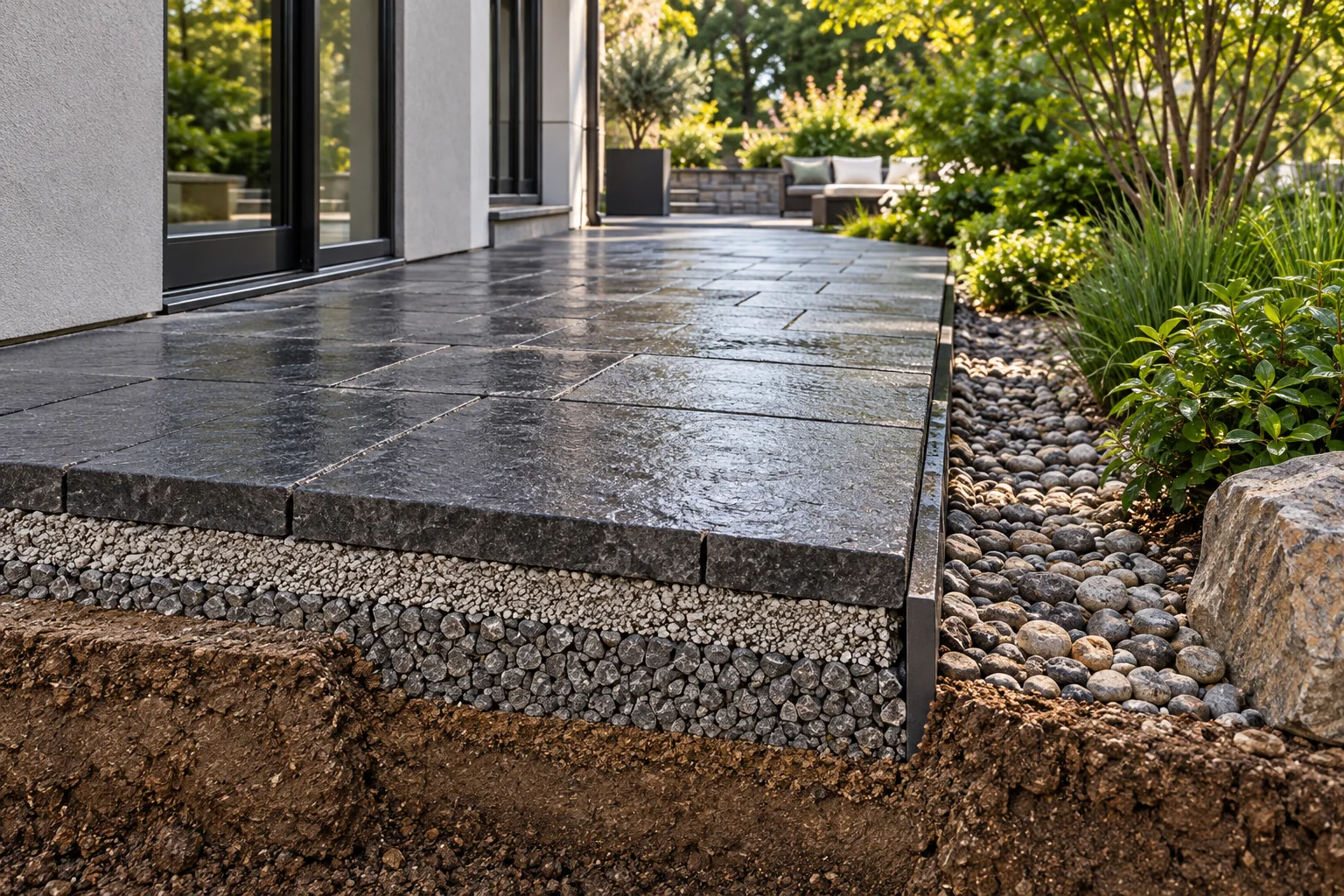
Keep the walking line stable and predictable. Set pavers on a compacted, well-draining base appropriate for local soil and use, restrain the edges, and avoid rocking units or abrupt height changes. A narrow stepping-stone path can look relaxed, but it may be less comfortable for guests, children, or people who use mobility aids than a continuous, firm surface. If accessibility is a goal, consult applicable local requirements and a qualified designer; required pedestrian routes have specific criteria beyond choosing a stone finish.
Make the route easy to follow in rain and at night. Avoid glossy surfaces, loose pieces, and joints that widen or wash out. Check the path after installation and after the first heavy rain; water should not collect in the walking line, and adjacent soil or mulch should not spill onto the surface.
Compare Common Lava Stone Finishes
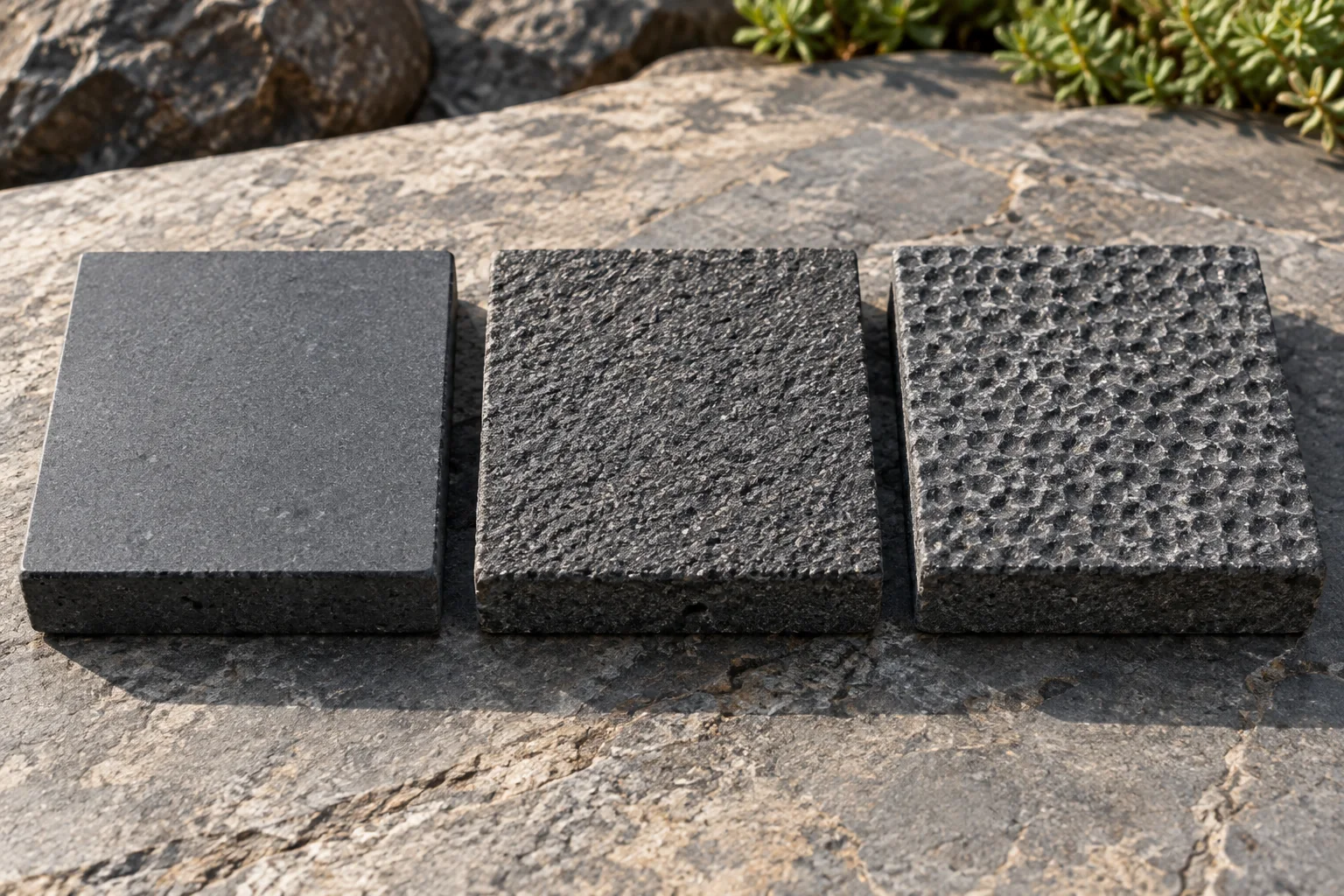
| Finish | Appearance and feel | What to check outside |
|---|---|---|
| Honed | Matte and relatively smooth | Ask for wet-use slip results; smoother surfaces may need extra caution in exposed or damp locations |
| Polished | Reflective and visually rich | Usually a poor default for a wet walking route unless product-specific evidence supports the use |
| Flamed or thermal | Heat-treated texture with a rougher, matte appearance | Check traction data, comfort, and whether the texture is practical to clean |
| Bush-hammered | Evenly dimpled, tactile surface | Compare actual samples; tool pattern and depth vary by producer |
| Tumbled or natural split | More irregular, aged character | Check thickness variation and edge height so irregularity does not become a trip issue |
| Glazed lava | Colorful or glossy glass-like surface over a volcanic body | Verify exterior floor approval, slip rating, freeze-thaw suitability, and installation instructions for that glazed product |
One finish can serve a patio and walkway if it meets the needs of both locations, but it does not have to. Some projects use a comfortable patio finish and a more textured path finish in coordinated tones. Confirm that the products work together in thickness, edge detail, and installation method.
Climate and Installation Matter as Much as the Stone
In a freeze-thaw climate, water trapped in or beneath paving can contribute to cracking, spalling, or movement. Ask the supplier for test results for the exact stone and finish, then have the installer specify the base or bonded assembly, drainage, jointing, and edge restraint for your soil, exposure, and local conditions. “Weather resistant” is not a substitute for documented suitability for repeated freezing and thawing.
For adhered tile or stone work outdoors, the full assembly must account for moisture, movement, substrate, drainage, and materials compatible with exterior exposure. The Ceramic Tile Education Foundation notes that movement joints need to be addressed in wet interior and exterior tile installations. Have a qualified installer follow a recognized installation method and the manufacturers’ instructions; do not assume an indoor thin-set detail is adequate outdoors.
Drain water away from the house and from walking surfaces. Discuss slope, thresholds, downspouts, and where runoff will go before setting stone. A product that performs well as a standalone slab can still fail when the base, joints, or water management are wrong.
Before You Buy: Ask These Questions
- What exact stone or product is this, and is it natural basalt, another volcanic stone, or glazed lava?
- Is this specific thickness and finish approved for exterior paving and the intended foot traffic?
- Can you provide current absorption, abrasion or strength, freeze-thaw, and slip-resistance data that apply to this exact product?
- What base or bonded installation method, joint materials, movement joints, and edge restraints does the manufacturer require?
- Does the recommended sealer alter the color or traction, and what cleaning products should be avoided?
- Can I inspect multiple pieces from the intended batch and a full-size sample after wetting it?
- How will the installer manage slope, drainage, thresholds, and transitions to adjoining surfaces?
Order a little extra from the same batch for cuts and future repairs, with the quantity confirmed by the installer. Keep the product sheet, batch information, and care instructions with your home records.
Frequently Asked Questions
Are lava stone tiles the same as basalt tiles?
Not always. Basalt is a volcanic rock, while “lava stone” can also be used for other natural or glazed products. Check the product identity and technical data rather than assuming all lava stone has the same properties.
Is lava stone slippery when wet?
It depends on the stone, finish, contamination, and conditions. A polished or honed finish may behave differently from a textured finish. Ask for a slip-resistance test result for the exact product and intended use.
Can I use the same stone on my patio and walkway?
Often, if it is rated for both applications and the finish is suitable for wet foot traffic. You may still choose different sizes or textures for comfort, drainage, and the visual distinction between a gathering area and a route.
Will lava stone hold up in freezing weather?
Some volcanic stone products are suitable for freeze-thaw exposure, but the label “lava stone” alone does not prove that. Request product-specific test data and use an installation designed to drain water.
Does lava stone need to be sealed?
Care depends on the exact stone, finish, and sealer. Ask the supplier whether sealing is recommended, whether it changes the appearance or traction, and which maintenance products are compatible.
Choose for the Way You Use the Space
For a patio, compare comfort, format, furniture use, and drainage. For a walkway, prioritize dependable traction, stable edges, and a continuous route. In both places, verify the identity and performance of the exact lava stone product and get the installation plan in writing. Those details tell you far more than the product name alone.
Sources and Further Reading
- Natural Stone Institute: Natural Stone Testing Services
- Natural Stone Institute: ASTM Standards and natural stone performance
- Ceramic Tile Education Foundation: What Do You Need to Install Tile in Wet Areas?
- Ceramic Tile Education Foundation: Homeowner’s Guide to Hiring a Qualified Tile Installer
- Pyrolave: Product data sheet describing distinct natural and glazed lava applications

Ethan Miller
Ethan Miller writes about home improvement, interior design, cleaning, and everyday living at Home & Living Daily. He shares practical tips and simple ideas to help readers create more comfortable and functional homes.