A concrete patio’s cost starts with its area and finish, then changes with the work needed to prepare the site. As a planning reference, Concrete Network’s 2026 guide lists plain designs at $5 to $8 per square foot and more decorative work at higher rates. That is a starting point for discussing a project, not a complete quote for an unknown yard.
When comparing prices, ask which number includes excavation, demolition, base preparation, drainage, and access. Two estimates can use the same square footage and still describe very different jobs.
Measure the patio before choosing a budget range
Multiply length by width to find the area of a rectangle. A 12-by-16-foot patio is 192 square feet. A 15-by-15-foot patio is 225 square feet, and a 20-by-20-foot patio is 400 square feet. For an irregular shape, divide the plan into smaller shapes or have the installer measure the finished area.
Do not add a roof, a path, or a set of steps to the patio area unless the quote specifically includes them. A patio slab and a patio cover are separate projects, even when a search result uses similar wording.
Use finish prices on a consistent basis
Concrete Network’s January 2026 guide gives the following design tiers. The example totals below simply multiply those rates by 192 square feet; they are not contractor bids.
| Design tier in the guide | Published rate per square foot | 12-by-16-foot arithmetic example |
|---|---|---|
| Plain, without decorative color or finish | $5 to $8 | $960 to $1,536 |
| Simple decorative treatment | $8 to $11 | $1,536 to $2,112 |
| Custom treatment or contrasting detail | $11 to $18 | $2,112 to $3,456 |
| Elaborate decorative work | $18 and up | $3,456 and up |
A small job may have a minimum charge, so its total does not necessarily follow a large project’s unit rate. Your location, chosen product, and site preparation can also put a local quote outside a published range.
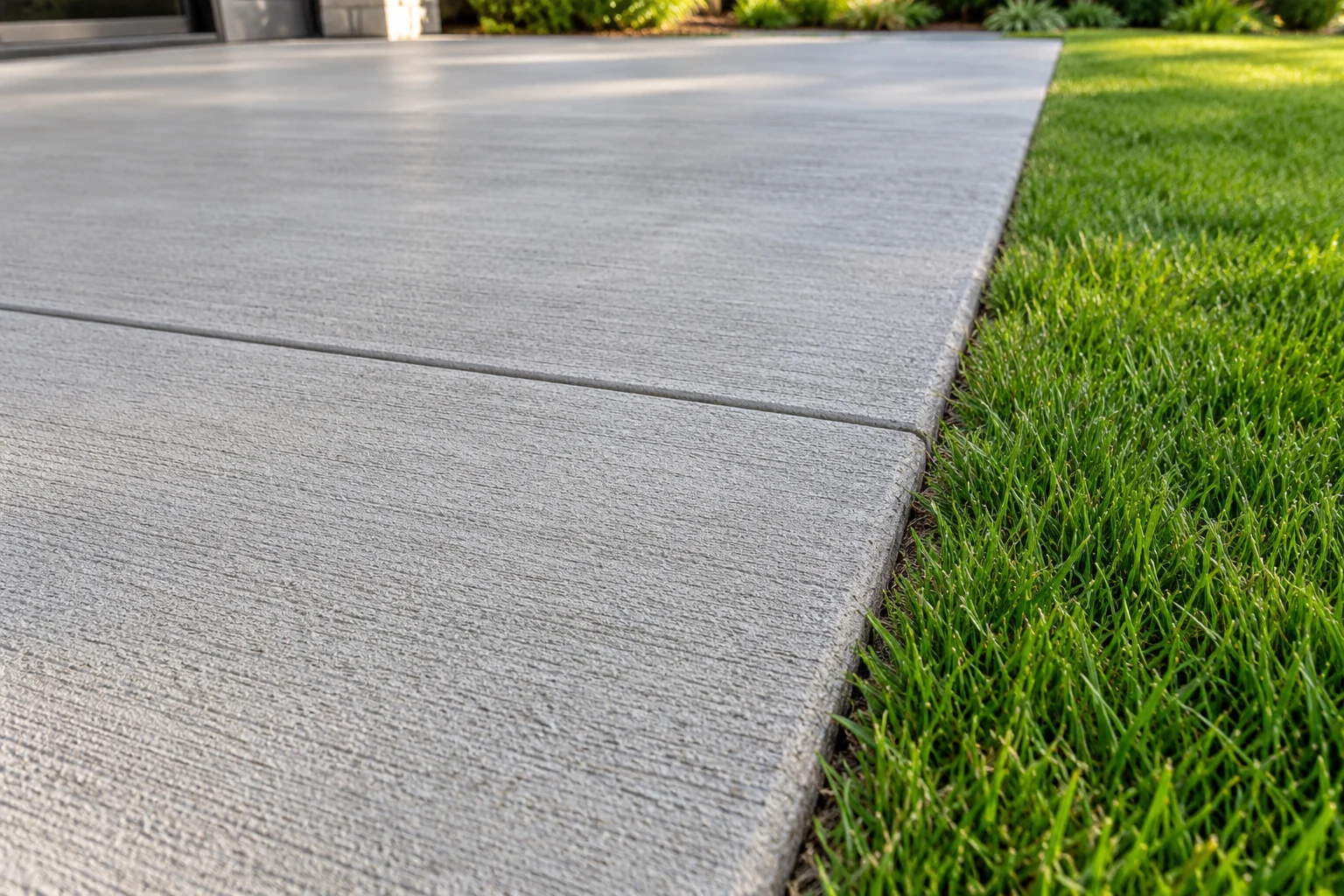
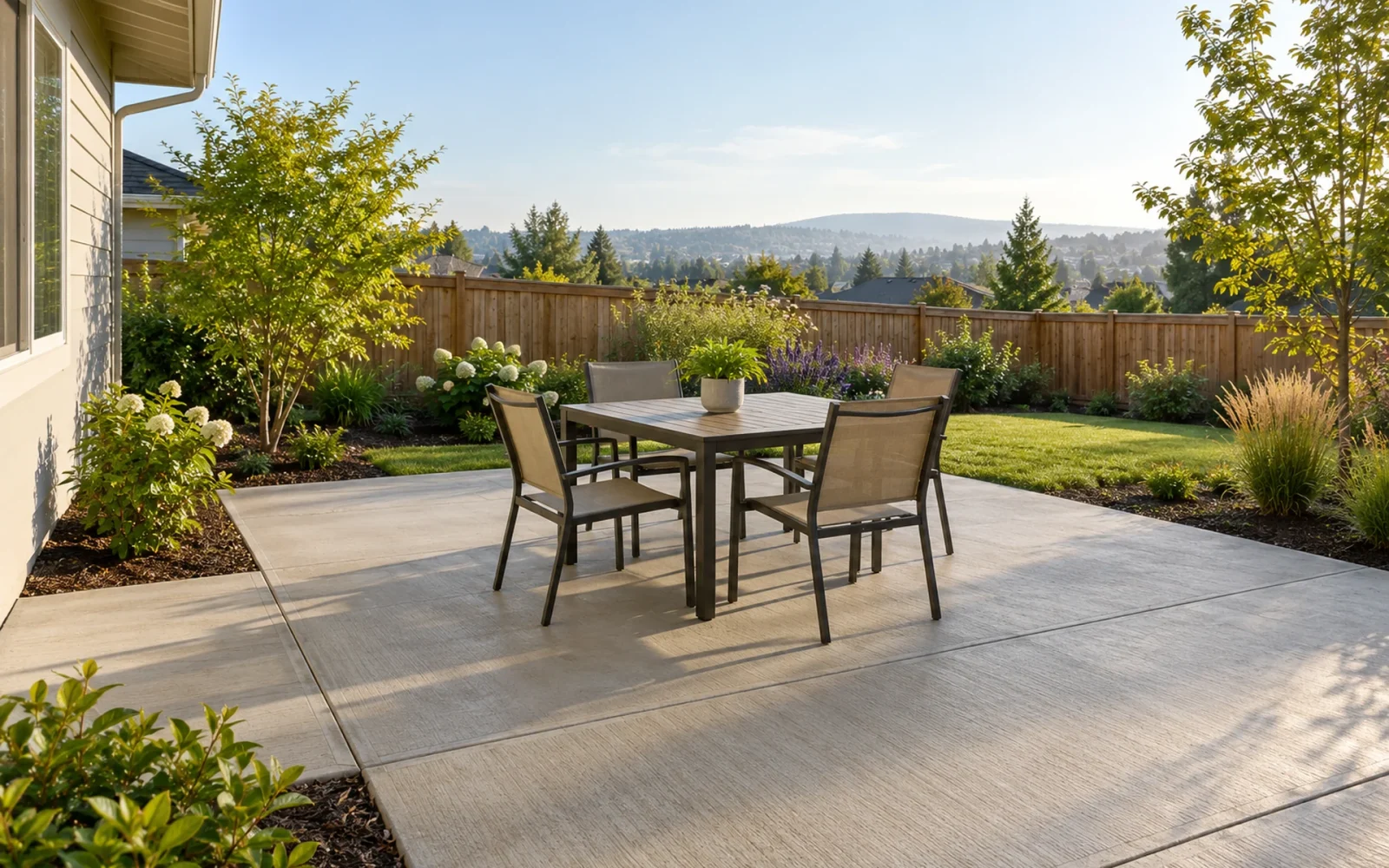
A broom finish provides surface texture without a stamped pattern. Stamping, coloring, borders, and more complex geometry add different operations and appearance choices. Ask to see actual examples from the installer, including joints and edges, rather than choosing from a close-up pattern photograph alone.
Check what “installation” leaves out
Homewyse’s May 2026 concrete-patio estimate starts at $10.30 to $12.64 per square foot for its specified basic installation. Its labor description excludes excavation, a gravel base layer, compaction, and hardscape demolition. That makes its scope important to the price, rather than just a higher or lower version of another guide’s number.
Use a local proposal to establish what your yard requires. The items most likely to change the complete budget include:
- Removal: breaking up an old slab, loading it, and disposing of it.
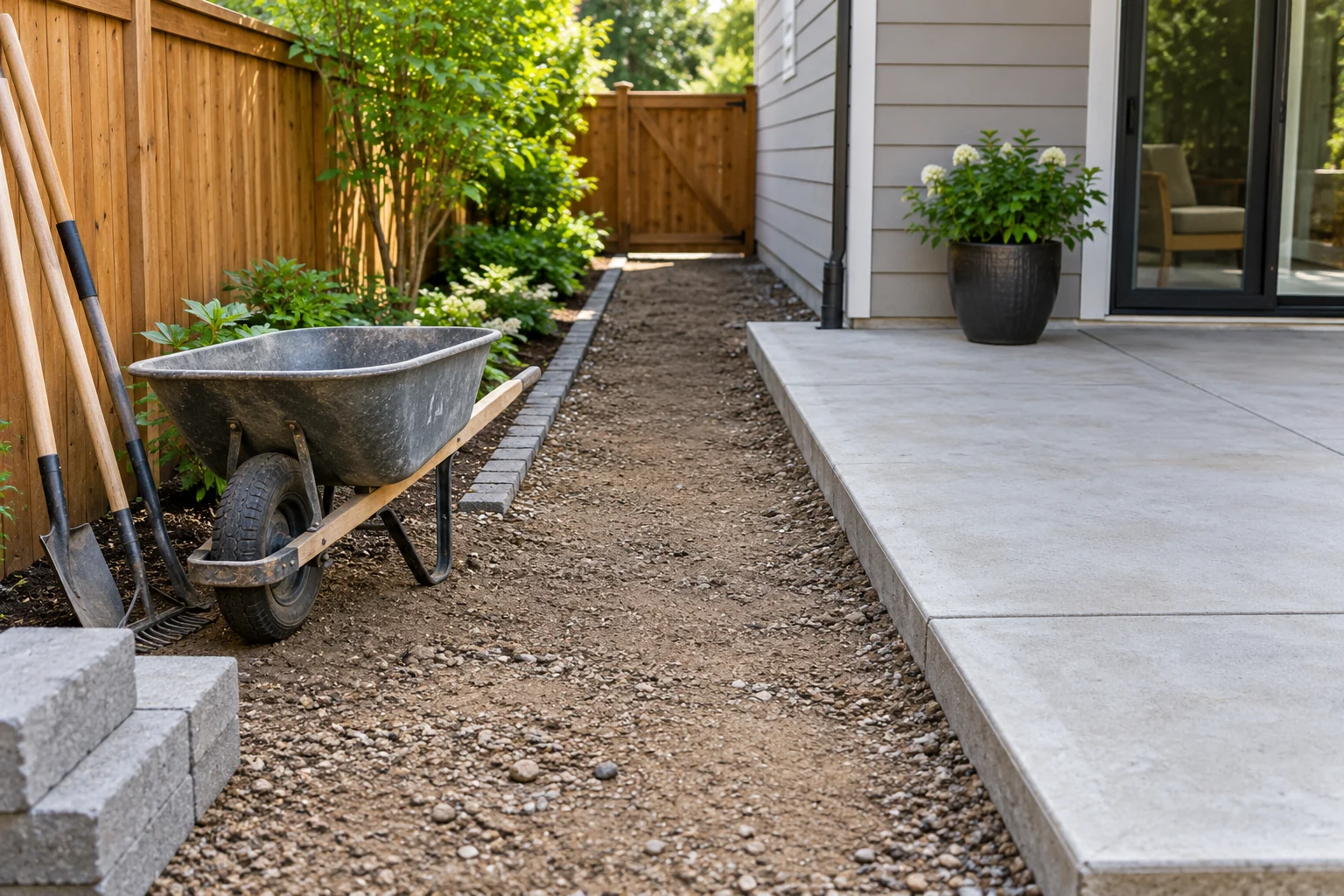
- Ground preparation: excavation, unsuitable-soil removal, specified base material, and compaction.
- Access: moving equipment and concrete through a narrow route or arranging pumping where needed.
- Levels and drainage: coordinating the surface with doors, adjacent ground, and a route for water.
- Finish and edges: color, stamping, curves, borders, and separate steps.
- Completion: cleanup, adjoining landscape repair, any specified sealer, and required fees.
The installer should determine the slab and base design for the site and intended use. Do not select thickness or reinforcement solely by taking the cheapest detail from a general cost calculator.
Compare a base bid with its extras
Suppose one installer quotes $4,800 for a complete 400-square-foot plain patio, with demolition priced separately at $1,000. The combined amount is $5,800. The slab package works out at $12 per square foot; the total with demolition is $14.50 per square foot. These are illustrative figures showing how to read a quote, not a suggested local price.
If another contractor’s $5,400 price includes demolition, compare that with $5,800, after checking the remaining scope. Comparing $5,400 with the first contractor’s $4,800 headline would hide the difference.
Do not add another labor allowance to an installed package that already includes labor. Conversely, a concrete-material delivery price does not include the crew, forms, finishing, or the ground work simply because it is measured in cubic yards.
Where reducing scope can help
A simpler outline, fewer decorative treatments, and a carefully sized usable area can reduce work. Test the furniture footprint before enlarging the slab: occupied chairs and the route from the house determine useful space better than a drawing of an empty rectangle.
Keep essential drainage and ground preparation in the design. If the budget is tight, price the plain version first, then ask what an optional border or color treatment adds. A smaller well-planned patio can be a more workable choice than a large surface built around omitted site work.
Send the same measured plan, access photographs, existing-surface details, and finish preference to local installers. Ask for clear inclusions, exclusions, allowances, and change terms. Those written proposals will give you a usable budget for your yard.

Ethan Miller
Ethan Miller writes about home improvement, interior design, cleaning, and everyday living at Home & Living Daily. He shares practical tips and simple ideas to help readers create more comfortable and functional homes.