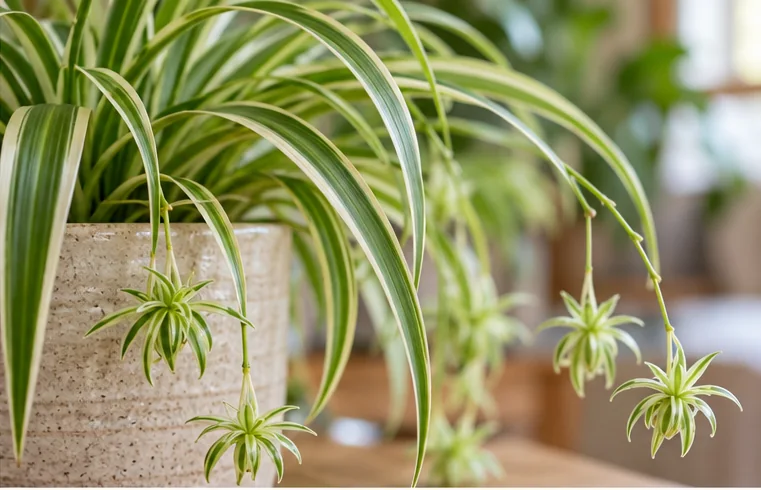
No. The spider plant (Chlorophytum comosum) is listed by the ASPCA as non-toxic to dogs. If your dog took a small nibble from a correctly identified spider plant, the plant itself is not considered poisonous. Still, eating leaves, potting mix, or plant-care products can upset a dog’s stomach or create a separate hazard, so check what was swallowed and watch your pet.
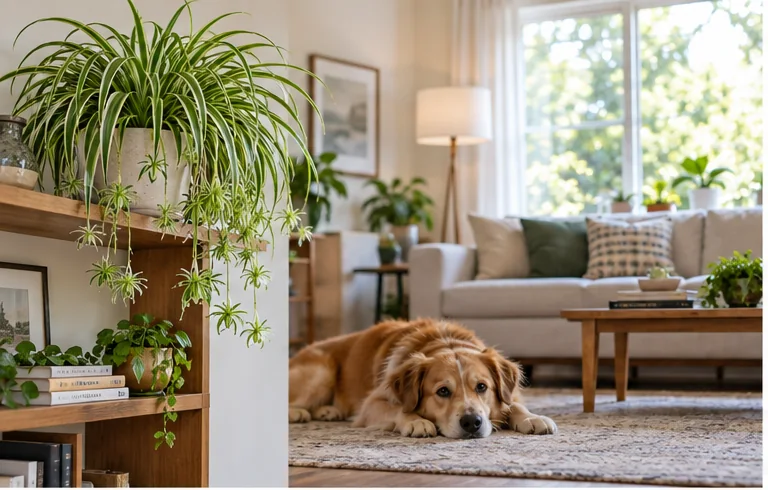
Are spider plants safe for dogs?
The ASPCA’s plant-specific entry identifies spider plant by its scientific name, Chlorophytum comosum, and classifies it as non-toxic to dogs and cats. The ASPCA’s dog plant list also places spider plant among plants non-toxic to dogs. That is the most directly relevant reference for this question.
You may find an older ASPCA article that groups spider plants with mildly toxic houseplants. That conflicts with the current plant-specific listing and dog list. Because plant databases and articles can differ, use the current entry for the correctly identified species—and contact a veterinarian or animal poison-control service if the plant is uncertain or your dog has symptoms.
What if your dog ate a spider plant?
If you are confident it is a spider plant and your dog seems well, take these practical steps:
- Move the pot and any fallen leaves or plantlets out of reach.
- Check whether your dog also ate potting mix, fertilizer, pesticide, a plant label, or pieces of the pot. Those exposures need separate attention.
- Keep the plant label or take a clear photo so you can confirm the species. Common names are easy to confuse.
- Observe your dog and note any change in appetite, energy, or digestion.
Do not induce vomiting or give home remedies unless a veterinarian tells you to. If your dog ate a large amount, has an existing health condition, or you are unsure what was swallowed, call your veterinarian for advice.
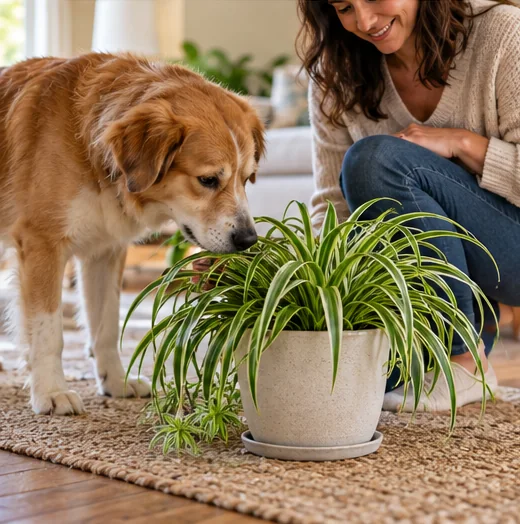
Can eating spider plant leaves make a dog sick?
“Non-toxic” means the plant is not listed as poisonous; it does not mean it is food. Chewing and swallowing plant material can irritate digestion, and a large amount of any fibrous foliage may lead to stomach upset. Vomiting or loose stool can also have causes unrelated to the plant, so avoid assuming the plant is responsible or harmless if your dog appears unwell.
Call your veterinarian promptly if vomiting or diarrhea is repeated, persistent, or accompanied by marked lethargy, weakness, pain, refusal to drink, or another worrying change. Seek urgent veterinary care for trouble breathing, collapse, seizures, or severe weakness. If poisoning is possible, the ASPCA Animal Poison Control Center is available 24/7 at (888) 426-4435; a consultation fee may apply.
Make a spider plant harder for your dog to reach
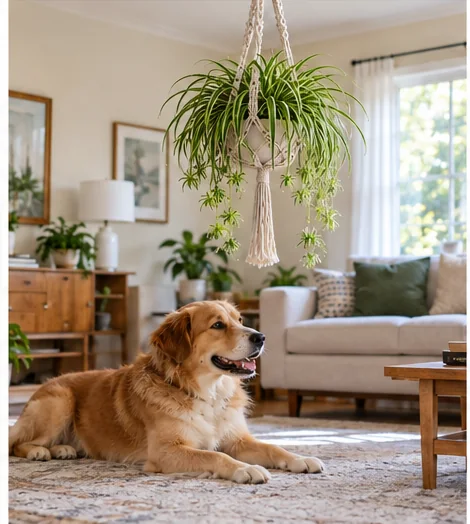
Even a plant listed as non-toxic can be chewed, knocked over, or mixed with soil and products. Put the pot on a stable high shelf or in a hanging planter beyond your dog’s reach, secure trailing stems, and clean up fallen plantlets. If your dog repeatedly chews greenery, use a closed room or sturdy barrier when you cannot supervise and offer appropriate enrichment. Do not rely on a plant’s toxicity classification as the only safety measure.
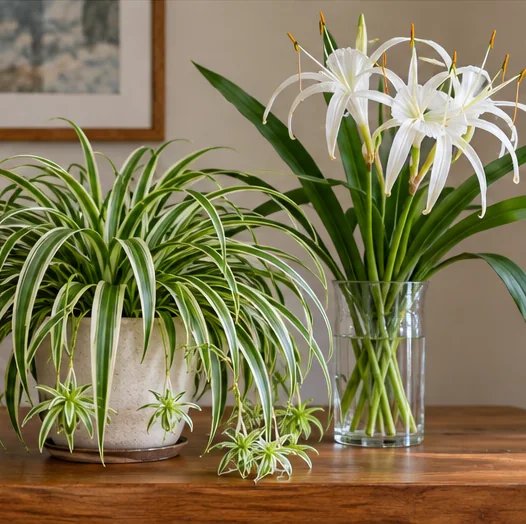
Is a spider plant the same as a spider lily?
No. A spider plant is Chlorophytum comosum, a leafy houseplant. “Spider lily” is a common name used for different flowering plants, so do not assume it shares the spider plant’s safety classification. Identify the plant by its scientific name or ask a veterinarian or poison-control professional to help identify it before deciding what to do.
The short answer
Spider plants are listed as non-toxic to dogs by the ASPCA. A small nibble from a confirmed spider plant is not generally a poisoning emergency, but keep the plant out of reach, check for soil or product ingestion, and contact a veterinarian if symptoms develop or the plant identity is uncertain.
This article provides general information, not a diagnosis or treatment plan for an individual dog. Your veterinarian or an animal poison-control professional can assess a specific exposure.

Ethan Miller
Ethan Miller writes about home improvement, interior design, cleaning, and everyday living at Home & Living Daily. He shares practical tips and simple ideas to help readers create more comfortable and functional homes.