A memorial garden can be as simple as a favorite flower in a pot beside a small stone, or as spacious as a planting bed with a place to sit. Start with one personal connection, a spot you can comfortably visit, and plants suited to the conditions. You can add more over time.
The ideas below focus on remembrance spaces at home: a balcony container, a quiet corner, an existing flower border, or a small backyard retreat. There is no required size, color scheme, or memorial object. Choose what reflects the person you are remembering and what you can realistically care for.
Choose a memorial garden that fits your space
Before buying anything, decide how you want to use the garden. Would you like to see it from the kitchen window, pause beside it on a daily walk, or sit there with another person? That answer matters more than making room for every decorative feature.
| Your space or priority | A practical starting idea | What to plan for |
|---|---|---|
| Balcony, doorstep, or rental | One planted container and a movable marker | Watering, drainage, permitted loads, and moving the pot |
| Small backyard corner | A compact flower bed with one focal stone | Mature plant spread and access for weeding |
| A place for regular visits | A chair or bench facing a planted border | A firm surface, a comfortable approach, and shade when needed |
| Limited budget or energy | Dedicate part of an existing garden | One meaningful addition rather than new construction |
| Remembering a gardener or nature lover | Favorite flowers or regionally appropriate native plants | Local growing conditions and seasonal care |
Visit the possible spot at different times of day. Notice sun, damp ground, wind, nearby noise, and the route from the house. A secluded corner can look appealing but may be harder to reach or maintain than a border beside a familiar patio.
Memorial garden ideas to make your own
Create a portable remembrance planter
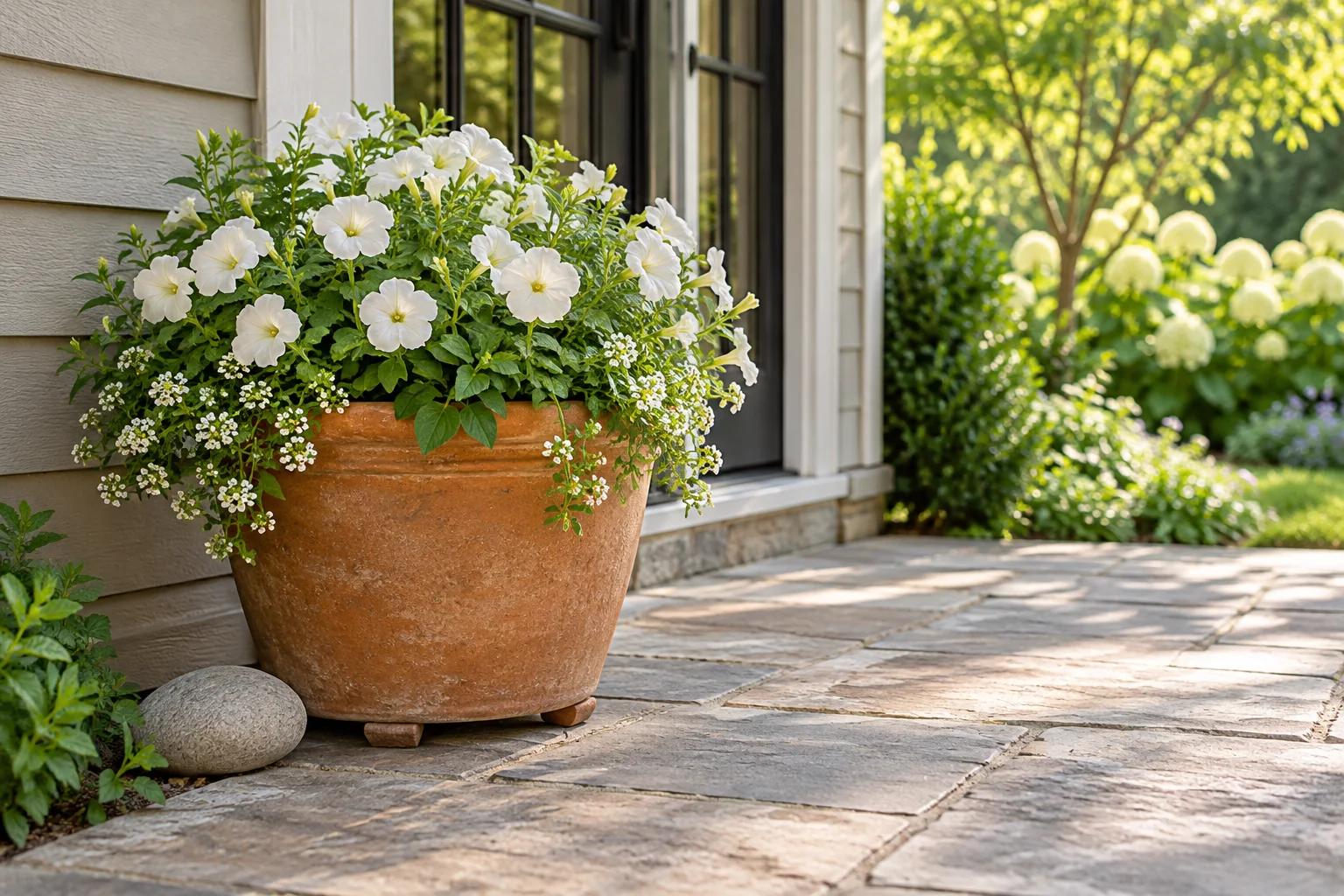
Choose a container with drainage holes, a suitable potting mix, and a plant you enjoy seeing close up. Place a small freestanding marker beside it, or tuck a weather-resistant name tag into the soil without crowding the plant. A favorite color can carry the meaning without an engraved object.
This works well when you rent, have little outdoor space, or want to take the memorial with you later. Keep the pot on a stable surface and out of the doorway. For an upper-floor space, follow our guide to starting a balcony garden before adding heavy containers.
A container is compact, but it is not automatically the easiest option. The University of Minnesota Extension’s container-care guidance explains that pots can need frequent watering in hot, dry conditions. Pick a size and location you can manage, and prevent standing water from keeping the mix soggy.
Turn a small corner into a planted tribute
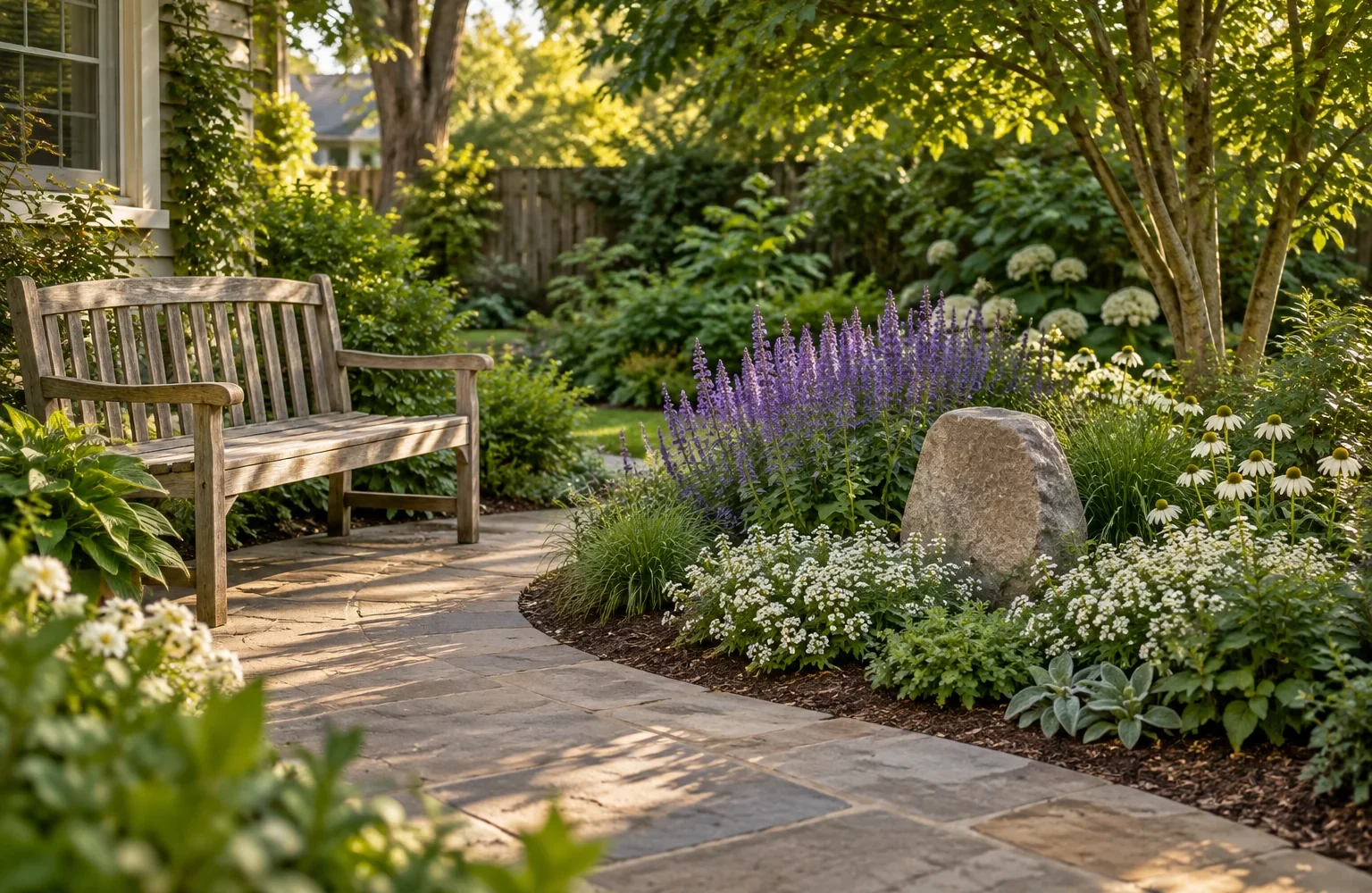
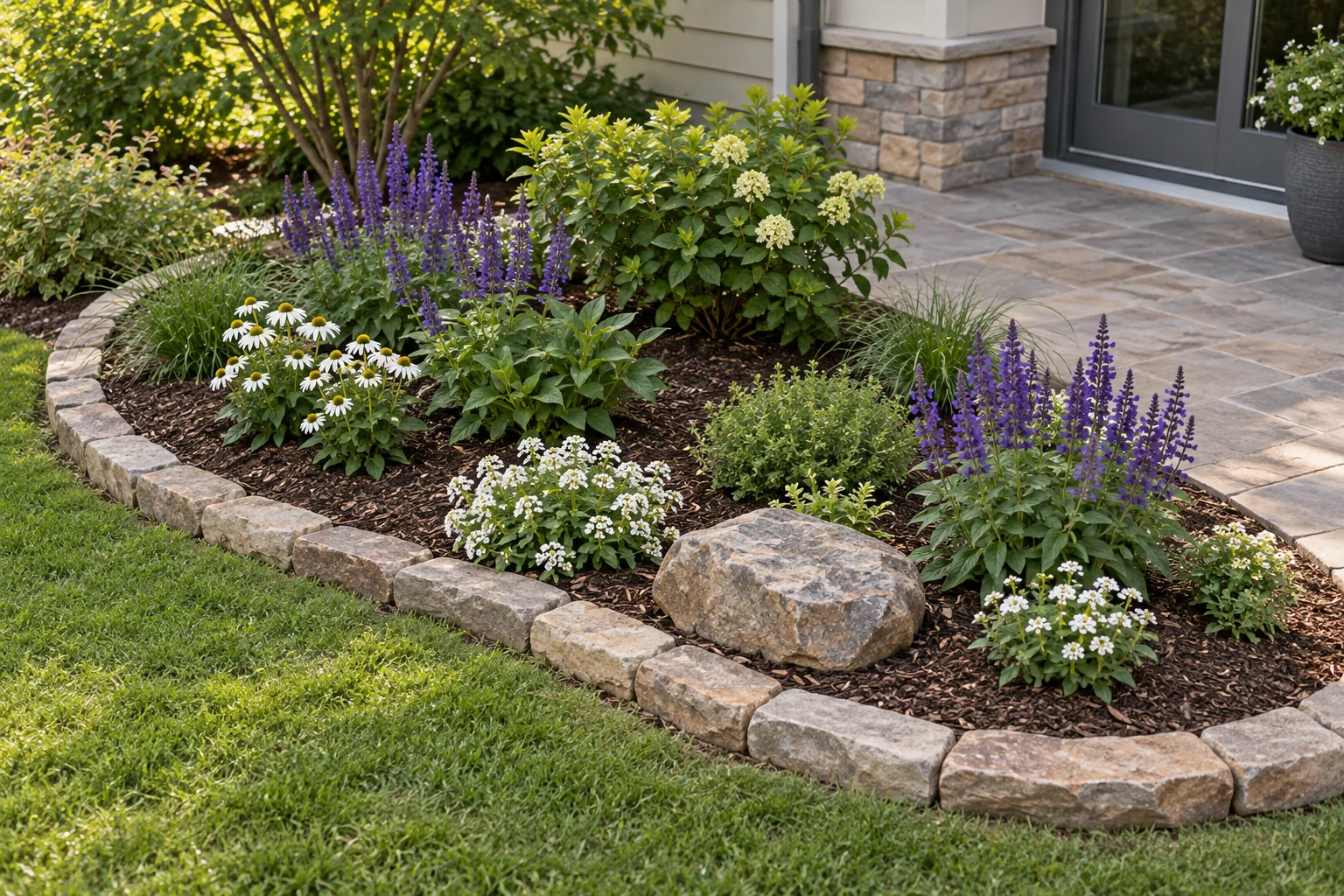
Use a simple outline, one focal point, and a few repeated plants. A stone near the front of the bed is easier to see than one hidden behind tall summer growth. Keep the tallest planting toward the back where it will not block the view or the route past the bed.
For a starting sketch, imagine a bed about 4 by 6 feet beside an existing patio. Place the marker near the front, one compact anchor plant toward the back, and small groups of flowers between them. These are illustrative dimensions, not a planting prescription: check each plant’s mature width before deciding how many will fit. Leave enough open edge to reach the bed without stepping through it.
If the corner is too small for a shrub, leave it out. Repeating one favorite flower can look more settled than squeezing in a tree, several ornaments, and many unrelated plants.
Pair a comfortable seat with a view of the planting
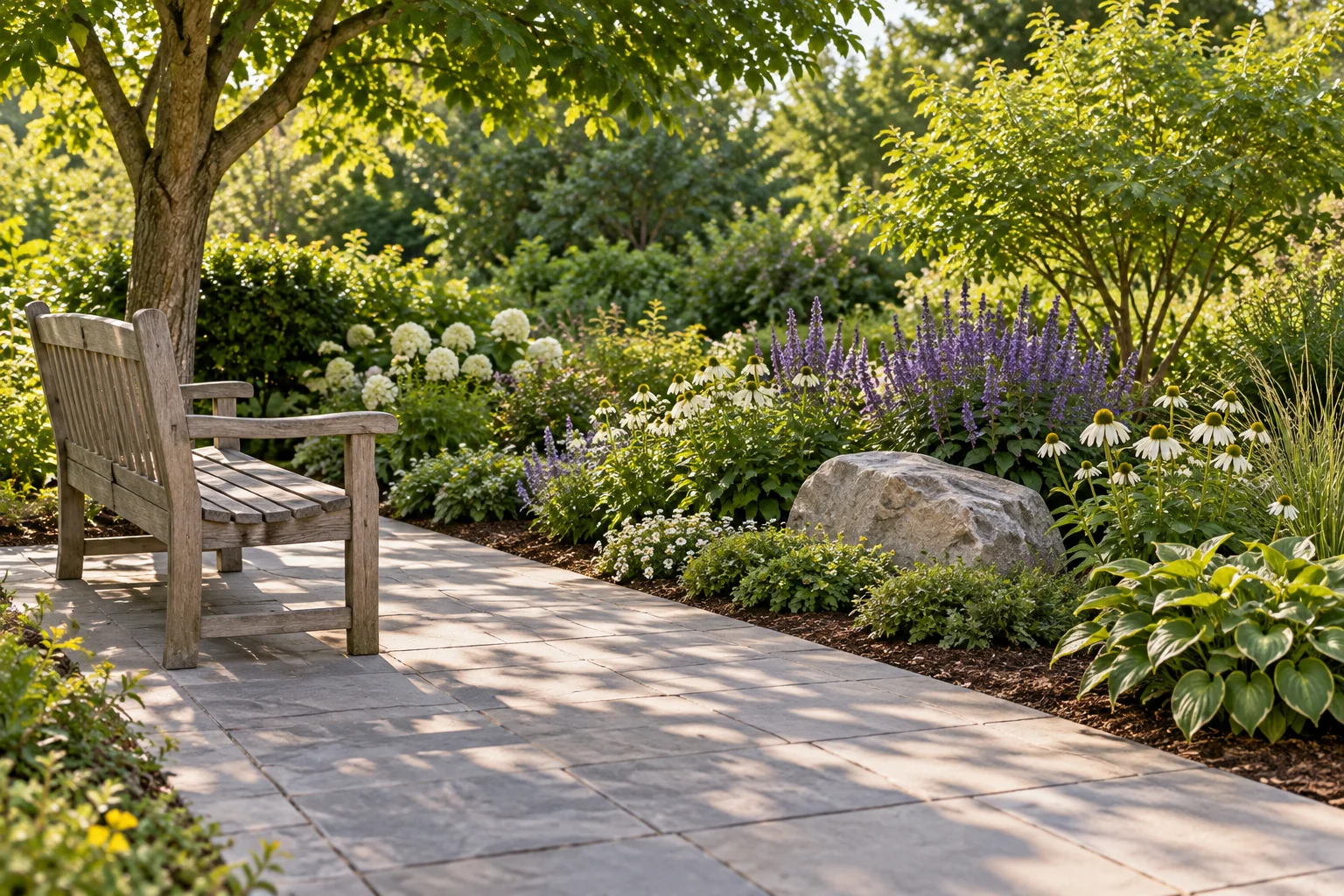
A chair you already own may be enough. Position it where you can see the meaningful plants or marker, rather than automatically putting it in the middle of the bed. Test the view while seated, and consider the sun at the time you are most likely to visit.
Give seating a firm, level base and keep the approach clear. If someone uses a mobility aid, choose the route and surface around that person’s needs; widely spaced stepping stones and loose gravel may be unsuitable. Our garden path planning guide covers route and material decisions in more detail.
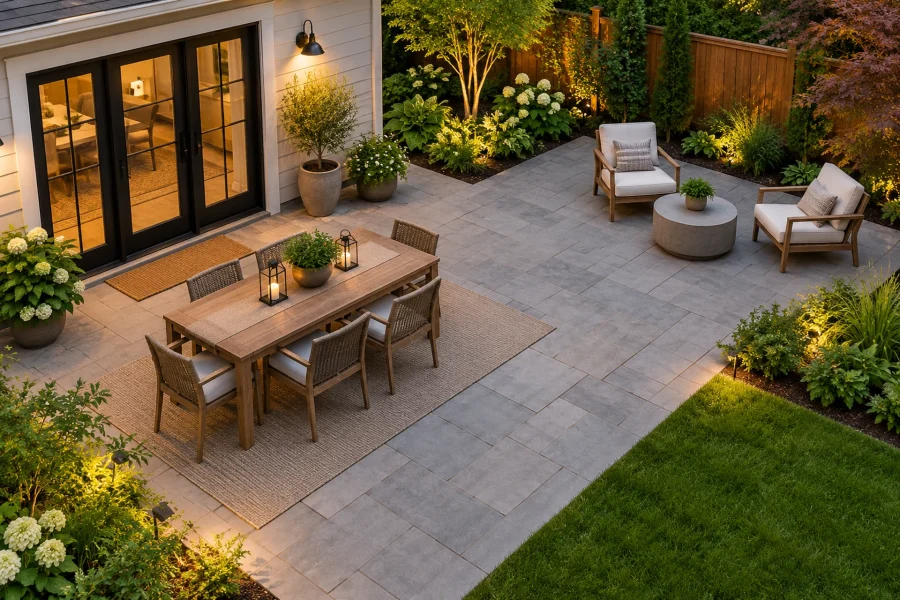
On a small patio, allow the planting to sit beyond the paving rather than filling the floor with extra pots. These small patio decorating ideas can help you preserve room to walk and sit.
Plant around a favorite color, flower, or memory
A yellow border might recall a favorite kitchen; a rose might bring back a family garden; an herb pot might remember someone who loved cooking. These connections can be more personal than a list of traditional flower meanings.
If the original plant will not grow well in your climate, borrow its color, shape, or scent instead. You can also keep a photograph of the original garden indoors and choose a better-adapted plant outdoors. Symbolism varies between families and cultures, so there is no need to treat one flower as the correct choice for everyone.
Dedicate a section of an existing border
You do not have to build a separate garden. Add one meaningful plant to a bed you already tend and identify it with a small marker or a note in your garden journal. This is a useful low-budget approach because the route, soil preparation, and surrounding planting may already be in place.
Before adding a new plant, check the roots and mature spread of its neighbors. A modest addition with enough room is easier to keep than a crowded display that needs immediate rearranging.
Use a tree as a long-term focal point
A tree can mark a memory through changing seasons, but choose it for its mature size and the site first. Consider its eventual canopy, roots, overhead clearance, nearby buildings, and future maintenance. A tree is a substantial commitment; a smaller shrub or container may fit your home better.
Keep a separate movable keepsake if the idea of leaving the tree behind would worry you. Avoid attaching a marker in a way that constricts a growing trunk. A freestanding plaque nearby can carry the dedication.
Make a flower patch for a nature lover
Build this idea around plants appropriate to your region and site, rather than a generic packet labeled “wildflowers.” Ask a local extension service or native-plant organization which species fit your soil, light, and available space. Check mature spread and local invasive-plant guidance before buying.
Repeat a few plants and plan for different flowering periods. A small patch beside an existing seat can provide changing detail without requiring a pond or elaborate structure. If you prefer quiet seating away from visiting insects, place the flowering patch farther from the chair.
Add one personal detail that can stay outdoors
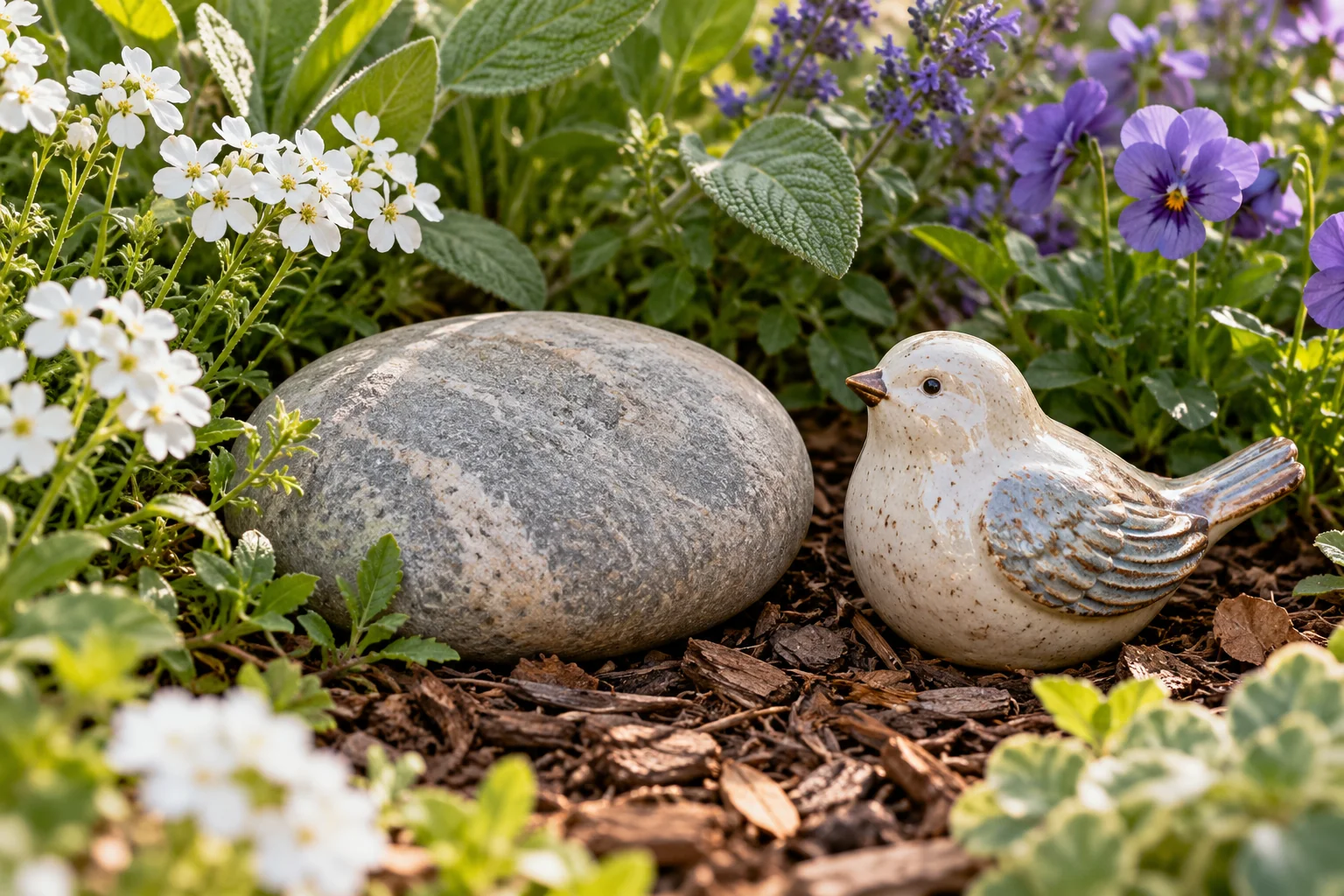
An engraved stone, a simple name plaque, or a garden object connected with a hobby can make the space recognizable. For a parent who loved growing vegetables, that might be a small herb bed with a marker. For a pet, it could be a name stone beside the place where you used to sit together.
Choose materials rated for outdoor conditions and check the maker’s care instructions. Keep original photographs, letters, and irreplaceable objects indoors; use replaceable copies only in suitable protective displays. Place the marker where plant growth, mowing, and irrigation will not make it difficult to read or care for.
Choose plants for the conditions, then the meaning
Write down the site’s light, drainage, available width, and watering access. Check the USDA Plant Hardiness Zone guidance for perennial cold tolerance. Hardiness zones describe average annual extreme minimum winter temperatures; they do not by themselves tell you whether a plant suits your summer heat, soil, or shade.
Use the following as ways to narrow your choices, rather than as a universal planting list:
- A sunny, well-drained bed: consider a compact cultivar of woodland sage if it suits your location. NC State Extension’s woodland sage profile describes its preference for well-drained soil and its violet flower spikes. Check the cultivar’s mature dimensions.
- A shady corner: look for locally suitable foliage plants and shade-tolerant flowers. Avoid forcing sun-loving favorites into a site where they will struggle.
- A meaningful anniversary: ask a local nursery which plants usually flower around that date in your area. Weather can shift flowering, so let the marker or seat carry the memory when flowers are absent.
- A year-round view: combine seasonal flowers with an appropriate evergreen or another lasting feature, if space allows. The garden can still feel intentional during dormancy.
- A container: choose plants for the pot’s conditions and plan for winter care. A perennial’s in-ground hardiness rating does not guarantee it will survive winter in an exposed pot.
There is no obligation to keep the first plant forever. If it declines or dies, replacing it with something better suited to the spot does not diminish the tribute.
Start on a budget and leave room to grow
Spend first on a workable planting location, suitable plants, and any access you actually need. New paving, a fountain, and a custom bench can wait. Exact costs depend on your region, plant sizes, materials, delivery, and how much site work is required, so use a shopping list rather than an unsupported total.
- Begin with the essentials: use an existing pot or bed, one meaningful plant, and a simple marker.
- Observe a growing season: see how the light, drainage, plant size, and care routine work before expanding.
- Add a useful feature: consider a seat, a short improved approach, or a more durable marker when you know what is missing.
Include ongoing supplies in your plan: potting mix, replacement annuals, mulch where appropriate, and watering equipment. A fountain adds cleaning, power or charging needs, and seasonal care. Add one only if you want that responsibility as well as the sound.
Keep the garden manageable over time
Choose fewer plant types if identifying and caring for many varieties would become a burden. Keep a short record of plant names, watering needs, and seasonal tasks. If several relatives will help, agree who will water during dry spells and who will check the space when you are away.
At seasonal changes, clear the approach, check the marker and seating for stability, and review crowded planting. Keep a photo of the garden and any inscriptions in your records. If you move, a container, stone, or separate keepsake can carry the remembrance to a new place.
Questions about starting a memorial garden
What can I put in a very small memorial garden?
One suitable plant and one personal detail can be enough. Use a pot, a narrow section of an existing bed, or a small planting beside a patio. Keep access and mature plant size in mind before adding a seat or extra decorations.
Does a memorial garden need ashes?
No. A dedication, favorite plant, or marker can create a memorial without any remains. If you want to include cremated remains, treat that as a separate decision before planting and seek location-specific guidance from the appropriate authority or funeral professional. This garden-design guide does not provide an ashes-disposal or soil-mixing method.
How can I make it personal without buying a plaque?
Choose a flower color, plant, or usable object connected with a shared memory. Dedicate the planting in a garden journal or keep a written note indoors. The garden does not need a public label to have a clear meaning to you.
Can I make a memorial garden for a pet?
Yes. Adapt the same ideas to a favorite part of the yard or a portable pot with a name marker. If other animals will use the space, check the suitability of the exact plant species and objects for them before installing the garden.
Start with the part that feels clear: a place, a plant, or a memory. A small garden you can enjoy and maintain is a complete tribute, even if you never add anything else.

Ethan Miller
Ethan Miller writes about home improvement, interior design, cleaning, and everyday living at Home & Living Daily. He shares practical tips and simple ideas to help readers create more comfortable and functional homes.