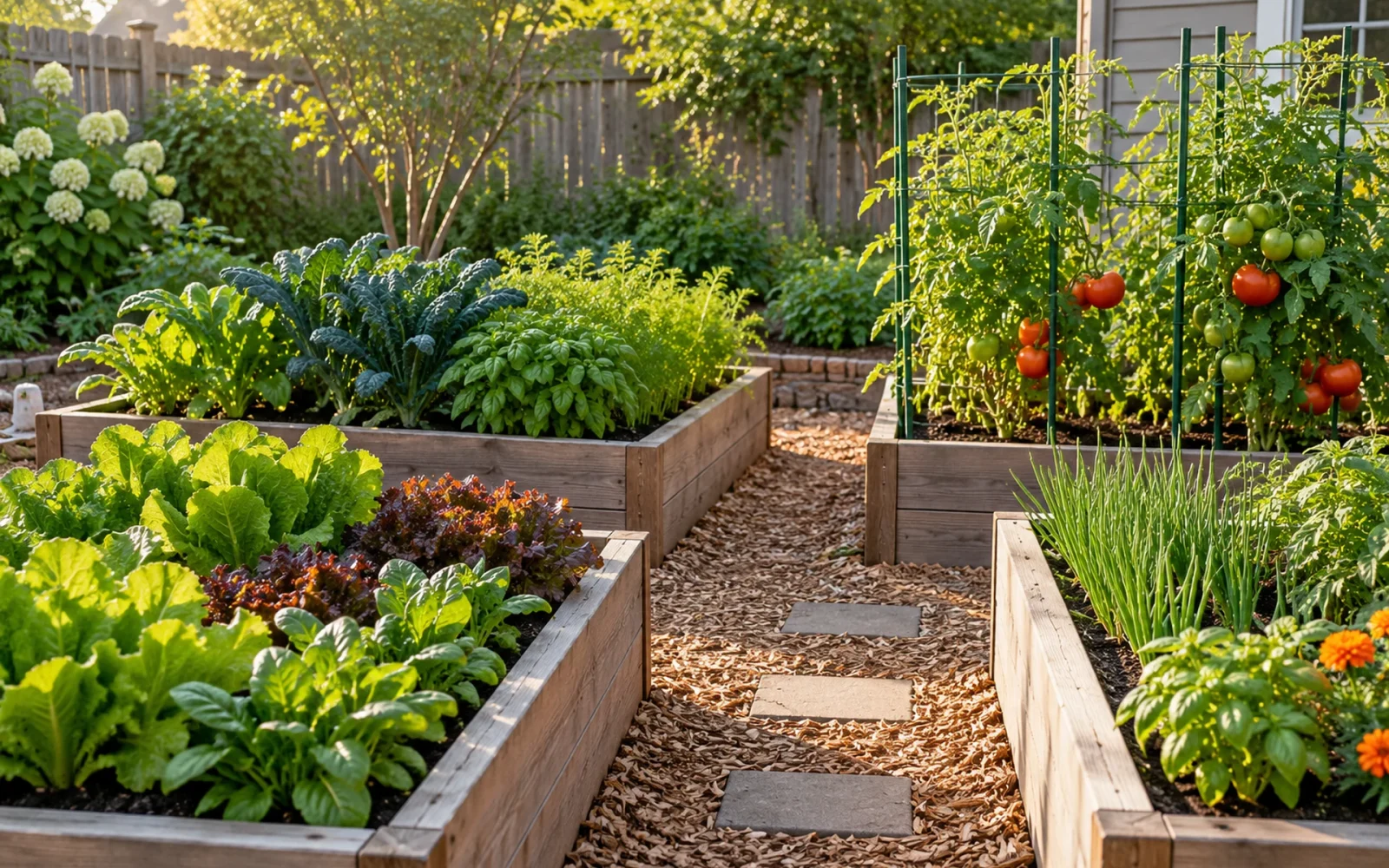
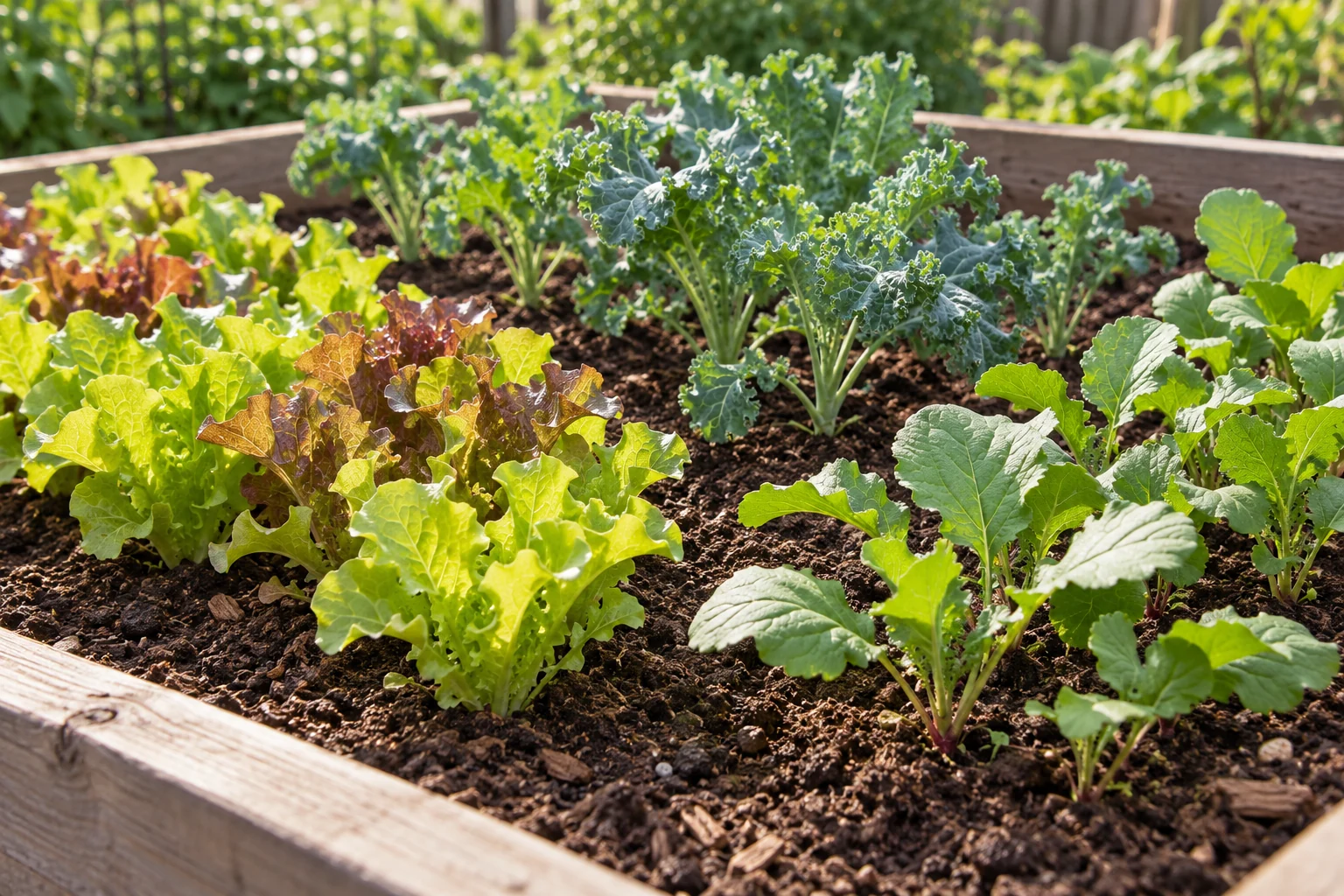
Leaf lettuce, radishes, compact herbs, bush beans, peppers, and suitably chosen tomatoes are useful raised-bed candidates. The right shortlist depends on sunlight, usable root space, season, and the plants’ mature spread. Start with crops you will eat and can maintain, then choose varieties that fit the actual bed.
A raised frame does not remove a crop’s need for suitable weather, water, and room. It also does not make every plant compact: a full-sized squash vine can occupy far more space than its planting hole suggests.
Filter the list by light and root space
Observe direct sunlight where the bed stands, including changes from trees, buildings, and the seasons. Fruiting crops such as tomatoes, peppers, and eggplants need a sunny site. University of Minnesota Extension uses 6 to 8 hours of sun as a baseline for these crops. More suitable light can be helpful; deep shade should not be treated as a productive vegetable site just because the soil is improved.
Leafy greens can be a more useful direction where light is less abundant, but still evaluate the actual conditions. Check a crop-specific growing guide before assuming a shaded bed can produce the same harvest as a sunny one.
Next, establish how much continuous growing medium the roots can use. An open-bottom bed over suitable garden soil differs from an elevated planter with a floor or a bed over paving. Read our guide to raised-bed depth and usable root space before choosing a large plant for a shallow contained box.
Choose small, repeatable harvests for a limited bed
| Crop group | Why consider it | What to plan |
|---|---|---|
| Leaf lettuce, arugula, and baby greens | Small sowings can provide manageable leafy harvests | Suitable cool conditions, thinning, and repeated sowing where the season permits |
| Radishes and suitable carrots | Root crops can use a prepared, workable growing zone | Variety-appropriate root depth, spacing, and timely harvest |
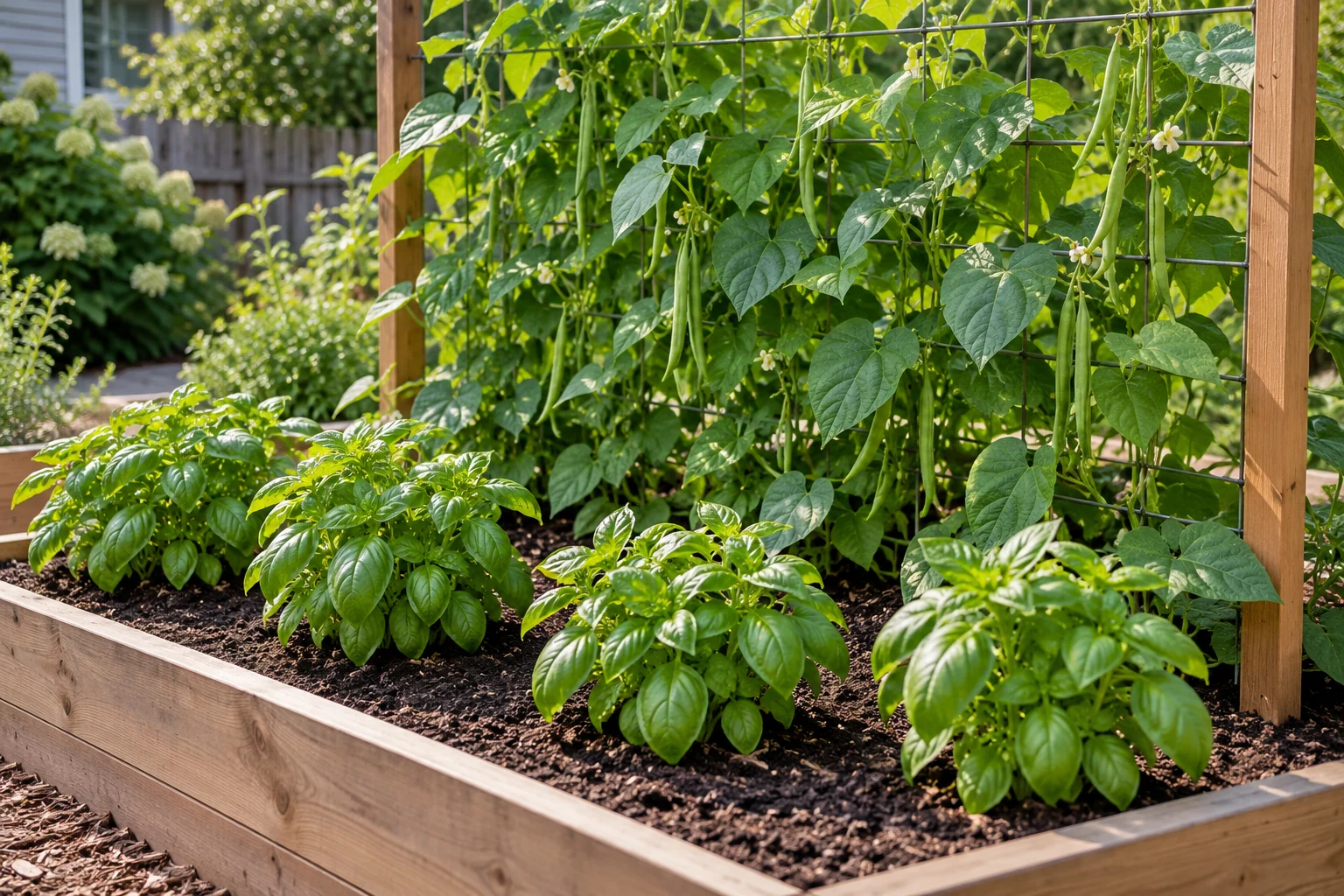
| Bush beans | A defined warm-season planting without a tall climbing structure | Mature spread, warm soil, access for frequent picking |
| Basil, parsley, or chives | Useful small harvests close to the kitchen | Each herb’s season, mature size, water needs, and whether it will stay beyond one season |
| Compact peppers or tomatoes | A focused fruiting crop where sun and root volume suit it | Support, variety-specific spacing, watering, and access around the mature plant |
| Climbing peas or beans | Vertical growth can use an edge of the bed | The correct season for each crop, a suitable support, shade, and access |
Do not plant every row of the table into one small bed. Select a few crops whose growing requirements work together. Choose a compact cultivar by its description and mature dimensions, not only a packet photograph.
Give large plants their mature footprint
Tomatoes can be productive in a suitable raised bed, but a small transplant can become a substantial plant. Check whether the variety is compact, determinate, or a larger vining type, and plan its supports before the roots and foliage fill the space.
Cucumbers, pole beans, and climbing peas can make a support useful, but they do not become space-free. Account for roots, mature foliage, picking access, and the shadow cast onto neighboring crops. Position a trellis where its shade is appropriate for your site rather than automatically putting it on a particular side.
Large squash, pumpkins, melons, and sprawling varieties may be better in a separate area unless the bed and surrounding space are deliberately allocated to them. Sweet corn also needs a suitable planting arrangement for pollination; a few isolated plants are not always a good use of one tiny bed.
Plan successive seasons instead of crowding everything together
Cool-season lettuce, radishes, and peas do not have the same timing as warm-season beans, basil, peppers, or tomatoes. Use your local extension planting guidance, current conditions, and variety information rather than a nationwide month-by-month calendar.
A small bed can host more than one round of crops. For example, a suitable spring leafy crop may finish before a warm-season planting, with another appropriate crop following later if the local season is long enough. University of Maryland Extension explains succession planting as using space vacated by spent plants and planning successive groups.
That does not mean each crop belongs in the bed simultaneously. Check days to maturity, whether they are counted from sowing or transplanting, the likely harvest period, and the weather expected at the end. Late-season growth can slow even when a packet’s headline day count looks promising.
Make flowers and perennial crops deliberate choices
Annual flowers can share a garden with vegetables when their light, water, and space needs fit. Choose a modest area instead of filling harvesting access with ornamental foliage. Do not assume one flower guarantees pest control or improves the yield of a neighboring vegetable.
Perennial herbs, strawberries, asparagus, and larger permanent plants commit root space beyond the current season. Consider winter exposure, mature size, and crop-specific care. An elevated planter can experience different root temperatures from the ground, so perennial survival needs more thought than choosing a cold-hardy plant label.
Keep vigorous spreading plants such as mint contained appropriately rather than allowing them to take over a mixed annual bed.
Keep the first planting easy to maintain
Draw the mature crop footprints and access points before planting. For a small rectangular bed, a greens-and-roots plan and a fruiting-crop plan are alternatives, not compulsory layers to stack into the same area. Use the actual cultivar’s spacing and thinning instructions.
Make watering reachable and inspect moisture in the root zone. Raised beds, especially contained ones, can dry faster than nearby ground. Base feeding on the growing mix, crop needs, and suitable soil-test guidance rather than assuming every bed needs the same fertilizer.
Start with a few crops you enjoy harvesting regularly. Record what thrived, what shaded another plant, and what you could not reach. Those observations will produce a better second planting than a longer generic list of vegetables.

Ethan Miller
Ethan Miller writes about home improvement, interior design, cleaning, and everyday living at Home & Living Daily. He shares practical tips and simple ideas to help readers create more comfortable and functional homes.