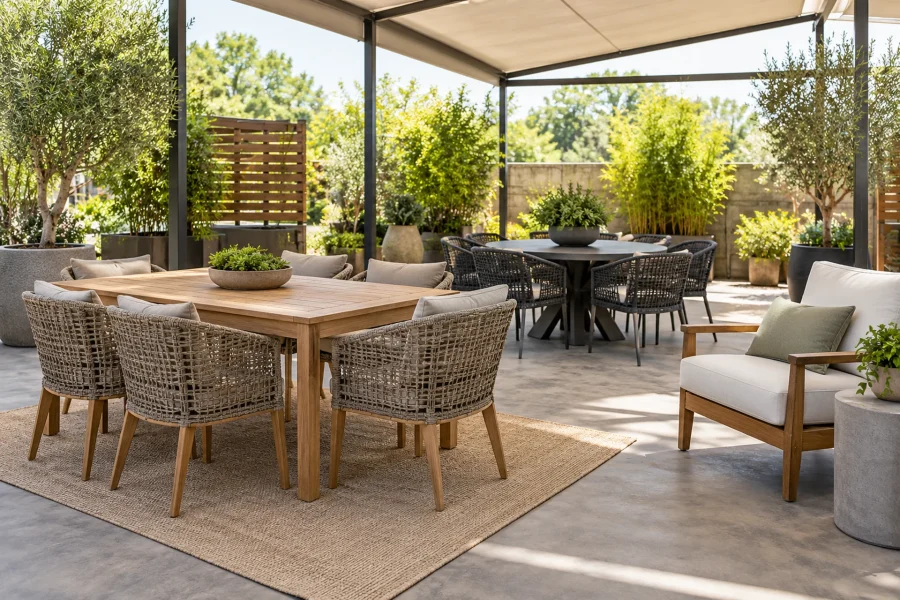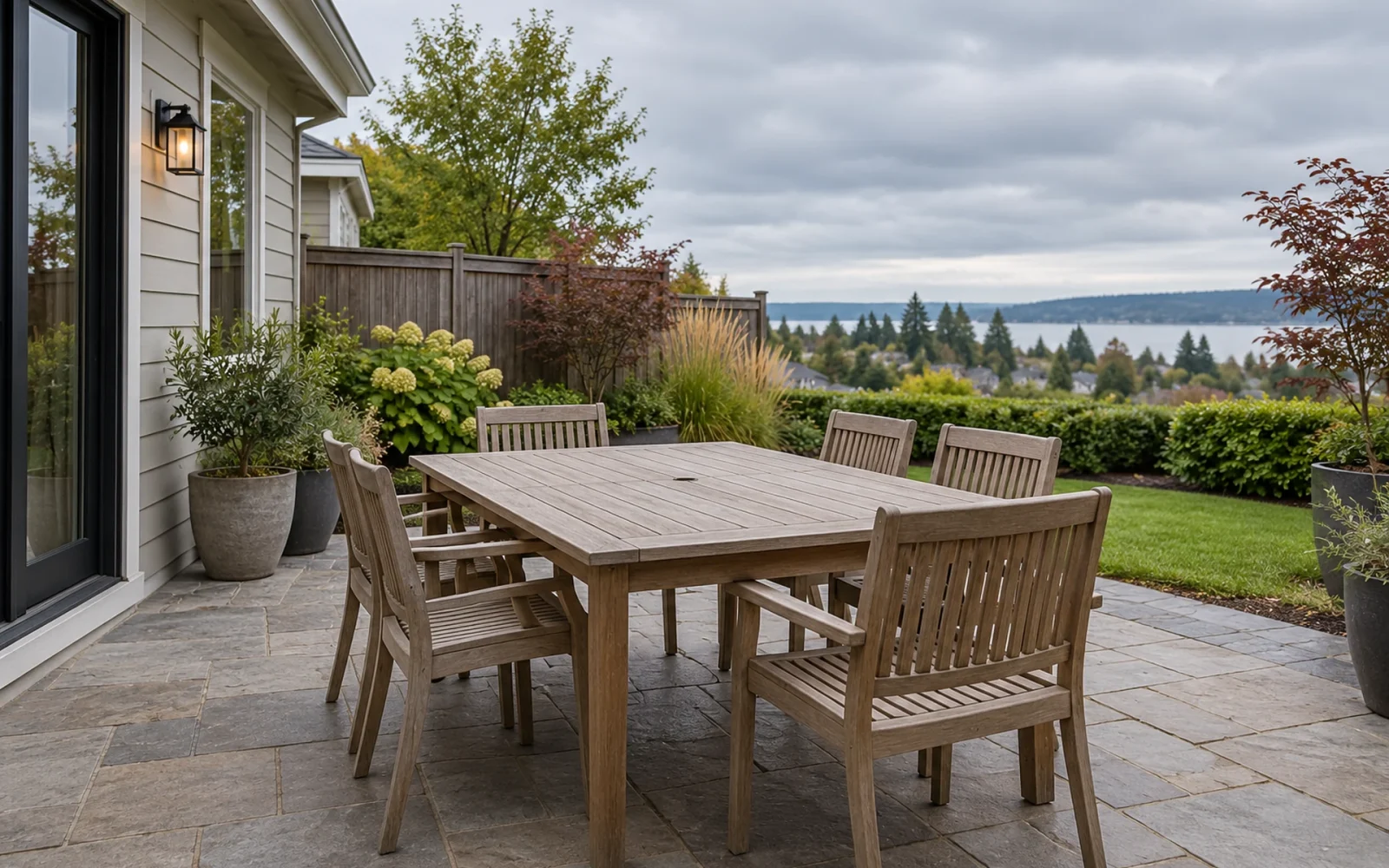
The most reliable way to keep outdoor furniture from blowing away during strong winds is to move portable pieces into suitable enclosed storage before conditions worsen. For furniture that must remain outside, use only a securing arrangement appropriate to the product, supporting structure, and forecast conditions. A heavy chair or a strapped cover is not automatically stormproof.
Separate a chair that shifts in an ordinary breeze from preparation for a severe-weather event. Everyday stabilization should not become a reason to leave loose objects outside during a warning.
Start with what can move or catch wind
Walk around the space and include cushions, stools, side tables, umbrella canopies, loose covers, rugs, decorative objects, and empty planters. Check the furniture’s shape as well as its weight. Broad backs, tops, and fabric panels can catch wind, and attached pieces can transfer that force to a frame.
Balconies, roof terraces, open corners, and gaps between buildings deserve particular attention. Do not assume conditions at street level describe an exposed balcony. Follow building management instructions and any product restrictions for that setting.
Identify a storage destination now. Measure the doorway and decide how you will move larger pieces without dragging them or lifting by fabric and weave. A storage plan that needs several people should be carried out early enough to arrange help.
Bring portable pieces indoors before a storm
The National Weather Service advises bringing in outdoor furniture before a tropical system because loose objects can become flying debris. Use the same principle when preparing for other forecast high winds: reduce the loose material available to move.
Store furniture in a suitable enclosed location, keeping exits and access to equipment clear. Stack only chairs designed to stack, within their instructions, and keep the stack stable. Moving several chairs into a tall loose outdoor pile does not remove the hazard.
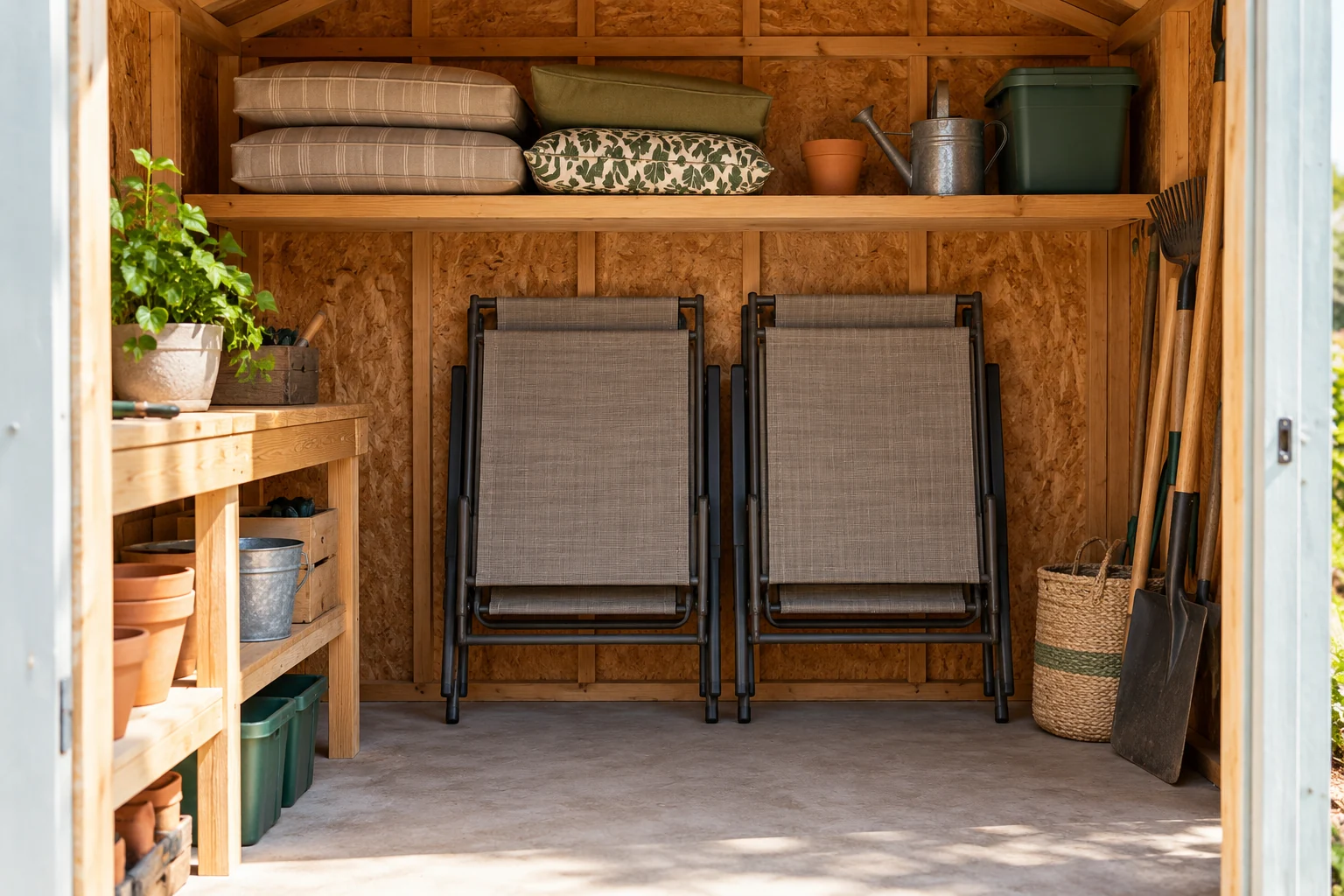
For longer storage, clean and dry the items as time allows and use the methods in our outdoor furniture storage guide. During storm preparation, follow official advice and prioritize reaching shelter over completing a cleaning routine.
Use an appropriate securing system for pieces that remain
Ask the furniture maker whether the piece is designed to be fixed or restrained, where loads may be applied, and which hardware or ballast system is permitted. A fixing point that supports a cushion strap is not necessarily a restraint point for the entire chair.
The supporting surface matters just as much. A railing, thin deck board, planter, or drainpipe should not be assumed suitable for tying down furniture. On a balcony, get approval for any attachment and confirm that it does not compromise the building’s waterproofing, guard, or required access.
If a permanent anchor arrangement is needed, have its loads, substrate, fasteners, and corrosion exposure assessed appropriately. Do not drill into a terrace or add a large concentrated weight without checking the structure. There is no universal sandbag quantity that makes every table safe in every gust.
Keep any permitted straps out of walking routes and use them only as designed. Joining multiple pieces can make a group awkward to move without giving it a verified wind rating. If there is no suitable restraint method, plan different furniture or storage rather than relying on an improvised knot.
Treat umbrellas and furniture covers separately
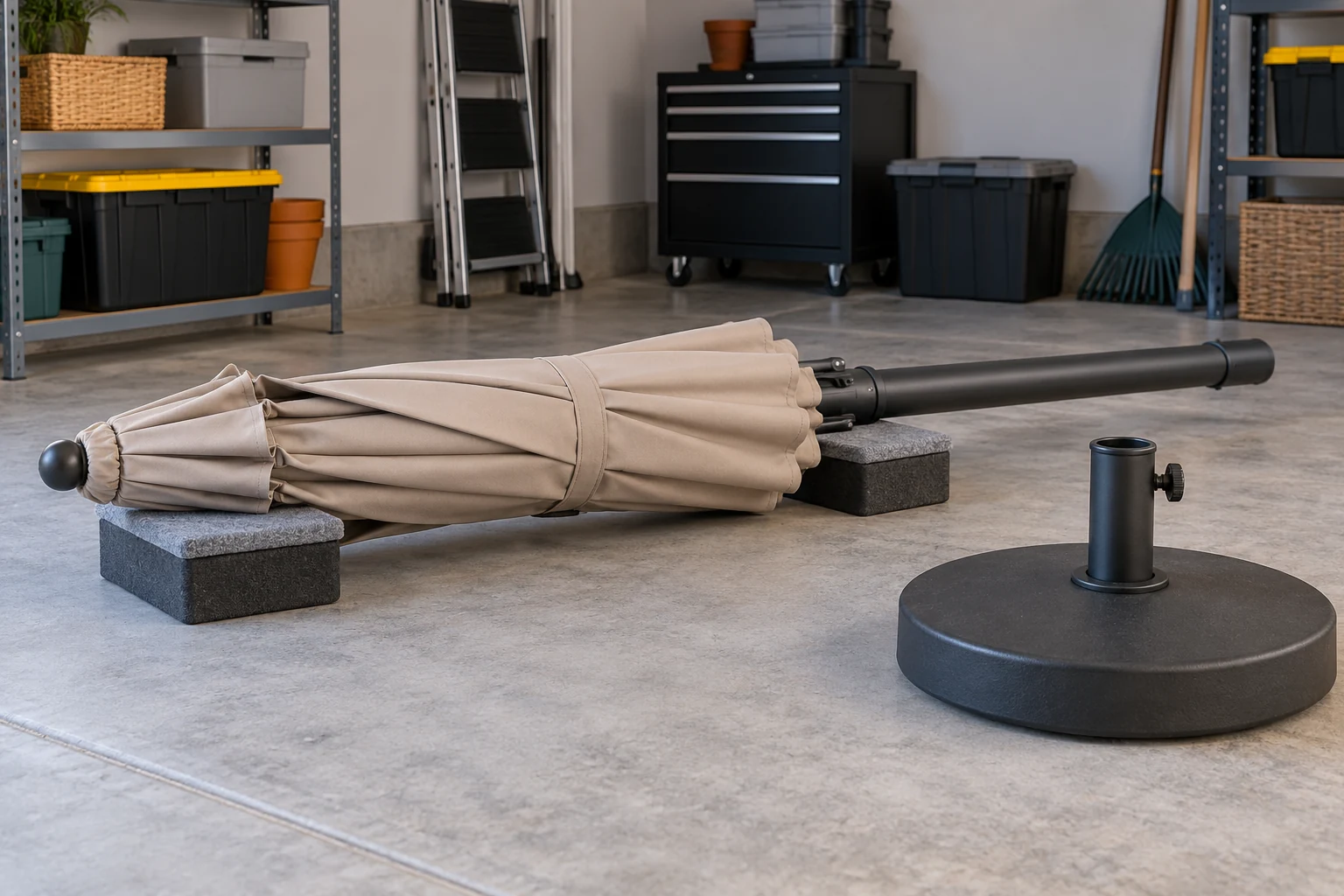
Close umbrellas when the instructions or conditions require it, secure their canopies with the provided ties, and remove them to shelter before severe weather where possible. Use the base specified for the exact umbrella and setting during ordinary use. An adequate everyday base does not establish that the umbrella should remain open in wind.
A cover protects surfaces under its specified conditions; it is not a structural restraint for the furniture beneath it. Secure or remove covers as the maker directs. Loose fabric can catch wind, while wrapping a whole group tightly may create a larger surface for wind to push.
Do not place furniture in a swimming pool as a storage shortcut. Submersion can damage furniture and pool finishes and complicate recovery. Use an appropriate storage or restraint plan instead.
Reduce ordinary movement without overstating protection
For day-to-day breezes, choose a layout and furniture suited to the exposure. Check stable feet, approved connectors on modular seating, and any specified base components. Keep loose cushions and accessories stored when unattended.
A sheltered position can improve comfort, but a fence or screen does not give furniture a wind rating. Screens themselves need a suitable support system. If pieces regularly move in ordinary conditions, reassess the product and location rather than adding increasingly heavy objects to the seats.
Finish preparation before the wind arrives
Use forecast alerts as a trigger for your plan, not a challenge to test how much the furniture can take. Once conditions are hazardous, stay inside and follow local instructions. Do not chase a loose chair or try to fold a struggling canopy in strong gusts.
After the event, inspect furniture, supports, glass, and fixings before reuse. A piece that stayed in place can still have damage. Repair the cause of looseness and revise the storage plan before the next warning.

Ethan Miller
Ethan Miller writes about home improvement, interior design, cleaning, and everyday living at Home & Living Daily. He shares practical tips and simple ideas to help readers create more comfortable and functional homes.