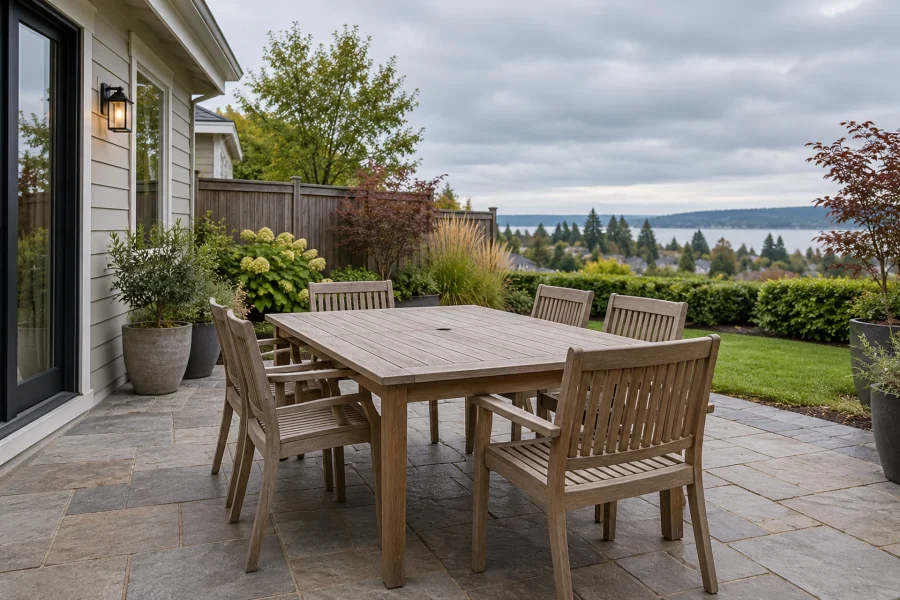
Late summer into early fall is a useful time to look for outdoor furniture clearance if price matters more than having a particular matching set. Shop earlier when you need a specific size, fabric, or configuration, or when delivery must happen before a planned event. There is no single week when every retailer offers its lowest price.
The best buying time is the point where the furniture you actually want, its complete cost, and its arrival date all work. A large markdown on an unsuitable or incomplete set is not a useful saving.
Choose a shopping window for your priority
Think of the seasonal calendar as a way to organize your search, not a promise of a discount. Retailers change ranges and promotions at different times, and outdoor furniture can remain useful year-round in warmer markets.
| Your priority | When to start looking | Main tradeoff |
|---|---|---|
| A specific collection or fabric | Before your local outdoor season, allowing for the stated order time | Less freedom to wait for leftover-stock clearance |
| A usable set at a flexible price | Compare spring and summer promotions, including major holiday weekends | A sale label may not beat another seller’s ordinary delivered price |
| Clearance with flexible style and quantity | Late summer through early fall; check remaining stock beyond that | Fewer matching pieces, colors, and replacement options |
| Furniture for a fixed event | Work backward from confirmed delivery and assembly | The cheapest later sale may miss the date you need |
Memorial Day, Independence Day, and Labor Day weekends are sensible checkpoints for US promotions, but compare the exact item. Some retailers run additional warehouse events or online sales outside those periods. Others carry limited outdoor ranges through winter.
By deep fall, a clearance page may still be online even when its event has ended or the shown furniture is no longer available. Check the dates, location, and actual stock before treating a search result as a live offer.
Work backward from arrival, not checkout
Decide when the furniture must be ready to use. Allow for the retailer’s processing and delivery estimate, any appointment, assembly, and time to inspect for missing or damaged parts. A custom fabric or special-order configuration may have a different timetable from an item labeled in stock.
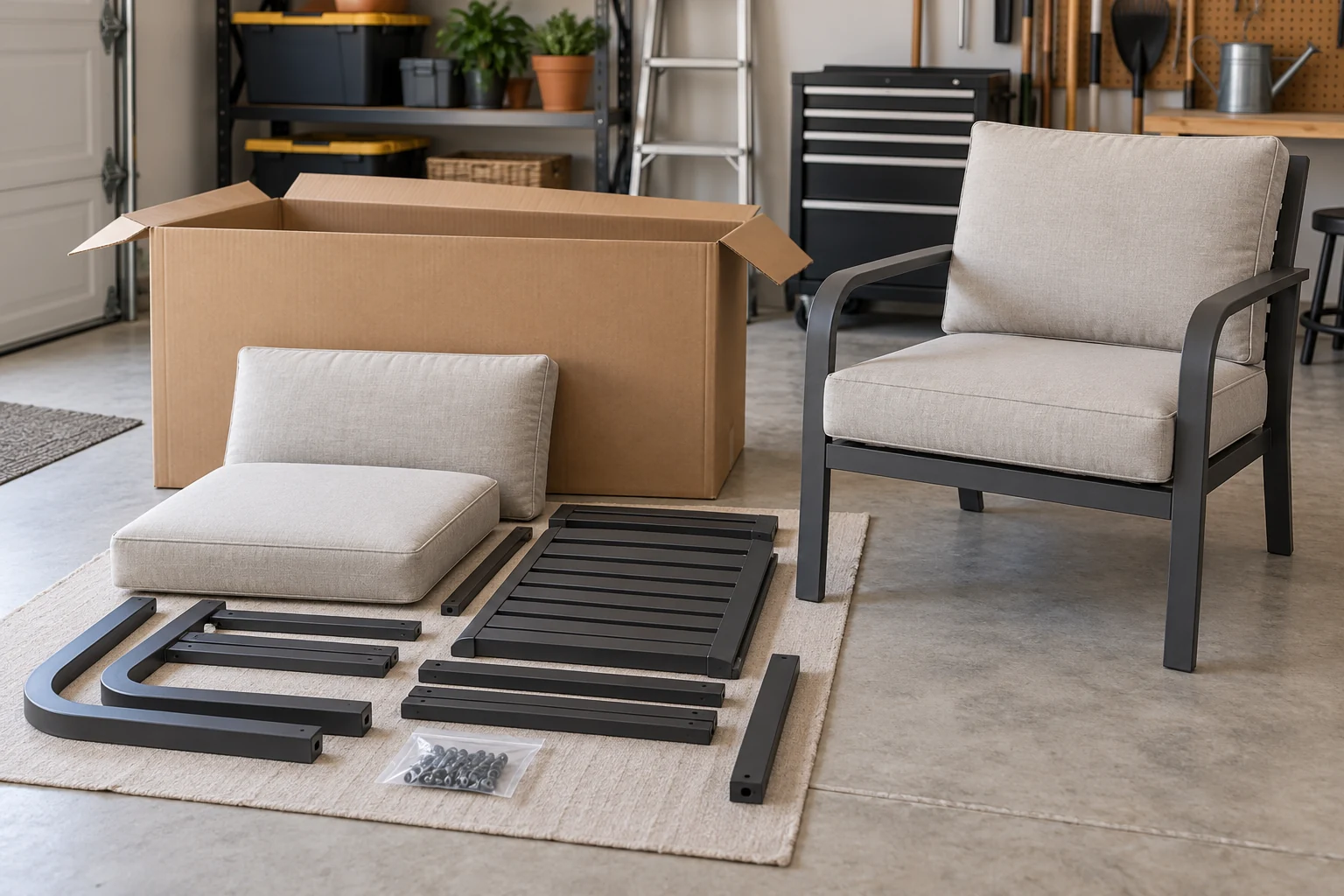
Ask what the delivery estimate means. Leaving a carton near the curb is different from bringing an assembled table onto a patio. Check access through gates and doors, particularly for a large sofa or a heavy tabletop.
If the date is important, request the seller’s current delivery expectations for your address and chosen configuration. Do not convert a generic website estimate into a guaranteed arrival. A flexible purchase for next season gives you more room to wait than furniture needed for a gathering next week.
Track one complete product
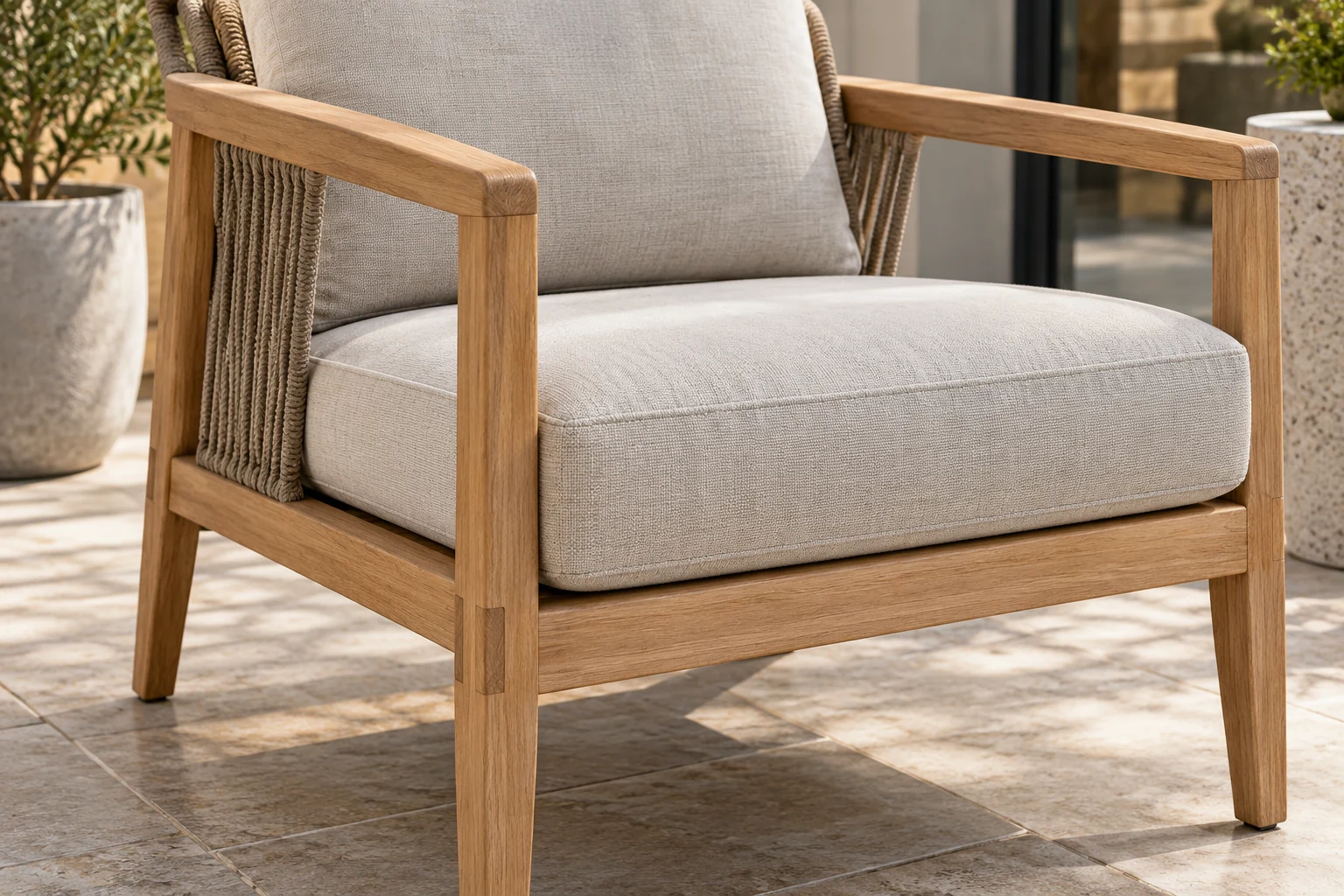
Write down the model or collection, dimensions, material, included pieces, fabric, and cushion specification. A photograph of a dining set may show an umbrella or extra chairs that are not included in the advertised price.
Record the total price when you first shortlist it, then compare later offers on that same configuration. Check whether a promotion applies to the selected color and quantity. A discount on the smallest option does not necessarily apply to the larger set you intend to buy.
Price any essential extras at the same time: cushions, umbrella base, covers, assembly, delivery, or storage. Check care requirements and replacement parts. A low-cost frame with hard-to-replace cushions can be less attractive than the headline suggests.
Inspect clearance and floor models more carefully
Clearance can include new discontinued stock, returns, display pieces, and scratch-and-dent items. Ask which description applies. Inspect joints, feet, coatings, upholstery, hardware, and any moving mechanism before accepting an item sold as seen.
Confirm whether matching pieces remain available and whether the price includes all cushions and fasteners. A replacement component may be difficult to source after a collection is discontinued. That matters if you are buying a partial set with plans to expand it.
Read the return, damage-reporting, collection, and warranty terms before paying. A warehouse event may be final sale or require prompt collection. Do not assume its terms are the same as the retailer’s normal online orders.
Compare the delivered cost before deciding to wait
For an arithmetic example, a hypothetical $700 set with $150 delivery costs $850 before tax. Another at $800 with equivalent delivery included costs less on those terms. Add the same necessary extras to both comparisons, and account for differences in condition or service.
If buying months before use, inspect the order immediately within the seller’s reporting window, then store it as instructed. Do not leave unopened cartons in a damp shed until spring and assume any problem can still be reported as delivery damage.
Set a realistic target price and an acceptable list of alternatives. Buy when a suitable, complete set meets those conditions. Waiting for an unknown additional reduction is less useful once the only remaining furniture does not fit the patio or the way you want to use it.

Ethan Miller
Ethan Miller writes about home improvement, interior design, cleaning, and everyday living at Home & Living Daily. He shares practical tips and simple ideas to help readers create more comfortable and functional homes.