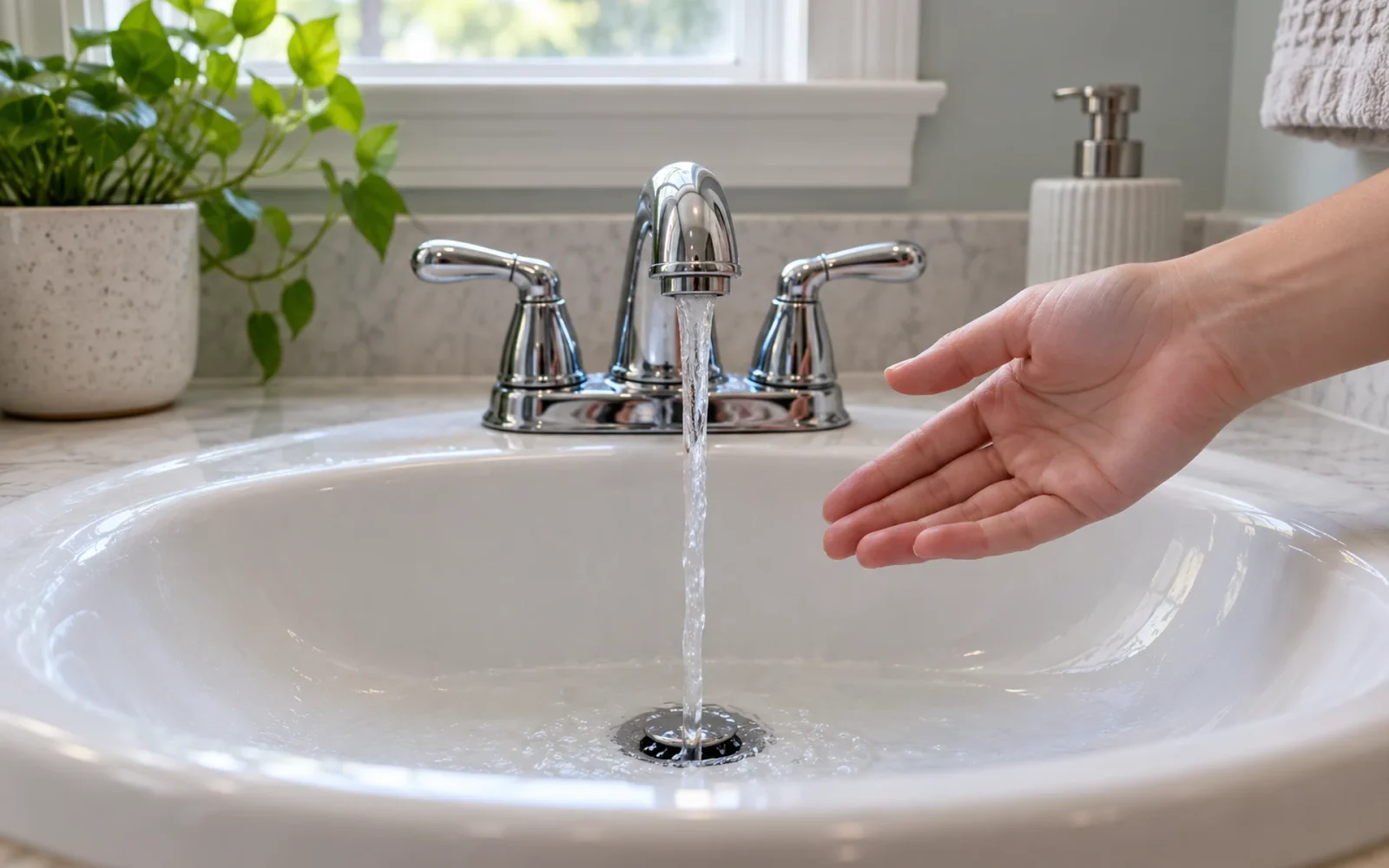
To improve water pressure at home, first establish whether the problem affects one fixture, only hot water, or the entire house. A blocked faucet outlet needs a different response from a supply problem. Buying a booster or turning a regulator before making that distinction can leave the original restriction in place.
Start with observations you can make without taking plumbing apart: when the change began, which outlets are affected, and whether another water-using appliance is running.
Use the pattern to narrow the next check
Try several accessible faucets separately, comparing hot and cold at each. Then notice what happens during normal simultaneous use, such as a shower while a washing machine fills. Avoid wasting water on a lengthy test. In an apartment or shared building, ask the property manager whether other units have the same problem.
| What you notice | Where to look next |
|---|---|
| One faucet is weak on hot and cold | The aerator, fixture, local supply connections, or recently disturbed debris |
| Hot water is weak at several fixtures | The water-heating system or shared hot-water piping |
| All fixtures changed suddenly | A service interruption, leak, recent valve work, or supply equipment problem |
| Flow falls mainly when other fixtures run | Available delivery under demand, restrictions, and pipe or equipment capacity |
| Nearby homes changed at the same time | The utility’s current service conditions |
These patterns guide an investigation; they do not prove a failed part. A distant upstairs shower may be affected by several restrictions along its route, rather than by the showerhead alone.
Weak flow does not always mean low pressure
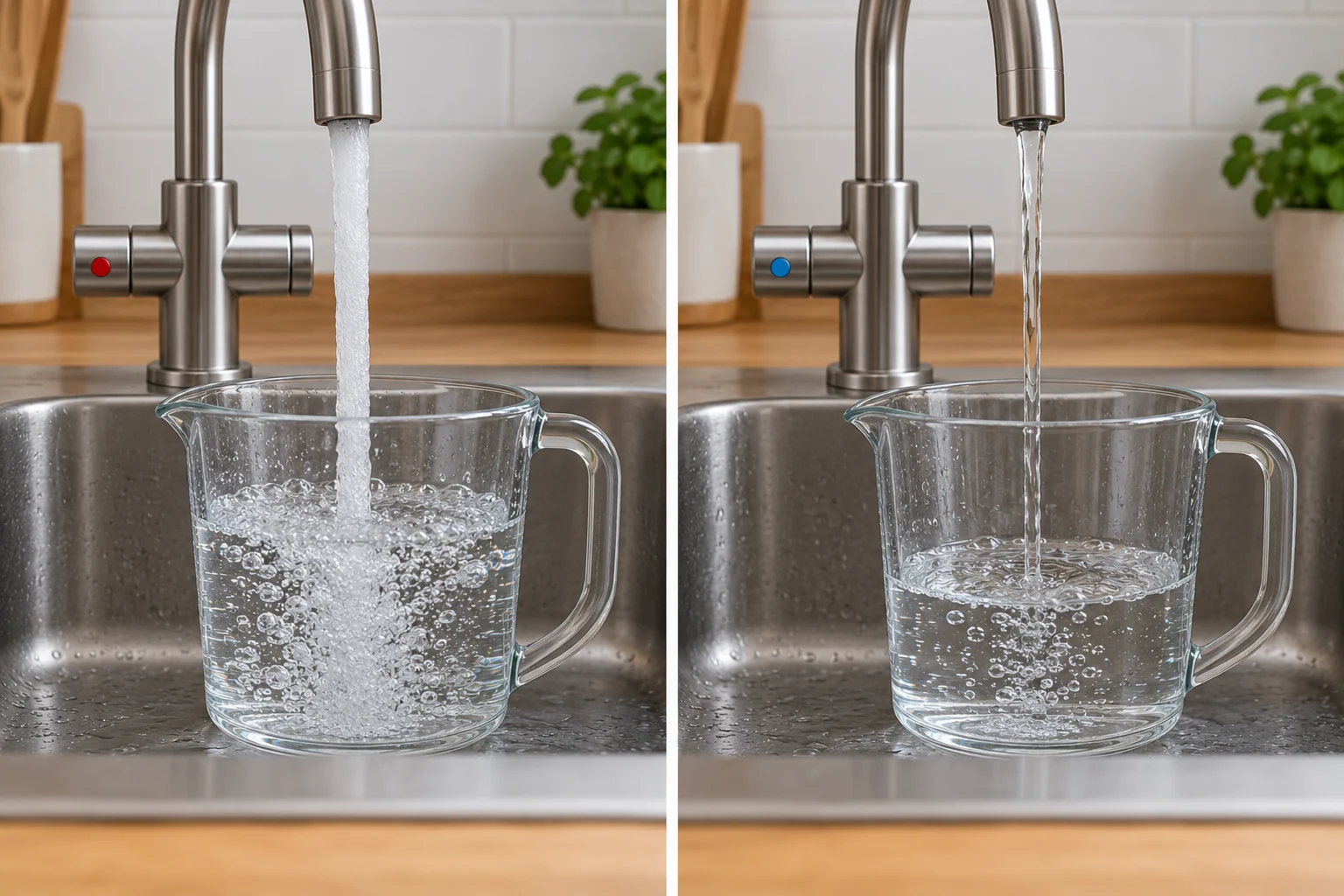
Pressure is the force available in the water system, commonly measured in pounds per square inch. Flow is the volume delivered over time. A partly blocked passage can reduce delivery even when a gauge shows reasonable pressure with every faucet closed. The Portland Water Bureau’s pressure and flow guidance explains this distinction and recommends comparing fixtures and hot versus cold water.
If you have a suitable hose-thread gauge and a sound, accessible connection, follow the gauge instructions to record pressure with other water uses stopped. A second reading during normal demand may help a plumber understand the change. Note the connection location and conditions; a reading taken downstream of a particular filter or regulator describes that location.
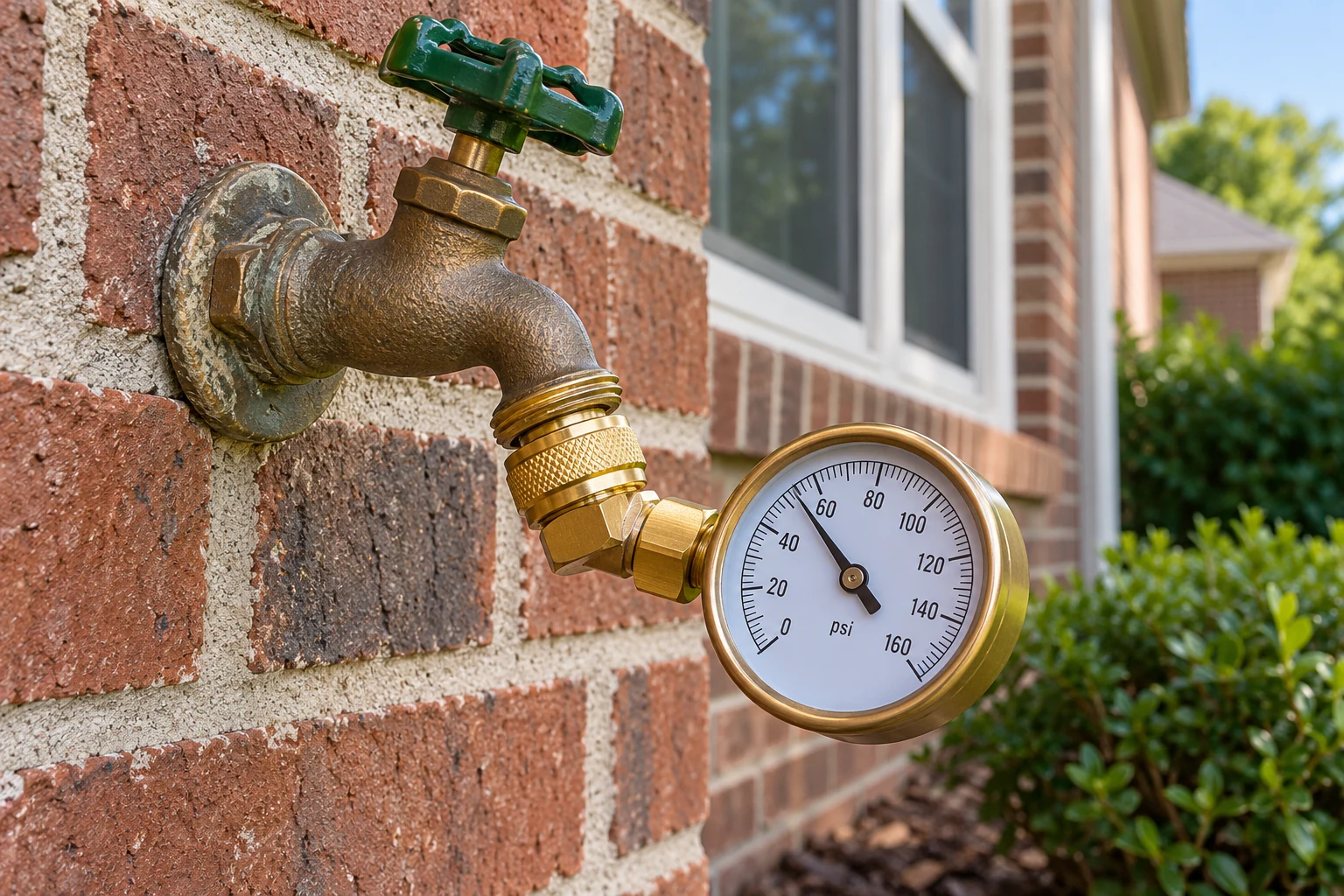
Ask your utility or plumber what operating range is appropriate for your address and plumbing. Do not treat an online “ideal PSI” as an instruction to raise your regulator. The permitted pressure, equipment ratings, elevation, and local supply conditions all matter.
Make the simple checks that fit your system
When only one fixture is affected
Inspect the faucet outlet for visible debris or mineral buildup. If its aerator is designed for user removal, use the manufacturer’s method, protect the small parts, and clean it as directed. Some recessed aerators require a specific key. Avoid gripping a finished spout with bare pliers or applying a cleaning chemical that the finish does not tolerate.
Look for a visibly kinked flexible supply connection without pulling on it. If a local valve was recently serviced, tell the installer about the reduced delivery. Do not force a stiff or corroded shutoff to test a theory. A leak created by that attempt is a larger problem than a slow faucet.
When the whole house is affected
Check whether a known water-using activity explains the timing. Review service indicators and maintenance instructions for an existing whole-house filter or treatment unit. An overdue cartridge is worth investigating, but opening a pressurized housing or bypassing treatment without understanding its purpose is not a casual diagnostic step.
Look for new wet areas, audible water when fixtures should be off, or unexplained usage. Our home plumbing maintenance guide covers observations and records that help identify a developing leak. An active leak needs attention before any pressure increase.
Separate a utility issue from a private-well issue
For municipal water, check current service notices and ask the utility about an unexplained neighborhood-wide change. Utility-owned valves and meter equipment should be handled through the utility. In a shared building, the responsible party may instead need to investigate common pumps, regulators, or service piping.
For a private well, record unusual pump cycling, changes during sustained use, and any recent service. Pump capacity, well yield, controls, and pressure-tank condition are different questions. Raising a pressure-switch setting does not create more water in a low-yield well. Have a qualified well contractor assess those components rather than adjusting electrical controls or tank air pressure from a generic tutorial.
A booster may suit a verified supply-pressure problem, subject to local requirements and professional sizing. It cannot clear a clogged pipe, repair a leak, or guarantee that the incoming supply can meet demand. The useful next purchase is the one supported by the diagnosis.
Before calling, assemble the affected fixtures, hot/cold comparison, timing, recent work, and any safely obtained readings. That short record gives the utility, plumber, or well contractor a much clearer starting point than “the shower feels weak.”

Ethan Miller
Ethan Miller writes about home improvement, interior design, cleaning, and everyday living at Home & Living Daily. He shares practical tips and simple ideas to help readers create more comfortable and functional homes.