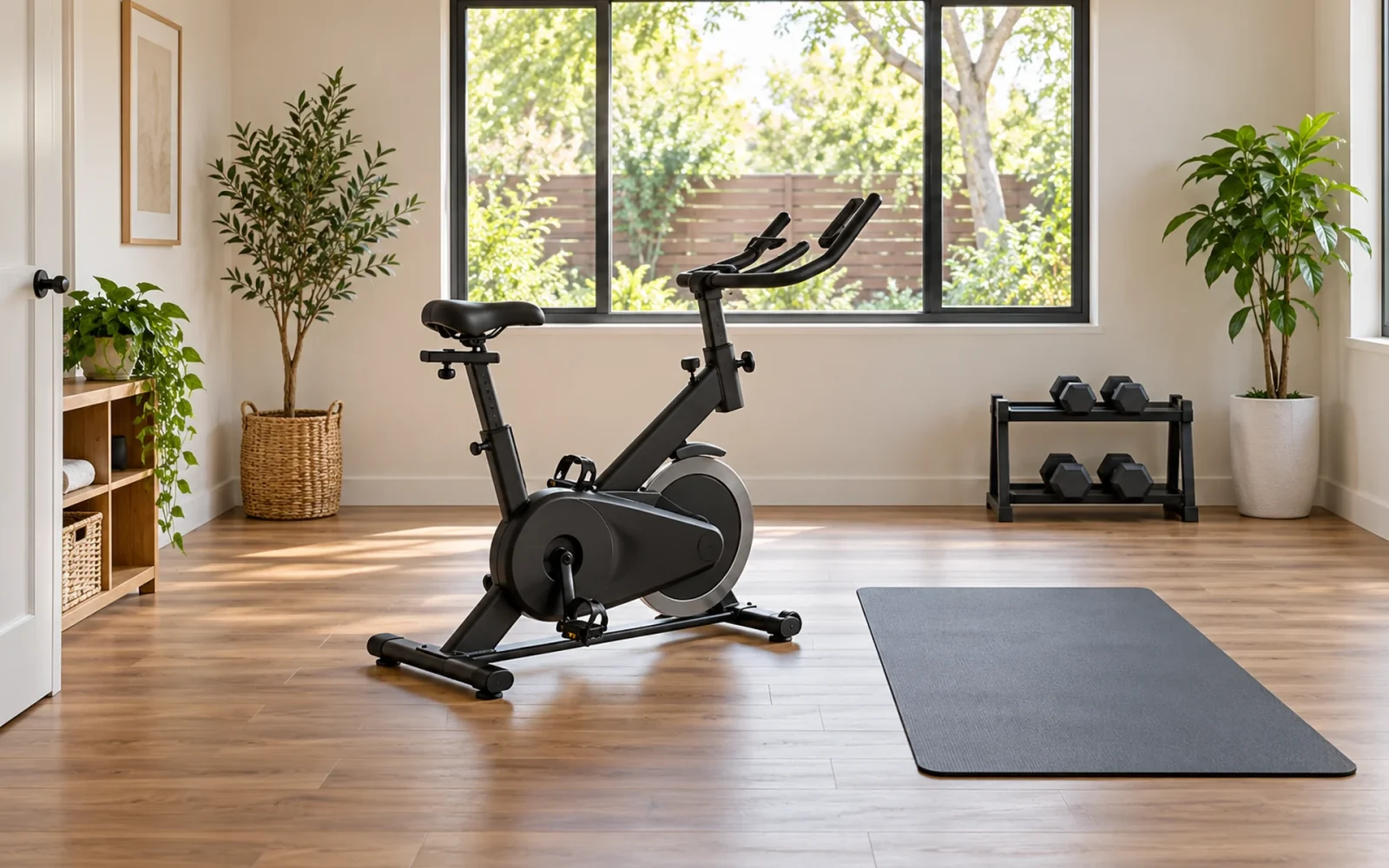
Remodel a home gym around the training you actually do, then check the room’s support, equipment clearances, flooring, moisture, and ventilation before buying machines. A protective mat and a space big enough to store the equipment do not establish that the room is ready for exercise.
Start with a limited routine and an equipment list. A bike and open movement area need a different plan from a loaded rack, heavy plate storage, or a treadmill used at incline.
Measure the equipment in use, not just parked
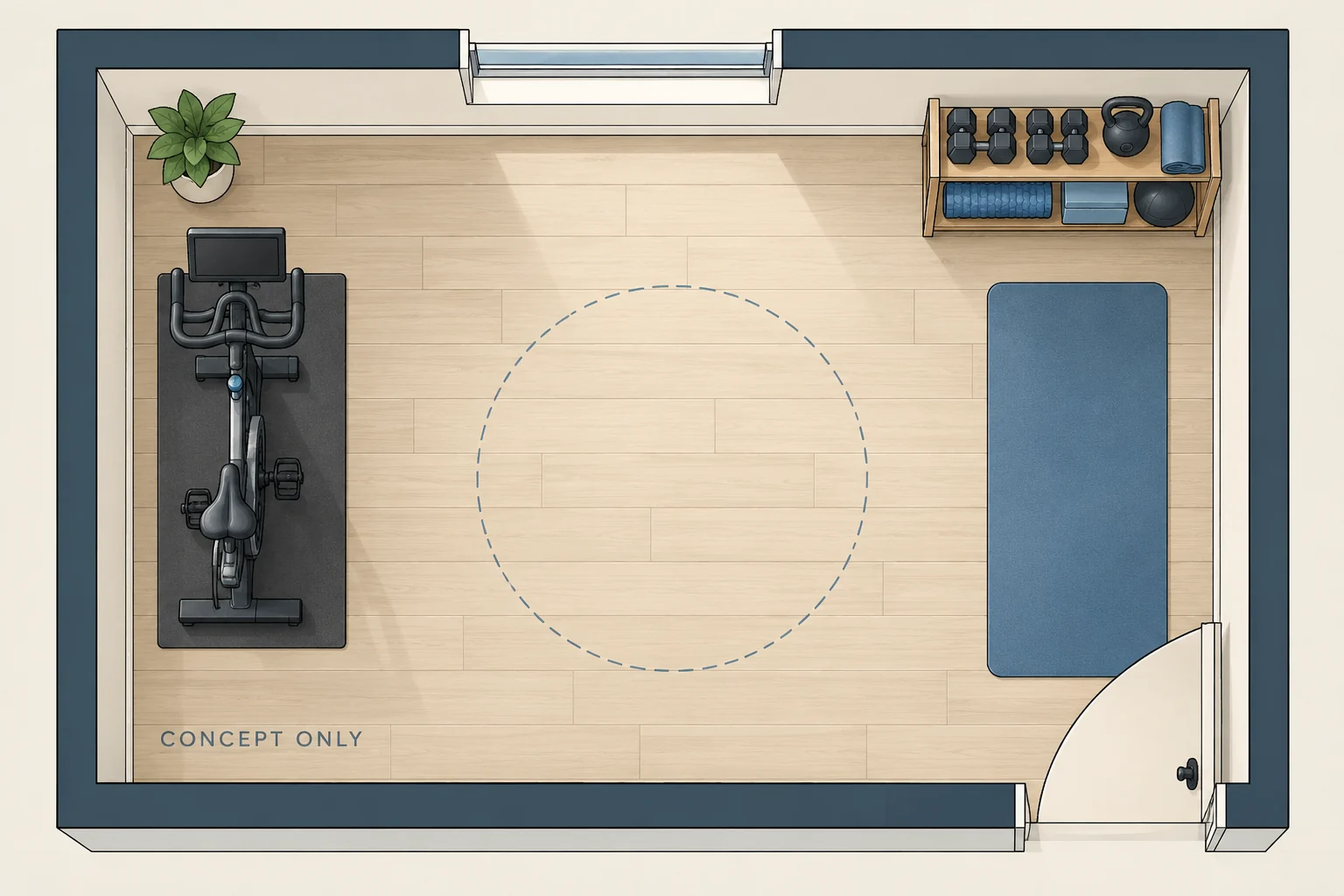
Plot the exact models on a room sketch. Add the space needed to mount, dismount, adjust, load, and service them. Include doors, storage access, the user’s movement, and the route between pieces.
For one concrete example, Peloton’s Tread setup guide calls for at least 78.7 inches behind that machine and 24 inches on each side. It also places floor-exercise mats beside the deck rather than directly behind it. Those model-specific instructions demonstrate why the machine’s footprint is not the complete space requirement; use the instructions for your chosen equipment.
Check height during the intended activity. The user’s position on a raised machine, incline, overhead movement, ceiling fittings, and moving equipment parts can all matter. A ceiling height that suits one routine is not a universal home-gym standard.
Measure the delivery route and assembled dimensions too. A machine that fits the room may still be difficult to bring through a stair turn or narrow doorway.
Assess floor support separately from surface protection
List equipment weight, stored weights, intended users, and how the equipment will be used. Concentrated loads and repeated movement deserve consideration, particularly on an upper floor or where the existing structure is uncertain.
Have a qualified professional assess suitability when the planned setup or building condition warrants it. A generic residential pounds-per-square-foot figure is not approval for a particular heavy machine or rack. Dividing the total weight by the entire room area can hide where the load is actually applied.
Rubber can serve a surface-protection or impact-management role within its specification. It does not establish additional structural capacity. A concrete slab also needs its condition and suitability considered rather than assumed from its material name.
Choose flooring for movement, stability, and compatibility
| Use | Surface questions |
|---|---|
| Stretching and floor exercise | Is the surface comfortable, stable for the movements, and easy to clean? |
| Stationary cardio equipment | Does the manufacturer permit the selected mat, and will the equipment remain stable? |
| Free weights | What impact is permitted, what protection is specified, and what supports the assembly below? |
| Mixed-use room | Will removable protection affect the existing finish, doors, transitions, or normal use? |
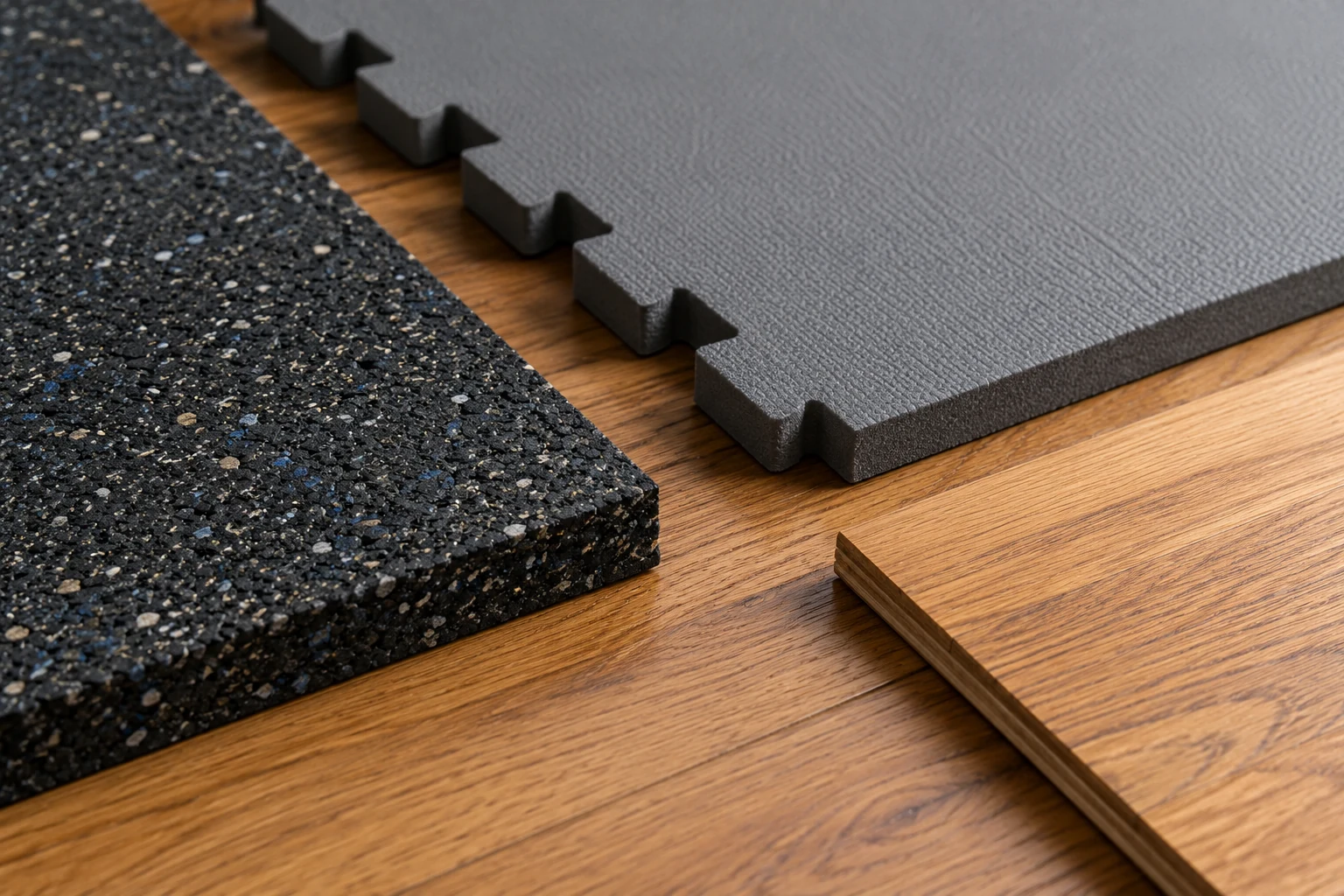
A softer surface is not automatically better beneath every machine or loaded stance. Check equipment and flooring instructions together, including compatibility with the existing finish, installation method, cleaning, and ventilation requirements.
Resolve dampness and damaged substrate before covering the room. An observation under a taped sheet does not replace the flooring manufacturer’s required evaluation. For a basement location, our basement moisture-control guide separates water sources, condensation, and humidity management.
Give air exchange and temperature their own plan
A circulating fan can make the room feel different without bringing in outdoor air. Heating, cooling, dehumidification, and ventilation perform different jobs. The EPA explains that most home heating and cooling systems do not mechanically bring fresh air indoors. Check what your actual system provides.
Discuss the room’s use with an appropriate HVAC professional when existing arrangements are insufficient. Consider equipment heat, occupancy, moisture, available supply and return paths, and the climate. Opening windows is not an identical solution in every season or air-quality condition.
Keep equipment and storage clear of intended ventilation paths. In a garage or converted space, establish suitability for the proposed use rather than assuming a portable fan makes the original room conditions acceptable.
Test noise and the everyday routine before expanding
Consider rooms below and beside the gym, household working hours, and the type of movement planned. Protective flooring may reduce some impact effects, but it does not guarantee that structure-borne vibration or sound will disappear.
Start with the core equipment once the room is suitable, follow the installation and access requirements, and check the experience during normal use. Keep storage low and organized where appropriate, preserve clear routes, and complete any required equipment anchoring through the specified process.
Add another machine only if the room still works with it in use. A gym you can enter, operate, clean, and share with the rest of the home is more valuable than a room filled to its storage capacity.

Ethan Miller
Ethan Miller writes about home improvement, interior design, cleaning, and everyday living at Home & Living Daily. He shares practical tips and simple ideas to help readers create more comfortable and functional homes.