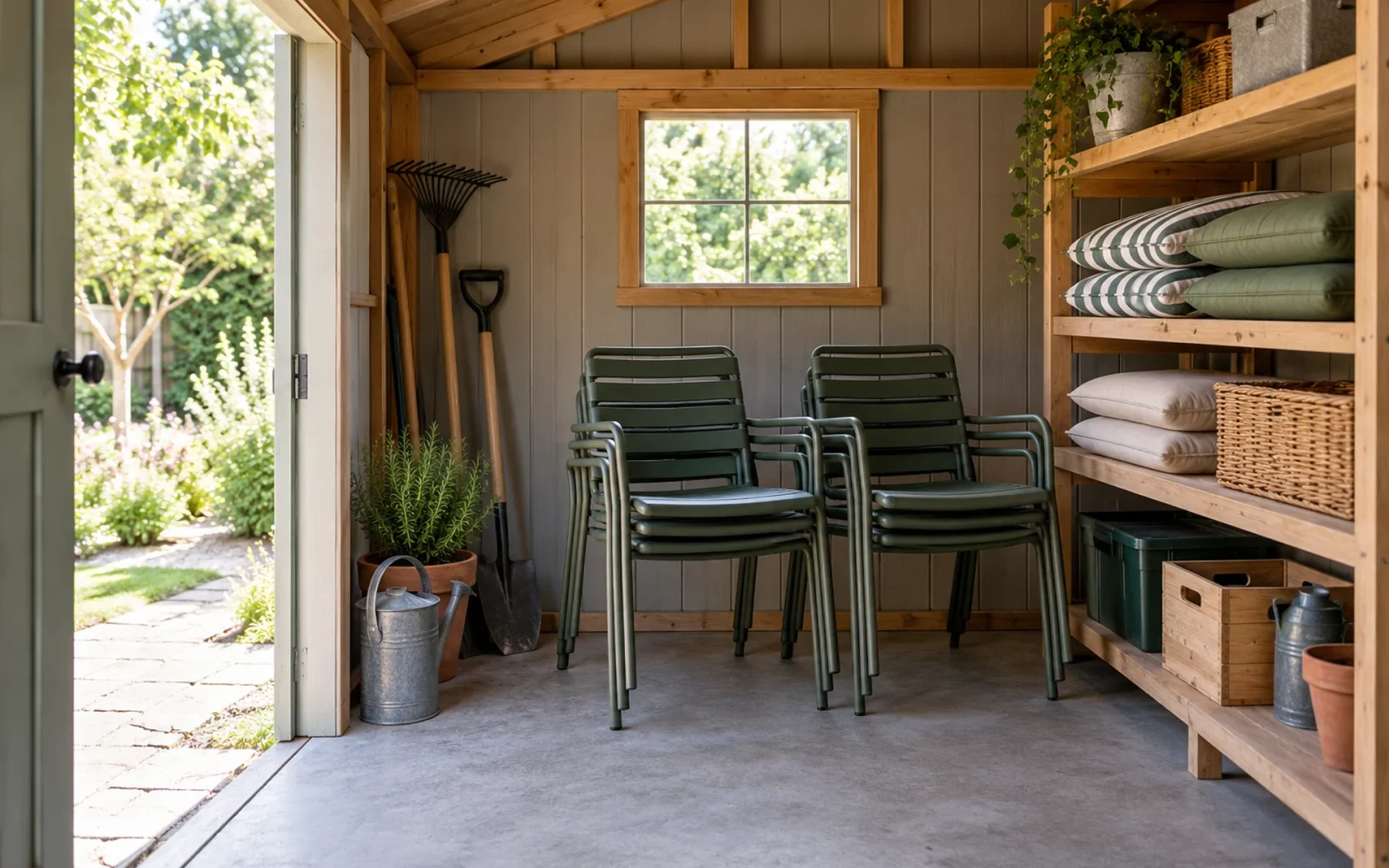
Store outdoor furniture for winter by cleaning each material appropriately, drying it completely, and separating items that need indoor shelter from frames permitted to remain outside. Dry cushions and a ventilated, secure storage arrangement matter more than simply pulling a waterproof cover over the whole set.
Start while there is still suitable drying weather. Washing everything on the last evening before a freeze can leave you choosing between storing it wet and leaving it exposed.
Sort the furniture before moving it
Make three groups: items going into a dry sheltered space, items staying outdoors under suitable protection, and pieces that need repair before storage. Use the instructions for each product, including mixed-material furniture. A weather-resistant frame does not establish that its cushion filling, tabletop, or fittings tolerate the same conditions.
Prioritize loose cushions, pillows, umbrella canopies, removable fabric, and parts whose instructions require shelter. Check glass, stone, composite, and ceramic tops for their own freezing and storage restrictions. Do not infer freeze resistance from weight or appearance.
Photograph the assembled set and label small hardware if permitted disassembly will help. Bag clean, dry fasteners with their corresponding component so spring assembly does not become a search for unfamiliar bolts.
Finish cleaning early enough for complete drying
Remove leaves, pollen, food residue, and dirt before packing. Use the appropriate gentle method rather than pressure-washing every material. Our outdoor furniture cleaning guide separates wood, coated metal, woven surfaces, plastic, and fabric.
Check joints, undersides, drain openings, and feet. Deal with chipped coatings or other minor damage using the maker’s approved repair method, allowing any repair product to cure before covering. Storage is a poor place to conceal an unresolved wet or rusting joint.
Dry components with air circulating around them. Watch for water retained between stacked surfaces and inside cushion seams or filling. “It has been outside in the sun” is not a sufficient drying check when thick padding still feels cool and damp inside.
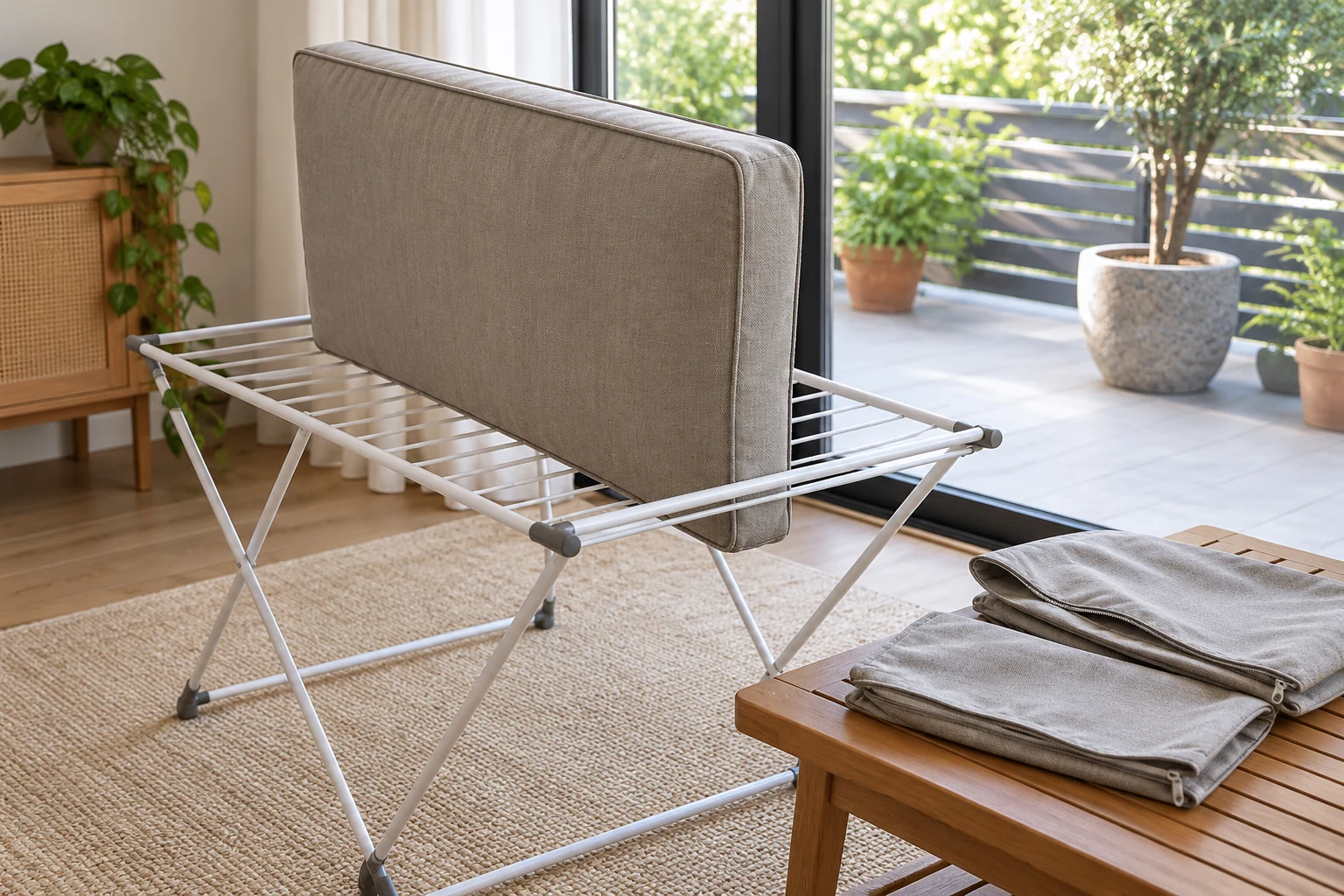
Pack cushions separately from the frames
Follow the fabric and cushion instructions before removing covers. A zipper may be intended for assembly rather than routine machine washing. The separate guide to cleaning outdoor cushions covers washing and drying decisions.
Once fully dry, keep cushions in a clean, dry place with an appropriate bag, box, or shelf arrangement. Do not tightly compress them unless their construction allows it. Avoid putting the entire dry collection into a damp shed or onto a floor that receives water under the door.
Check the container itself for moisture before loading. A weatherproof deck box can still receive condensation or water when opened, and it does not dry a damp cushion. If you discover mustiness, inspect and address the cause rather than adding fragrance and shutting the lid.
Choose an indoor arrangement you can access
A dry garage, shed, or other appropriate unheated shelter may suit many frames, but check the product’s storage instructions. Some wooden furniture should avoid abrupt changes into a hot, dry room. Leave space for circulation and future inspection rather than pushing every surface against a damp wall.
Stack only pieces designed to stack. Use appropriate protection at contact points without enclosing moisture. Keep stacks stable and low enough to handle, and avoid loading heavy objects onto a table or chair simply because its surface is convenient.
Maintain the route to the doorway and required access to equipment and stored items. Plan where large pieces will fit before carrying them through the door. Lift by the frame or designated points with suitable help; do not pull a heavy sofa by its weave or drag wooden legs across the floor.
Protect the furniture that must stay outside
Use a cover sized for the actual grouping and suitable for the furniture. Secure its straps as designed and preserve its vents. Support the top where the cover system calls for it so water does not collect in a deep sag. Keep the furniture’s drainage paths open and avoid letting the cover hem sit in standing water.
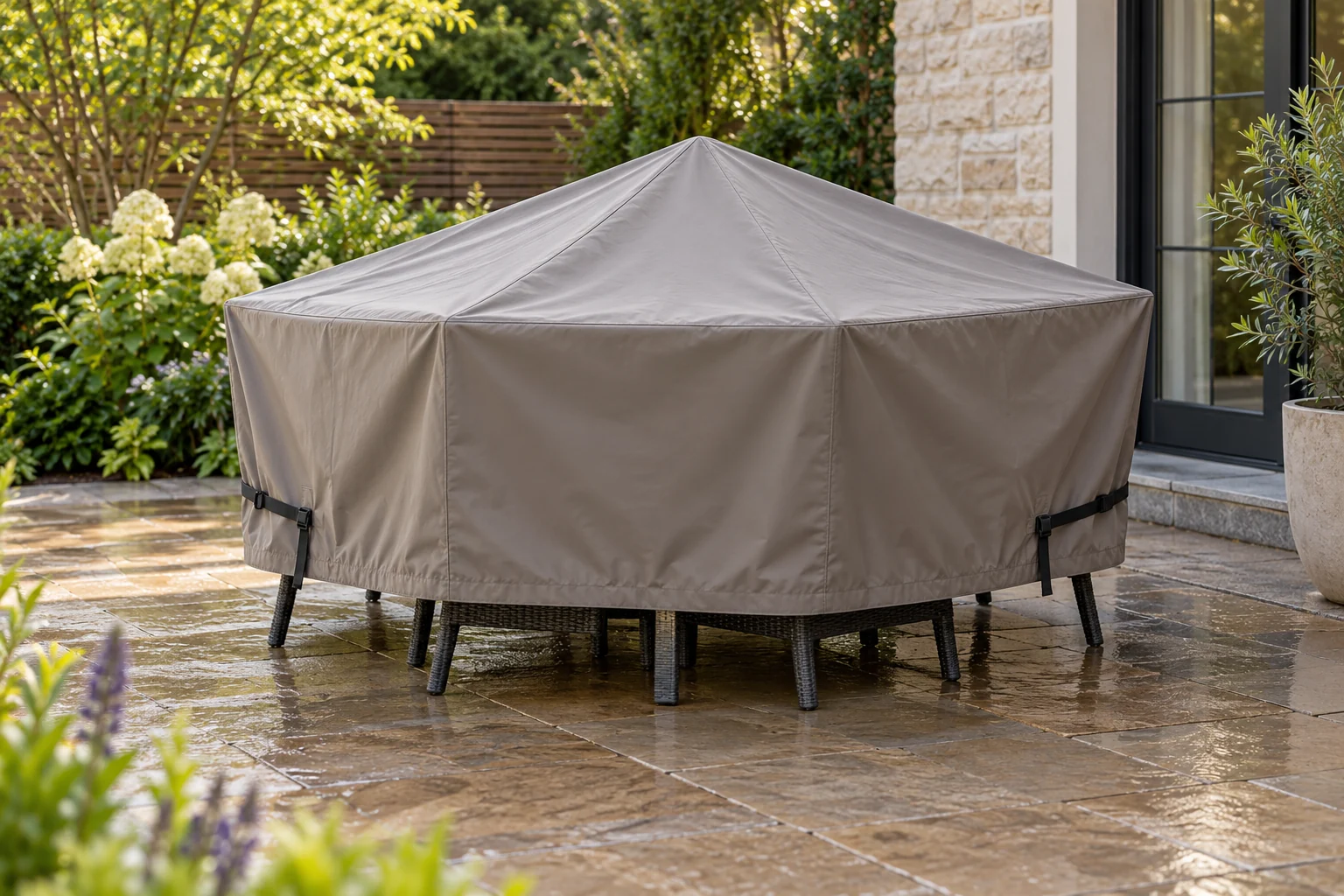
Keep pieces on an appropriate stable, draining surface rather than wet soil. Use any approved supports or foot protection without making the furniture unstable. Remove and store an umbrella as instructed rather than leaving it open to support a cover.
A cover does not make furniture stormproof or snow-load rated. Follow the product’s guidance for wind, snow, and ice. Do not use a sharp tool, hot water, or an improvised heavy weight to manage buildup or hold a cover down.
Inspect during storage and reopen gradually
After strong weather and periodically through the season, check straps, pooled water, condensation, and signs of leaks. Pick a dry opportunity to lift the cover and inspect underneath. Correct the source of moisture rather than repeatedly sealing it back inside.
In spring, uncover in suitable weather, check stability and hardware, and clean only as needed. Return dry cushions after confirming the frames and storage contents are sound. A storage plan succeeds when the set comes back usable without a large repair job hidden beneath the cover.

Ethan Miller
Ethan Miller writes about home improvement, interior design, cleaning, and everyday living at Home & Living Daily. He shares practical tips and simple ideas to help readers create more comfortable and functional homes.