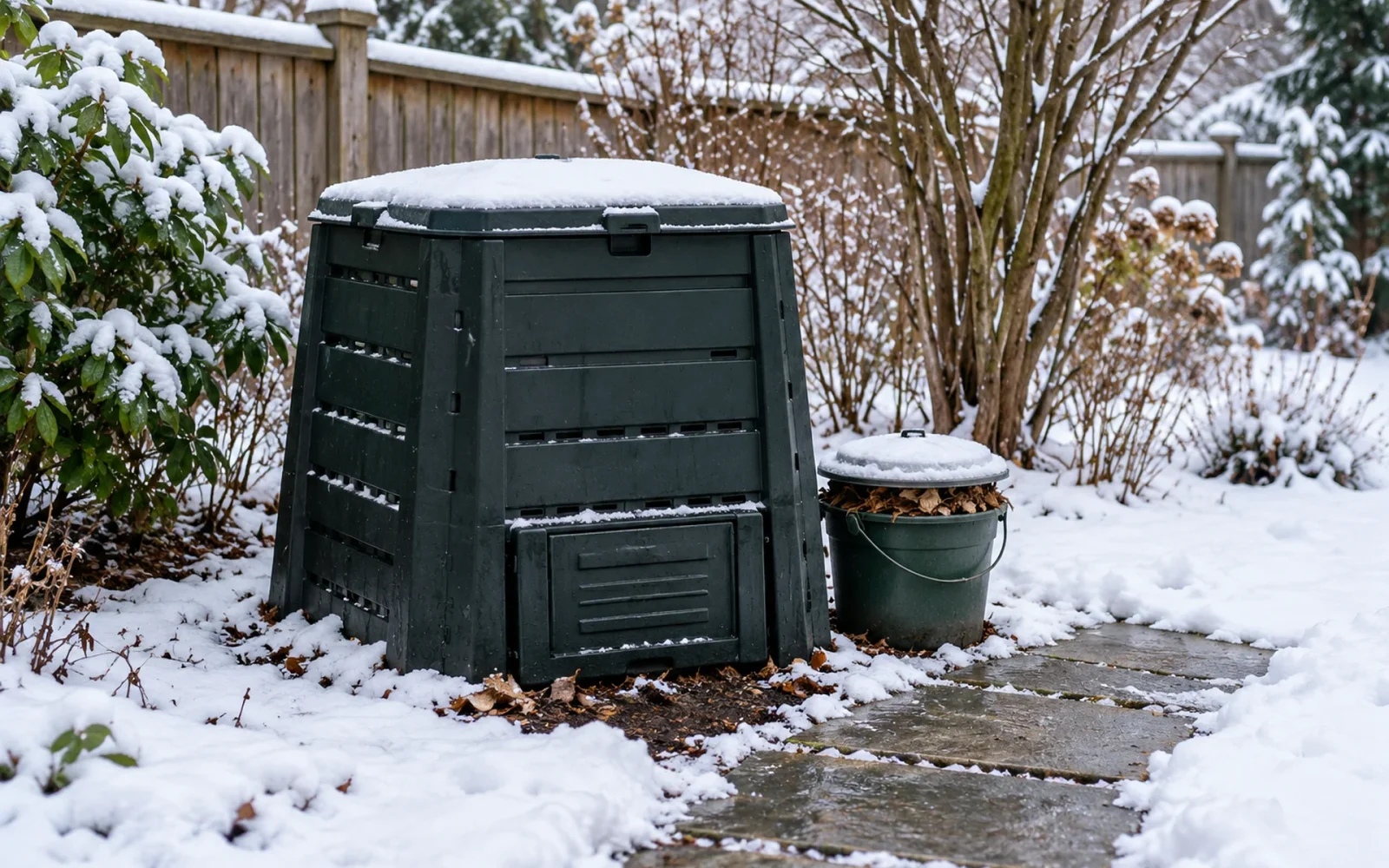
Yes, you can continue composting in winter, but continuing to add suitable material is different from keeping a pile hot. Decomposition slows in cold weather and stops in material that is completely frozen. The batch can resume breaking down as conditions improve.
Prepare enough space for ingredients that will shrink more slowly, keep dry browns available, and plan what you will do during the spring thaw. You do not need a steaming pile to maintain a useful winter routine.
Decide what winter means for your site
In a long deep freeze, a small outdoor bin may mainly hold material until warmer weather. In a mild wet winter, the greater problem may be water filling the spaces that should contain air. A dry winter can leave exposed material short of moisture even when the air feels cold.
UNH Extension explains that fully frozen compost stops decomposing, while a sufficiently protected interior may stay active. That distinction is useful when setting expectations: the surface and center can behave differently, and not every household pile will retain heat.
Choose a goal you can manage. Saving and layering inputs for later processing can be a sensible result when active winter composting is impractical.
Make space, store browns, and keep the route usable
If you have genuinely finished compost, harvest it before the coldest period to free capacity. Do not empty unfinished material into the garden simply to make room. A small bin or tumbler can fill quickly when the incoming scraps no longer break down at their summer pace.
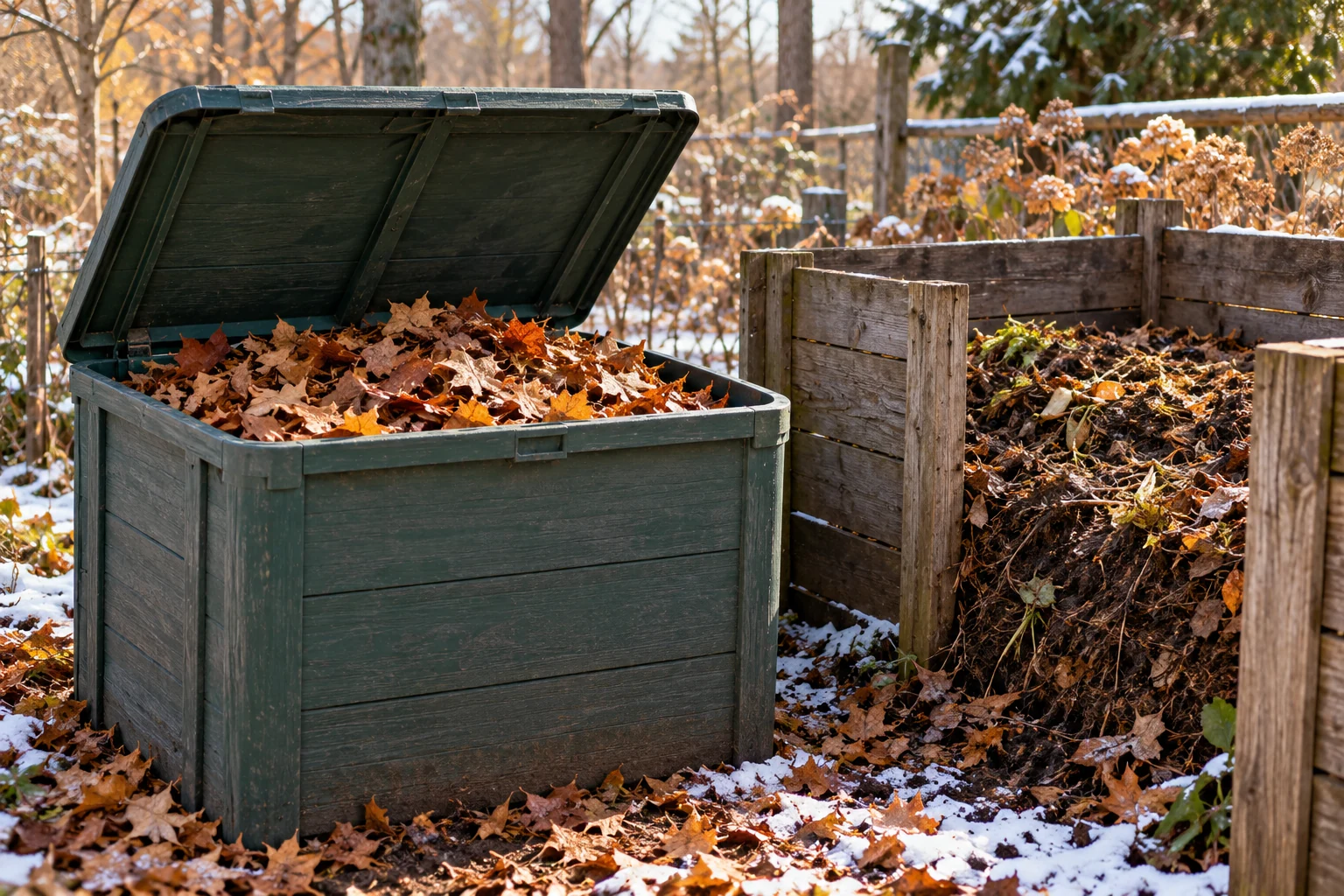
Store clean dry leaves, torn plain cardboard, or other suitable browns under protection. A reserve that becomes a soaked mat is harder to use. Position it so you can reach it at the same time as the bin.
Keep the approach safe and accessible, and check that lids and openings will remain usable. Do not force frozen latches or try to rotate a solid frozen tumbler. Follow the container’s weather and operating instructions.
Choose any backup collection capacity before the main bin fills. A permitted collection service or another appropriate processing route is preferable to overflowing a lid or compressing every new addition into an already packed container.
Keep feeding suitable material, with browns
Continue the ordinary input rules for your system. Freezing does not make meat, dairy, greasy leftovers, pet waste, or unsuitable packaging appropriate for a conventional backyard pile.
Prepare larger vegetable scraps into manageable pieces, remove stickers, and add them with suitable browns rather than building an exposed layer of food. Where the material is accessible, tuck fresh inputs into the working area and cover them appropriately.
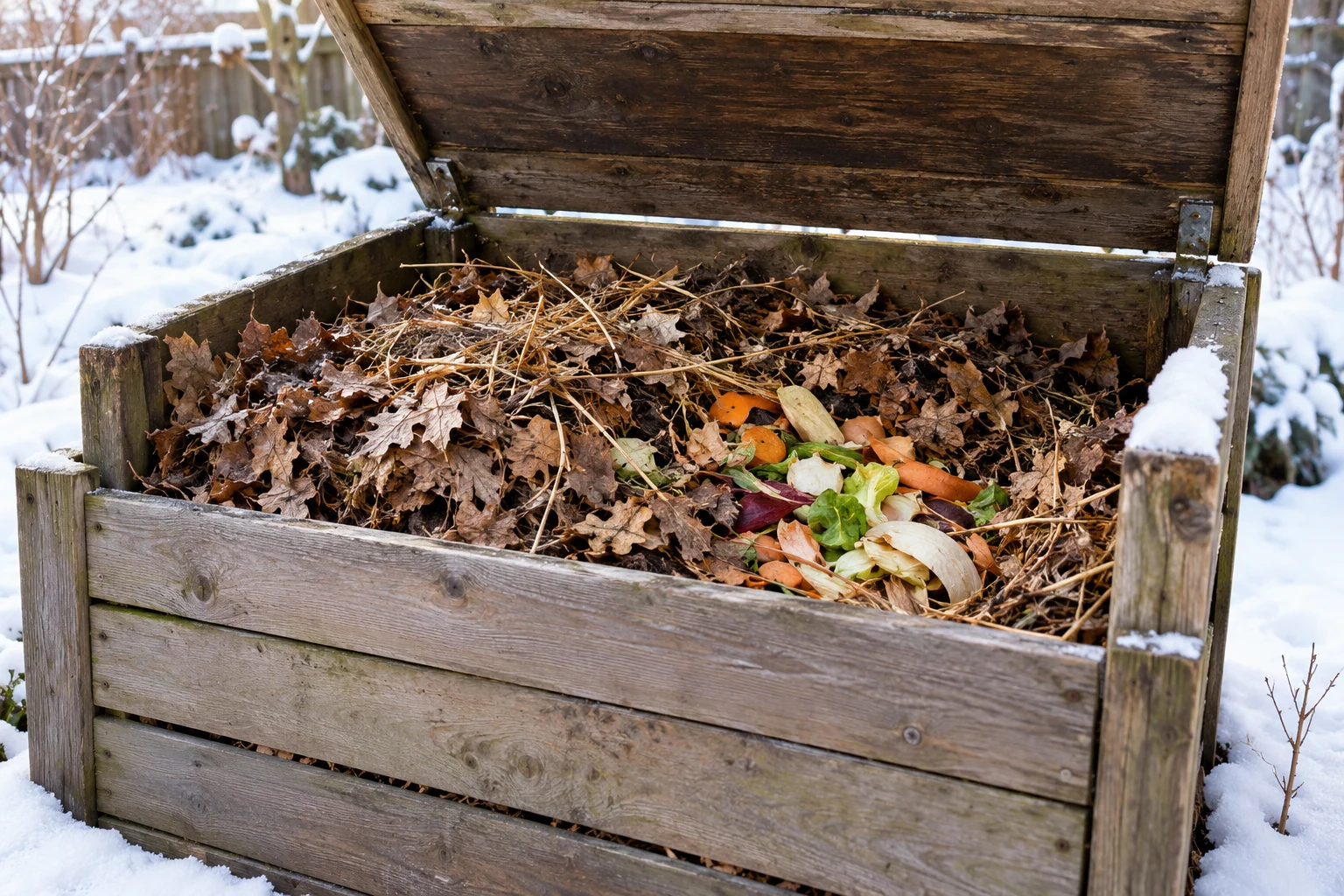
If the pile is frozen solid, do not break it apart just to insert a small bowl of scraps. Use an appropriate accessible area or backup route and expect the new material to need further processing later.
For indoor collection between trips, use a washable container and empty it regularly. Chilled or frozen storage can be convenient where household space and the receiving system allow it. That is storage, not evidence that composting has taken place.
Insulate thoughtfully and turn for a reason
The Cornell winter-composting factsheet describes protecting a bin with materials such as stored leaves and notes that winter turning can release retained heat. Insulation can moderate exposure, but it cannot guarantee that every small batch stays active.
Keep ventilation and required drainage functioning. Do not wrap an aerobic system airtight to retain warmth or let insulation obstruct its openings. Manage covers so excess rain or snowmelt does not create a wet mass.
In a deeply cold pile, avoid routine turning simply to follow a summer calendar. In a mild spell, inspect before deciding whether mixing is useful. Wet compacted material may need correction, whereas a reasonably structured batch can be left to retain its conditions.
If you are deliberately maintaining an active hot process through winter, follow a complete method suited to the pile size and climate. Frequent turning alone does not create that process.
Expect a different moisture problem during the thaw
When the contents thaw, previously frozen scraps can release water. A winter’s additions may also contain more greens than you realized, especially if the brown reserve ran out.
Inspect the inside once it is workable. Break apart dense sections, incorporate suitable browns where needed, and restore the mixture’s air spaces. Check the site for persistent incoming water instead of treating every wet batch with more dry material indefinitely.
A sour or rotten smell calls for inspection and correction. Do not mask it with powders or assume it means the whole batch must be thrown away. Resume management based on the actual condition and your chosen method.
Do not harvest by season alone
A bin filled in winter is not automatically ready because spring has arrived. Recent scraps, slow woody material, and frozen pockets can still be unfinished.
Separate a finishing batch from new inputs, assess breakdown throughout, and allow curing before sensitive plant use. A small system may need time after thawing before it produces a usable harvest.
If winter capacity repeatedly becomes the limiting factor, change the collection or processing plan for the next cold season. Keeping a manageable, contained supply of material and browns is a useful foundation, even when most decomposition happens later.

Ethan Miller
Ethan Miller writes about home improvement, interior design, cleaning, and everyday living at Home & Living Daily. He shares practical tips and simple ideas to help readers create more comfortable and functional homes.