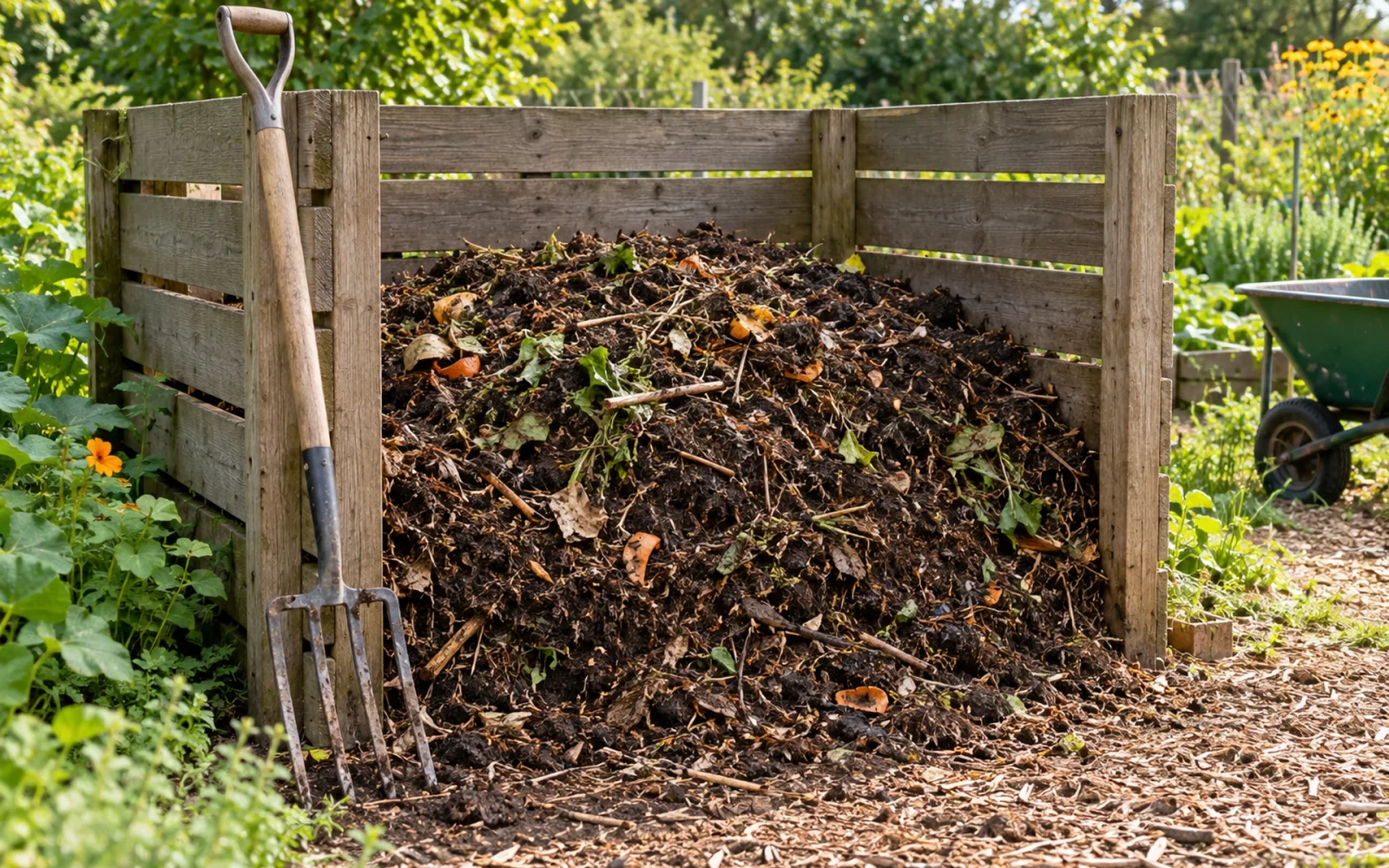
Turn compost according to the method and the material’s condition. An actively managed quick-compost batch may be turned every few days, while an ordinary slower backyard pile may only need turning every few weeks or when conditions call for it. A worm bin and a batch being left to cure should not follow the same turning routine as an active hot pile.
Inspect moisture, texture, and activity before deciding that another turn is the answer. Turning a dry pile more often does not supply its missing water.
Choose a routine that fits the goal
| Method or stage | How to think about turning |
|---|---|
| Actively managed quick-compost batch | Frequent turning can be part of the method; Oklahoma State gives three to four days for actively decomposing material |
| Ordinary managed backyard pile | Occasional turning can be enough; Illinois describes a two-to-four-week example |
| Low-effort passive pile | Can decompose with little turning, accepting a slower and less uniform process |
| Tumbler | Use the model’s operating guidance and inspect whether the contents actually mix |
| Worm bin | Maintain suitable bedding and feeding; do not turn it like a hot pile |
| Curing batch | Preserve suitable moisture and air without restarting an unnecessary intensive routine |
Oklahoma State’s quick-composting guidance links its frequent-turning example to active decomposition. Illinois Extension describes a different routine for its household-pile approach. The schedules describe different management choices; their average would not create a better rule.
What a turn is meant to accomplish
A useful turn redistributes material from the outside toward the center, opens compacted areas, and gives you a chance to assess moisture throughout. It is more than stirring the visible top.
In an active pile, the center and edges can behave differently. Rebuilding the mass helps expose less-processed material to more useful conditions. It also reveals pockets that stayed dry or became wet and dense.
Turning is only one way air reaches a pile. Its structure and the mix of materials also matter. A pile that repeatedly collapses into a wet block may need a change in ingredients and incoming moisture rather than endless turning.
Inspect before you lift the fork
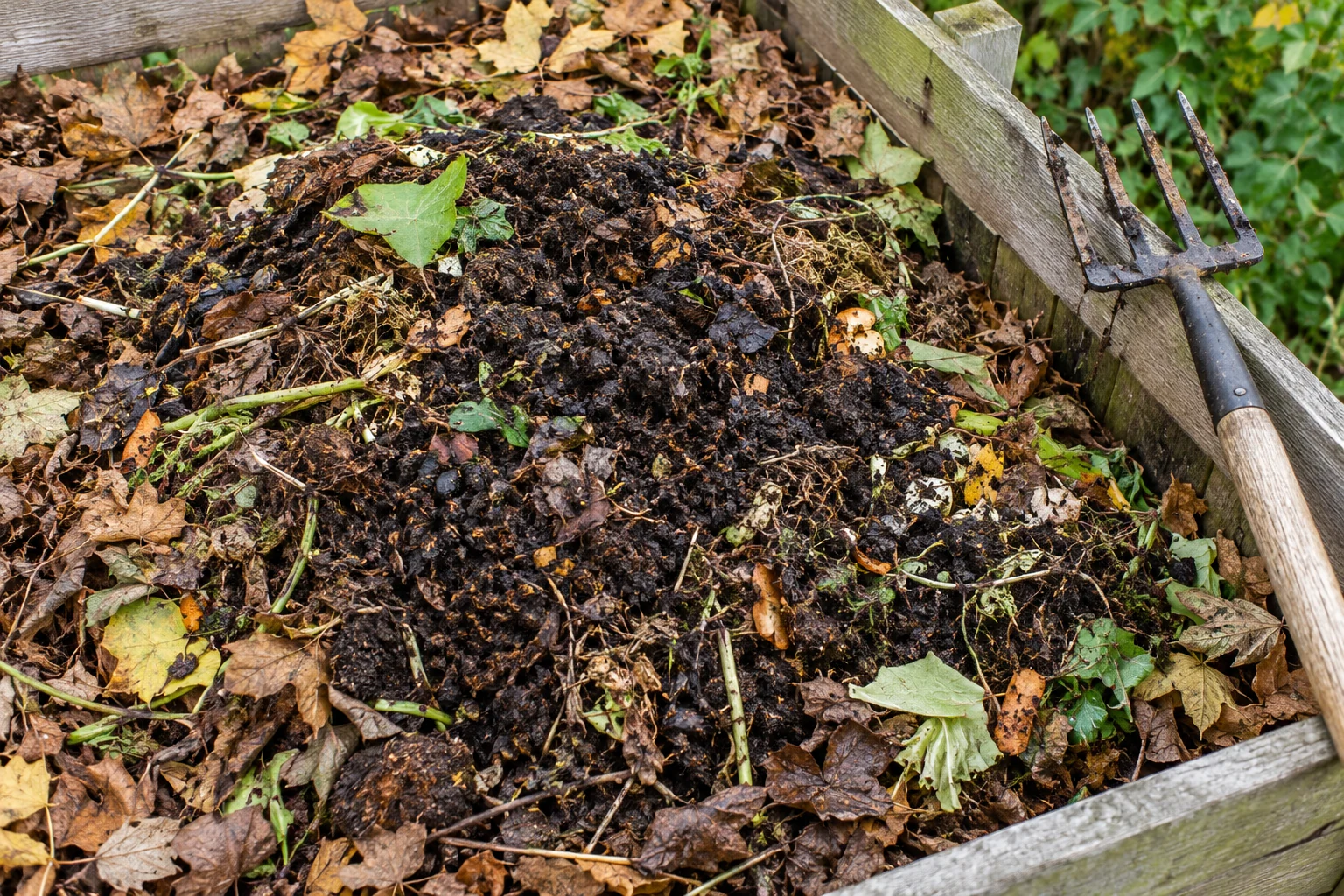
Wet, compacted, or strongly off-smelling material: open and redistribute it while correcting excess moisture and the mixture. More water is unlikely to help a dripping center.
Dry material that looks unchanged: add moisture gradually during appropriate mixing. Repeatedly fluffing it in hot dry weather can make the moisture problem harder to manage.
A previously hot batch cooling: inspect whether less-processed material remains and whether the active method calls for turning. Cooling can also mean that the active phase is nearing its end, not that every pile needs more fresh food.
A frozen pile: do not force it apart to satisfy a calendar. Cold-weather management has different heat and access tradeoffs.
A compost thermometer can help track an active method, but a single cool reading does not identify the cause. Consider inputs, moisture, size, and weather alongside the temperature trend.
How to turn a manageable pile
- Make room beside the pile or in an adjacent bay.
- Move the outside material into the area that will become the new center.
- Break apart mats and large clumps as you encounter them.
- Distribute moisture or suitable corrective material through the batch as needed.
- Move the more processed center outward while rebuilding a loose mass.
- Inspect again after the pile has had time to respond.
Use a pile size, opening, and tools that suit what you can comfortably handle. If frequent full turns are impractical, choose a slower method or a more manageable system rather than treating an intensive schedule as a requirement for all composting.
For a tumbler, check that ingredients tumble rather than a wet ball rolling intact. Extra rotations cannot solve an overfilled or badly balanced drum. Our guide to using a compost tumbler covers that batch routine.
Can you turn compost too often?
Yes, in the practical sense that more turning can become unnecessary work and release heat or moisture you want to retain. It may also distract you from the actual problem. A dry, carbon-heavy pile needs a considered correction, not simply another daily turn.
Match the routine to your goal. If you are not trying to run an intensive quick-compost method, you do not need to imitate its labor schedule. Conversely, a deliberate active method needs its complete management plan, not just frequent turning added to an unrelated pile.
Ease off when the batch is finishing
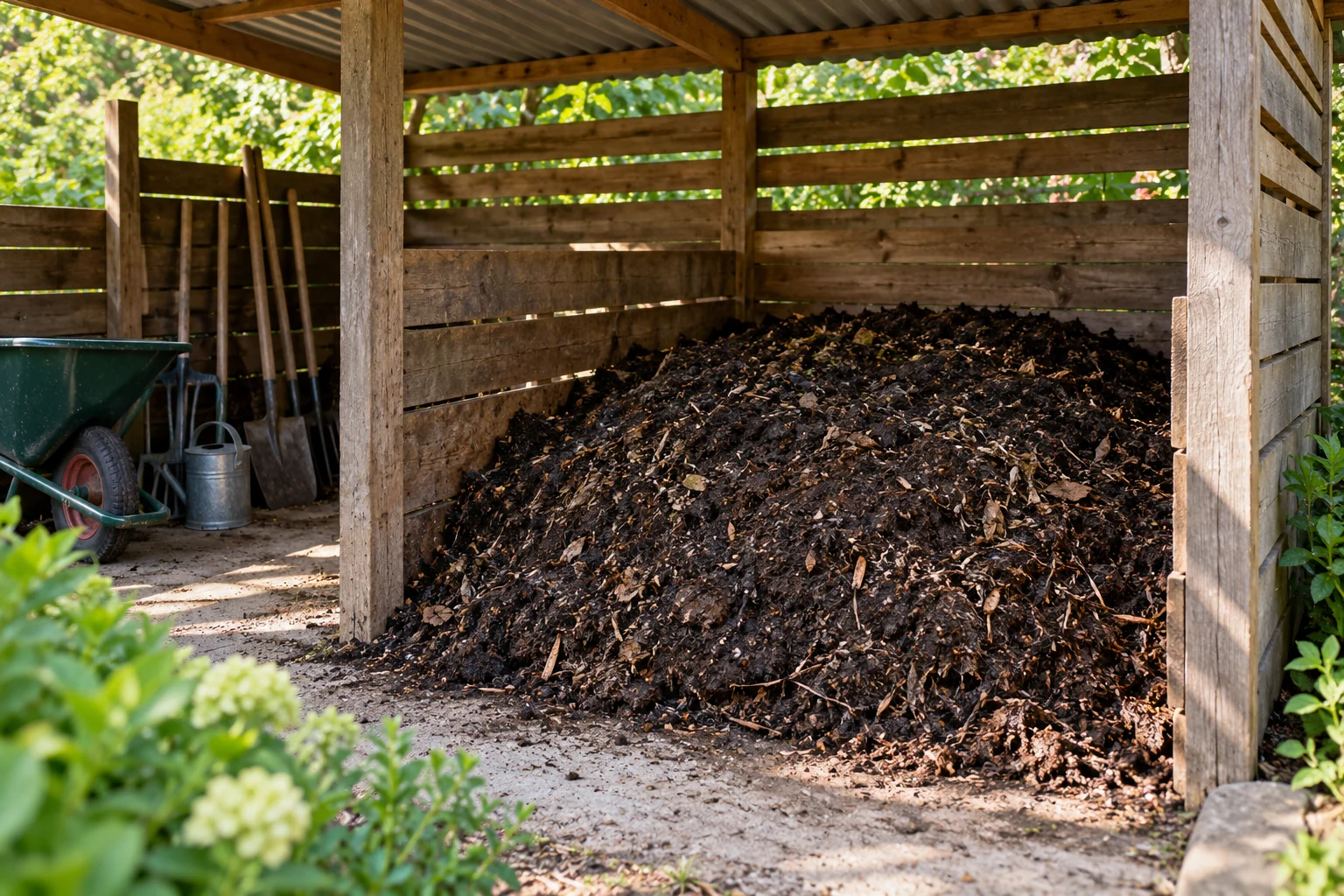
When most soft inputs have broken down and appropriate mixing no longer restarts significant activity, assess whether the batch is ready for curing. Stop adding fresh scraps to that material and give it finishing time.
Keep it appropriately moist and aerated, correcting problems if they appear. It does not need an automatic return to the busiest turning schedule. The useful stopping point is when the active work has served its purpose, not when you reach a predetermined number of turns.

Ethan Miller
Ethan Miller writes about home improvement, interior design, cleaning, and everyday living at Home & Living Daily. He shares practical tips and simple ideas to help readers create more comfortable and functional homes.