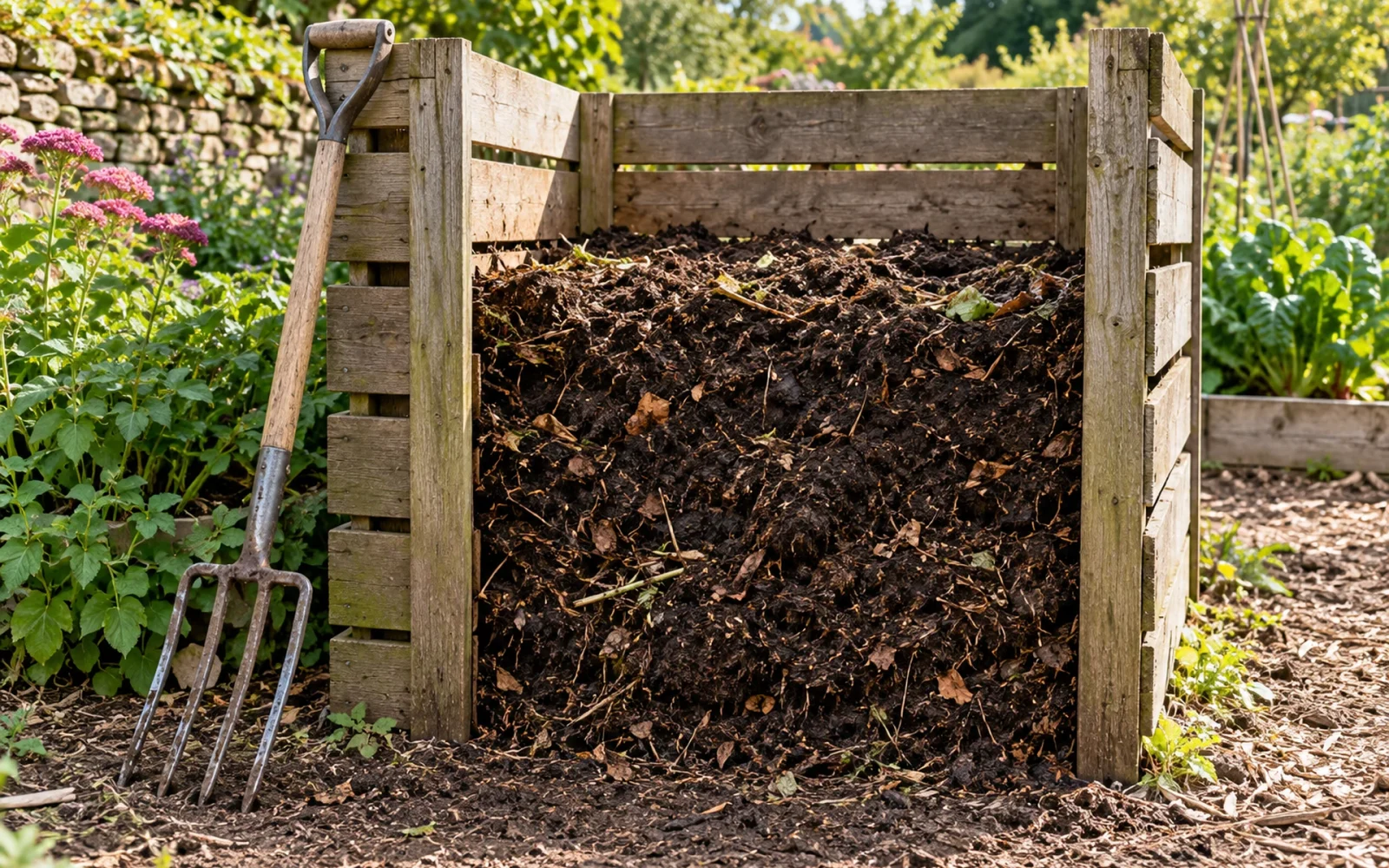
Home compost usually takes months rather than days. Iowa State Extension gives two to four months for a well-managed pile of mixed, shredded plant material, while unshredded material left largely unattended can take a year or longer. Your method, ingredients, weather, and management determine where a batch falls.
Time alone does not establish that compost is ready. Separate the active breakdown period from curing, and judge the actual material before putting it around roots or into a container mix.
Choose a time range that matches the method
A deliberately built and managed batch can progress differently from a bin receiving fresh scraps every day. The Iowa State timing guidance links its shorter range to regular watering and turning, with a mixture of shredded material. The slower example has different inputs and management.
| Your setup | Useful planning expectation | What the calendar does not establish |
|---|---|---|
| Managed mixed batch | Several months can be realistic; Iowa State gives two to four months for its stated conditions | Whether every pocket is mature or the batch has had adequate finishing time |
| Largely unattended pile with bulky material | A year or longer may be needed | That an old pile has finished if it is dry, compacted, or repeatedly fed |
| Continuous-feed household bin | Different layers have different ages | That all its contents share the age of the container |
| Tumbler or other enclosed system | Capacity, inputs, and the operating method still matter | That a short advertised cycle produces fully cured compost |
Climate changes the timeline. A pile started before a long cold period may make little visible progress until conditions improve. A dry summer can also slow decomposition if moisture is not maintained.
Decide when this batch began and when feeding stops
Write down the date you built or separated the batch, not simply when you bought the bin. If you keep adding fresh peelings to an old mass, the new inputs still need time to decompose.
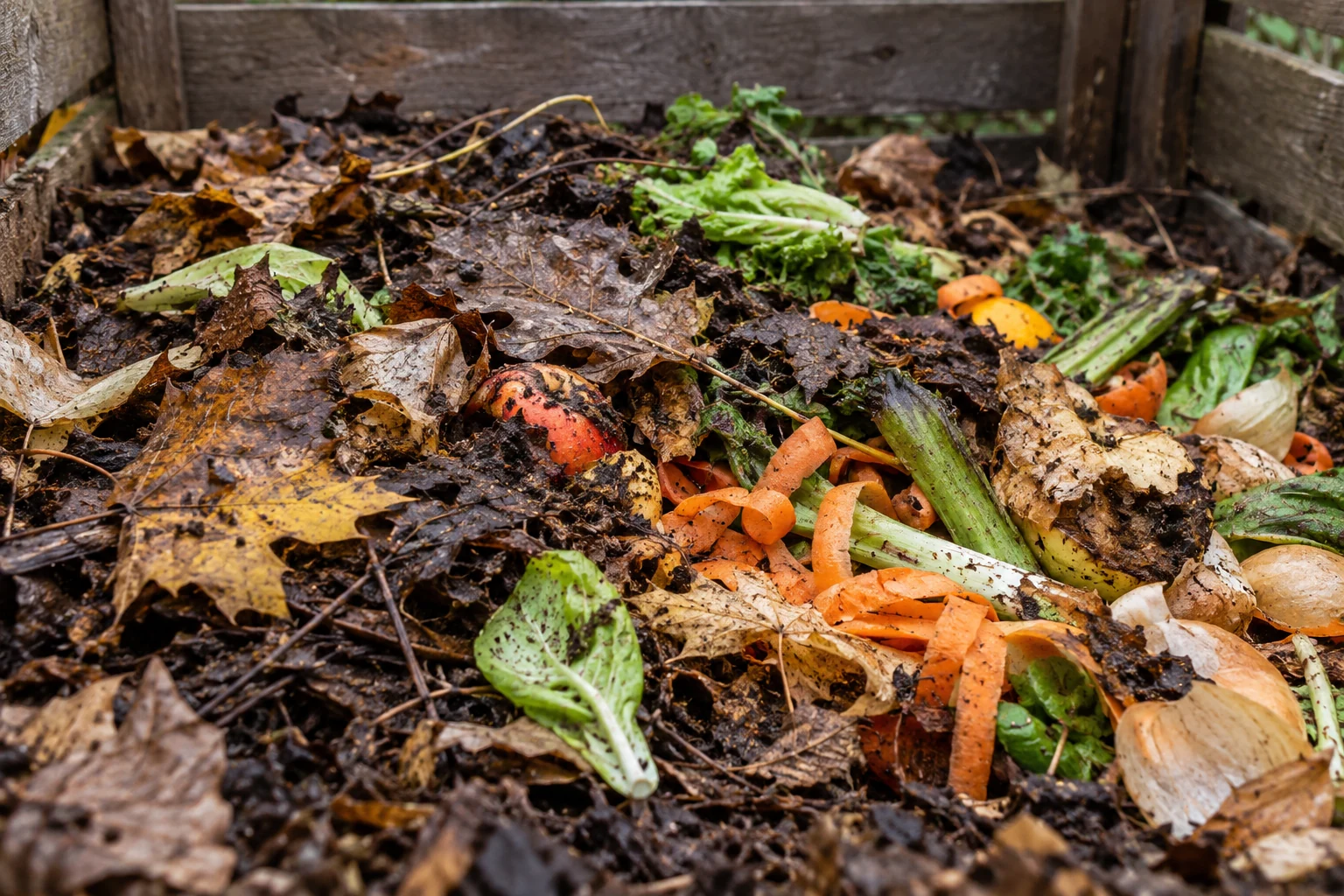
When you want a uniformly finishing batch, stop fresh additions and send the next scraps elsewhere. A second bay, chamber, or suitable collection route makes that possible. Without separation, expect mixed ages and assess what you remove rather than assuming the whole bin is ready.
Our guide to using a compost tumbler explains why a rotating drum still needs a batch and curing plan.
Why large pieces can remain after the rest changes
Soft food scraps, thin leaves, fruit stones, eggshells, and woody stems do not disappear at the same rate. Larger or tougher pieces can remain visible in an otherwise well-processed batch.
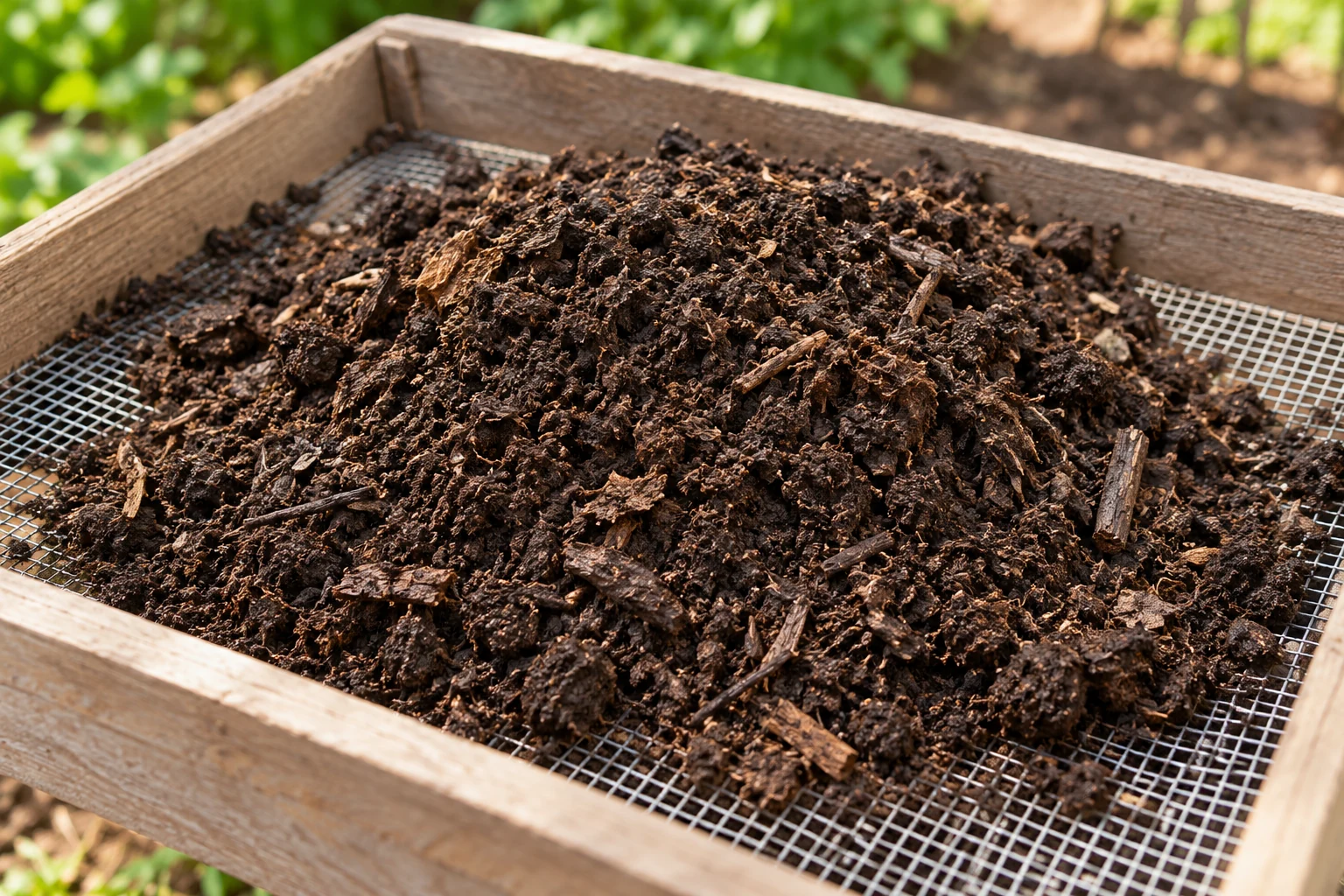
Screening can separate coarse remnants for another batch, but it cannot make the fine fraction mature. Nor does removing recognizable food establish that contaminants, weed seeds, or pathogens have been dealt with. Those are different questions from texture.
Reduce bulky material appropriately before starting, distribute ingredients rather than leaving dense pockets, and keep the pile’s moisture and air in a usable range. There is no additive that replaces all those conditions.
Use several readiness signs together
Look for a loose, earthy material in which most soft original ingredients are no longer recognizable. Check multiple parts of the batch, including damp corners and the bottom, rather than judging one attractive handful from the surface.
For a pile that has been actively heating, declining activity and a lack of renewed heating after appropriate mixing can be useful signs of progress. A cold pile that never heated because it is frozen, too dry, or too small is not proven mature by its temperature.
Strong sour, rotten, or ammonia-like odors are a reason to investigate conditions and allow further processing. A pleasant smell is helpful, but it is not a laboratory certificate. Be especially conservative when preparing a mix for seeds or sensitive young plants.
Allow a finishing stage without fresh scraps
Curing gives the material time to stabilize after the most active breakdown. Keep it appropriately moist and aerated, protected from becoming waterlogged or completely dry. This is not the stage for restarting daily food additions.
The required period varies with the process and intended use. Do not take a seller’s active-cycle time, add an arbitrary number of days, and assume the result suits every plant. If the material remains uncertain, continue curing or use a known mature supply for the immediate planting task.
Change the condition that is slowing it down
If a batch appears stalled, inspect before intervening. Dry recognizable leaves need a different correction from a heavy wet mass. A pile of large woody pieces needs more time or preparation, not simply more water. Winter cold may call for patience rather than frequent turning.
Record the change you make and compare the material later. That helps you learn the pace of your system. For planning, leave flexibility in the planting schedule rather than depending on an exact compost harvest date.

Ethan Miller
Ethan Miller writes about home improvement, interior design, cleaning, and everyday living at Home & Living Daily. He shares practical tips and simple ideas to help readers create more comfortable and functional homes.