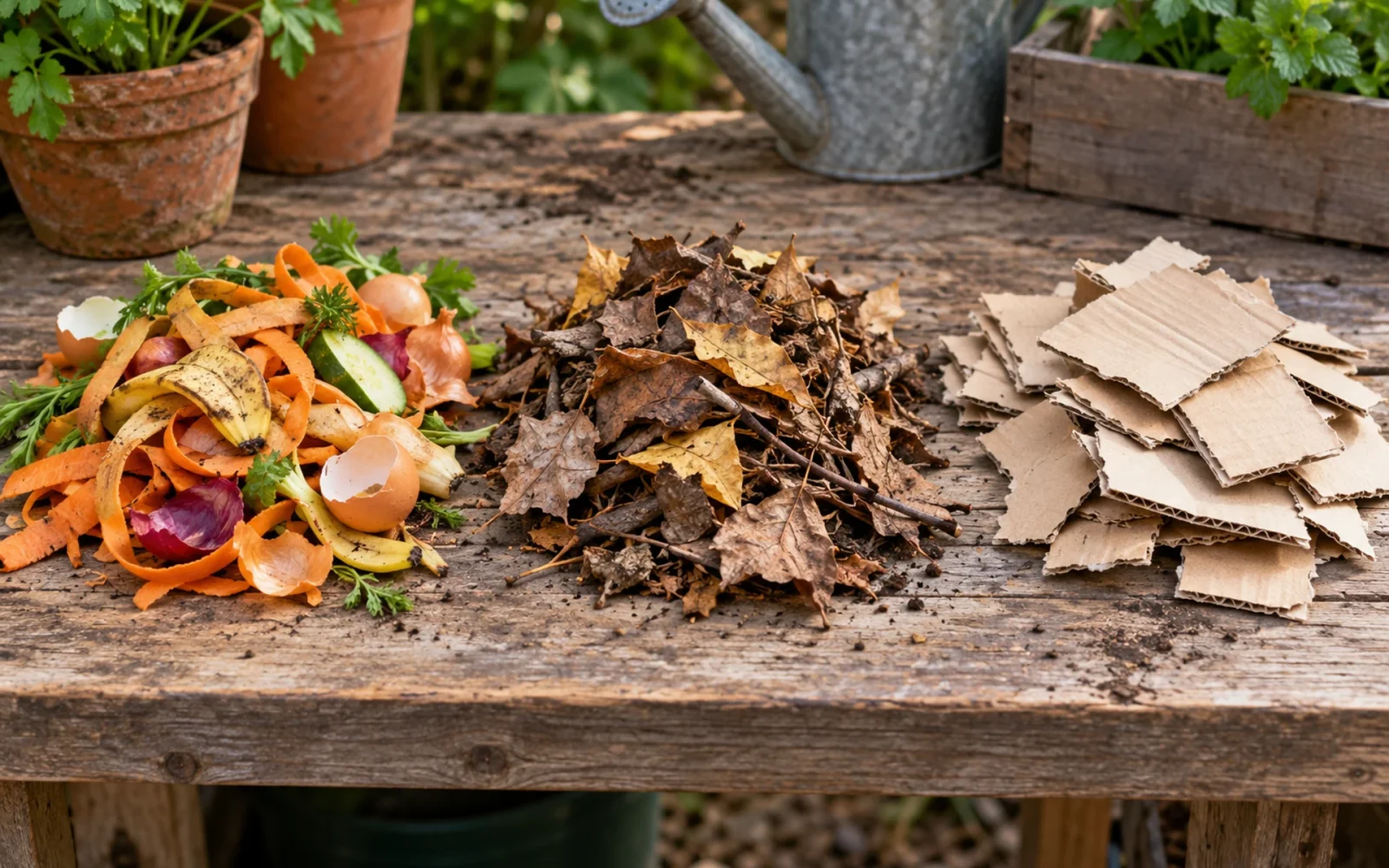
For a normal backyard compost pile, start with fruit and vegetable scraps, coffee grounds, dry leaves, suitable plant trimmings, and shredded plain paper or cardboard. Mix moist, nitrogen-rich inputs with drier carbon-rich material. Keep plastic, treated material, pet waste, and foods your system is not designed to handle out of the pile.
This guide is for an ordinary household pile or bin, not a commercial facility, a specialized hot-treatment system, or a bokashi bucket. Something accepted in one of those systems is not automatically suitable for yours.
The everyday materials worth learning first
| Material | How to prepare or assess it | Useful caution |
|---|---|---|
| Fruit and vegetable peelings, cores, and trimmings | Remove labels and cut large pieces into smaller chunks | Cover and mix them into the pile rather than leaving an exposed heap of food |
| Coffee grounds and plain paper filters | Separate the grounds from any plastic pod; tear the filter | Grounds behave as a green input, while the paper is a brown input |
| Dry fallen leaves | Remove litter and loosen or coarsely shred large mats | Dense wet layers can restrict air |
| Fresh grass and soft plant trimmings | Use a known source and mix in modest additions | Check treatment history and avoid thick compressed layers |
| Plain cardboard and uncoated paper | Remove tape, labels, staples where practical, and plastic windows; shred or tear | Do not assume glossy or lined packaging is equivalent |
| Small untreated twigs and woody stems | Reduce size where appropriate | Expect them to take longer than soft scraps |
You do not need every material on the table. A short routine using sources you can identify is easier to manage than an ambitious collection of unfamiliar waste.
Paper and cardboard need a closer look
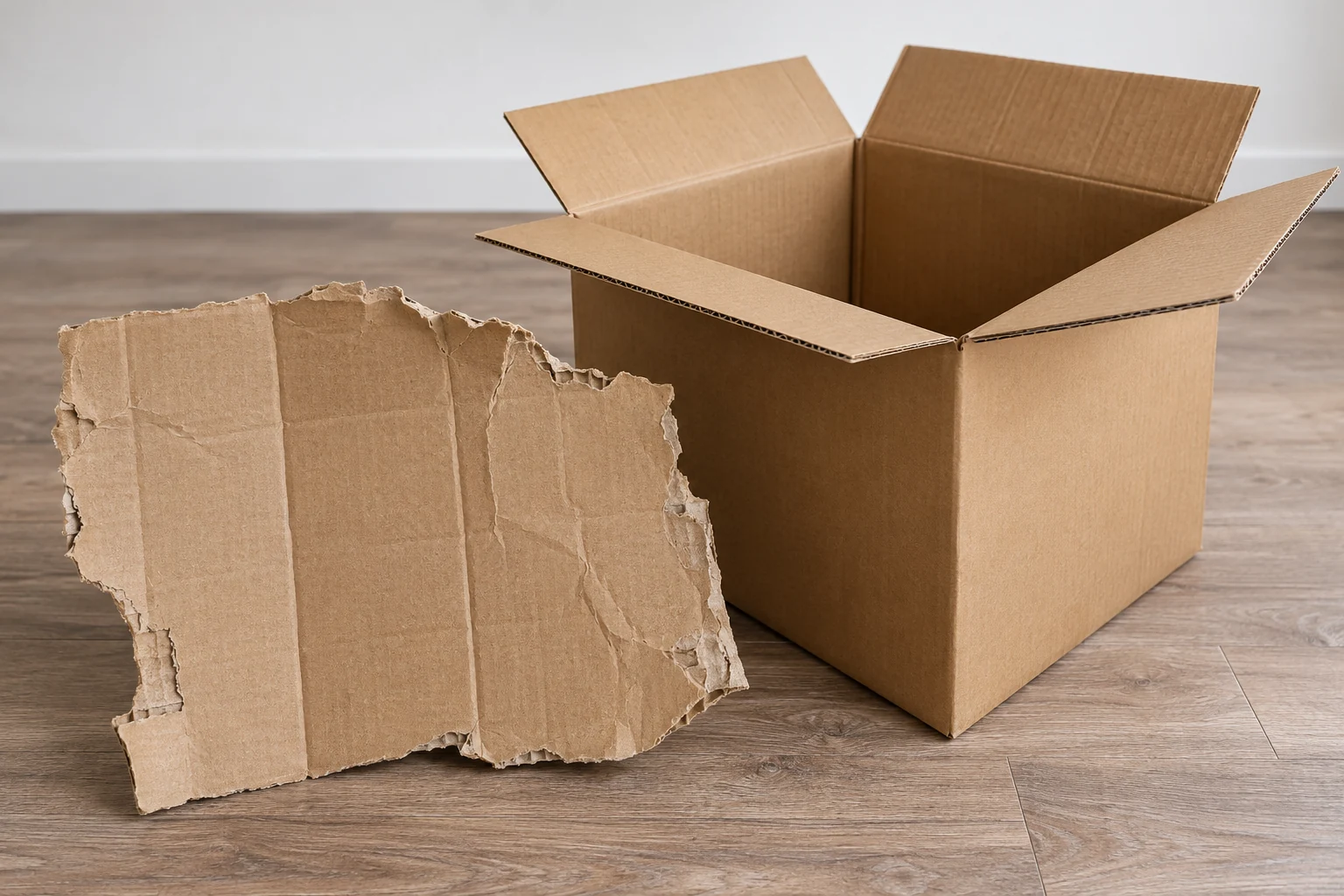
Plain brown corrugated cardboard and paper egg cartons are useful sources when prepared appropriately. Tear them apart so they distribute through the mix rather than forming a flat water-shedding sheet.
Look for waxy or plastic linings, glossy coatings, adhesive strips, and food-contact treatments. A paper appearance does not tell you what the material contains. If the product’s home-compost suitability is uncertain, use another disposal route instead of experimenting in compost intended for your garden.
The same applies to tea bags. Loose tea leaves are straightforward, but a bag may contain plastic mesh or a heat-sealing material. Check the actual product; do not rely on the appearance of a biodegradable-looking sachet.
Garden material depends on its history
Soft healthy trimmings can be useful ingredients. Large woody prunings often suit a separate slow system or a garden-waste service better than a small kitchen-scrap bin.
Check any herbicide or other treatment instructions before adding lawn clippings or plants. Material collected from someone else’s property may have a history you do not know. Do not assume the composting process will remove every residue.
Keep aggressive weed roots, weeds carrying seed, and diseased or pest-infested material out of a beginner pile unless you have verified that your process is suitable for them. An occasional warm center does not establish that all the material has received a controlled treatment.
Use leaves from a reasonably clean source and remove rubbish before mixing. Save some dry browns separately so you have them when the next kitchen scraps arrive.
Leave out inputs that create avoidable problems
For a conventional home pile, leave out meat, fish, bones, dairy, fats, greasy food, and pet waste. They require different handling or can attract animals and create problems the ordinary pile is not designed to resolve.
Treated or painted wood, cleaning chemicals, synthetic fabrics, plastic, metal, glass, and produce stickers do not belong in your compost. Do not use dryer lint as a dependable brown source: its composition can include synthetic fibers.
Cooked food is not one uniform ingredient. Plain plant scraps differ from an oily, salty meal with meat or dairy. For a simple beginner routine, collect preparation trimmings and keep complicated leftovers out unless you have an appropriate receiving system.
“Compostable” packaging may need a commercial facility
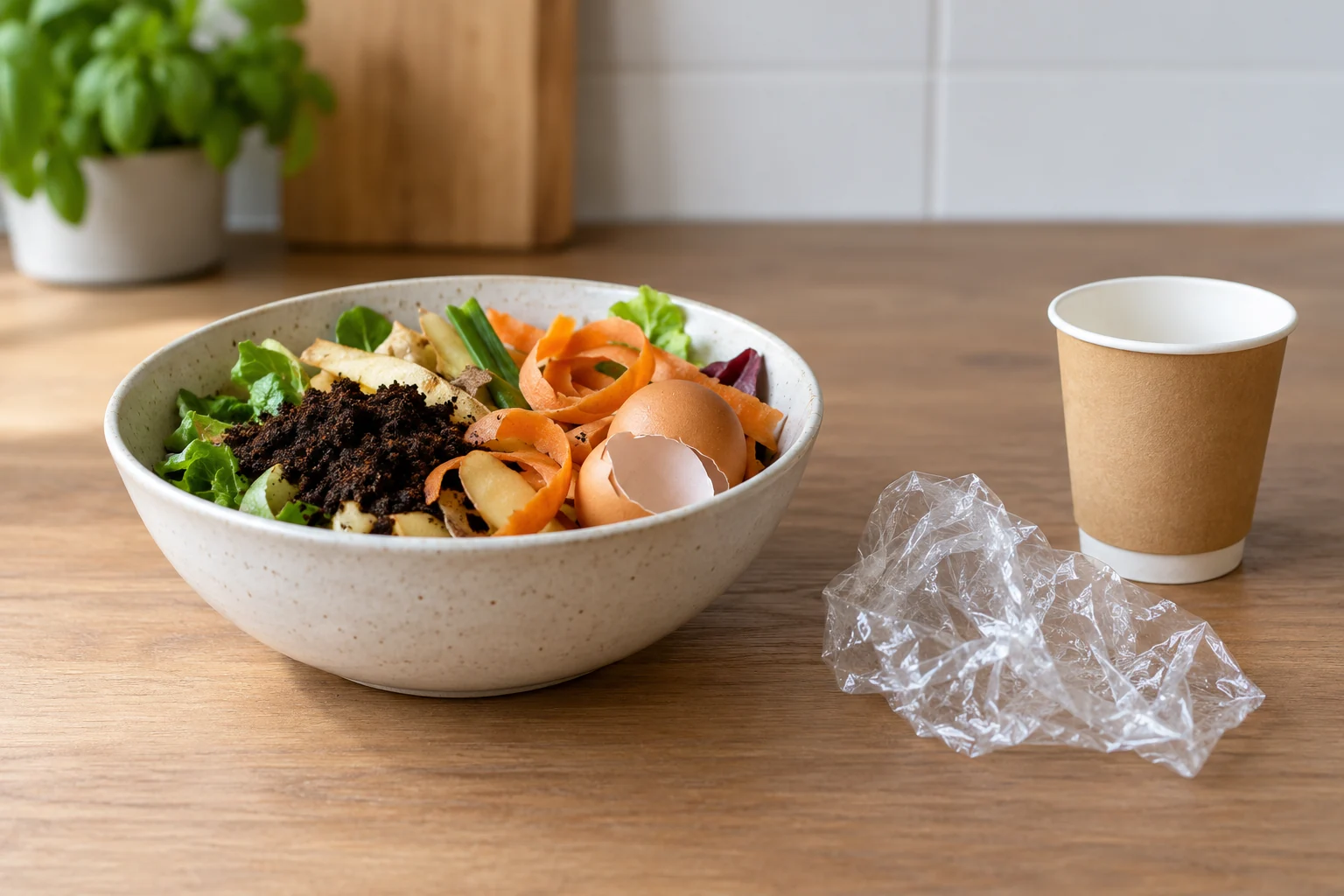
The EPA’s backyard-composting guidance distinguishes an ordinary home pile from commercial processing and advises against adding compostable foodservice ware and bags to the usual backyard system. A commercial acceptance claim does not establish that the item will break down in your bin.
For collected food waste, follow the receiving program’s rules. Even a certified product may not be accepted by that particular facility. If a liner is not accepted, use an allowed collection method rather than leaving fragments to be screened out later.
Use three questions for an unfamiliar item
- What is it actually made from? Include coatings, adhesives, labels, and mixed components.
- Does my system accept it? Check home-pile guidance or the receiving program rather than another method’s instructions.
- Can I manage the amount and decomposition time? A material can be compostable but still overwhelm a small bin or remain for a long time.
If you cannot answer one of those questions, leave the item out for now. Keep a short accepted list beside the collection pail and check the contents before transferring them. Preventing contamination is easier than picking fragments out of finished compost.

Ethan Miller
Ethan Miller writes about home improvement, interior design, cleaning, and everyday living at Home & Living Daily. He shares practical tips and simple ideas to help readers create more comfortable and functional homes.