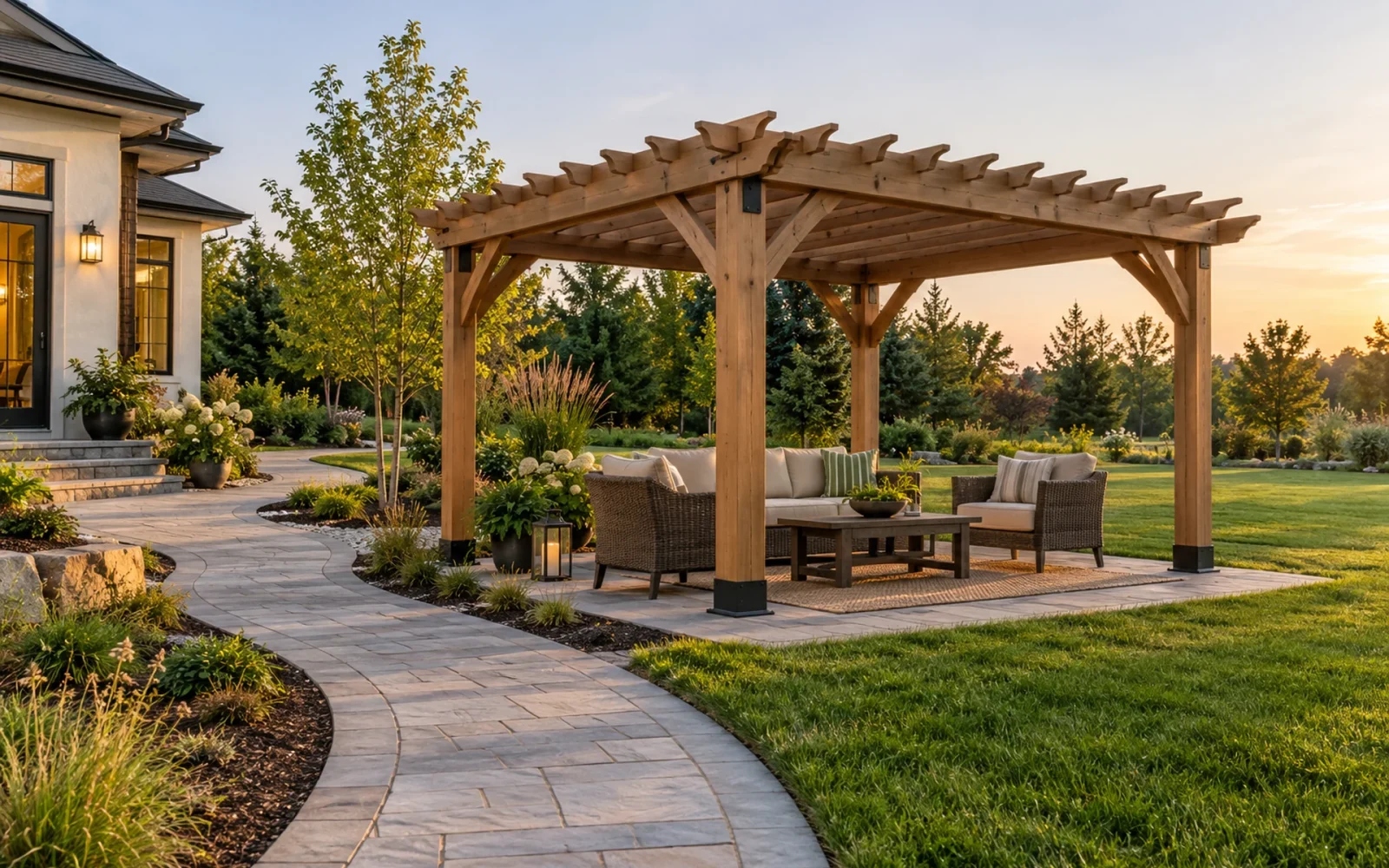
Put a pergola where it supports the way you already want to use the yard, with shade at the right hours and a workable route from the house. Then confirm that the location can accommodate its foundations, roof overhang, water discharge, and local requirements. The most attractive empty corner is not always the place you will use.
Before ordering, mark two possible locations and try the furniture there. A short comparison can reveal problems that are difficult to see in a garden photograph.
Choose the activity before the destination
For everyday meals, proximity to the kitchen may matter more than a distant view. For a reading retreat, a quieter garden spot may be worth the walk. For a gathering area, consider where people naturally move between the house, seats, lawn, and gate.
Describe the activity in practical terms: “two people eating after work,” “six guests at a table,” or “a shaded seat after gardening.” That gives you a useful test for each location instead of a vague wish for an outdoor room.
Mark the post positions and roof outline separately. Place chairs or safe temporary templates inside the usable area. Walk around occupied seats and check whether posts would land in a natural route.
Compare the sun at the times that matter
Visit both locations during your usual outdoor hours. Note what is already shaded by the house or trees, where direct light enters, and whether that pattern changes noticeably through the afternoon.
An open-rafter roof will not provide the same cover as a solid or adjustable roof. Ask the supplier to show the proposed shadow with your furniture in place. Avoid choosing orientation solely from a generic north-south rule: the roof geometry, season, latitude, and nearby buildings influence the result.
Also consider light indoors. A structure close to the house can change what reaches a kitchen or living-room window. Check the view from those rooms before deciding the pergola belongs directly outside the door.
Follow the walking route with something in your hands
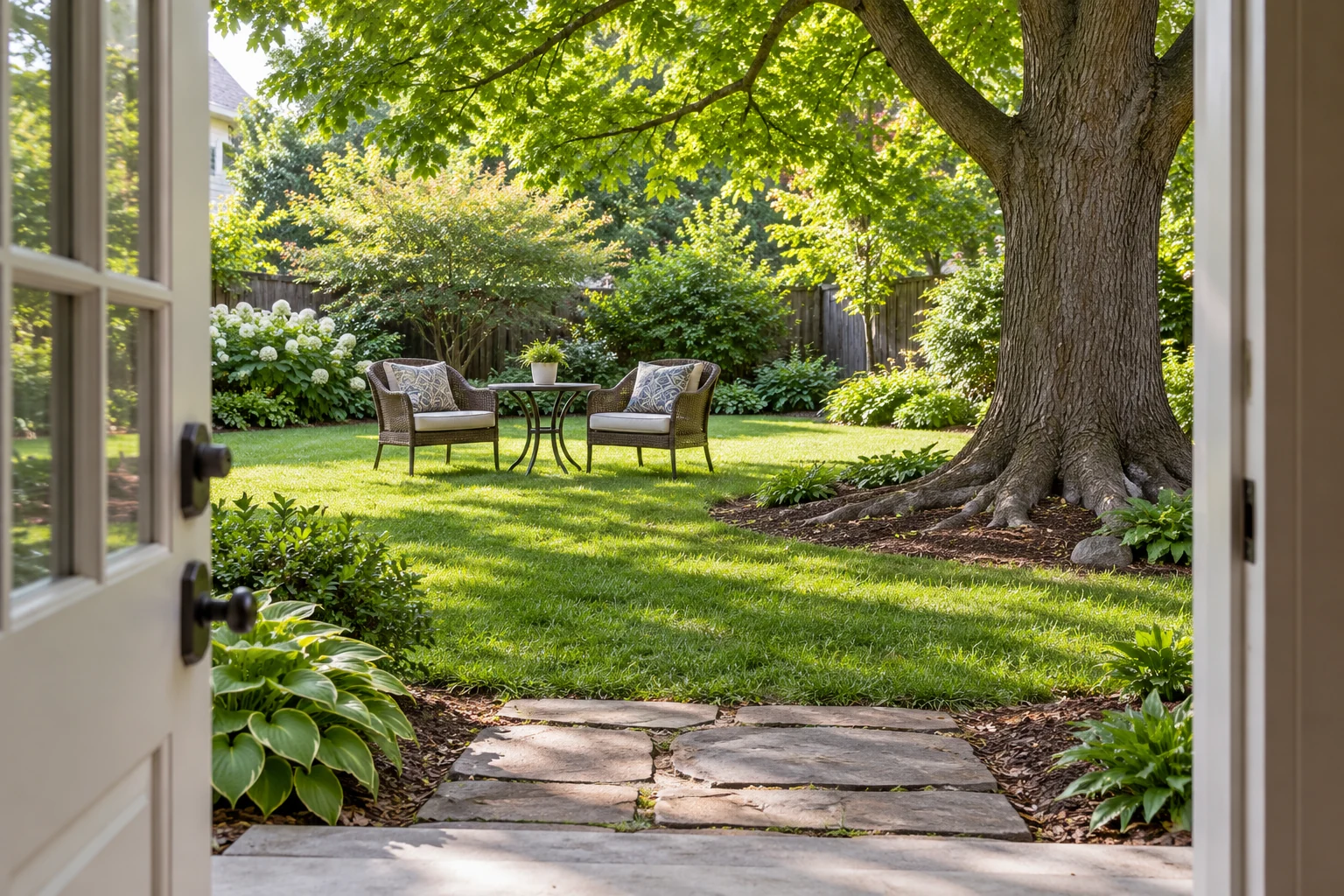
Carry a tray from the kitchen to the proposed table. Check the door swing, steps, changes of surface, and the space needed to pass a chair. Repeat the route toward other yard destinations.
A garden pergola can feel separate without requiring an awkward journey. You may need a more suitable path, lighting, or a transition between surfaces. Include those items in the project scope instead of treating the structure as an isolated purchase.
Look at privacy from the actual seats. A location with an appealing outward view may also be exposed to a neighboring upstairs window. Small changes in furniture direction or location can help before you decide to add screens.
Rule out unsuitable ground and hidden conflicts
Observe the area after rain. Is it a low point, a runoff route, or the place a downspout empties? A roofed pergola collects water and sends it somewhere else, so its outlet needs a suitable destination.
Locate underground services before planning excavations or anchors. Check access to drains, utility equipment, gates, and any easement or other area that must stay clear. Confirm the property boundary rather than using a garden edge as proof.
Existing paving does not establish that a structural foundation is present below it. Deck boards are also not proof of suitable support. Have the proposed anchoring and foundations checked for the structure, substrate, and site conditions.
Keep substantial tree roots and the tree’s future growth in the decision. Excavating near an established tree or putting a roof directly beneath branches can create maintenance and structural complications. Get appropriate advice where roots or limbs conflict with the proposed work.
Near the house and attached to it are different decisions
A freestanding pergola can stand near a patio door without relying on the house for support. An attached structure needs suitable building connections and water detailing. Neither arrangement has a universal separation distance that suits every site.
Ask the designer or installer what the chosen system requires, then verify local rules and property restrictions. Setbacks, height, roof form, services, and the relationship to the house can all matter. Do not treat a supplier’s photograph as evidence that the same placement is permitted for your property.
Allow room to maintain it too. Can you access roof channels, finishes, fittings, and planting around the posts? A tight gap that looks neat on installation day can be difficult to clean later.
Make a simple two-location comparison
Imagine one candidate just beyond the kitchen patio and another at the garden’s far end. The first offers an easy meal-carrying route but may affect a window and need a careful roof-water outlet. The second offers a quieter view but needs a usable path and may be exposed to low sun.
List those real differences rather than assigning arbitrary scores. If daily dining is the priority, the near-house position may deserve further design work. If a quiet retreat is the goal, the garden position may justify improving the approach. Neither wins independently of the intended use.
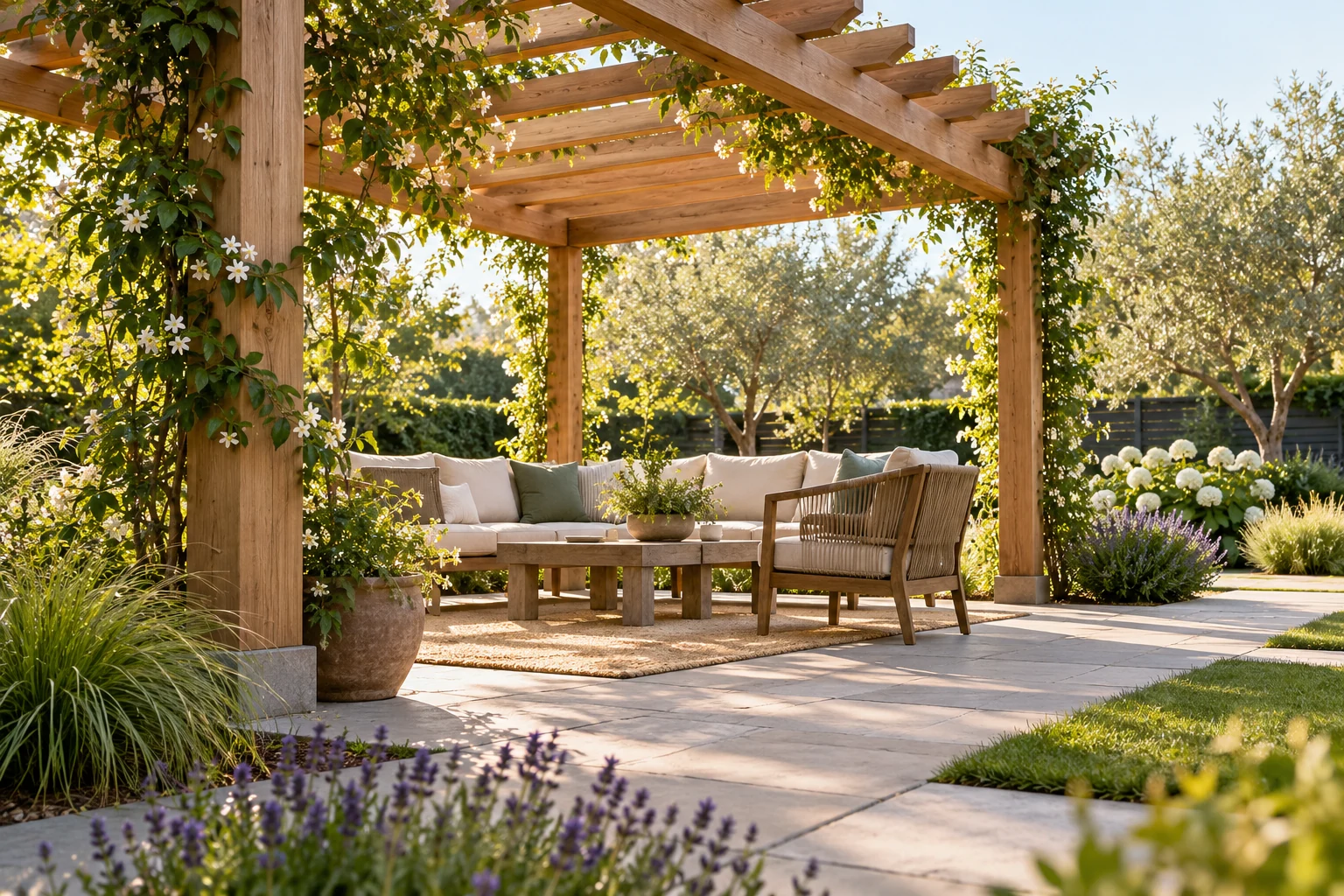
Use the marked locations for a few ordinary afternoons or evenings before committing. Then take the preferred layout, photographs, service information, and observed sun pattern to the installer. That makes the final foundation and structure decision part of a location you have already tested for daily use.

Ethan Miller
Ethan Miller writes about home improvement, interior design, cleaning, and everyday living at Home & Living Daily. He shares practical tips and simple ideas to help readers create more comfortable and functional homes.