Pergola prices depend on what you are buying: a material kit, an assembled open frame, or a roof system with foundations and services. As examples checked in October 2026, Home Depot’s installation guide lists a 12-by-12-foot custom wood pergola at $7,539, while The Luxury Pergola lists a 12-by-16-foot motorized configuration starting at $24,168 factory-direct. These describe different sizes, products, and scopes, not a national price range.
Before setting a budget, decide whether you want an open garden framework or substantial adjustable cover. Adding the roof you actually need can change the purchase more than changing the frame color or material.
Start with the package, not the square-foot price
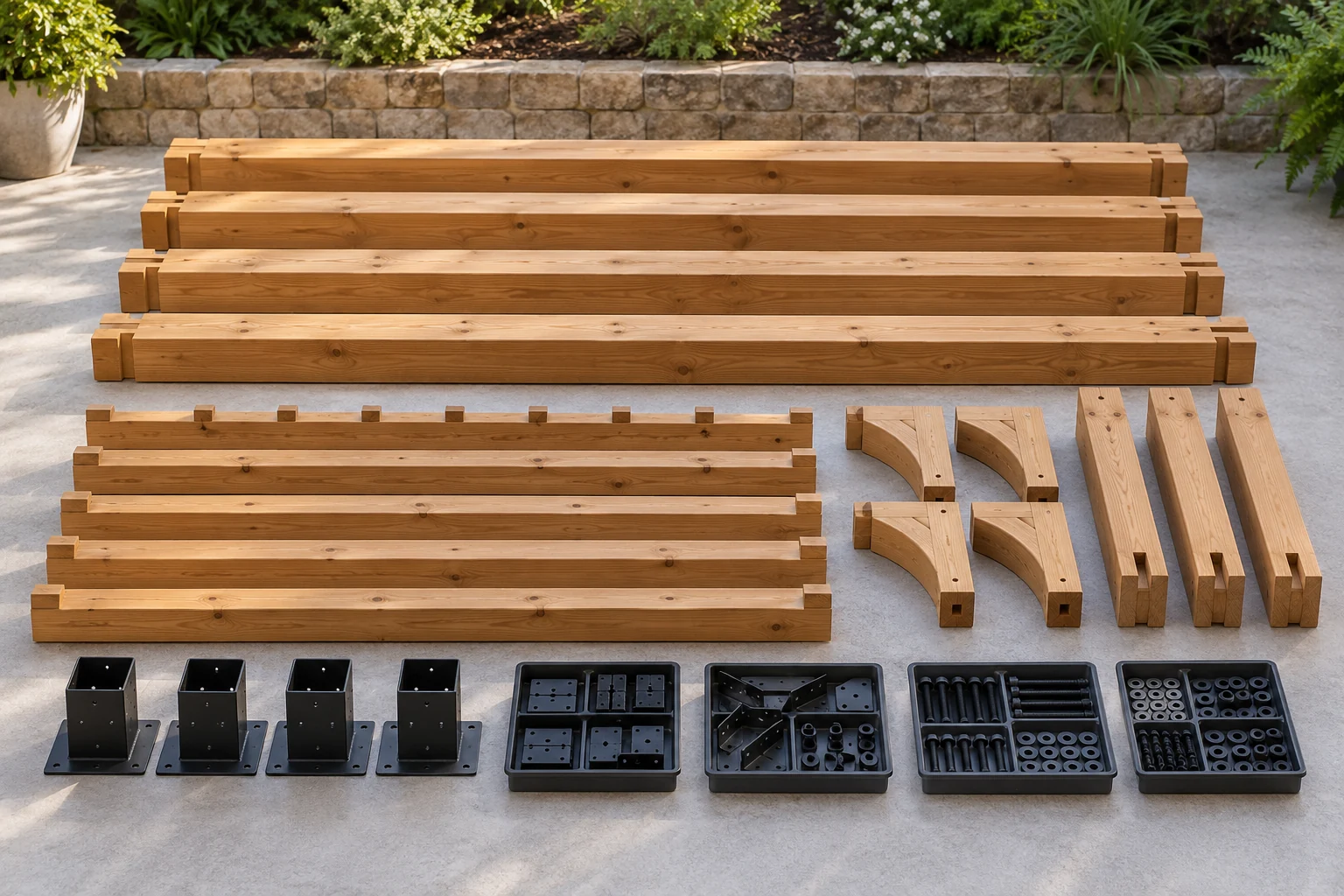
A kit may include precut members and specified hardware but leave you responsible for foundations, assembly, tools, and local requirements. An installation package may include labor and materials for a defined structure, while still needing clarification about unusual ground work or site access.
Ask for a list of inclusions before comparing prices. Does the amount cover delivery to the property or placement at the build site? Are anchors included, and what must they attach to? Is electrical work needed? Which accessories shown in the photograph are extra?
Read published examples in their own scope
Home Depot’s pergola installation guide describes its figures as including the labor and materials to build a custom pergola. Its body text lists these wood-pergola examples:
- 10 by 12 feet: $6,994.
- 12 by 12 feet: $7,539.
- 12 by 16 feet: $8,848.
Those are published service-guide references, not an offer for every address or a guarantee that all site work is included. Confirm current availability, design, and exclusions in a written local proposal.
The Luxury Pergola’s published 2026 pricing lists a 12-by-16-foot motorized configuration starting at $24,168. It presents factory-direct pricing with final configuration, accessories, and shipping zone affecting the amount. Treat it as a specific premium product reference; confirm installation, foundations, and services separately.
The point of these examples is the difference in scope. Averaging them would not tell you what a “standard pergola” costs, and adding a general labor estimate to a package that already includes labor would count it twice.
The roof can change the whole project
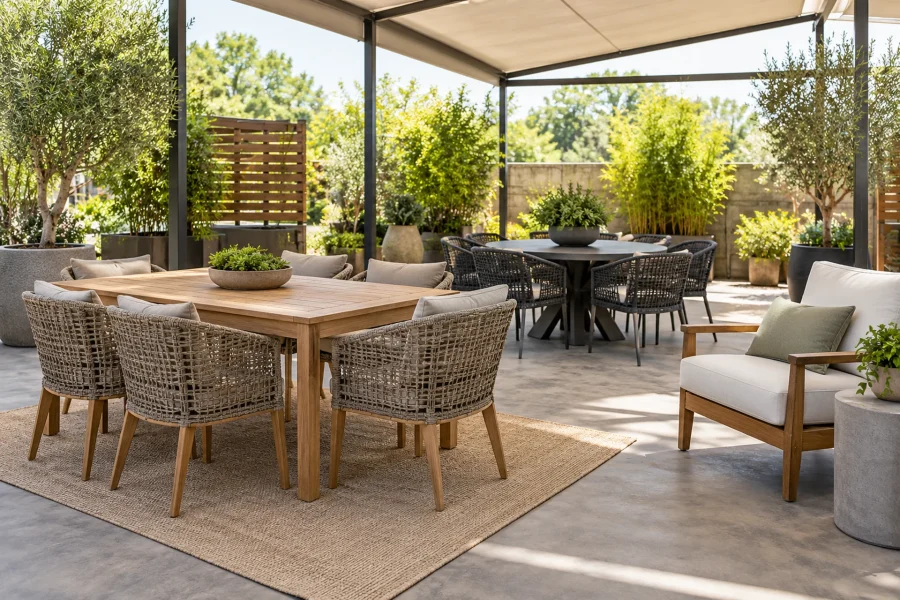
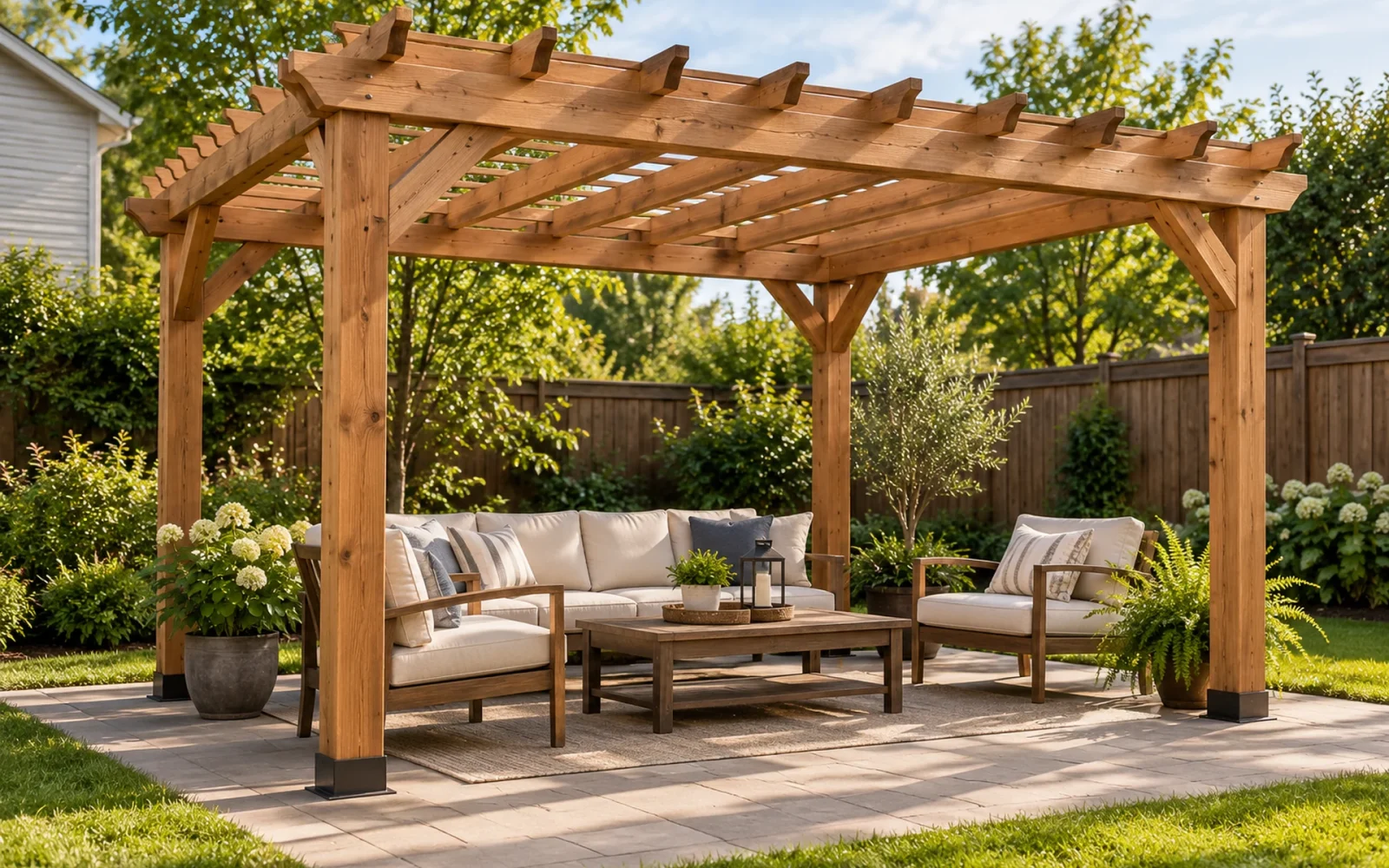
An open timber pergola provides structure and partial shade. A fabric canopy introduces a different operating and maintenance routine. Motorized louvers add moving parts, drainage, controls, and potentially electrical work. A solid cover changes rainwater handling and the loads that the supporting structure must accommodate.
Price the roof performance you need from the beginning. A low open-frame price can be a poor budget reference if you already know you want to keep a dining table sheltered from overhead rain.
Compare the exact size and dimensions being quoted. Roof measurements, post positions, and usable interior space are not necessarily the same. A nominal 12-by-16-foot product may fit your furniture differently from another supplier’s product with the same label.
Put site work and services on visible lines
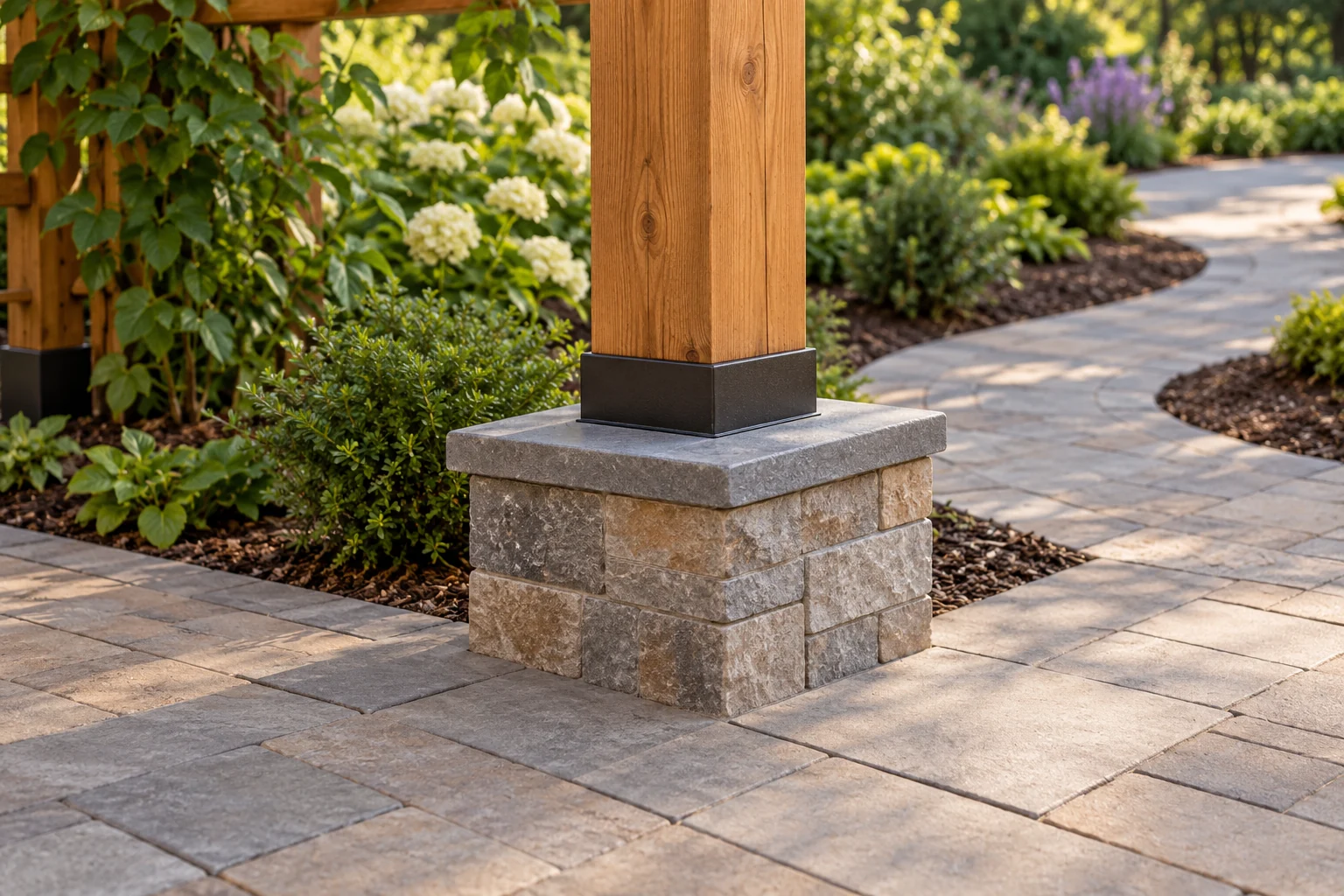
Ask the installer to identify the foundation or anchoring design for your site. Existing pavers or deck boards are not proof that a suitable structural support already exists underneath them.
Other items to clarify include removal of an old structure, difficult access, delivery handling, drainage outlets, restoration of paving or lawn, power supply, controls, lighting, screens, and any required approval fees. Some will be essential to the selected design; others are optional upgrades.
Local wind and snow requirements can affect the suitable structure and its support. Do not substitute a general material claim such as “steel is strong” for the exact model’s ratings and installation conditions.
Compare DIY with the same finished result
For a kit, build a complete list: purchase price, tax, delivery, foundation work, approved anchors, tools or equipment hire, help with lifting, finishes, and services. Include your ability to set it out and assemble it according to the instructions.
As a simple budgeting example, suppose a kit costs $3,200, with $1,100 of quoted foundation work and $1,400 for assembly. The result is $5,700 before any excluded delivery, tax, services, or accessories. Those are illustrative figures, not current market estimates. Compare that scope with an installed proposal, not just the $3,200 kit headline.
A custom build can solve a difficult footprint or appearance requirement, but requires a defined design and material list. Buying loose lumber does not remove the need to confirm connections, supports, and approvals.
Budget for the routine after installation
Timber finishes, removable fabric, moving roof parts, drains, and electrical components have different maintenance needs. Ask what must be inspected, cleaned, retracted, or stored, and how warranty coverage relates to those tasks.
Use local quotes to make the final decision. Supply the same site photographs, dimensions, intended use, roof requirement, and accessory list to each bidder. A complete proposal for the pergola you will actually use is more valuable than a broad average assembled from incompatible products.

Ethan Miller
Ethan Miller writes about home improvement, interior design, cleaning, and everyday living at Home & Living Daily. He shares practical tips and simple ideas to help readers create more comfortable and functional homes.