Decorate a small patio by making one activity comfortable, keeping the route from the house open, and using a few repeated colors or materials to connect the furniture with the garden. Start by editing what occupies the floor. More cushions, pots, and lights will not solve a layout that is difficult to walk through.
A small ground-level patio can borrow space visually from the planting beyond it. You do not have to fit every decorative feature inside the paving edge.
Clear the route before you choose a style
Remove unused chairs, empty pots, and objects that have become temporary storage. Open the door fully and walk the routes you use: into the garden, toward a gate, or to a washing line. Note where you have to turn sideways or move something.
Keep those routes on a simple sketch. Also mark drains, service access, steps, and door swings. The remaining area is the space available for the main furniture grouping, not an invitation to fill every gap.
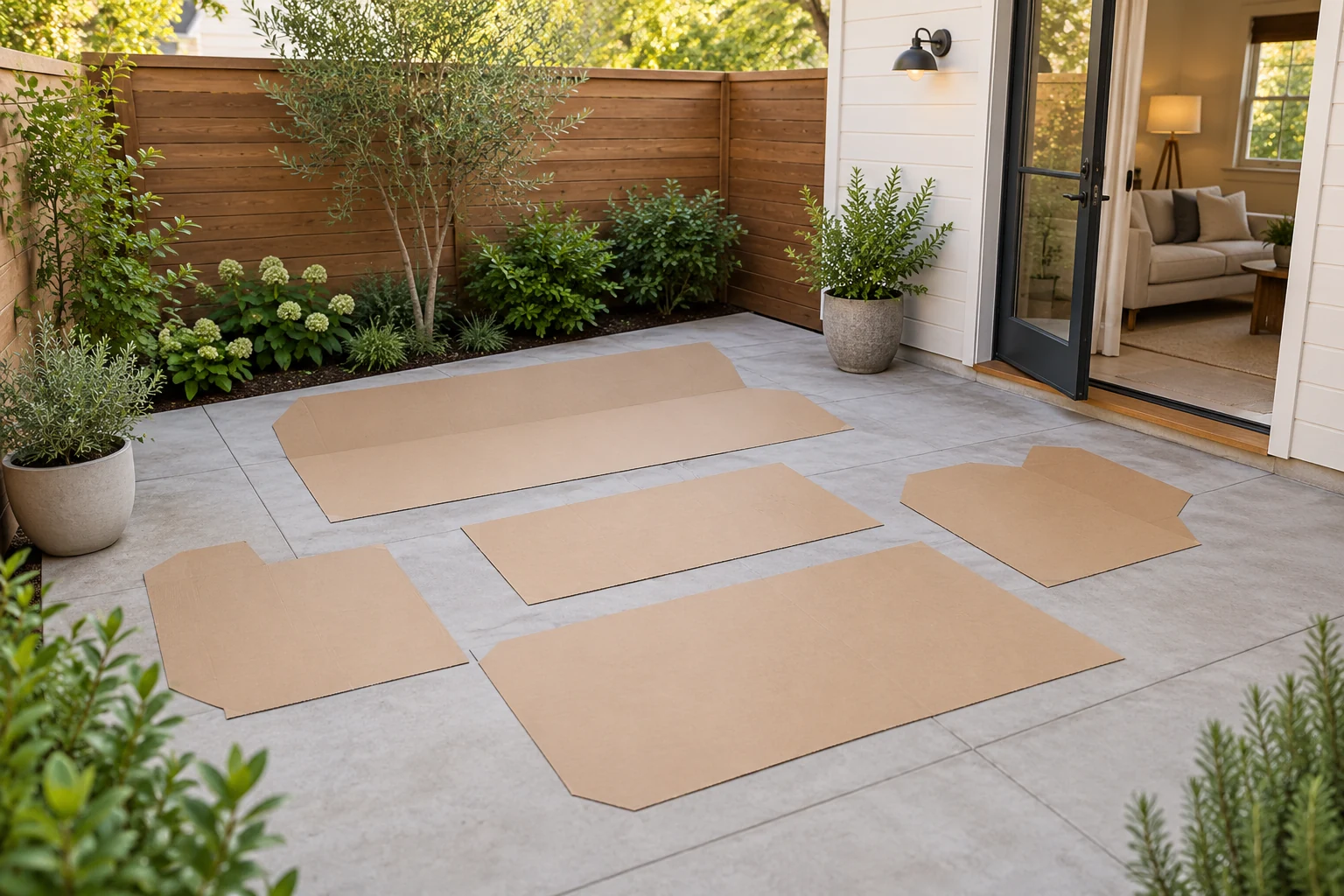
Use removable templates appropriate to the surface, or put your existing chairs in the proposed positions. Sit down, pull out a dining chair, and carry a tray through the arrangement. Allow the required access for the property; a picture of a tidy patio does not establish a suitable clearance.
Give the most useful furniture the most useful space
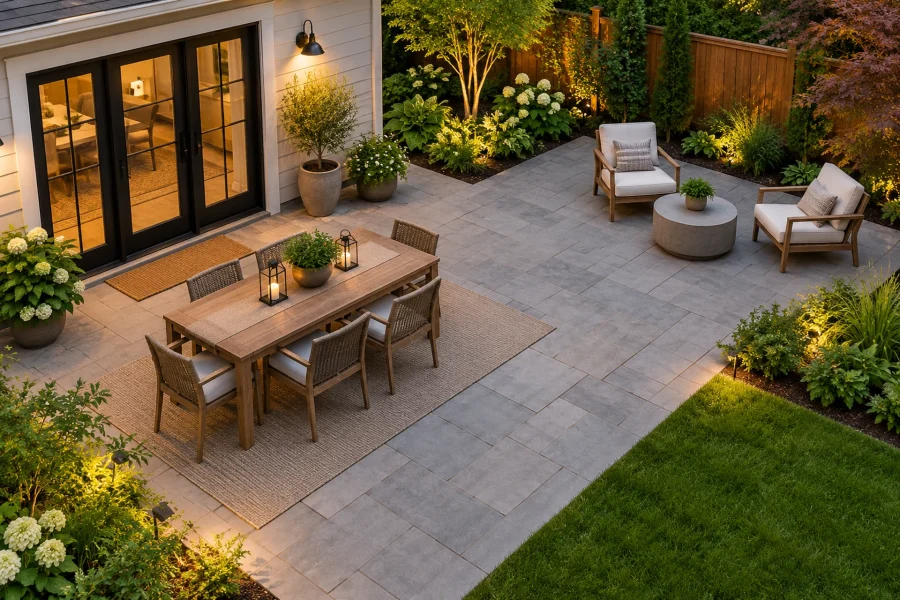
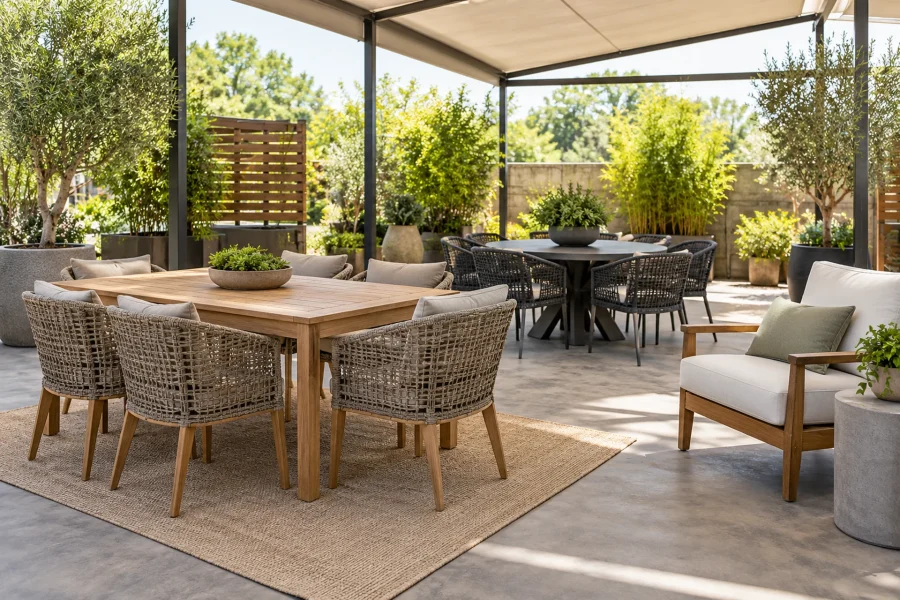
For meals outside, choose a table that fits the way you eat and chairs that can be occupied without blocking the exit. For reading, prioritize a comfortable seat and a reachable side table. A very small patio may work better with two chairs than a full conversation set.
Check the entire footprint, including angled legs, armrests, cushions, and reclining movement. Furniture described as compact can still have a deep lounge seat. Conversely, tiny furniture that is uncomfortable is not a successful way to save space.
A bench along a suitable edge can keep the center open, but compare its depth with the available area. If it includes storage, make sure the lid can open without dismantling the arrangement. Only use a stool or box as spare seating if it is designed for that purpose.
Make the boundary work harder than the center
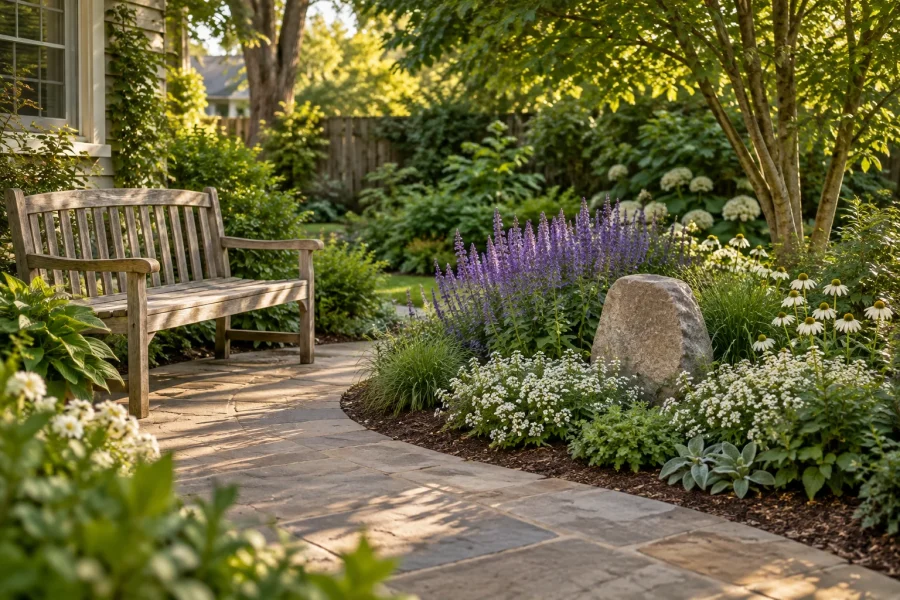
Use an adjoining planting bed to frame the patio, or group a few containers at one edge instead of scattering small pots across the floor. Choose plants for the actual light, climate, and watering routine, allowing their mature spread to stay out of the route.
If a wall or fence already has an attractive texture, let it remain visible. A single outdoor-rated decorative piece can give a plain wall a focal point. Check permitted fixing methods and substrate before mounting shelving, trellises, or planters.
A targeted privacy solution can be more useful than enclosing the whole area. Our guide to backyard privacy without a fence explains how to identify the view that needs screening. Avoid adding a large screen just because it looks cozy in someone else’s courtyard.
Repeat a small number of choices
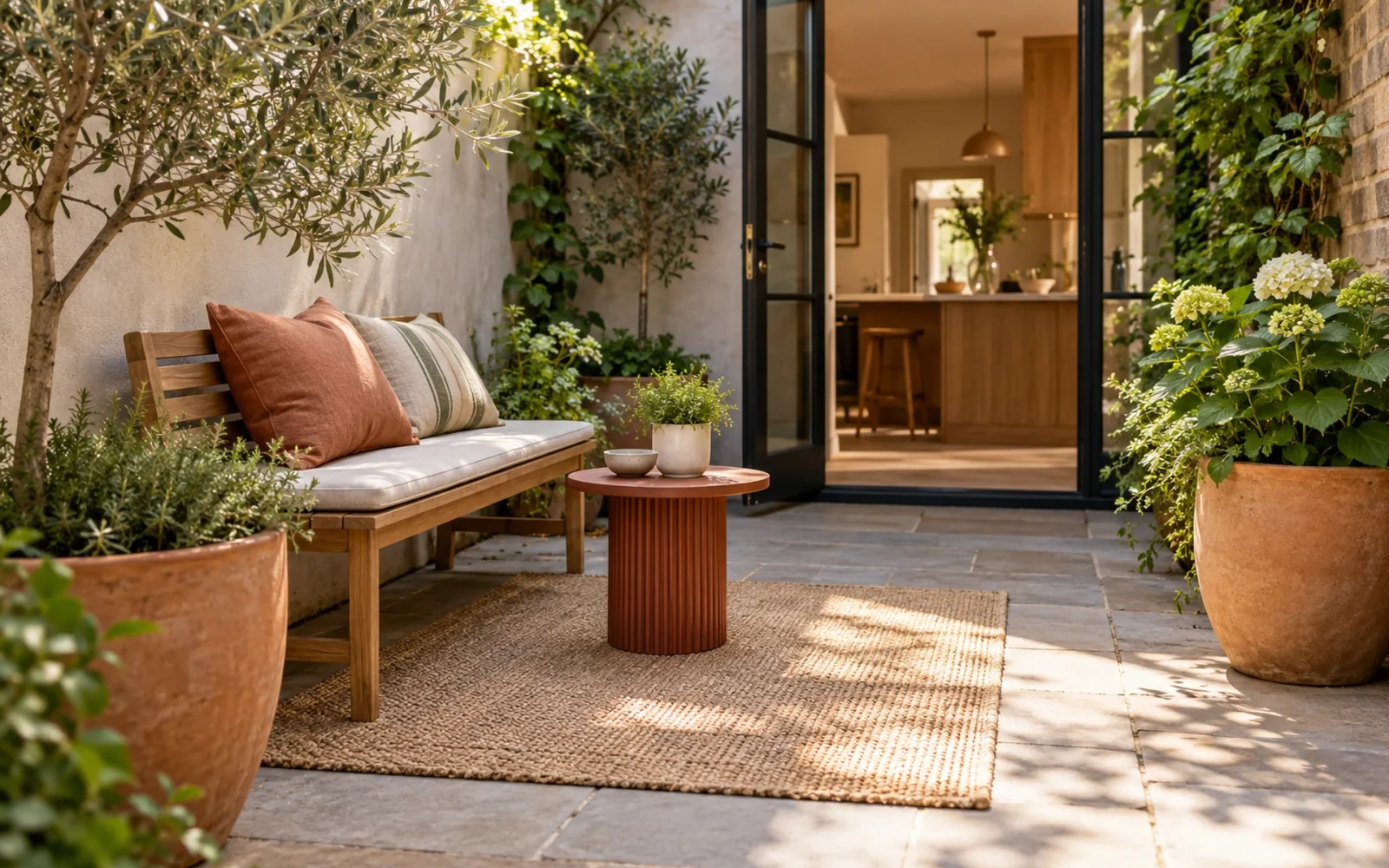
Choose a simple palette from what is already present: paving, the door, a favorite plant, or the adjoining room. For example, warm gray furniture, terracotta containers, and one muted cushion color can feel coordinated without buying a matching collection.
Repeat a material or color in a few places rather than adding a new theme to every object. A group of similar pots often looks calmer than a line of unrelated tiny containers. Varying plant shape or leaf texture can provide interest without adding more colors.
Use an outdoor rug only if it suits the surface, drainage, and maintenance. Check that doors clear it and corners stay secure. Lift and clean beneath it as needed. If the paving already has a strong pattern, leaving it exposed may give you the finished look with less upkeep.
Add light and shade to an existing layout
For an evening seat, start with enough outdoor-rated light to see the route and table. A suitable portable lamp may be all the decoration you need. String lights can work where there are appropriate supports and outdoor power, but keep cables out of the doorway and walking area.
Shade should land on the furniture at the time you use it. Include an umbrella’s base and opening space in the plan, or check the support requirements before considering an awning or sail. A cover chosen for appearance alone may leave the seats in low afternoon sun.
Do not solve a crowded layout by hanging heavy items overhead without confirming support. Small patios still need safe fixing, drainage, and clear access.
Try a layout with one movable extra
For a narrow patio used by two people, try a bench on the long edge, a small side table at its end, and one spare folding chair that comes out only when needed. Group two containers near the far corner to draw the view outward. Keep the door-to-garden route along the open side.
This is a starting arrangement, not a dimensioned plan. Test it with occupied furniture. If you prefer eating outside, replace the bench idea with a compact dining arrangement rather than trying to keep both.
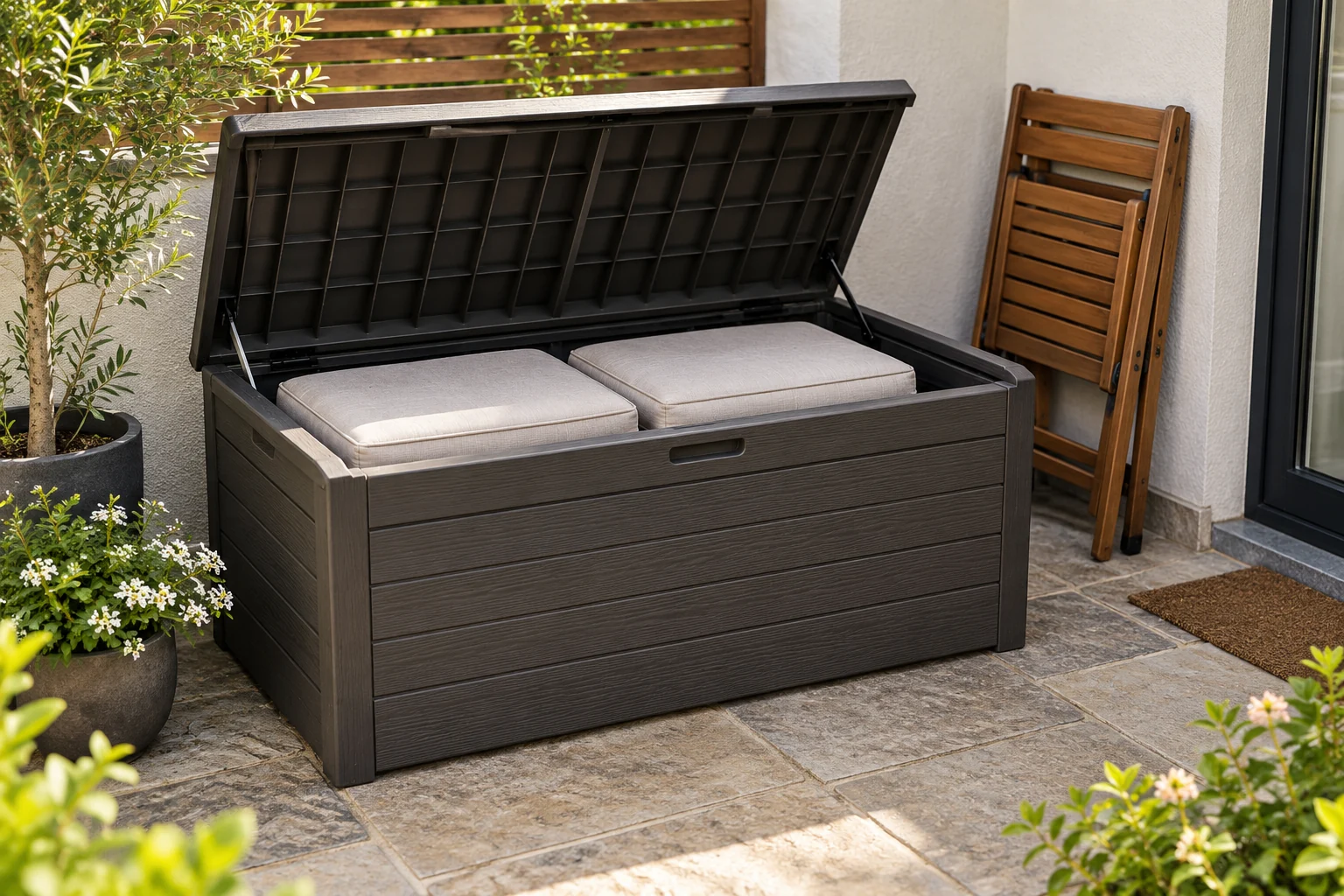
Spend first on the seat or table that makes the patio usable, then on one planting group and the lighting you need. Add accessories after living with that setup. If cushions are difficult to store or you move three pots every time you sit down, edit the arrangement before buying another decorative piece.

Ethan Miller
Ethan Miller writes about home improvement, interior design, cleaning, and everyday living at Home & Living Daily. He shares practical tips and simple ideas to help readers create more comfortable and functional homes.