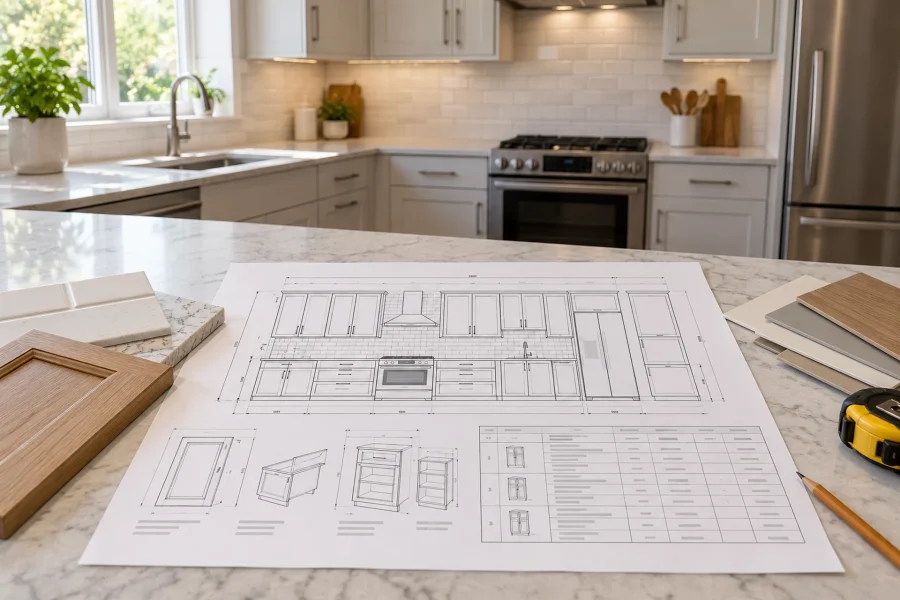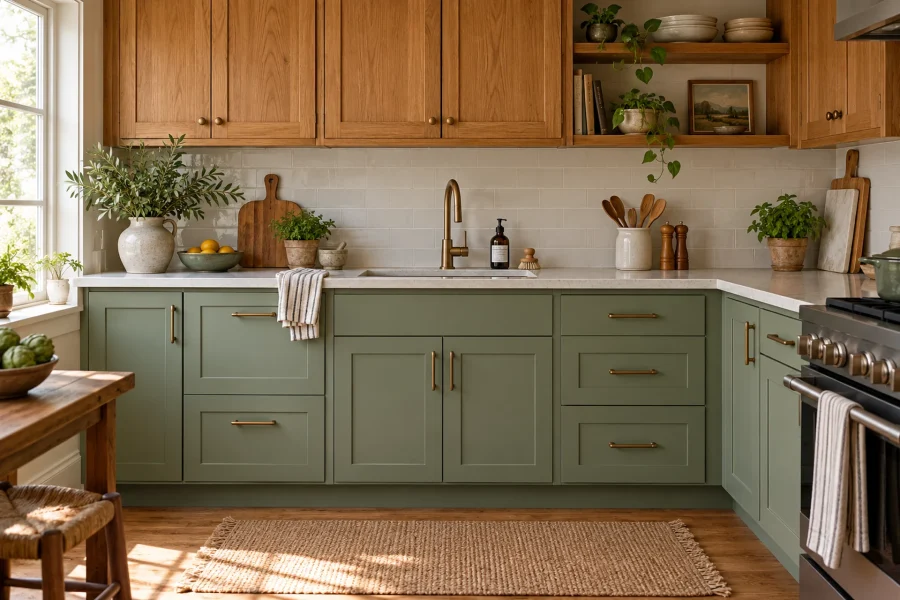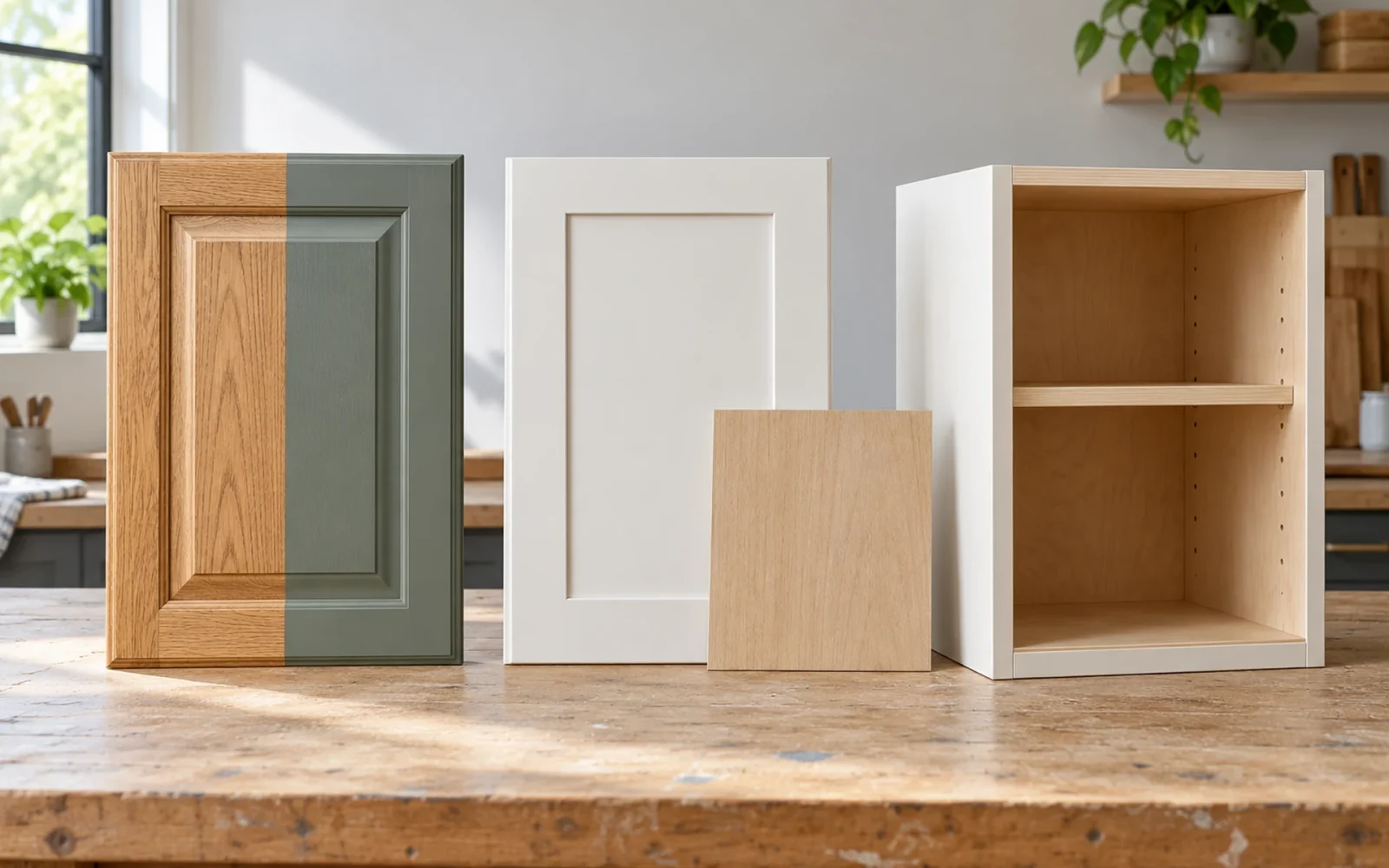
Refinish kitchen cabinets when the structure, doors, and layout work but the surface needs a change. Reface them when the boxes are worth keeping and you want new doors, drawer fronts, and a coordinated exterior. Replace them when the boxes or physical arrangement no longer support the kitchen you need.
Inspect the retained structure before paying for its appearance. New fronts over unsuitable boxes can preserve the same storage problems and add a fresh cost to a replacement you still need.
Understand what each proposal actually changes
| Route | Core work | What it preserves | Main limitation |
|---|---|---|---|
| Refinish or repaint | Prepare existing surfaces and apply a suitable new finish | Most existing cabinet components | Does not change the basic door profile or box arrangement |
| Reface | Fit new fronts and coordinate exposed cabinet surfaces; hardware or interior upgrades may be additional | Suitable existing boxes | The retained box dimensions and layout still constrain the result |
| Replace | Remove and install new cabinet assemblies | Only components deliberately retained elsewhere | Can involve counters, services, floors, and surrounding finishes |
Terminology varies between providers. A “cabinet makeover” might mean painting, doors only, or a fuller refacing package. Ask for the components and preparation in writing instead of comparing service names.
Check the boxes, layout, and interior use first
Look inside, especially around the sink base, joints, shelves, and hinge attachments. Record swelling, movement, damaged surfaces, or hardware that no longer holds securely. Have the cause of moisture damage corrected before deciding what can be retained.
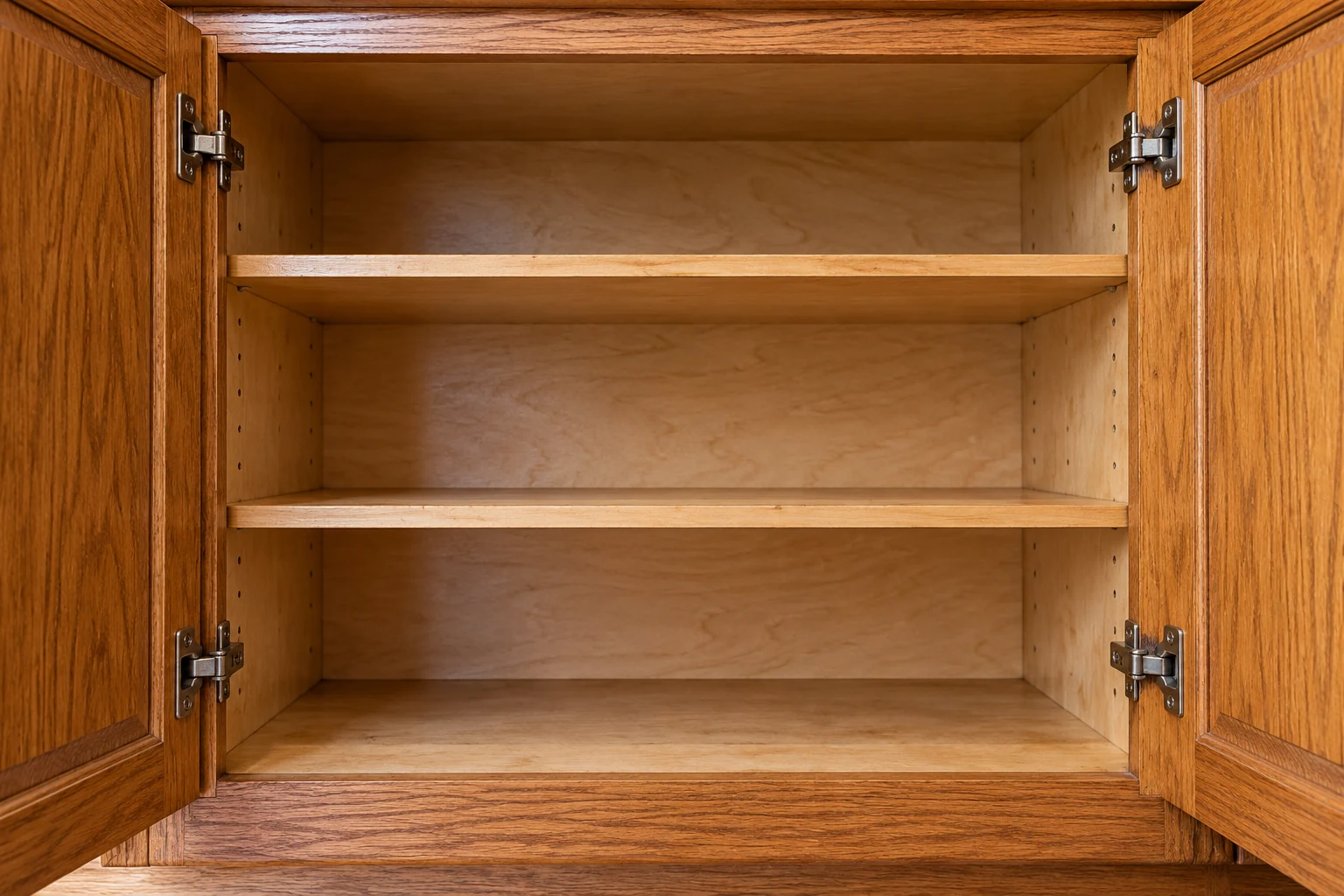
Then assess use. Do the drawers hold what you need? Can you reach the corner? Will the intended appliances fit and open? A limited organizer may solve one storage problem, while a different cabinet width or drawer arrangement may require replacement.
Age alone does not answer the question. Well-maintained older boxes can be useful, while newer cabinets can be unsuitable for a revised layout. Compare condition and function with the intended result.
Refinishing changes the surface, with preparation attached
Identify the existing material and finish before choosing paint or stain. Solid wood, veneer, laminate, and wrapped surfaces need different assessments. Do not assume a stained look can be achieved on every existing door or that a thin veneer tolerates extensive stripping.
The Sherwin-Williams cabinet refinishing guide emphasizes cleaning and preparation and discusses primer adhesion testing. That supports treating preparation as part of the project, rather than comparing only the price of the topcoat. The actual coating system and substrate instructions should determine the work.
Ask about repairs, existing finish removal if needed, work-area separation, cure time, and reassembly. Unknown older coatings deserve assessment before disturbance. A finish can improve appearance but cannot restore a swollen cabinet core or a failed joint.
Refacing needs a coordinated exterior
New doors and drawer fronts can change a cabinet’s profile more than repainting. Check how the provider will match the visible face frames, ends, toe kicks, fillers, and trim. A new door sample by itself does not show how the full run will look.
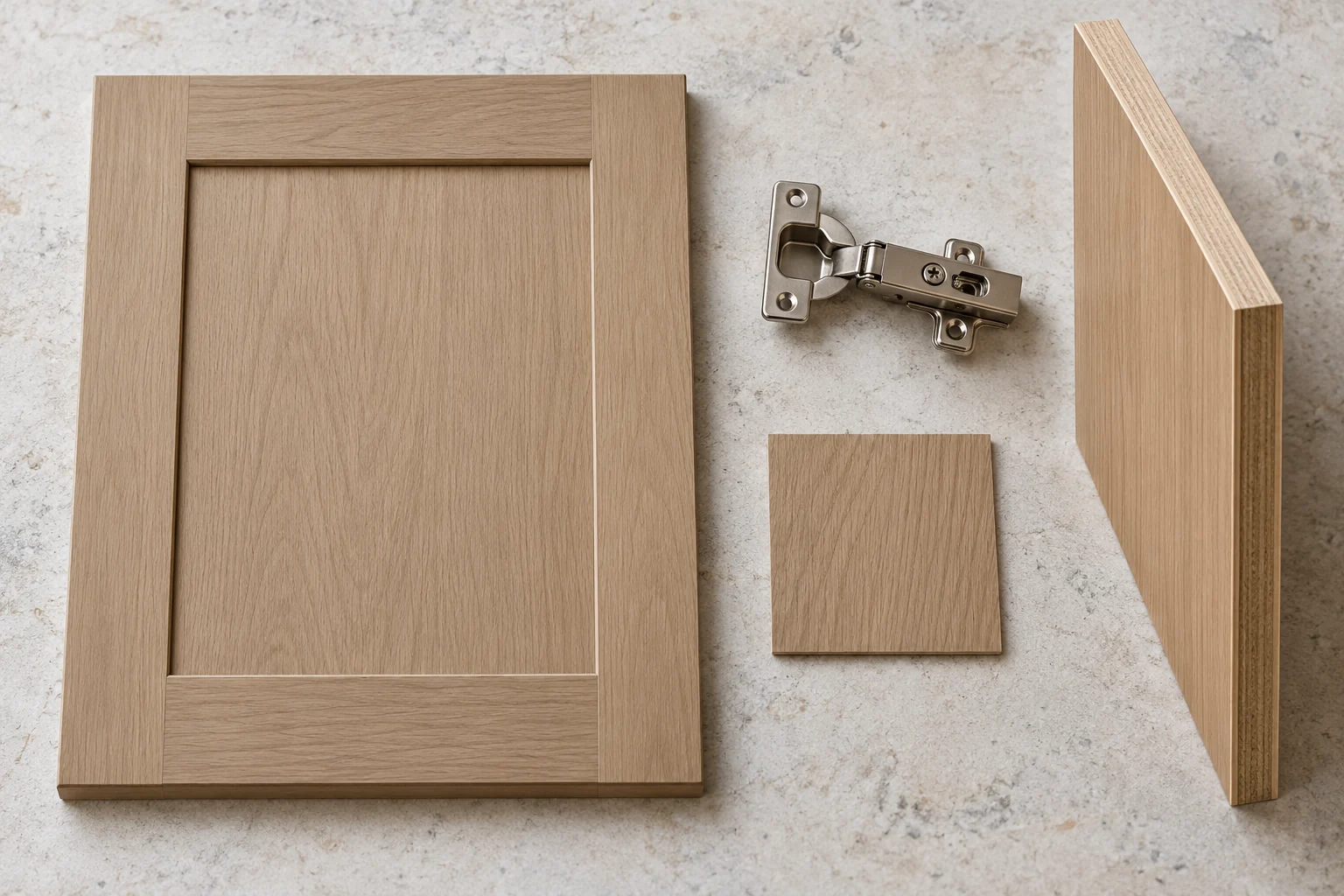
Confirm hinge compatibility, overlay or inset details, drawer operation, and the work needed at existing holes. Replacement drawer boxes, slides, and organizers may be worthwhile, but they should be identified as included work or separately priced additions.
After choosing the route, our kitchen hardware guide can help compare grip, finish, and style. Test a sample and confirm the mounting details before ordering every pull.
Replacement earns its cost when the physical design must change
New cabinets can address damaged boxes, unsuitable storage arrangements, or a changed layout. Price the full inventory, finishing panels, fillers, hardware, installation, and affected services. A stock-cabinet comparison should include those pieces before it is set against a refacing proposal.
Coordinate the counters at the same time. Retaining a counter during cabinet replacement may be difficult or unsuitable; have the installer and fabricator assess the actual assembly. Do not assume an expensive top can be removed and reinstalled without consequence.
Compare complete installed proposals, disruption, care, and warranty scope. Refacing is not always cheaper once extensive repairs and interior changes are added. The best route preserves what is still useful while changing the parts that prevent the kitchen from working.

Ethan Miller
Ethan Miller writes about home improvement, interior design, cleaning, and everyday living at Home & Living Daily. He shares practical tips and simple ideas to help readers create more comfortable and functional homes.