The most useful bookcase DIY idea is the one that matches your storage needs, tools, and willingness to make permanent changes. Refresh an existing unit for a manageable first project, build a simple rectangular bookcase when you want custom dimensions, or add fitted trim when you are ready to work around uneven walls and floors.
Use this guide to choose a project and plan its details. For a structural build, follow a complete, dimensioned plan rather than estimating board thickness, shelf spans, and fasteners from an inspiration image.
Choose your project before buying materials
| Project | A useful fit when | Main challenge |
|---|---|---|
| Paint or backing refresh | The bookcase already fits and is sound | Preparing the existing surface correctly |
| Simple freestanding build | You need a different width or shelf arrangement | Accurate cuts, square assembly, and suitable shelf support |
| Modular units with fitted trim | You want a built-in appearance | Leveling, fixing, and fitting gaps against the room |
| Full custom built-in | The wall has awkward dimensions or several functions | Detailed design, installation, and coordination with room features |
Freestanding describes how the bookcase is constructed, not permission to leave it unsecured. Read the unit or plan’s anchoring requirements. If you rent, check what wall fixings and permanent changes are permitted before choosing a tall unit or fitted project.
Refresh a plain bookcase with paint and a new backing
A structurally sound bookcase can look very different with a new finish, contrasting back panel, or adjusted shelf spacing. This is a useful starting point when the existing unit fits the room and its shelves can hold what you want to store.
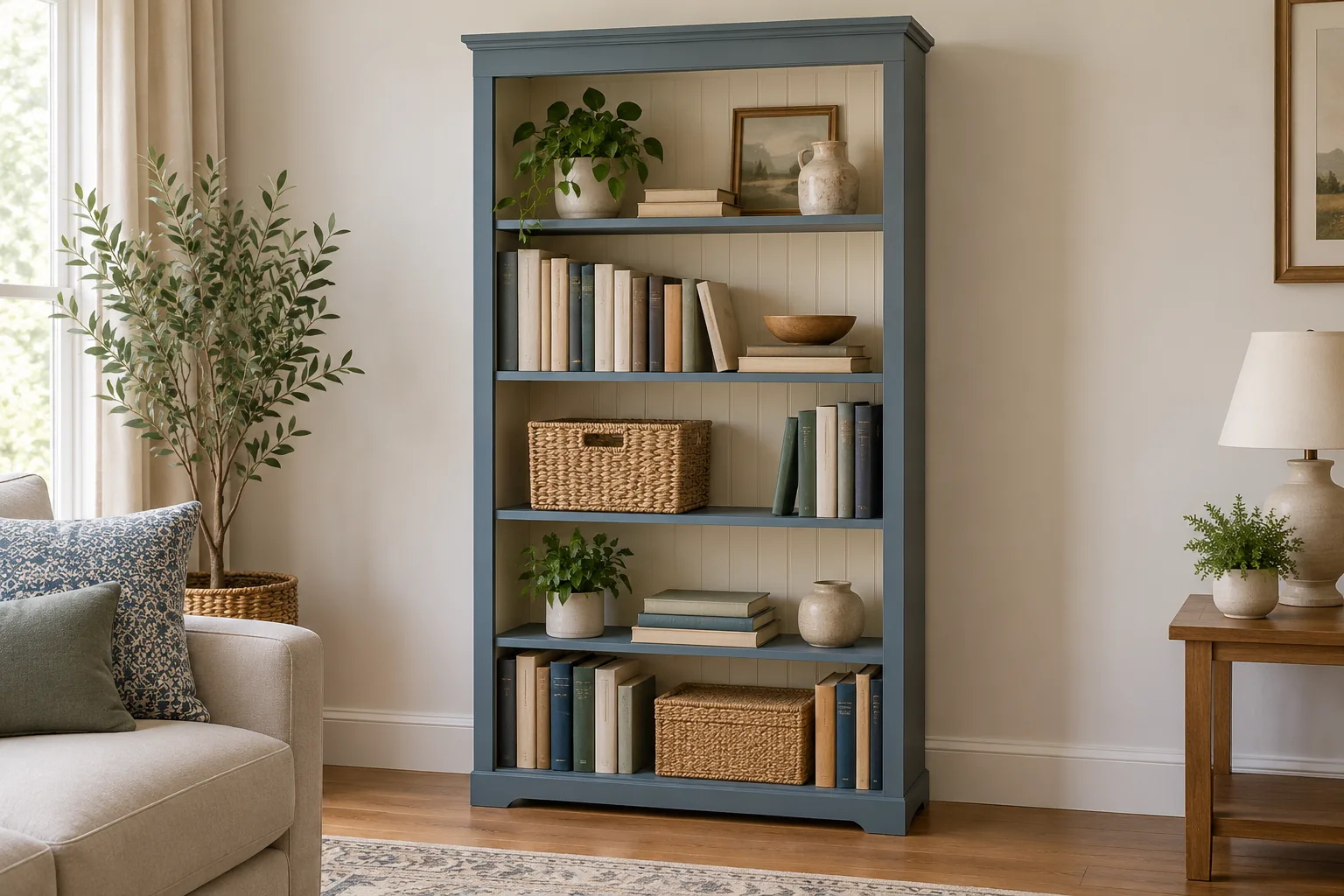
Identify the surface first: solid wood, veneer, laminate, and an existing painted finish may need different preparation. Clean it, check the coating maker’s instructions, and test adhesion in an inconspicuous spot. Avoid aggressive sanding that can cut through a thin veneer.
Paint the back a lighter color to highlight objects, or use a quieter tonal shade if the books are visually busy. A removable decorative backing can be useful, but do not remove a structural back panel simply to change the appearance.
Let the finish cure before returning books to the shelves. The label’s cure guidance matters more than whether the paint feels dry. Our guide to interior paint drying and curing explains the distinction.
Build a simple rectangular bookcase for a specific space
A straightforward box with side panels, shelves, and a back is a more manageable design than a complicated arch or angled unit. Customization can come from the dimensions, finish, and shelf arrangement rather than unusual geometry.
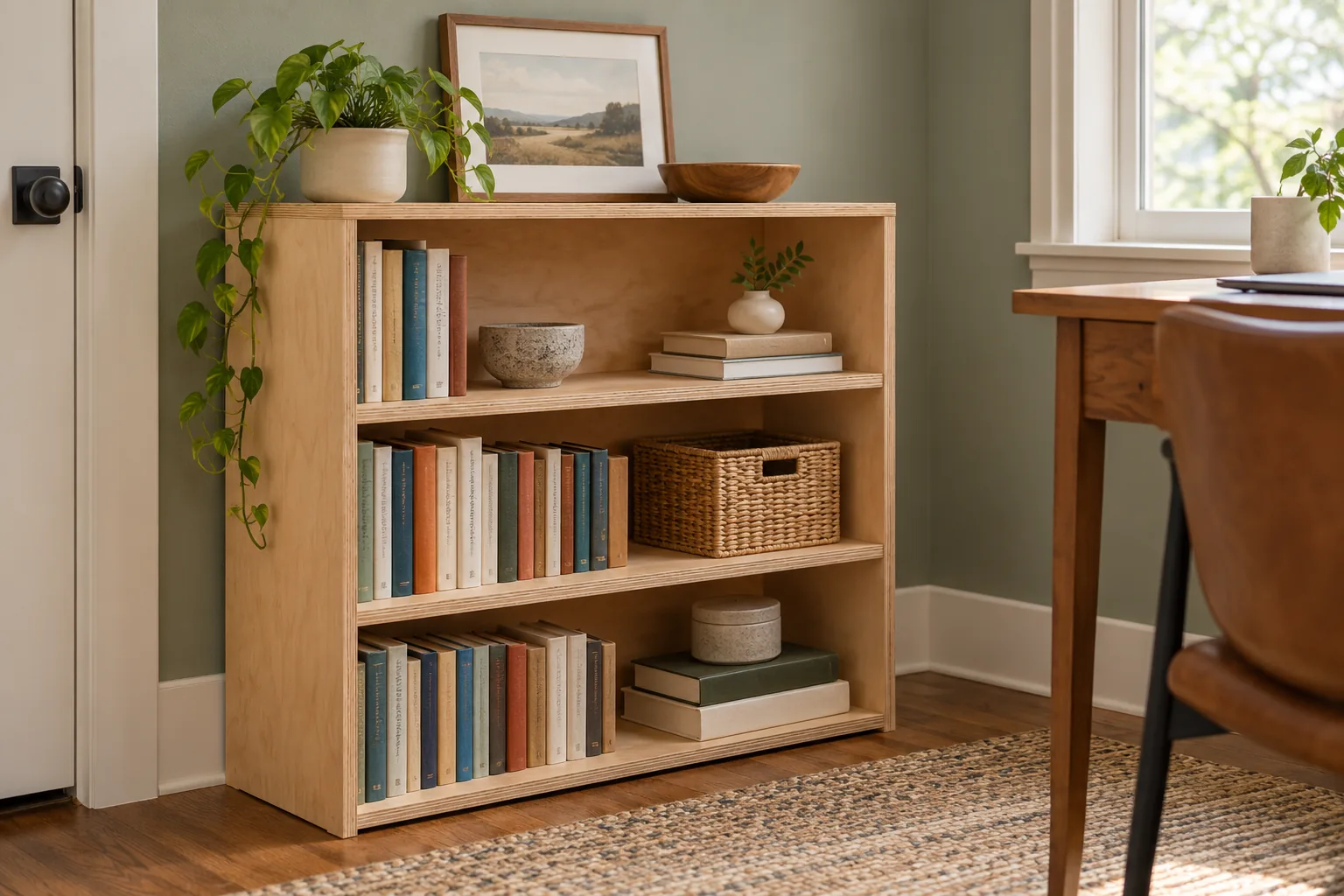
Measure the room and the books before settling on a plan. Oversize art books, binders, and paperbacks use space differently. Include the thickness of the shelves and side panels when checking usable openings; the outside size is not the storage size.
Look for a plan that specifies materials, joinery, back construction, shelf supports, and installation. The Home Depot’s built-in bookshelf guide illustrates the stages involved in a larger project. Compare its scope with your tools and experience before adopting any measurements.
If a plan does not state a load rating, do not invent one. Shelf behavior depends on material, thickness, unsupported span, support method, and load. A row of heavy books needs a different assessment from a few light ornaments. Shorter spans or intermediate dividers may suit the design, but changes to a plan still need appropriate structural consideration.
Create a built-in look with modular bookcases and trim
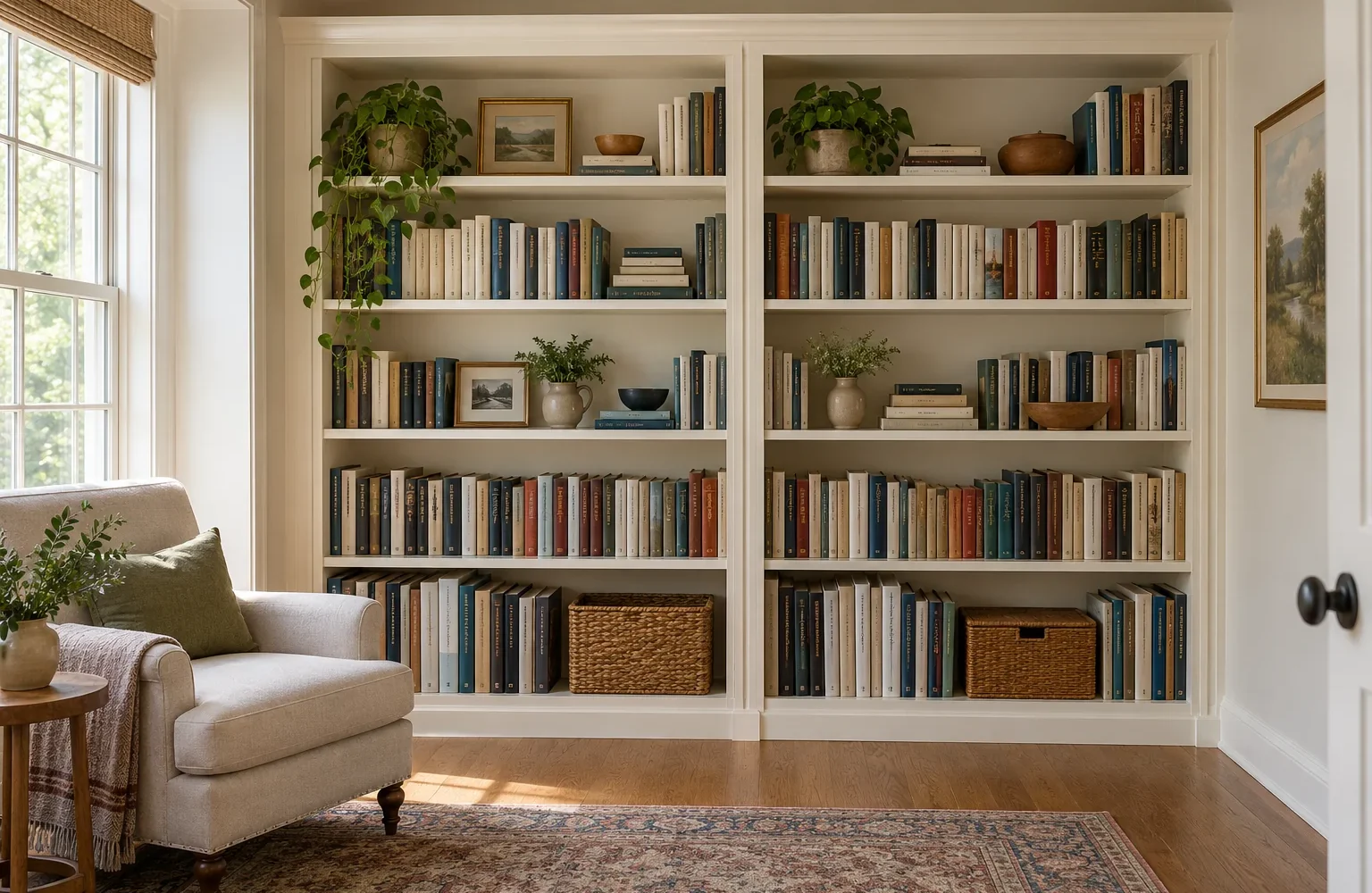
Placing compatible bookcases side by side and finishing their perimeter with trim can create a fitted appearance. It works best when the units already suit the space and you are comfortable measuring small differences between the room and the furniture.
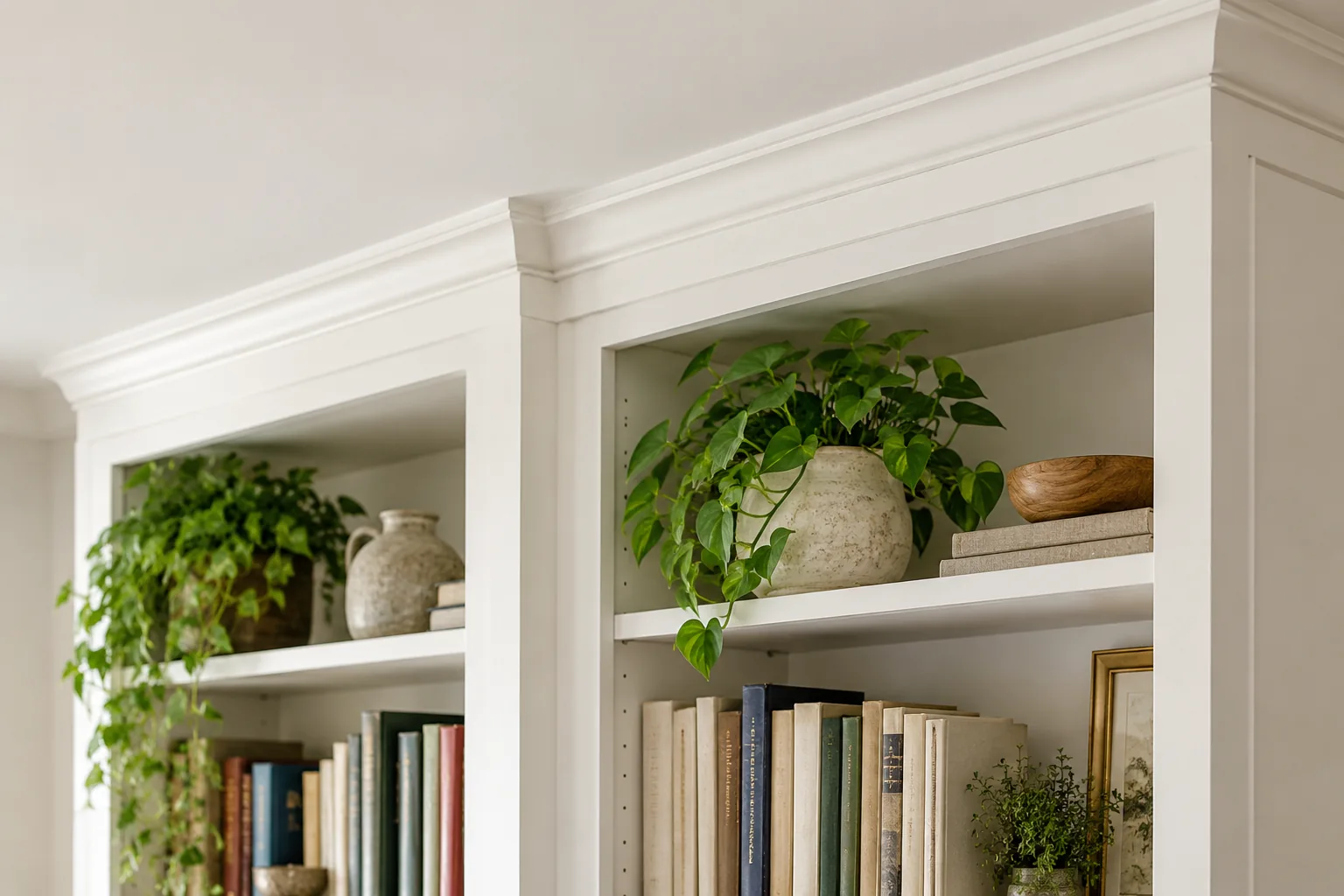
Measure the wall at several heights and check the floor for level. Plan how the units will clear baseboards, how they will be fixed, and how end gaps will be finished. Do not assume both ends of a wall need identical filler pieces.
Finish trim is decorative; it is not a substitute for a suitable base or structural fixing. Keep outlets, vents, and necessary service points accessible. If the installation affects wiring, heating, or other building services, get the relevant professional involved before concealing them.
Choose this route for the integrated appearance, not because it promises a universally quick or cheap result. Leveling, fitting, surface preparation, and finishing can make a modest-looking wall a substantial project.
Try a low bookcase with several short bays
A low bookcase can store books while leaving room for art above it. Divide a wide design into narrower bays rather than assuming one long shelf can hold a continuous row of books. Check the design’s support and loading requirements before filling it.
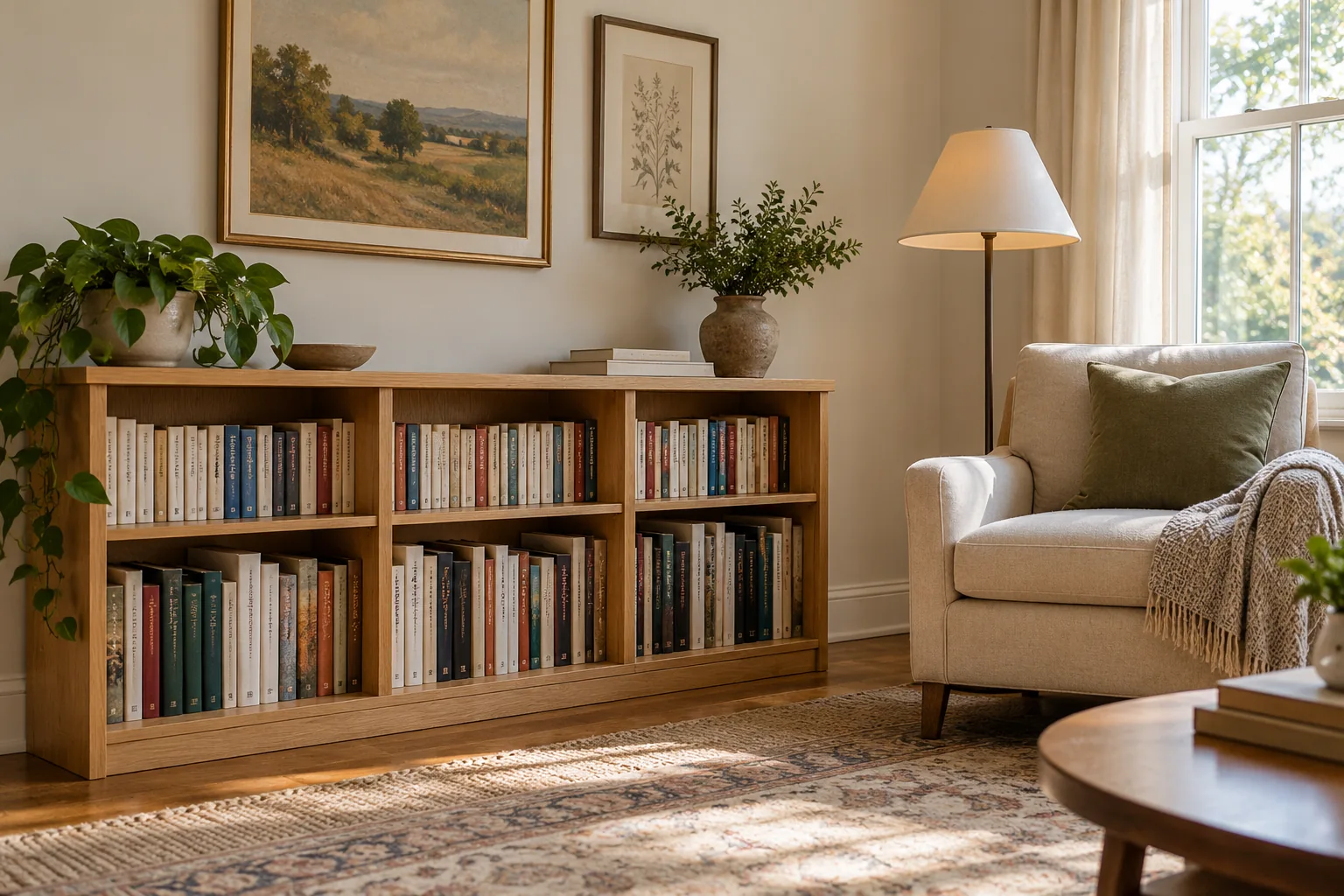
Keep the surface useful rather than covering it with objects that must move whenever you reach a book. A reading lamp nearby can be helpful, but route its cord so it does not cross a walkway or become trapped behind the unit.
Plan the practical details that make the project last
Inventory the contents
Group the books and objects you want to store, measure the tallest pieces, and leave some space for additions. Adjustable shelves offer flexibility, but their pins and supports must be compatible with the design. A shelf that can move is not automatically suitable for every load.
Check the route into the room
Think about delivery and assembly as well as the finished wall. Will the side panels fit through the doorway? Can the assembled case be stood upright beneath the ceiling? A project that fits the final position may still be difficult to maneuver into it.
Anchor and load it as intended
The CPSC recommends securing top-heavy furniture and following the manufacturer’s anchoring instructions. Use hardware appropriate to the wall and unit; consult the manufacturer or a qualified installer if the fixing is uncertain. Keep heavier items low and avoid putting tempting objects where children may climb to reach them.
Match the finish to the room
Repeat a wall color for a quiet fitted effect or use contrasting wood for a separate furniture feel. Before committing to a bold finish, compare a sample with the floor, trim, and adjacent furniture. Our beginner DIY home decor ideas offer smaller projects if you would rather practice finishing skills first.
Bookcase DIY questions
Is building a bookcase cheaper than buying one?
It depends on the design and what you already own. Compare the full materials list, finishing supplies, hardware, tool needs, and delivery costs with a ready-made unit that meets the same need. Custom sizing may be the strongest reason to build, even when it does not reduce the total spend.
Can I use a bookcase as a room divider?
Only choose a unit or design intended for that use and an installation that addresses stability. A finished back does not make a wall-dependent bookcase suitable for standing unsupported in the middle of a room. A divider also needs safe circulation around it.
Which project should I start with?
Start with the smallest change that fixes the storage problem. Refresh a sound unit if it already fits. Choose a documented simple build if the dimensions are wrong. Move to fitted trim or full custom work when you understand the room’s irregularities and the installation requirements.

Ethan Miller
Ethan Miller writes about home improvement, interior design, cleaning, and everyday living at Home & Living Daily. He shares practical tips and simple ideas to help readers create more comfortable and functional homes.