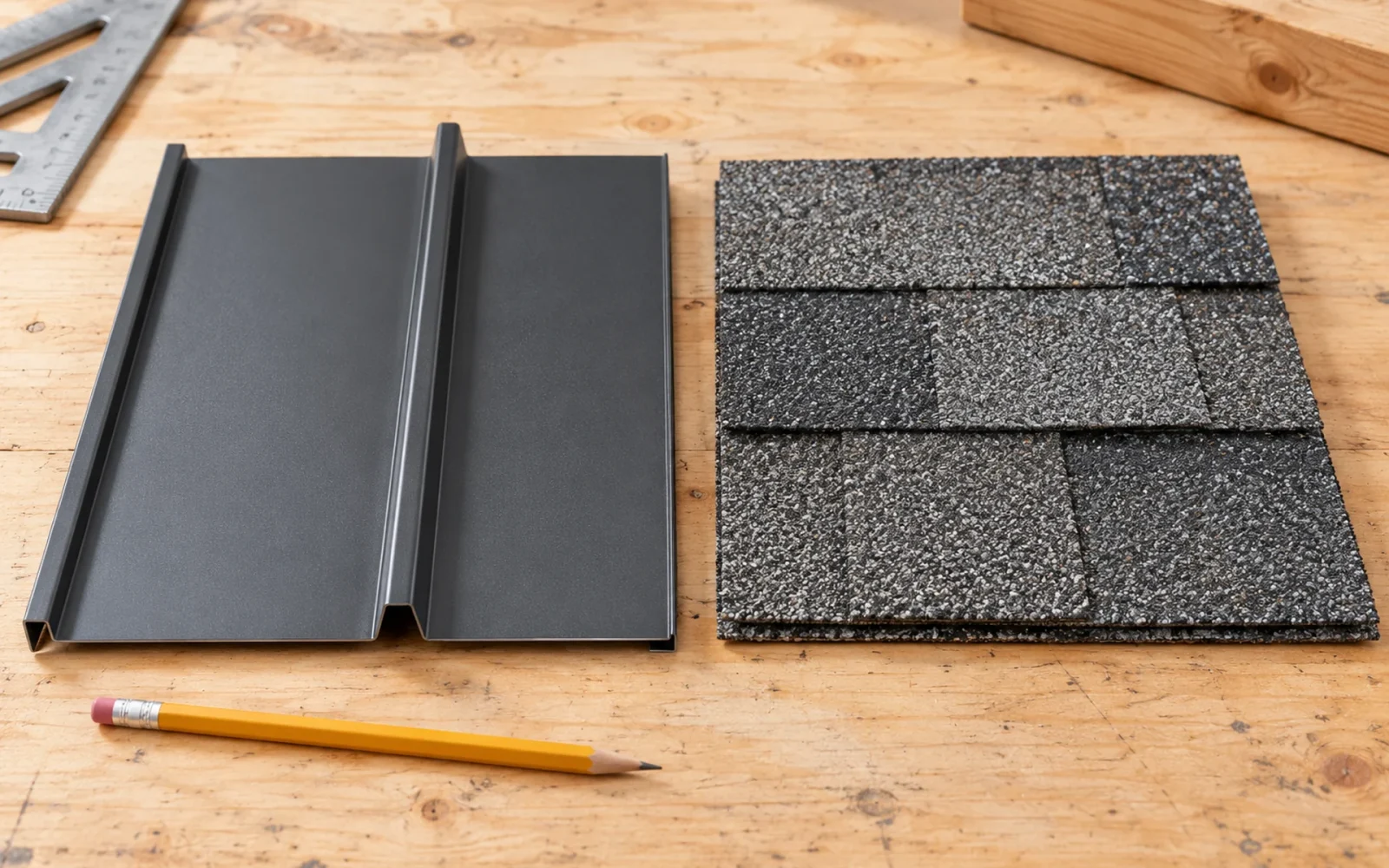
A metal roof can be the better choice when you value a long service life, have a suitable system and installer, and can absorb a higher initial price. Asphalt shingles often make more sense when the upfront budget is tighter and you want a familiar roofing system with widely available installation and repair services. Neither material is the better purchase for every home.
Compare the actual products and installed assemblies before choosing. “Metal” might mean standing-seam panels, exposed-fastener panels, or metal shingles, while asphalt includes several product grades. A premium example of one category and a basic example of the other are not an even comparison.
First decide which systems the quotes describe
Ask each roofer to name the product, base material, finish, underlayment, fastening arrangement, and treatment of roof details. The roof’s slope and the manufacturer’s installation requirements help determine what is appropriate. A broad material preference does not establish that a particular panel belongs on every section of your house.
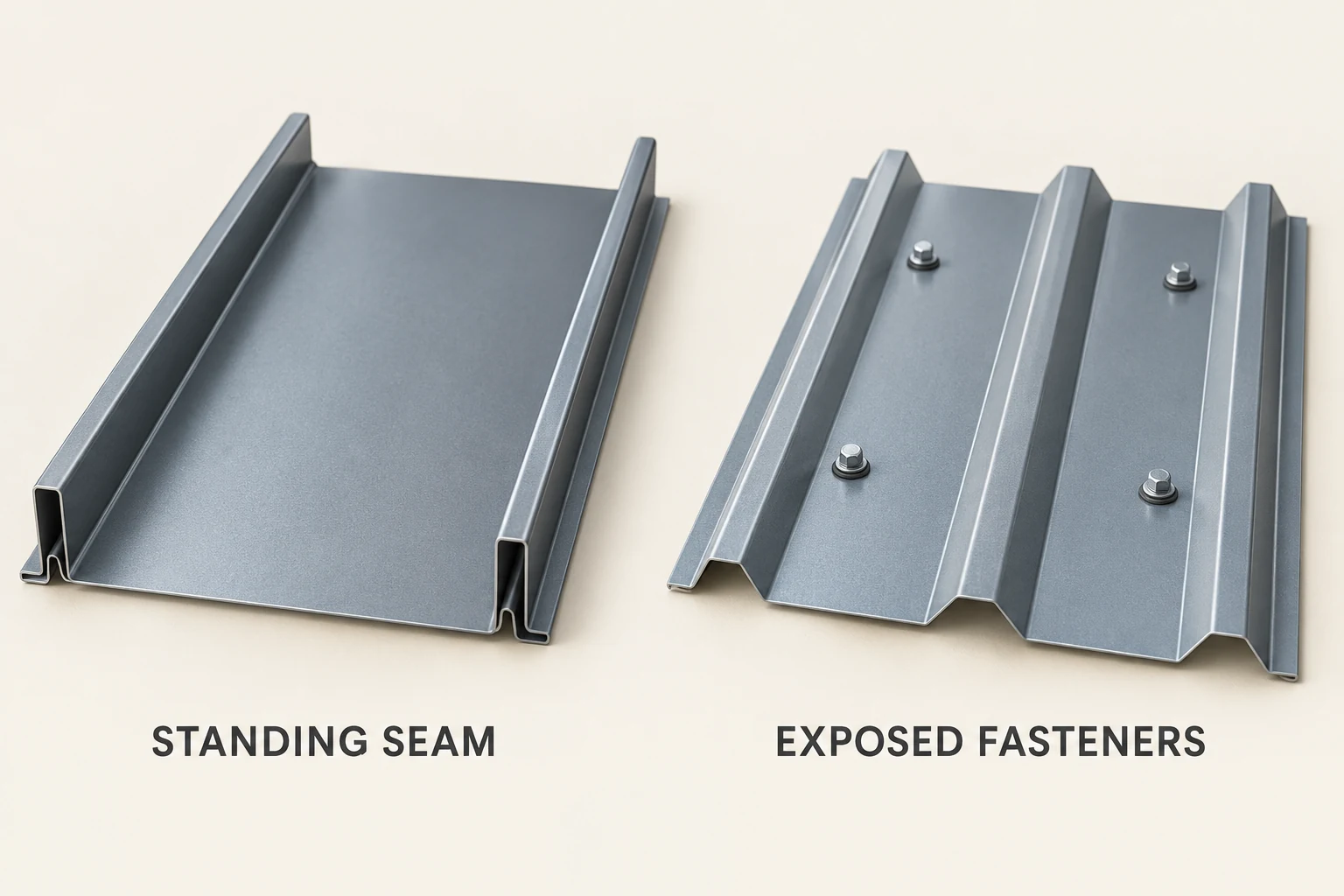
Standing-seam systems conceal their fastening details within the assembly; exposed-fastener systems have visible fasteners through the panels. Ask how the selected system accommodates movement and what fastener or seal inspection its manufacturer requires. A low panel-material price alone does not describe the installed residential roof.
| Decision | Metal roofing | Asphalt shingles |
|---|---|---|
| Initial budget | Often higher; panel system and detail work matter | Often lower; compare the specified shingle grade |
| Long-term planning | Potential for long service, with system-specific care | Usually a shorter planning horizon, affected by product and exposure |
| Repair arrangements | Find a contractor familiar with the exact profile and finish | Establish product availability, matching, and localized repair options |
| Noise and comfort | Depend on the full roof and ceiling assembly | Also depend on assembly, insulation, and room configuration |
Pay more only for benefits you can identify
Get proposals for the same measured roof area and the same removal and repair scope. Then separate the material-system premium from other differences, such as new flashing, decking allowances, ventilation, cleanup, or a different warranty. A metal bid with substantial additional work cannot be compared fairly with a shingle-only headline price.
For example, hypothetical bids of $20,000 and $32,000 differ by $12,000. Whether that premium is worthwhile depends on what the second proposal includes and how long the benefits matter to you. The difference does not become a guaranteed saving merely because a brochure divides the roof price by an optimistic lifespan.
Ask about future service as well as installation. Who can work on the roof when a penetration needs attention? How are replacement panels or matching finishes obtained? If you plan solar equipment, have the roofing and solar contractors coordinate the selected attachment system and warranty responsibilities before ordering.
Longer potential life does not eliminate maintenance
Metal systems can offer a longer planning horizon, but published ranges describe categories rather than your future replacement date. For example, Construction Metal Products publishes a 40-to-70-year metal-roof range. That manufacturer estimate should not be applied indiscriminately to every metal, coating, fastener system, climate, and installation.
Our guide to roof lifespan and replacement signs explains why the covering, underlying components, condition, and warranty terms must be considered separately. A long-lived panel still depends on the details around it.
For either choice, obtain the manufacturer’s inspection and maintenance guidance. Ask what the installer recommends after storms and how debris, penetrations, seams, flashings, and any exposed fasteners will be checked. Work at roof level belongs with someone equipped to access it safely.
Will rain sound louder under metal?
The exposed roof material is only one part of the sound path. Decking, underlayment, attic space, insulation, and the interior ceiling sit between rainfall and an occupied room. An open-sided shelter with bare panels is not a useful stand-in for a finished house.

Interlock’s manufacturer guidance on rain noise describes those assembly layers for its residential metal system. That supports asking about the construction beneath the covering, not promising one universal noise level for every metal roof.
If sound is a priority, describe the room directly beneath the roof and ask the installer how the proposed assembly compares with your existing one. A finished attic bedroom deserves a more specific discussion than “metal is noisy” or “you will never hear it.”
Heat and storm performance need product evidence
A roof does not become energy-efficient simply because it is metal. Color, surface properties, insulation, climate, and the rest of the building affect the result. ENERGY STAR’s cool-roof guidance notes that reflective roofs generally provide greater savings in hot, sunny climates and on buildings with less roof insulation. Use the selected product’s performance information instead of budgeting a fixed reduction in household bills.
For local wind, hail, fire, snow, or coastal exposure, request the relevant product and assembly documentation. Ask what the test or rating covers, what installation conditions it assumes, and whether the proposed roof matches them. A general claim of “stormproof” does not answer those questions.
Also distinguish appearance from water-shedding performance. If dents, finish damage, or future matching concern you, ask how they are handled under the actual warranties and any insurance policy. Confirm insurance treatment with your insurer; do not subtract an assumed discount from the metal premium.
Choose around your constraints
Metal deserves serious consideration when a well-specified system meets your exposure needs, local installation expertise is available, and the initial premium fits your plans. Asphalt deserves equal consideration when it provides the required performance at a price that leaves room for necessary deck, flashing, or other building repairs.
The stronger choice is the roof you can specify, install, maintain, and afford as a complete system. Paying for a longer-lived covering while leaving important details unresolved is a weaker decision than selecting a simpler system with a clear scope and accountable installation.

Ethan Miller
Ethan Miller writes about home improvement, interior design, cleaning, and everyday living at Home & Living Daily. He shares practical tips and simple ideas to help readers create more comfortable and functional homes.