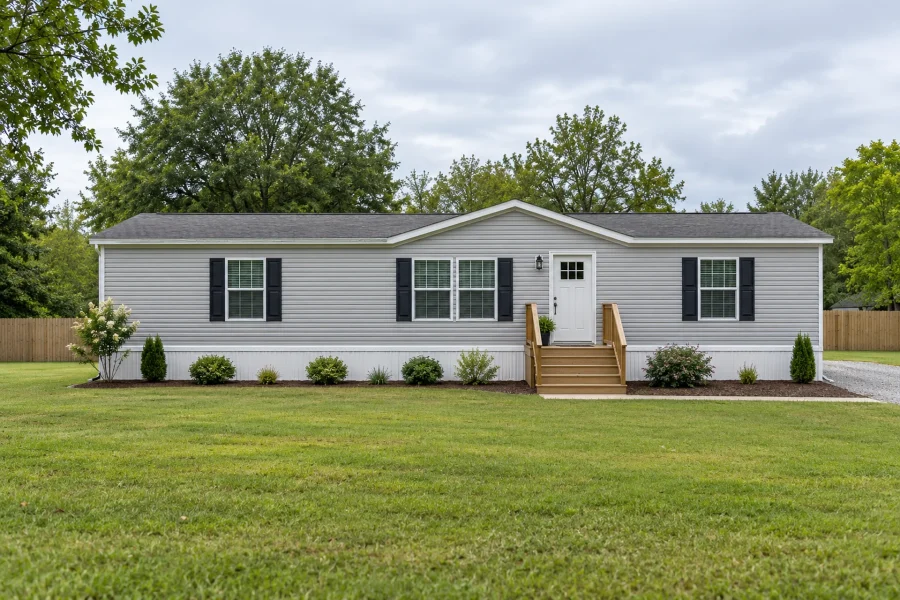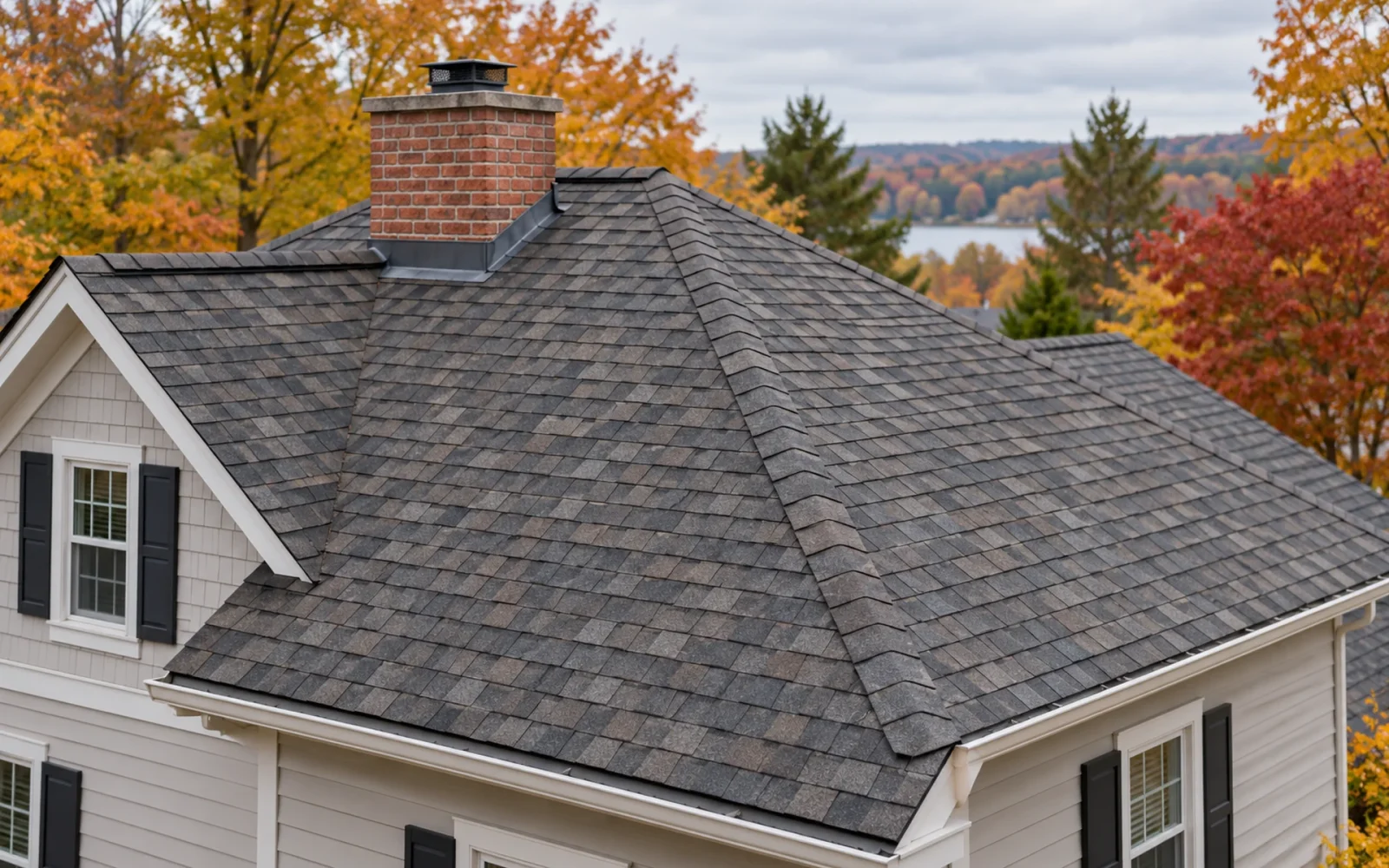
An asphalt-shingle roof often has a planning lifespan of roughly 15 to 30 years, while some metal, tile, and slate systems last much longer. That is a range for a material category, not the remaining life of your roof. Installation, climate, maintenance, and the condition of the whole assembly can move the decision earlier or later.
Use age to decide when to investigate and budget. Use an assessment of actual condition to decide what work is needed. A roof does not become sound because its warranty has years left, or require complete replacement simply because it reaches a birthday.
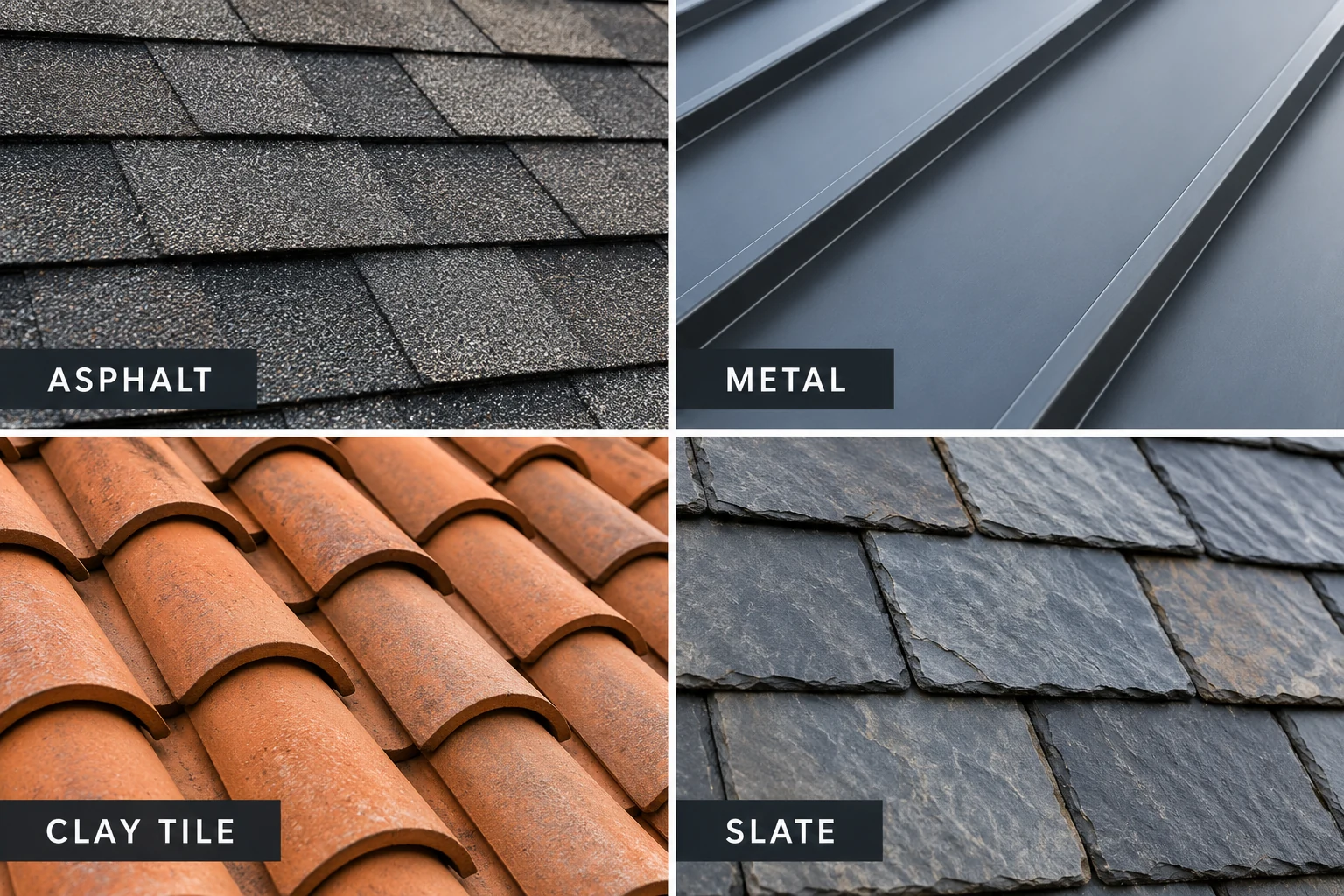
Typical roof lifespans by material
| Roofing material | Published planning range | What the number leaves out |
|---|---|---|
| Asphalt shingles | About 15 to 30 years | Shingle type, installation, exposure, and condition of underlying components |
| Metal roofing | About 30 to 50 years in SERVPRO’s general guide | Metal type, coating, fastening system, and corrosion exposure |
| Cedar shingles | About 20 to 30 years | Climate, installation details, and maintenance |
| Clay or concrete tile | About 50 to 100 years | Breakage, flashings, underlayment, and the supporting assembly |
| Slate | About 60 to 150 years | Slate quality, attachment, flashings, and specialist repair needs |
Different guides give different ranges, especially for a broad category such as metal. A coated steel panel system and a copper roof are not identical products. Identify what is actually installed before applying the longest figure you find online.
Find out how old the roof really is
Start with installation invoices, permits where available, warranty papers, inspection reports, or records from the previous owner. A house’s construction year does not establish the date of its current roof. A repair receipt also does not prove the entire roof was replaced.
Ask whether different sections have different ages. An addition, porch, low-slope section, or repaired slope can have a different material and history from the main roof. Note any installed-over layers if that information is available, rather than assuming the visible surface tells the full story.
If the date remains uncertain, an inspection can document present condition and likely repair needs. It cannot turn an unknown installation date into a precise age just by looking at one photograph.
The shingles or tiles are only part of the roof
A long-lived roof covering still depends on the layers, transitions, and details around it. A leak at a penetration or flashing can require attention even when most of the covering looks serviceable. Conversely, a localized problem does not automatically establish that every slope needs replacement.
For tile and slate, ask the specialist to distinguish the condition of the visible units from the condition of attachments, underlayment, and flashings. The potential longevity of a tile is not a promise that every component beneath it lasts equally long.
The useful inspection explains where a defect is, what it affects, and whether repair is practical within the remaining assembly. A recommendation based only on a material’s advertised lifespan leaves that reasoning out.
Condition signals that deserve attention
Look for changes you can observe safely: missing or displaced pieces, curling or cracked shingles, recurring ceiling stains, or visible distortion in a roof line. Have leaks and suspected structural movement assessed promptly rather than waiting until a planning lifespan expires.
Nationwide’s roof-condition guidance discusses damaged shingles, water damage, and flashing problems, while also noting that a single sign does not necessarily require total replacement. Request photographs and an explanation of the affected areas when a contractor recommends substantial work.
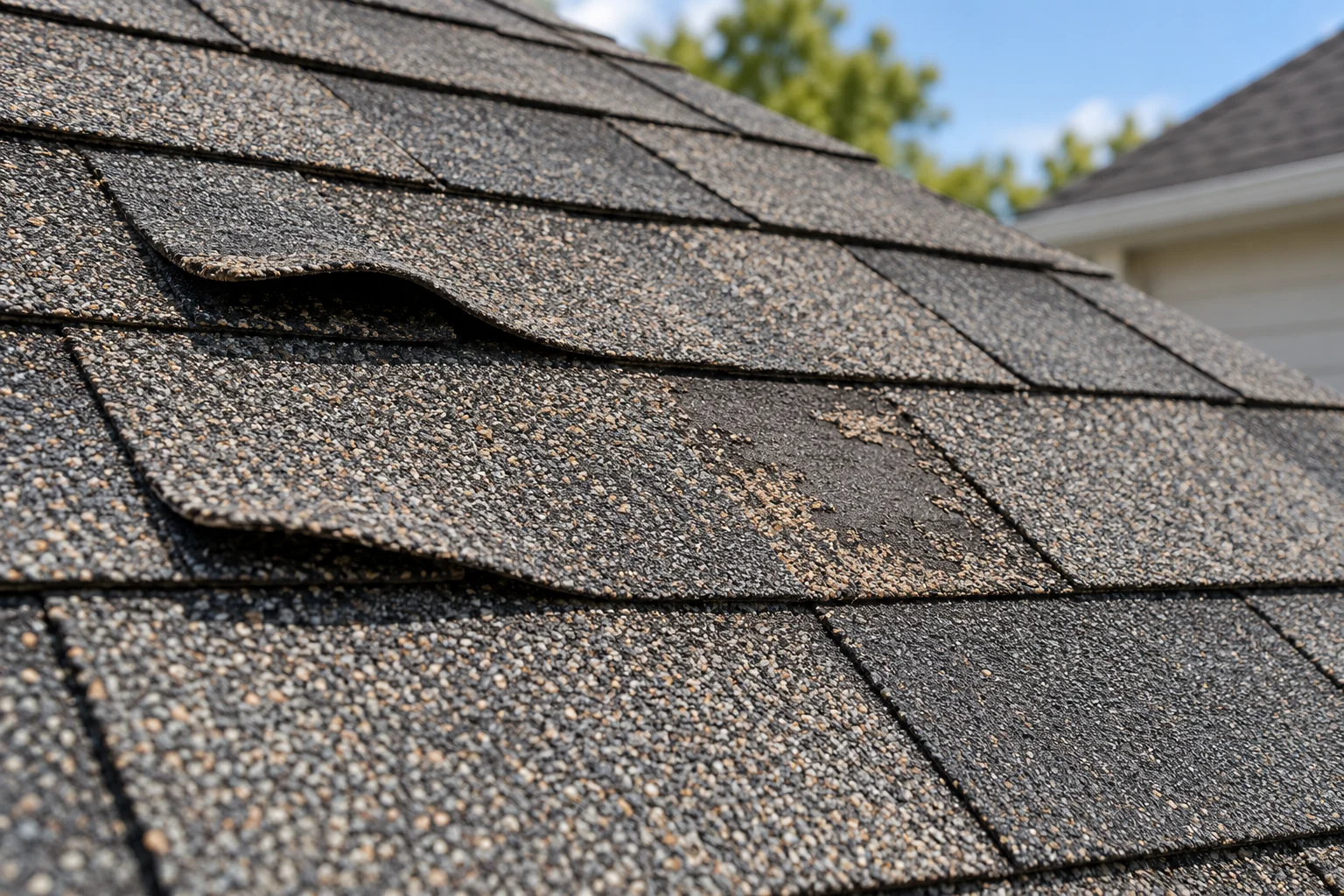
Keep initial observations at ground level, using binoculars where useful, or let a qualified professional arrange appropriate access. Walking on the roof adds risk and can damage some materials. Interior observations should also be limited to areas you can access safely.
Why similar roofs age differently
Compare exposure, not just installation dates. Sun, storms, wind-driven debris, nearby trees, and the local environment can affect different roof sections differently. A sheltered slope and a more exposed slope may not tell the same story.
Installation and ongoing care matter too. Water-management details, suitable ventilation where the assembly requires it, compatible components, and prompt repair of identified defects all belong in the discussion. These are reasons to assess the actual system, not reasons to promise that maintenance adds a fixed number of years.
Keep a record of inspections, repairs, and storm damage with dates and photographs. Comparing a new observation with an earlier record is more useful than trying to remember whether a worn patch “always looked like that.”
A warranty period is not a service-life forecast
Read what is covered, whose work or product is covered, exclusions, maintenance obligations, and any transfer requirements. A long or “lifetime” product warranty does not mean the entire installed roof will perform unchanged for that period.
For a concrete example, GAF’s shingle and accessory limited warranty describes coverage for manufacturing defects and its conditions. It is a warranty document, not a general promise that every roof component has the same lifespan. Check the terms for your own installed products and any separate workmanship coverage.
Is a 20-year-old roof automatically due for replacement?
No. Twenty years may put an asphalt roof into a period when closer evaluation and replacement budgeting are sensible. It does not establish the condition of a particular roof, and it says even less about a different material.
Ask for a recommendation that distinguishes localized repair, monitoring, and replacement, supported by the condition of the covering and the assembly beneath it. If the proposal is substantial or the explanation is unclear, another assessment can help you compare the reasoning.
A useful roof-life estimate tells you what to do next and why. It should connect documented condition to a maintenance, repair, or replacement plan, rather than leaving you with a reassuring warranty number or an alarming age alone.

Ethan Miller
Ethan Miller writes about home improvement, interior design, cleaning, and everyday living at Home & Living Daily. He shares practical tips and simple ideas to help readers create more comfortable and functional homes.