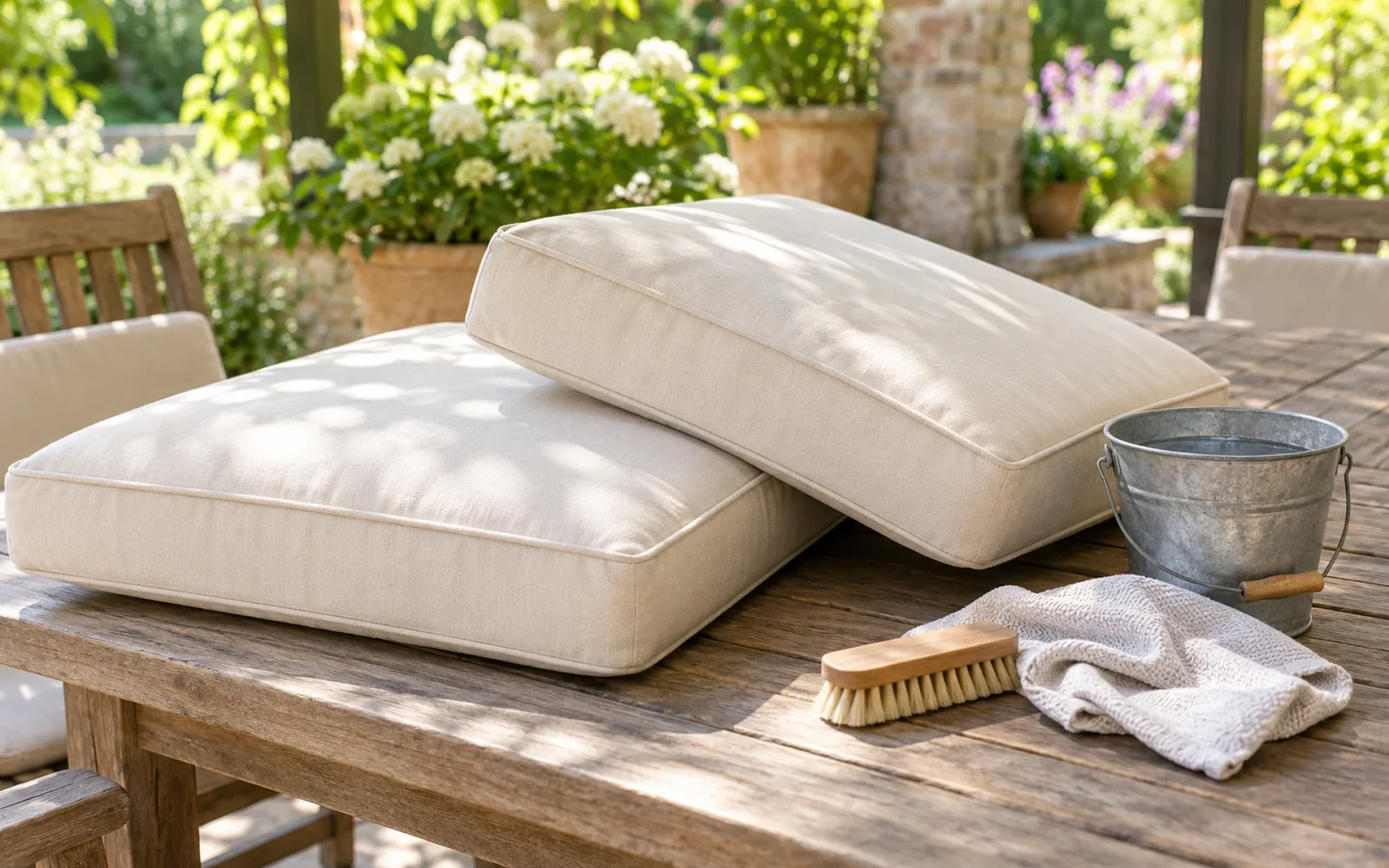
Clean outdoor cushions by removing loose dirt, washing with a solution approved for the fabric and cushion construction, rinsing thoroughly, and letting the entire cushion air-dry. Check the care instructions before removing a cover or choosing a stain treatment. “Outdoor” does not mean that every cushion tolerates a washing machine, bleach, or a pressure washer.
Plan the drying space before you start. A clean-looking cover over damp filling is not ready to go back into a storage box.
Read the label and check what the zipper is for
Look for the furniture maker’s care label, the fabric brand, and any instructions for the filling. If the label is missing, search the manufacturer’s care information using the model name or ask before using a stronger treatment.
A zippered casing may allow assembly or replacement rather than routine machine washing. The cover can also be difficult to refit after shrinkage or distortion. Do not remove it solely because you can unzip it.
Separate cushions into the cleaning method each one permits. A decorative pillow bought later may need different care from the original seat cushions, even if the colors match. Check trims, backing, and attachments as well as the main fabric.
Inspect seams and fabric before wetting anything. A torn cover, crumbling filling, or persistent odor from inside needs more thought than a normal surface wash. Stronger soap will not repair deteriorated foam.
Take off dry debris before adding water
Remove cushions from the furniture and use a clean, soft brush or an upholstery vacuum attachment to lift dust, grit, and loose leaves. Pay attention to piping, seams, and the crease between the seat and back. Work gently so you do not abrade the fabric.
Choose a clean working surface where rinse water can drain without carrying soil back onto the cushions. Do not wash them directly on a muddy lawn. Keep the metal or timber frame out of a fabric-cleaning experiment; it may need a different product.
If the furniture itself also needs attention, use our separate guide to cleaning outdoor furniture by material before putting the dry cushions back.
Use a gentle whole-panel wash when the cushion allows it
Mix the cleaner at its stated dilution and test it on an inconspicuous area. Rinse and let that patch dry so you can check color and texture before treating the visible face.
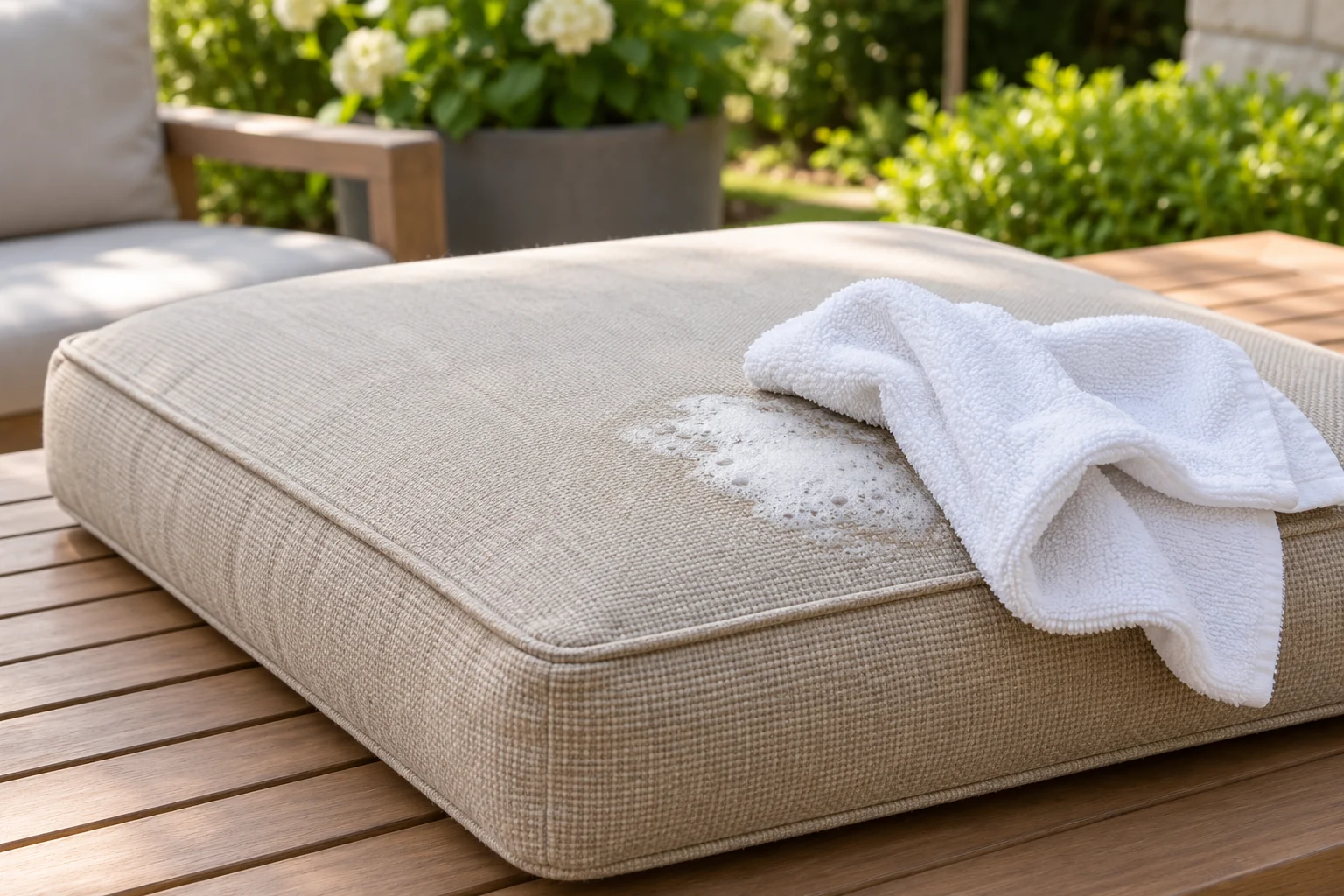
For a specific example, Sunbrella’s outdoor upholstery instructions describe ¼ cup of mild soap per gallon of lukewarm water, gentle cleaning with a sponge or soft brush, thorough rinsing, and air-drying. Use that example only for confirmed Sunbrella upholstery with compatible cushion construction; another fabric’s instructions may differ.
For cushions approved for wet cleaning in place, work across the panel rather than repeatedly attacking a tiny spot. Keep the amount of water proportionate to the approved method. Removable seat cushions that can be rinsed are different from upholstery permanently attached to a frame.
Rinse as directed until cleaner residue is gone. If permitted, use a gentle hose flow rather than a forceful jet. Do not assume a pressure washer will save time: concentrated pressure can stress fabric, seams, and the filling beneath them.
Check the underside and edges for trapped soap. Adding extra detergent often creates more rinsing work without improving the result.
Change the treatment for the stain, not the whole routine
A fresh drink spill: blot up liquid with a clean cloth. Work without rubbing the spill across a wider area, then follow the approved spot-cleaning method. Check for a ring after the fabric dries before escalating.
Food grease or sunscreen: lift excess material and blot. A fabric maker may recommend an absorbent or a particular stain remover for oil. Verify that guidance rather than applying a kitchen degreaser to an unknown textile.
Bird droppings or stuck-on debris: lift the surface material carefully, then clean the affected area using the fabric’s instructions. Avoid grinding it into the weave with a stiff brush.
Mildew-like spots: first confirm which treatment the fabric and filling permit. A bleach-compatible cover does not establish that its thread, backing, foam, or nearby furniture is also compatible. Some fabric makers provide a specific mildew recipe; that recipe should stay with that material and application.
Do not combine bleach with vinegar, ammonia, or another cleaner. Use one approved method at a time, with the required rinsing between products. Keep a record of what you used so a second attempt is a considered choice rather than an unidentified mixture.
Dry the inside before you store or cover it
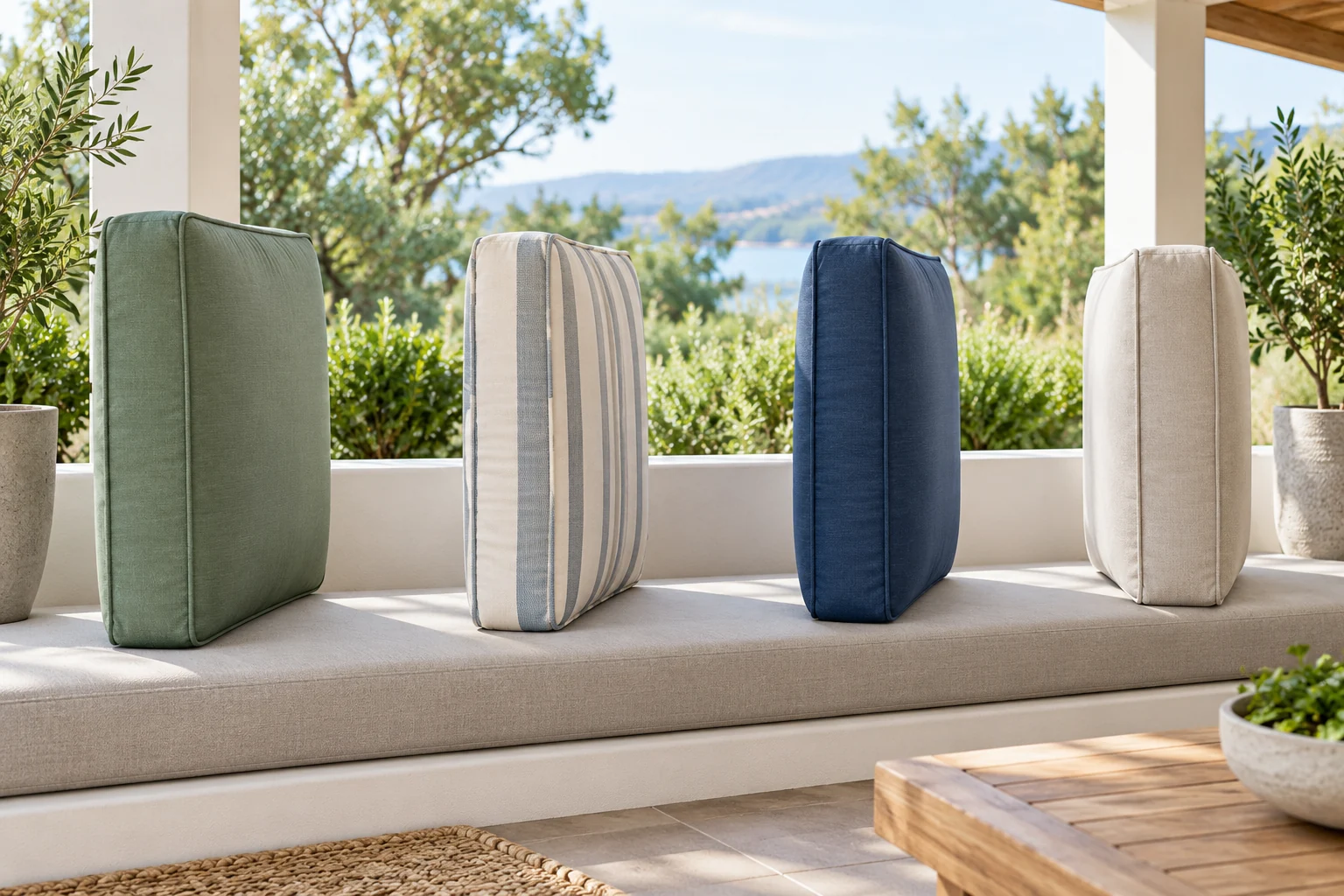
Set loose cushions where air can circulate around them, using the drying position recommended by the maker. If they can stand on edge safely, leave space between them rather than making a stack. Turn or reposition them as appropriate so the underside does not remain against a wet surface.
Drying time depends on filling thickness, how much water entered, humidity, and airflow. A sunny afternoon is not a reliable deadline. Check the edges, seams, and filling accessible through the opening without dismantling the cushion against instructions. A cool, damp interior means more drying time.
Do not use a tumble dryer, direct heater, or steam cleaner unless the care instructions explicitly allow it. Once dry, return the cushions to a clean frame. Store them in a dry, ventilated place when appropriate, and avoid sealing moisture inside a cover or box.
Can outdoor cushion covers go in the washing machine?
Only if both the fabric and furniture instructions permit removal and machine washing. Follow their cycle, temperature, detergent, fastening, and drying directions. Wash a matching set consistently if the instructions call for it, and keep each cover with the correct insert.
If the care method is unknown, start with dry debris removal and obtain the manufacturer’s guidance before soaking the entire cushion. If odor or contamination remains in the filling after approved cleaning and full drying, replacing the insert or cushion can be more useful than repeatedly bleaching its surface.

Ethan Miller
Ethan Miller writes about home improvement, interior design, cleaning, and everyday living at Home & Living Daily. He shares practical tips and simple ideas to help readers create more comfortable and functional homes.