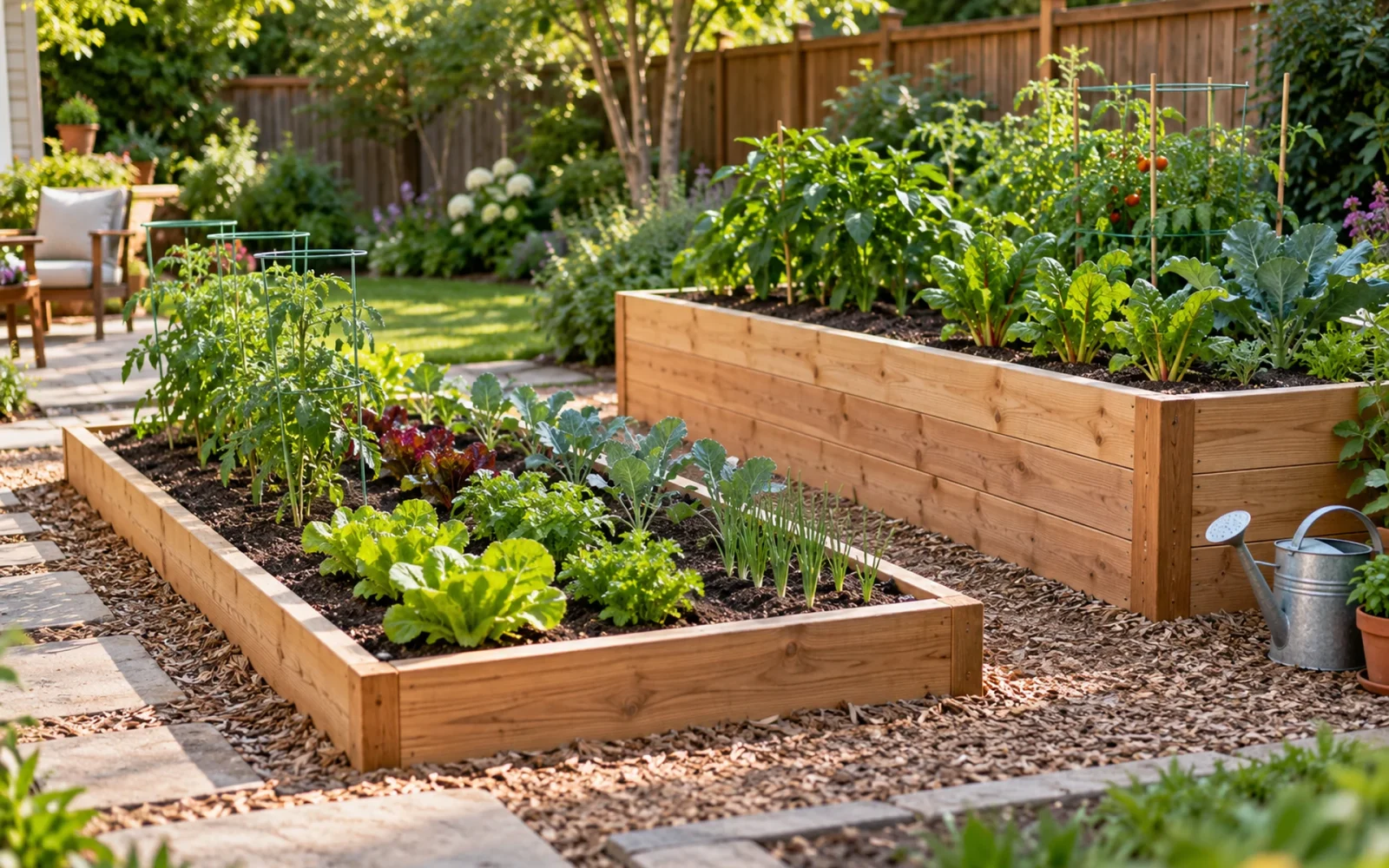
A raised garden bed on prepared, usable garden soil can often have sides only 6–12 inches tall because roots can continue into the ground below. A bed with a closed bottom, or one standing on paving, must provide the needed root space inside the planter itself. For many annual vegetables, 12–18 inches of usable growing mix is a practical range to consider first; larger crops and restricted root zones may need more.
The right choice depends on three things: what you will grow, what lies beneath the bed, and how you want to reach the plants. Do not treat a bed’s advertised wall height as either its filled soil depth or a plant’s maximum rooting depth.
Measure soil depth, wall height, and working height separately
Wall height is the height of the frame. Filled soil depth is the growing mix inside it, after allowing for space below the rim. Usable root depth can include suitable soil beneath an open-bottom bed. Working height is how far you need to bend or reach to tend the surface.
For example, a 12-inch wall filled to 10 inches does not contain 12 inches of growing mix. If the bed is open to good soil below, the root zone may extend farther. If the same frame has a closed floor, that additional opportunity is absent.
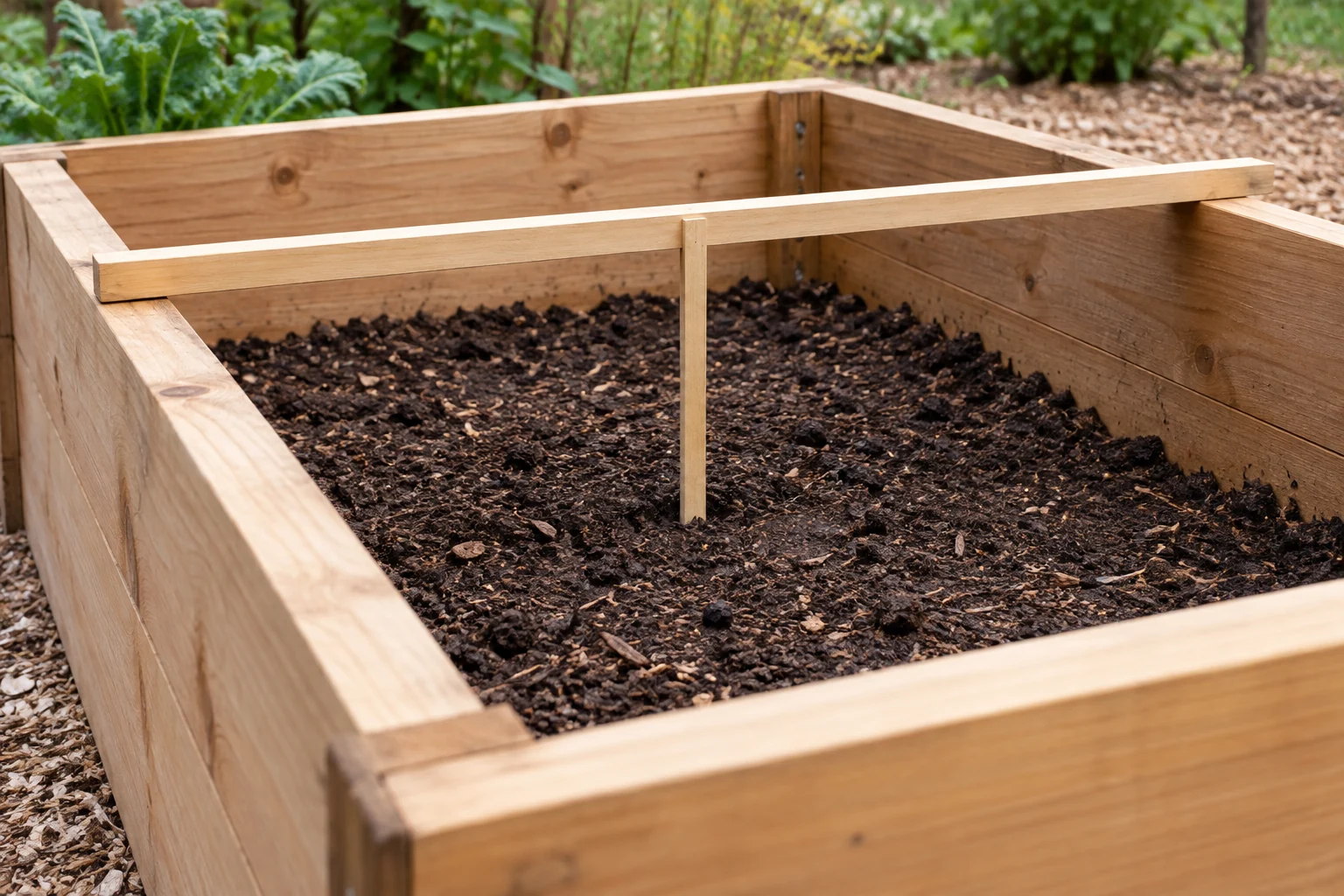
Ask for the actual internal dimensions of a kit or planter. Legs, false bottoms, reservoirs, thick walls, and structural parts can reduce the growing space without changing the overall outside height.
What is below the bed changes the answer
Open-bottom frame on suitable ground
A low frame can be enough to contain added soil while roots use the prepared ground beneath it. University of Minnesota Extension notes that many gardeners do not need to raise beds more than a few inches, and describes simple raised ground beds as mounds about 6–8 inches high.
The important condition is that the soil underneath is genuinely usable. Remove competing vegetation, assess compaction and drainage, and prepare the growing area appropriately. A board placed over an impermeable barrier or an unexamined problem site does not create unlimited root access.
Frame over poor or restricted soil
If the underlying ground is rocky, badly compacted, waterlogged, or otherwise unsuitable, do not automatically count it as part of the root zone. Investigate whether it can be improved or whether the design needs to function more like a contained planter. Suspected contamination needs a proper site-specific plan, not simply a taller wooden border.
Also check any proposed bottom layer. A liner, a deep layer of undecomposed material, or a container floor changes the actual depth available to roots. The growing conditions must match the crop even if the outside of the bed looks deep.
Closed-bottom planter or bed on a hard surface
Here, roots cannot rely on garden soil below. Choose the interior depth and volume for the intended planting, and provide drainage as part of the container’s design. Eartheasy’s depth guide distinguishes open-bottom beds from planters on non-soil surfaces; that distinction explains why a recommendation for a low ground-level frame may not suit an elevated box.
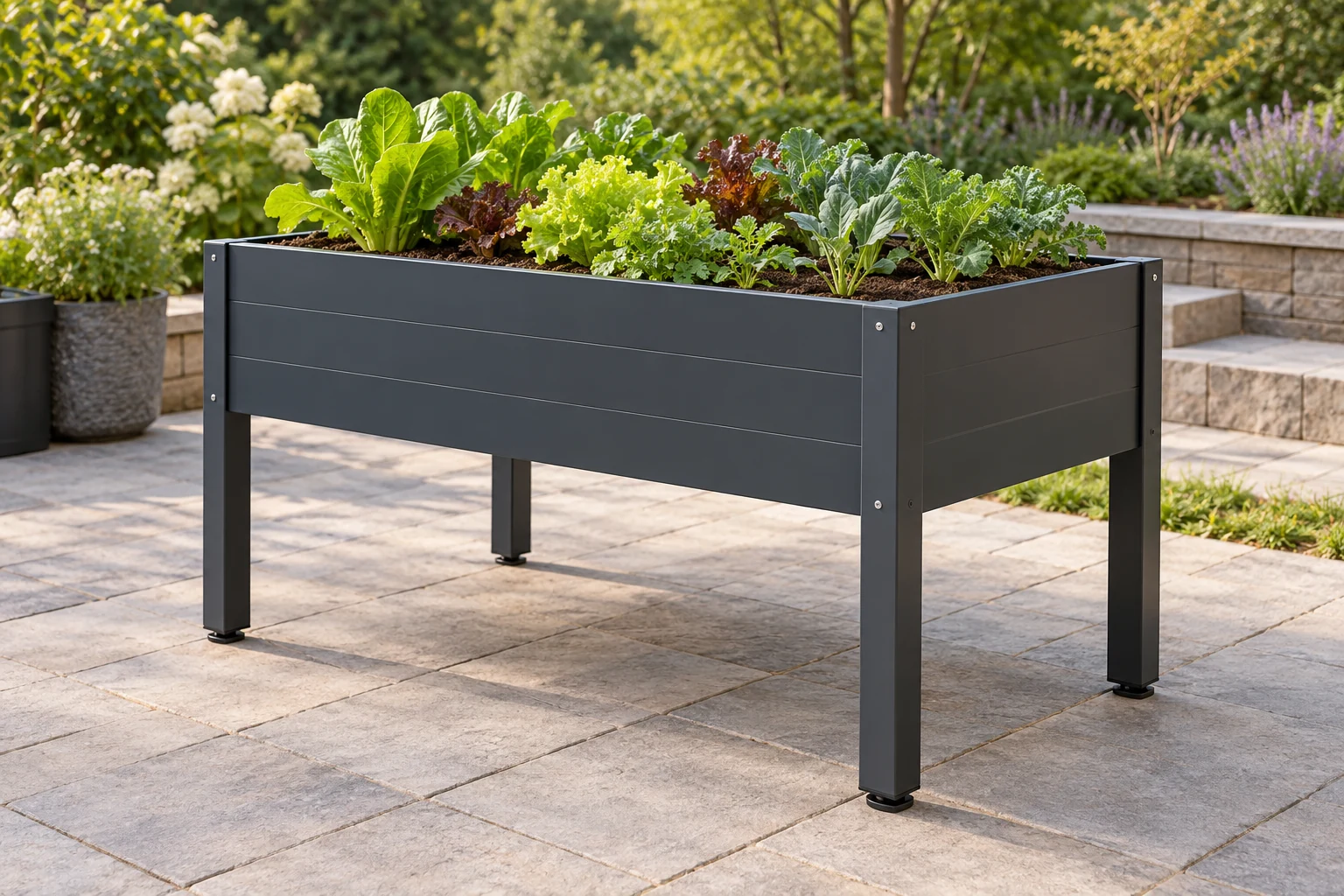
An elevated planter also needs a base and legs designed for its full wet weight. A deeper box is not a simple upgrade if the supporting structure cannot take the added load. On a balcony or roof, the supporting building requires its own assessment.
Match the growing space to the crops
Small leafy crops and large, long-season vegetables do not have identical needs. Short varieties of root vegetables differ from long ones, and a compact tomato selected for containers differs from a large vine with an extensive root system.
As a starting reference, Gardenary suggests approximately 6 inches for lettuce and some herbs, 12 inches for crops such as carrots and peppers, and 18 inches for tomatoes. These are growing-space recommendations to evaluate, not a claim that every herb stops rooting at 6 inches or every tomato has the same requirement.
Use the numbers differently according to the site:
- Shallow seasonal planting over prepared garden ground: a low frame may work because usable soil continues below it.
- A mixed annual vegetable planting: consider the largest crop’s needs and the available root zone, not only the easiest crop in the bed.
- Large tomatoes, substantial root crops, or contained planters: consider a deeper design, often 18–24 inches or more of usable space where appropriate, and check the exact crop and variety.
- Perennials or a long-term planting: use crop-specific guidance for mature roots and future maintenance rather than choosing from a generic annual-vegetable chart.
Depth also works with width and total volume. A very narrow deep box is not equivalent to a broader bed with the same depth. Check plant spacing, support needs, and the watering routine alongside the vertical measurement.
Choose extra height for access deliberately
You may want a taller bed even when the plants could use a lower one. Standing, seated gardening, limited bending, children’s access, and the available reach all affect the useful working height. Test the position with a temporary surface before deciding on the frame.
A higher wall does not make a wide bed easier to reach across. Check the distance from each accessible side to the center and leave enough path width to work comfortably. If the bed is against a fence, you have less reach than when you can walk around it.
Separate a comfortable working surface from a deep column of soil. A properly designed elevated planter can put a shallower growing box at a useful height, but it still needs enough root volume and suitable structural support. Avoid treating all tall garden furniture as the same kind of raised bed.
Calculate what the additional depth will require
Added depth increases the quantity of mix even when the planting area stays the same. For an example bed with an internal area of 3 by 6 feet, the filled volume is:
| Filled depth inside the bed | Approximate mix volume | Equivalent cubic yards |
|---|---|---|
| 6 inches | 9 cubic feet | 0.33 |
| 12 inches | 18 cubic feet | 0.67 |
| 18 inches | 27 cubic feet | 1.00 |
| 24 inches | 36 cubic feet | 1.33 |
These are geometric quantities before allowing for structural parts, settling, or the supplier’s ordering guidance. They exclude soil beneath an open bed. Use actual inside dimensions and the planned soil level, not the overall external measurements of a kit.
More soil also means more weight and outward pressure on the walls. Taller beds may need different bracing, joints, and foundations. Do not simply stack another course of boards onto a low-frame design without checking its construction.
Nor should the required root zone be replaced with trash, impermeable containers, or an unplanned layer of filler to reduce the soil order. If using an established layered-growing method, understand its settling, nutrient, drainage, and root-space implications as a separate design choice.
Make the decision before buying the frame
List the crops, identify whether roots can enter suitable soil below, and choose a comfortable working position. Then calculate the interior mix depth and volume. This sequence is more useful than buying the tallest kit you can afford or the shallowest one that fits a budget.
Once those choices are settled, our guide to building a low raised garden bed gives a ground-level wooden-frame example. Use it when that design fits your root-zone and access decisions; choose a different container or structure when it does not.
After planting, inspect moisture below the surface and monitor settling. Extra depth can provide more growing space, but it cannot compensate for unsuitable light, poor drainage, overcrowding, or a watering routine that does not match the bed.

Ethan Miller
Ethan Miller writes about home improvement, interior design, cleaning, and everyday living at Home & Living Daily. He shares practical tips and simple ideas to help readers create more comfortable and functional homes.