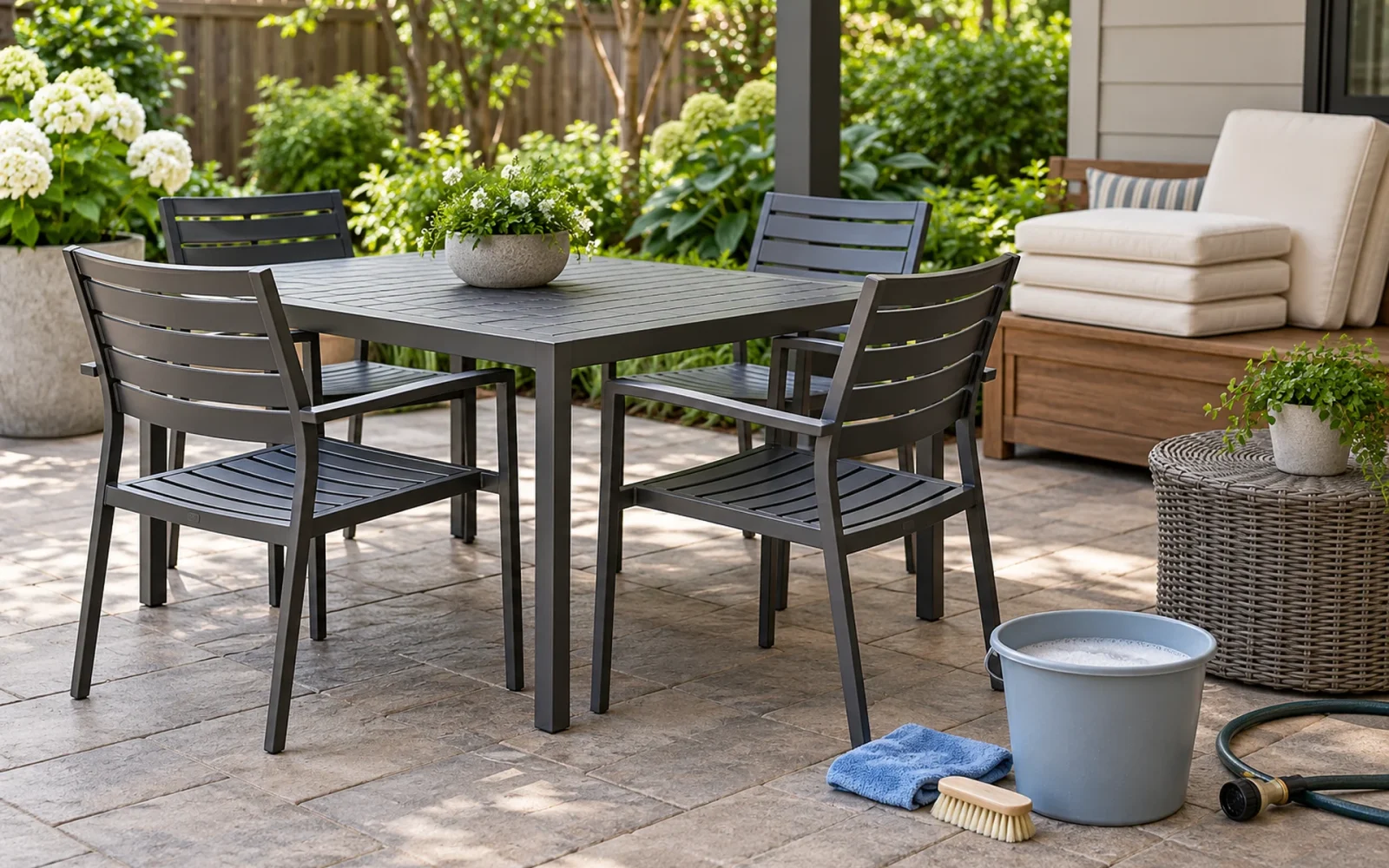
Clean outdoor furniture by removing loose dirt first, then washing each material with a cleaner approved for its finish. Mild soap, lukewarm water, and a soft cloth are a useful starting point for many hard surfaces. Cushions, natural wicker, bare wood, and coated metal need different handling, so identify the surface before reaching for a stronger product.
The aim is to remove dirt without turning a cleaning job into a refinishing job. A faded surface, a rusting joint, and a food stain may all look like discoloration, but they will not respond to the same treatment.
Check what is under the finish
Find the product label, order details, or care instructions. A chair that looks like wood may be metal with a decorative finish. A woven seat may be natural rattan, synthetic resin, or a coated fabric. “Outdoor” describes its intended setting; it is not permission to use any cleaner on it.
Separate removable cushions and accessories from the frame. Look beneath seats, around joints, and at the feet for peeling coatings, loose parts, broken strands, or softened wood. Deal with stability problems before using the furniture again.
| Surface | Routine approach | Do not assume |
|---|---|---|
| Coated aluminum, steel, or iron | Soft cloth, approved mild wash, rinse or wipe clean, dry | Every mark is dirt or every coating tolerates abrasives |
| Wood | Use the method for its species and finish | Silver-gray teak needs to be scrubbed back to yellow |
| Synthetic wicker | Remove grit from the weave, then wash gently if permitted | The same method suits natural rattan |
| Plastic or HDPE lumber | Mild wash and a non-abrasive cloth or approved brush | Solvents, sanding, or abrasive pads are harmless |
| Upholstery or sling fabric | Follow the fabric and furniture instructions together | A zipper means the cover can go in a washing machine |
Remove the loose dirt before it becomes muddy residue
Work in a shaded area where soap will not dry immediately on the surface. Brush or vacuum pollen, leaves, crumbs, and grit, using a soft attachment around seams and weave. Move the furniture only in a way its construction allows; dragging it can damage feet and joints.
Set out a bucket, soft cloths, a non-abrasive sponge, and a soft brush for textured areas. Use the cleaner’s or furniture maker’s dilution instead of making a stronger mixture in the hope that it will work faster. Test an unfamiliar product on an inconspicuous spot and assess it after drying.
Clean a manageable section, remove the residue, then move on. If gentle hose rinsing is permitted, use low pressure and avoid directing water into mechanisms, hollow openings, or attached electrical components. Otherwise, wipe with clean damp cloths, changing the water when it becomes dirty.
Match the frame cleaning to the material
Coated metal
Use a soft cloth or sponge to lift routine dirt from coated aluminum. Clean accessible undersides and feet as well as the visible arms and tabletop. Yardbird’s care guide, for example, recommends mild soap and water with a non-abrasive cloth for its aluminum frames.
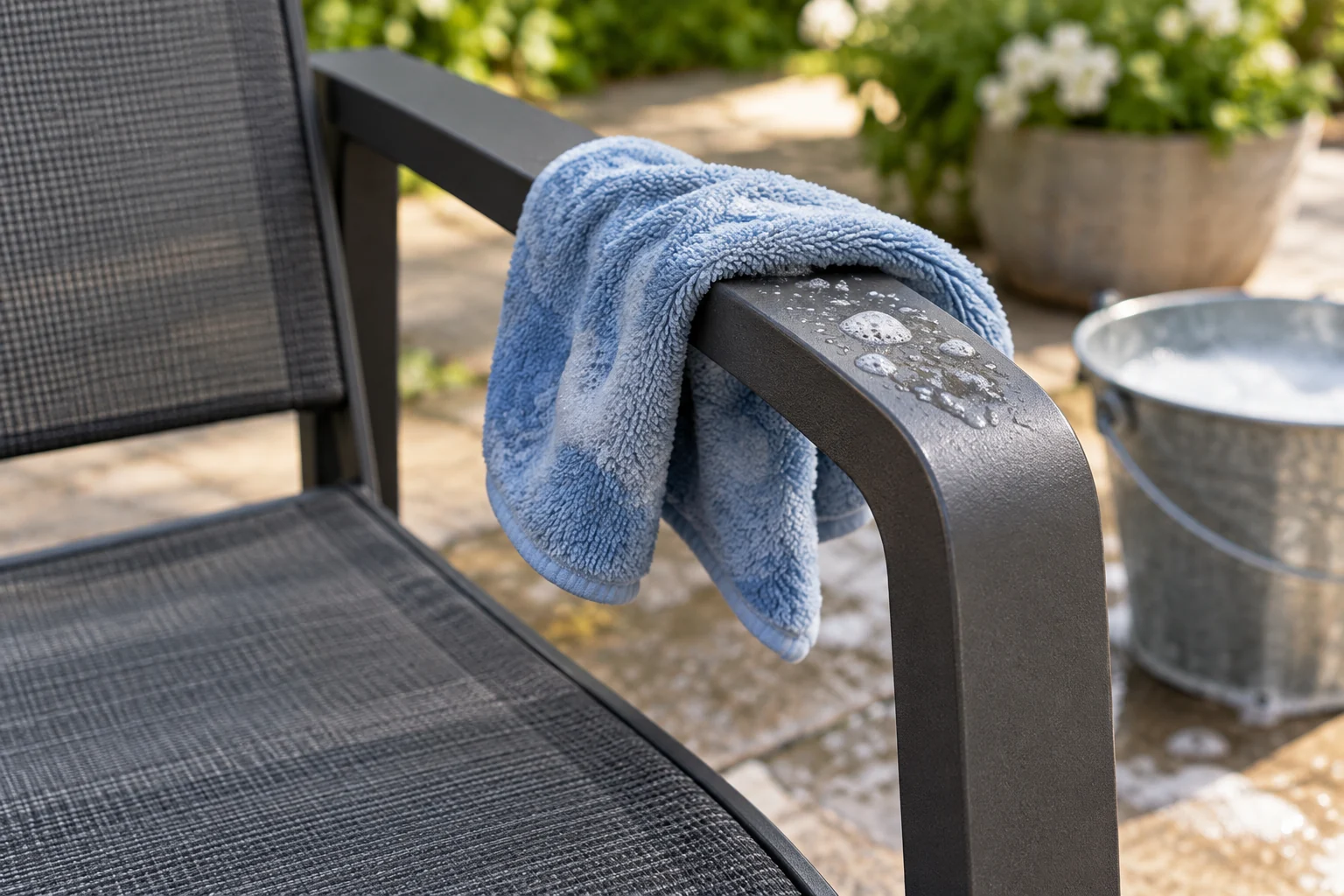
On steel or iron, inspect reddish marks for actual corrosion. Washing does not repair a chip in a protective coating. Follow the maker’s rust-treatment and touch-up instructions rather than attacking the entire frame with a wire brush. For aluminum, pale oxidation or damaged powder coating also calls for a material-specific response, not an automatic steel-rust remedy.
Wood, including teak
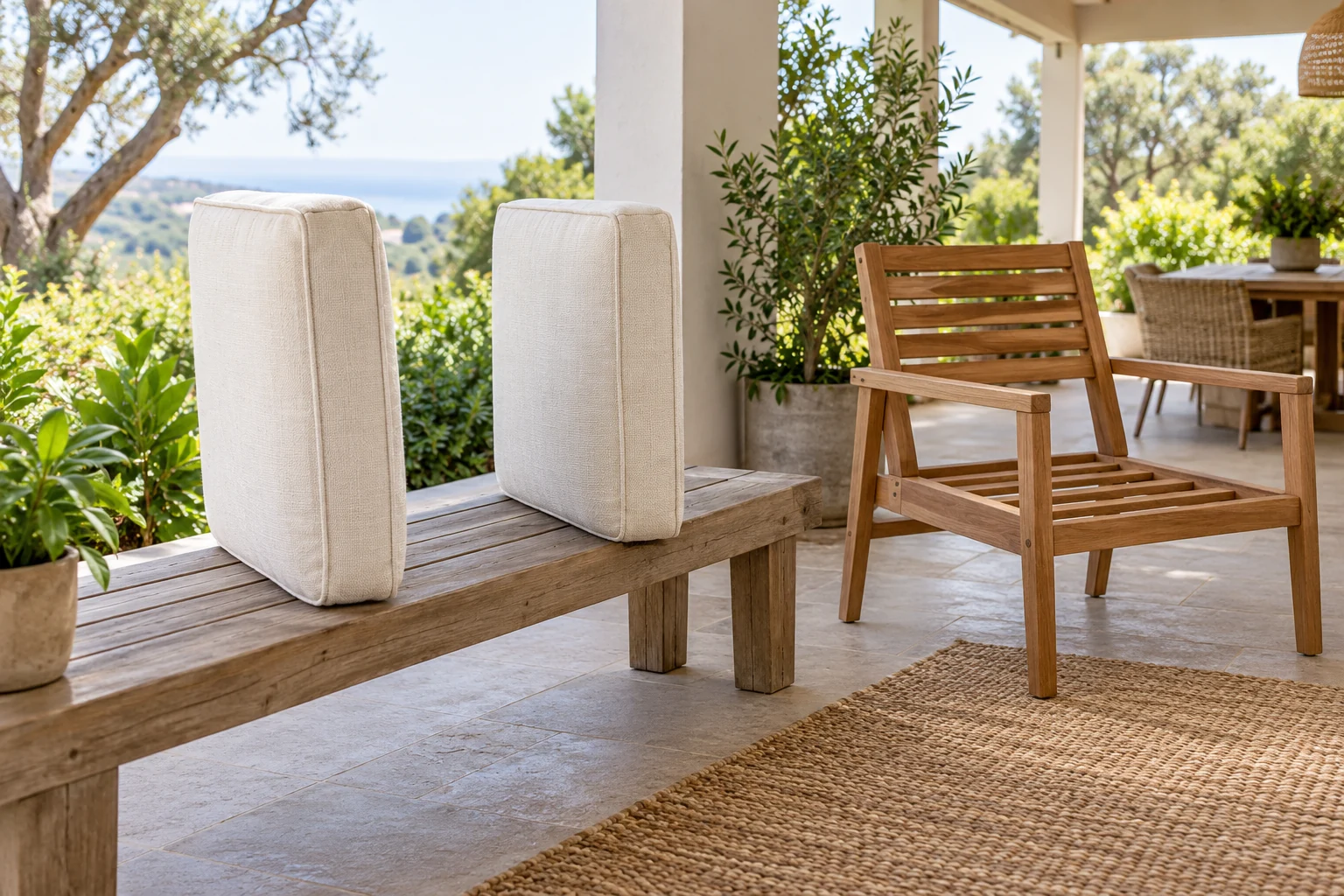
Check whether the wood is unfinished, painted, sealed, or coated. Use a suitable gentle wash, clean with the grain, and avoid leaving the piece soaking in water. Dry it with airflow around joints and underneath surfaces.
Natural gray weathering on teak is different from a spill. Decide whether the goal is ordinary cleaning or changing the appearance before buying a restoration product. Oiling and sealing are also separate decisions; they are not required steps after every wash. A manufacturer’s advice for its bare teak does not automatically apply to a factory-coated wooden set.
Wicker and plastic
For synthetic wicker, remove grit from between the strands with a soft brush or vacuum before washing. Use a small brush where the weave meets the frame, then rinse gently if the product allows it. Support the furniture normally instead of using the weave as a handle.
Natural wicker needs much less moisture. Vacuum it and use a lightly damp cloth for appropriate spot cleaning; do not transfer a resin chair’s hose-down routine to absorbent natural fibers. Let it dry in a ventilated location.
For molded plastic or HDPE lumber, clean broad sections evenly so one stubborn mark does not become a polished or scratched patch. Even within plastic furniture, methods differ. POLYWOOD specifically warns against sanding its lumber, because sanding scratches the surface and affects warranty coverage. That is a useful reminder to check the exact product before treating plastic like wood.
Clean fabric separately from the frame
Brush away loose dirt and blot a fresh spill before it spreads. For general upholstery cleaning, work across the area specified by the fabric maker so a spot treatment does not leave an obvious ring. Do not automatically remove a cover: some zippers are provided for assembly rather than routine laundering.
For confirmed Sunbrella non-removable outdoor upholstery, the official cleaning guide specifies mild soap and lukewarm water, gentle cleaning, thorough rinsing, and air-drying. Use the current instructions for the actual fabric and cushion construction; a fabric’s bleach tolerance does not establish whether its thread, backing, filling, or adjacent frame tolerates the same treatment.
A sling is a tensioned fabric surface, not a loose cushion. Clean it in place as directed rather than removing it for a washing machine. Phifer’s outdoor-fabric guidance includes fabric-specific cleaning and drying methods. Check the named fabric rather than relying only on the chair’s appearance.
When ordinary washing leaves a mark
Identify the residue before changing products. Lift food solids, blot oils, and consult a stain guide for the particular surface. Sunscreen in upholstery is a different problem from algae on a hard frame. Do not use a homemade vinegar, bleach, or baking-soda mixture as a universal substitute for those instructions.
For suspected mildew, use a treatment approved for the affected material. Protect nearby finishes and follow the cleaner’s label. Never mix bleach with vinegar, ammonia, or other cleaning products. Where a cushion smells musty inside or its filling is deteriorating, cleaning only the fabric surface may not resolve the problem; ask the manufacturer about professional cleaning or replacement.
Stop if the finish becomes chalky, color transfers unexpectedly to the cloth, strands begin to loosen, or the surface starts to abrade. More pressure can turn a removable stain into permanent damage. Pressure washers and steam cleaners should be used only when the exact product’s instructions permit them.
Finish with drying, then decide on protection
Remove soap residue, wipe hard surfaces where appropriate, and leave space for airflow. Check cushion seams, undersides, and filling rather than judging only the top fabric. Wait until everything is dry before stacking, storing, or fitting a cover.
Adjust the cleaning routine to exposure. A covered porch may need mostly dust removal, while furniture near trees, a pool, or salt spray needs more frequent inspection. Brush away debris before it builds up, deal with spills promptly, and inspect beneath covers during long periods of non-use.
If a clean piece still looks different from when it was new, separate appearance from condition. A sound teak chair with a gray patina may need nothing more. A peeling frame, broken weave, or wet, damaged cushion needs a repair decision. Cleaning is complete when the dirt is gone and the furniture is dry and usable, not when every material looks factory-new.

Ethan Miller
Ethan Miller writes about home improvement, interior design, cleaning, and everyday living at Home & Living Daily. He shares practical tips and simple ideas to help readers create more comfortable and functional homes.