To remove hard water stains, use a cleaner that dissolves mineral deposits and is safe for the surface underneath. A mixture of equal parts white vinegar and water can work on compatible glass and faucet finishes. Natural stone, coated surfaces, and some decorative finishes need a different approach.
The basic process is straightforward: remove surface dirt, treat the mineral buildup, wipe gently, rinse thoroughly, and dry. Choosing the right treatment matters more than scrubbing harder.
Identify the Surface Before Choosing a Cleaner
Hard water contains dissolved minerals, mainly calcium and magnesium. As water evaporates, it can leave behind chalky spots, cloudy films, or crusty deposits around fixtures.
Those marks can overlap with soap residue and other stains. A shower door may have both mineral buildup and a greasy soap film, while brown discoloration in a sink may involve iron. Start by cleaning away ordinary dirt so you can see what remains.
Use this guide to choose your next step:
| Surface | Starting approach | Main precaution |
| Shower glass | Mild detergent and water, followed by a compatible mineral-deposit treatment | Protective coatings may restrict which cleaners you can use |
| Faucets | Soft cloth and a finish-approved cleaner; diluted vinegar where permitted | Do not assume every metallic-looking finish tolerates acid |
| Stainless steel sinks | A manufacturer-approved vinegar treatment or descaler | Avoid steel wool and prolonged chemical contact |
| Toilet bowls | A toilet-compatible limescale remover | Never combine it with bleach or another toilet cleaner |
| Marble, limestone, travertine, and other natural stone | A pH-neutral stone cleaner for initial cleaning | Vinegar and acidic descalers can damage the stone |
Check the fixture’s care instructions before using a new cleaner. A small hidden-area test is useful, but it does not override a manufacturer’s warning.
Never mix vinegar or acidic descalers with bleach. This can release toxic chlorine gas. Use one cleaning product at a time, ventilate the room, and follow the label’s protective-equipment instructions.
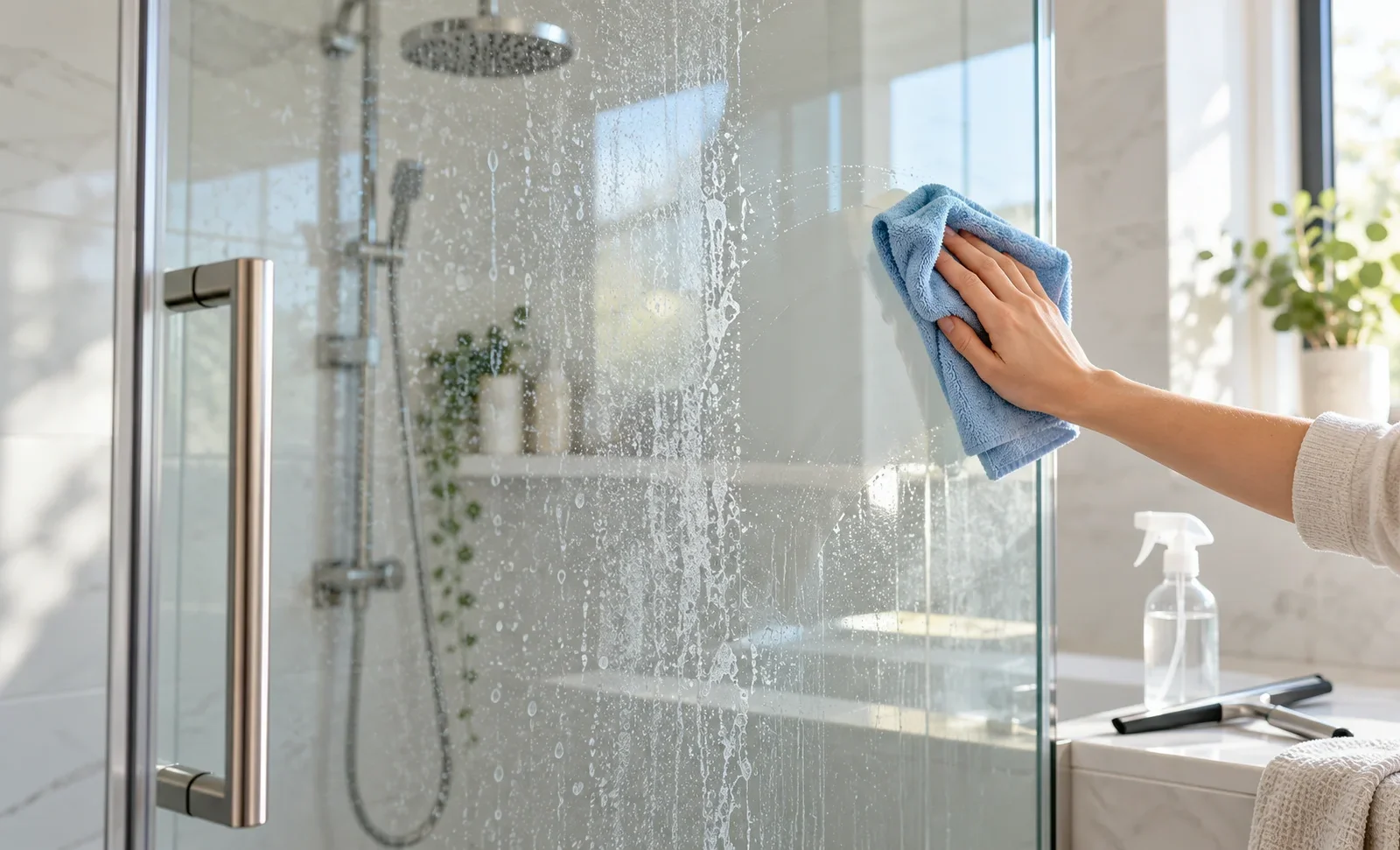
How to Remove Hard Water Stains from Shower Glass
First, remove soap residue with mild detergent, warm water, and a soft cloth. Rinse thoroughly before applying a separate mineral treatment.
If your shower-door manufacturer permits vinegar, use ordinary distilled white vinegar rather than a stronger cleaning-vinegar concentrate.
- Mix equal parts white vinegar and water. For a small batch, combine half a cup of each.
- Apply it with a soft cloth or sponge. Work on a manageable section and keep the solution away from nearby stone and incompatible metal trim.
- Gently wipe the deposits. Follow any contact-time guidance supplied with your shower door. Do not assume an extended soak is safe.
- Rinse thoroughly. Remove the solution and loosened residue.
- Dry with a clean microfiber cloth or rubber squeegee. Inspect the glass once it is dry to see whether spots remain.
For glass with a protective coating, use the coating manufacturer’s approved cleaning method. Some coatings permit diluted vinegar but prohibit particular commercial limescale removers.
Avoid razor blades, steel wool, and aggressive scouring pads. They can scratch the glass or damage its coating. If the first treatment improves the spots, a second permitted application is preferable to increasing the pressure.
How to Remove Buildup from Faucets and Showerheads
Faucets
Begin with a damp, soft cloth. For finishes that allow diluted vinegar, wipe the deposits with a cloth moistened in a 50/50 vinegar-and-water solution, then rinse and dry.
A short cloth treatment can help soften crust around a faucet base or handle. For example, some faucet-care instructions allow a vinegar-dampened towel to remain in contact for five to ten minutes. Use that method only when it is approved for your fixture, and protect the countertop underneath.
Avoid wrapping the entire faucet in a soaked cloth overnight. Longer exposure is not a universal solution, particularly when you do not know the finish.
Showerheads and Aerators
Mineral deposits around spray holes or an aerator can affect water flow. If the showerhead has flexible, rub-clean nozzles, start by gently rubbing them as directed by the manufacturer.
For deposits that remain, check whether the removable part can be soaked in diluted vinegar. Remove it only as instructed, keep track of washers and seals, and follow the specified soaking time. Rinse the part before reinstalling it.
Treat the affected component rather than automatically submerging the entire fixture. A method suitable for an aerator may not be suitable for its surrounding finish.
How to Remove Hard Water Stains from a Stainless Steel Sink
Wash away food residue and grease first, then rinse. This exposes the mineral film so the treatment reaches it directly.
Where the sink manufacturer permits vinegar, apply it to the affected area using a soft cloth and follow the recommended concentration and contact time. Instructions vary: some stainless steel sink guides allow undiluted vinegar for a short treatment, while other surfaces require different care.
Wipe gently, following the visible grain of the steel. Complete any specified finishing steps, rinse thoroughly, and dry the basin and drain surround.
Do not use steel wool. It can damage the surface and contribute to rust or pitting. If brown marks remain after the white mineral film has lifted, investigate them as possible iron-related stains rather than repeatedly applying the same treatment.
How to Remove Hard Water Rings from a Toilet Bowl
For a persistent mineral ring, choose a cleaner specifically labeled for limescale removal in toilet bowls. The bowl material and any special coating must also be compatible with the product.
Before applying it, make sure another cleaner is not present. An in-tank bleach tablet can continue adding bleach to the bowl, so a flush alone does not establish that an acidic cleaner is safe to use.
- Prepare the bowl according to the cleaner’s directions. Some products require lowering the water level so the cleaner can reach the deposits without excessive dilution.
- Apply the stated amount. Keep it off the seat, hinges, and nearby surfaces.
- Allow the specified contact time. Do not turn a short treatment into an overnight soak.
- Scrub with a toilet brush. Concentrate on the mineral ring.
- Flush as directed. Restore the water supply first if you turned it off.
If the label permits repeating the treatment, do that before moving to abrasive tools. Avoid scraping the bowl with metal implements, which can damage its finish.
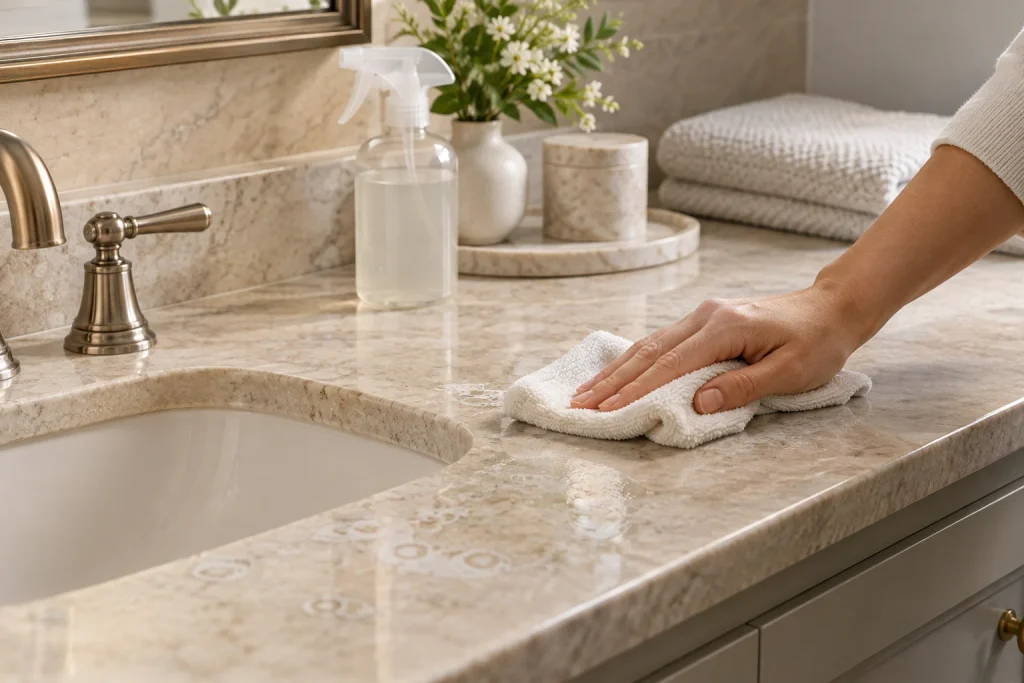
What to Do About Hard Water Marks on Natural Stone
Do not use vinegar, lemon juice, or a general acidic limescale remover on marble, limestone, or travertine. Acid can attack the stone itself and leave a dull patch known as etching. Other natural stones also require care because their mineral composition varies.
Start with a pH-neutral stone cleaner, using a soft cloth. Rinse and dry. This can remove surface residue, but it may not remove firmly attached mineral scale.
For remaining buildup, use a treatment specifically approved for your stone or ask a stone-care professional to assess it. This is particularly worthwhile on polished surfaces, where an unsuitable cleaner can turn a small deposit into a larger restoration job.
A dull mark that remains after cleaning may be surface damage rather than something sitting on top. Adding more cleaner will not restore an etched polish.
When Hard Water Stains Will Not Come Off
Look at how the surface responds before changing methods.
If the deposit is getting thinner, the treatment is helping. Repeat within the manufacturer’s directions rather than using a stronger concentration or leaving it on longer.
If a film remains, reconsider what you are cleaning. Soap residue, iron staining, mineral scale, and damaged finishes do not necessarily respond to the same product.
If a compatible vinegar treatment makes little difference, a surface-approved commercial descaler may be the next step. Check both the cleaner’s label and the fixture’s care instructions; a product labeled for glass in general may still be unsuitable for a particular coating.
Stop if you notice discoloration, loss of shine, or a change in texture. Those changes are reasons to reassess the method, not to scrub harder.
How to Keep Hard Water Stains from Returning
Remove leftover water before it evaporates. Squeegee shower glass after use, wipe splashes from faucets, and dry the sink when you finish washing up. Keep a clean cloth nearby so this becomes a quick final step.
Pay attention to areas where water repeatedly collects, such as faucet bases and the edges of sinks. Repair a persistent drip rather than continually cleaning the deposit it leaves behind.
Clean light spotting before it develops into a thick crust. Regular, gentle care makes it easier to avoid the stronger treatments that delicate finishes may not tolerate.
Conclusion
Start with the material you are cleaning, then choose a treatment that can remove mineral deposits without damaging it. Use diluted vinegar where approved, a compatible descaler for stubborn buildup, and stone-specific care for natural stone. Once the marks are gone, drying wet surfaces is the most useful habit to make the next cleanup easier.

Ethan Miller
Ethan Miller writes about home improvement, interior design, cleaning, and everyday living at Home & Living Daily. He shares practical tips and simple ideas to help readers create more comfortable and functional homes.