An asphalt-shingle roof replacement on an average-sized home can often be completed in one to two days of on-site work, according to GAF’s replacement timeline guidance. That is a useful benchmark for a straightforward job with suitable weather, materials, and crew availability. It is not a promise that every roof, or the entire project from first call to final paperwork, takes a weekend.
Before arranging time off or moving the car, ask what your roofer’s proposed finish date includes. The roof can be covered before the dumpster leaves, the yard is checked, or a required inspection is completed. Those are separate dates worth knowing.
Which part of the project are you timing?
A contractor may quote installation days while you are thinking about the wait after signing. Put both on the schedule. Product selection, material delivery, permits where required, weather windows, and the contractor’s existing commitments happen before the crew starts removing the old roof.
| Milestone | What to confirm |
|---|---|
| Ready to start | Materials, approvals, access, and a weather-dependent start date |
| Roof work complete | Covering and agreed roof details installed, with any outstanding work identified |
| Property handed back | Debris removed, cleanup checked, equipment collected, and completion records supplied |
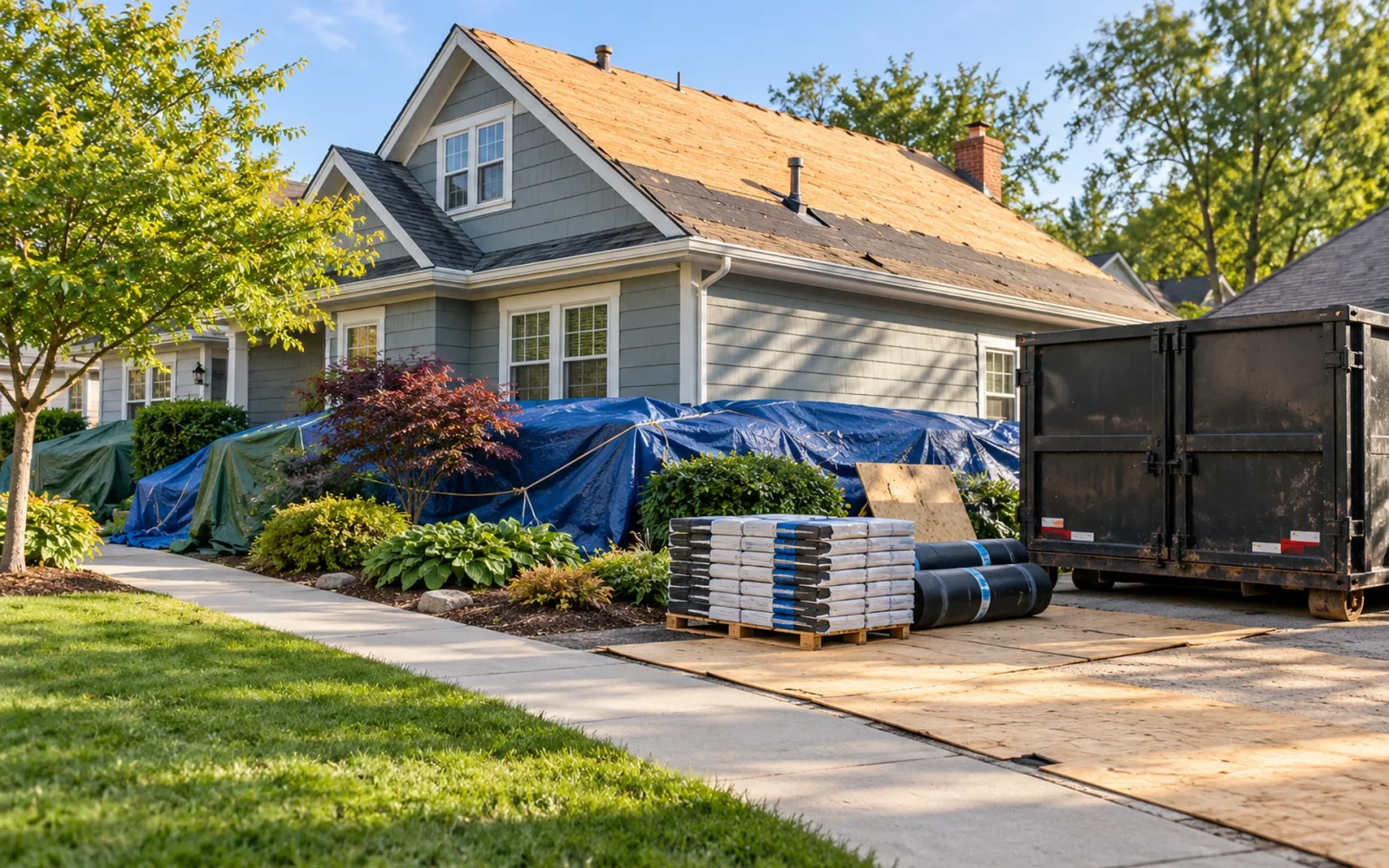
Ask whether a delivery or dumpster arrival will block your driveway before installation day. If you need a vehicle early the next morning, moving it after the container is in place may no longer be an option.
What happens once the crew arrives?
The usual sequence is preparation, removal, assessment of the exposed roof deck, installation of the specified system, and cleanup. Work can move in sections rather than across the entire roof at once. Do not add a generic “one day for removal” to “two days for installation” and treat the sum as a guaranteed project length.

The first visible change is usually a protected work area and a route for materials and debris. After removal exposes the deck, the roofer can assess conditions that were hidden beneath the old covering. Repairs may need your authorization before the next layers go on.
That is a good reason to settle the change process in advance. Agree who receives photographs, who can approve additional work, and how quickly that person must respond. Our roof replacement cost guide explains the decking allowances and exclusions to clarify in the written proposal. A delay caused by an unanswered repair decision is different from a crew simply working slowly.
Why a replacement can take longer than the benchmark
Roof area matters, but shape and access can matter just as much. Multiple valleys, dormers, penetrations, steep slopes, and restricted staging space create more handling and detail work. A small complicated roof can be a less straightforward job than a larger simple one.
The chosen system also changes the work. Tile, slate, metal panels, and asphalt shingles do not share one installation process. Ask for an estimate for your specific material and roof, rather than using an asphalt timing example to judge another system.
Weather changes the sequence
Rain, wind, frost, and extreme conditions can affect when crews can work and how much roof they open. Ask how the company decides whether to start, how it protects incomplete work, and who you contact if conditions change overnight. A plan that limits exposure may be preferable to forcing a promised finish date.
Get a revised estimate when the assumptions change. “One more day” should come with a reason, such as deck repair, an inspection, a changed forecast, or a delayed component. It should also identify the next milestone and any change to household access.
Other work can have its own timetable
Solar removal and reinstallation, skylight work, gutters, chimney repairs, or ventilation changes may involve separate coordination. Establish which items belong to the roofing contract and whether the roof is considered complete before those trades return. A single finish date can conceal several unfinished responsibilities.
Can you stay home while the roof is replaced?
Often you can, but being inside does not make it a normal workday. IKO’s homeowner guidance describes noise, debris, and disruption during removal and installation, and recommends keeping children and pets away from the work zone. Consider another place for calls, naps, or a noise-sensitive pet during the busiest hours.
Ask which door and outdoor route remain available. Do not walk beneath an active debris area to reach the mailbox or let a dog into the yard between crew movements. Arrange deliveries around the agreed access plan, and tell the crew about gates or other access constraints before work begins.
If anyone needs a consistently quiet environment or has limited mobility, discuss that directly with the contractor. The useful answer is a site-specific arrangement, not a blanket instruction that every household must leave or can comfortably remain.
Do not skip the handover because the shingles look finished

Confirm removal of debris and equipment, the agreed cleanup areas, and any follow-up collection date. Review visible concerns with the project lead from a safe location. There is no need for a homeowner to climb onto the roof to establish that a concern has been recorded.
Keep the final scope, approved changes, warranty documents, and any required inspection record together. Ask whether registration is needed for the selected warranty and who completes it. If something remains unfinished, record the task and expected return date rather than treating it as an informal promise.
The most useful schedule is one that explains what happens if the expected day changes. Before work starts, know the planned crew days, the overnight protection plan, your household’s access route, and what counts as completion. Those details make a short, disruptive project easier to manage even when the weather refuses to follow the calendar.

Ethan Miller
Ethan Miller writes about home improvement, interior design, cleaning, and everyday living at Home & Living Daily. He shares practical tips and simple ideas to help readers create more comfortable and functional homes.