The most practical ways to save water at home are to stop unintended use, shorten avoidable running time, and run appliances efficiently. Start with a running toilet or unnecessary irrigation before worrying about tiny savings at an already efficient faucet. Then choose a few daily habits the household can keep, rather than a long list nobody follows.
Where you live and what you already own matter. A household without a lawn has a different opportunity from one with automatic irrigation. A newer efficient toilet offers less replacement potential than an older high-use model. Use your actual routines to set priorities.
Find the water you are using without noticing
Look for persistent drips, toilets running between uses, appliance leaks, and outdoor watering that continues after the ground is already wet. Check the utility’s usage record if available, not just the dollar total. A rate change can increase the bill even when consumption stays the same.
Denver Water’s household guidance recommends reviewing bills for unusual usage and checking toilets, faucets, showers, and appliance supply lines for leaks. Treat an unexplained increase as a reason to investigate, especially if household size and outdoor use have not changed.
Make a short list with an owner and a next action. “Call about the toilet that runs overnight” is more likely to happen than “be more water-conscious.” If the utility offers leak alerts, check what they detect and how notifications reach you.
Reduce repeated bathroom running time
Turn off the tap while brushing teeth or shaving instead of letting it run through the whole task. Keep the necessary rinse brief and deliberate. In the shower, start by identifying the avoidable time rather than choosing a duration that no one in the household will maintain.
A shorter shower’s effect depends on flow. As a hypothetical example, reducing use by two minutes at 2 gallons per minute saves 4 gallons per shower. If two people make that change daily for a week, the arithmetic is 2 × 2 × 2 × 7, or 56 gallons. Your result depends on the actual flow, frequency, and whether the change really happens.
This is why several online annual savings figures should not simply be added together. They may assume the same old fixture, the same baseline behavior, or the same water use counted in more than one way.
Make kitchen and laundry routines do less unnecessary work
Use a properly loaded dishwasher where available and follow its instructions on scraping and preparation. Do not assume every plate needs a long rinse under a running faucet. If washing by hand, use a basin or a filled sink for the washing stage rather than leaving the water running continuously.
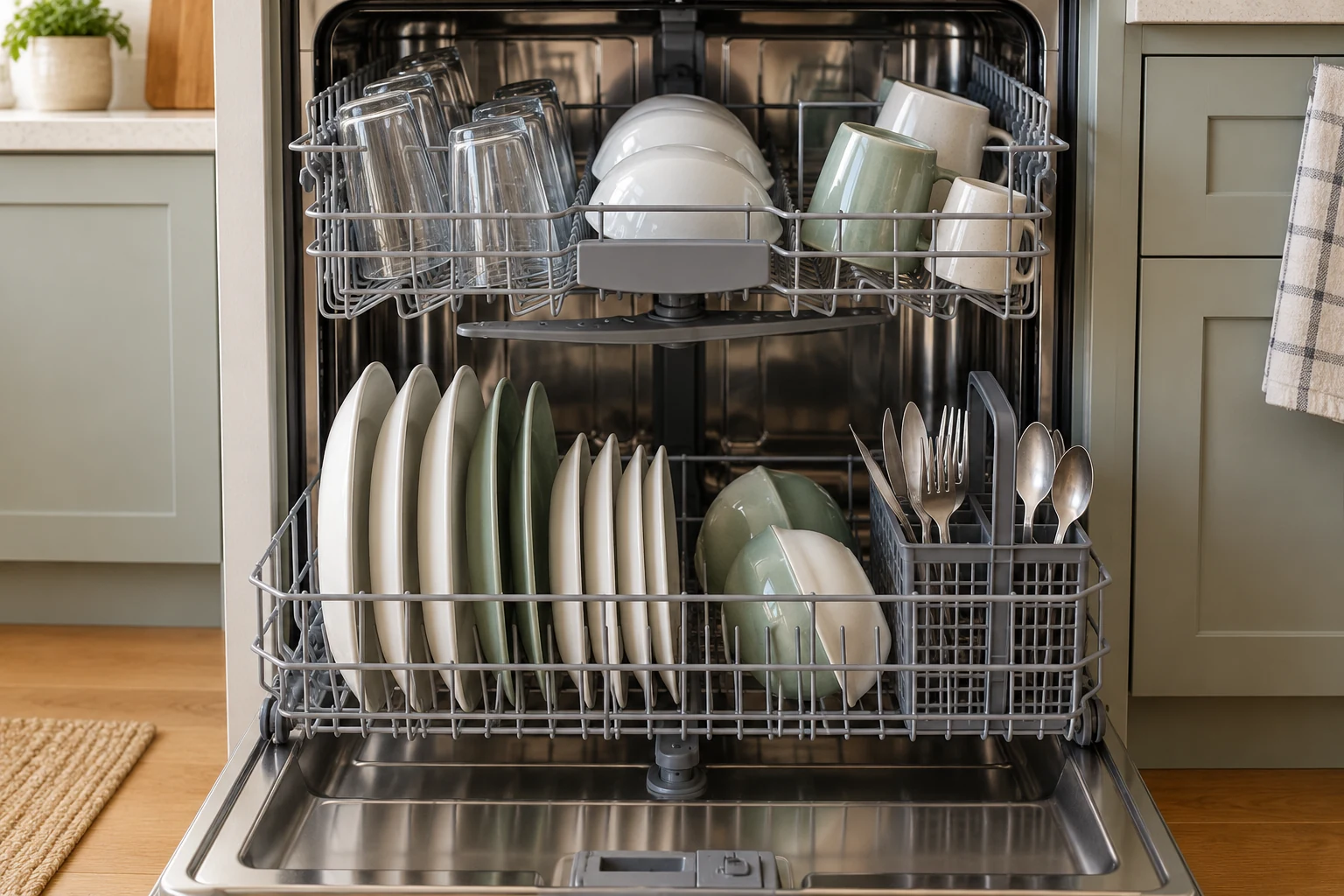
For laundry, wait for a useful full load or select the appropriate load setting where the machine allows it. Full does not mean compressed beyond the manufacturer’s instructions. Choose extra rinses or prewash for a real cleaning need rather than leaving them on automatically.
Keep chilled drinking water ready if you routinely run the tap waiting for it to cool. Plan food defrosting so a constant stream of tap water is not your default. These small changes are easier to sustain when the household puts the alternative within reach.
EPA WaterSense’s indoor-saving guidance includes full dishwasher loads, a basin for handwashing dishes, scraping rather than prerinsing, and appropriate laundry load settings. It also explains that WaterSense products undergo independent certification for water efficiency and performance. Those are useful criteria when a fixture needs replacement.
Replace equipment for a specific improvement
When a showerhead, bathroom aerator, or toilet needs replacement, compare the existing unit’s rated use with an appropriate efficient model. Check the label and specifications for that exact product instead of assuming “low flow” guarantees suitable performance.
Match aerators to the faucet’s connection and intended use. A kitchen task that requires filling a fixed-volume pot is different from an unnecessarily running bathroom tap: lowering the flow may simply make the pot take longer to fill. Choose the change that actually reduces wasted volume.
For washing machines and dishwashers, compare the water-use information and the cycles you expect to run. Include installation needs and usable capacity in the decision. Buying an appliance that is poorly suited to the household and running it twice as often can undermine the intended saving.
Let outdoor watering respond to the site
Check what happens during a watering cycle. Look for a broken connection, water hitting pavement, overspray, and runoff before it reaches the root zone. Adjust the system to the planting, soil, weather, and current local restrictions rather than copying a weekly schedule from another climate.
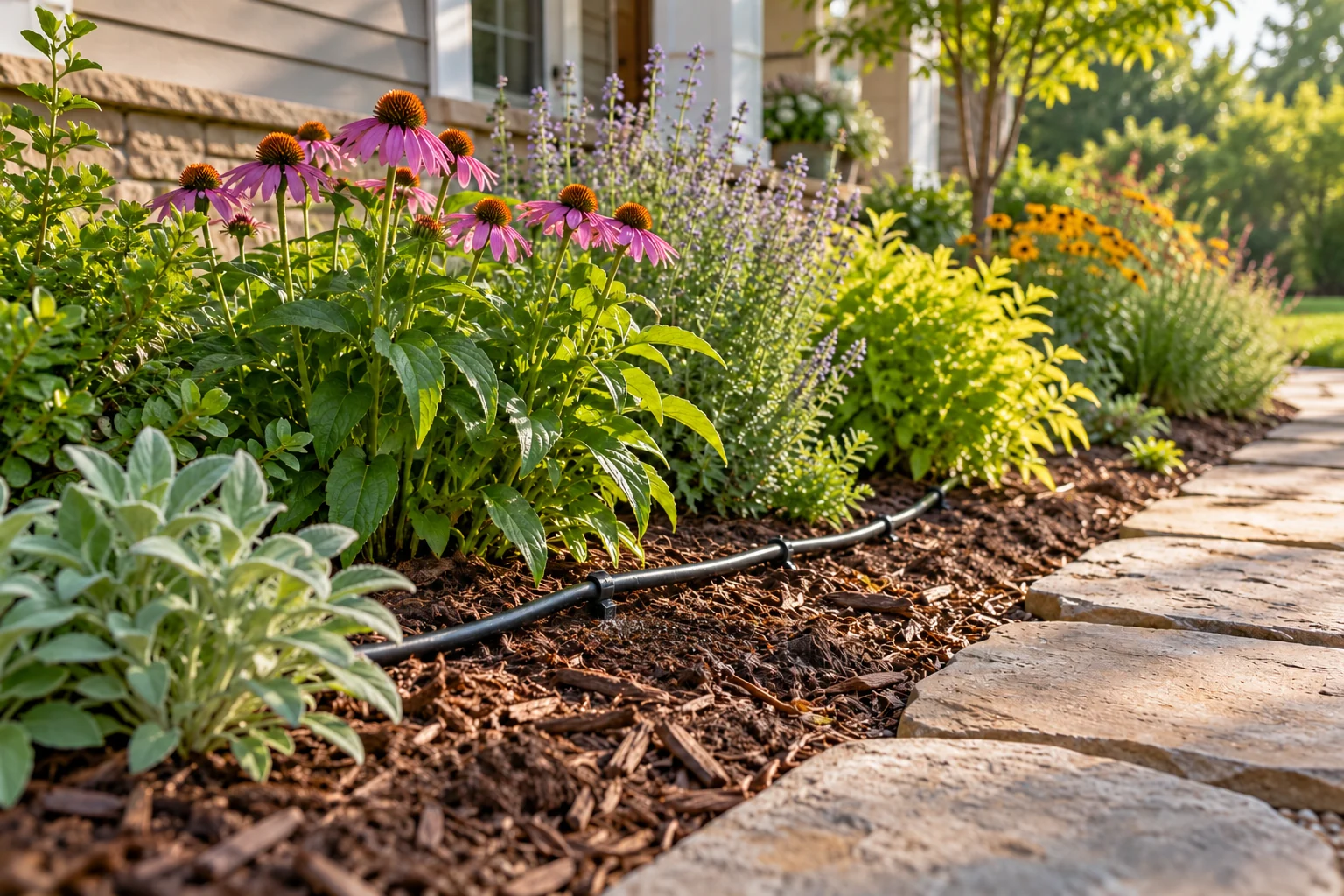
Check soil conditions before adding another watering cycle, and group plants with similar needs when making landscape changes. A drip system still needs inspection; it can waste water through a damaged line or an unsuitable schedule.
For dry debris on paths and driveways, sweep instead of reaching automatically for the hose. Madison Metropolitan Sewerage District recommends that substitution in its household conservation advice. Reserve water-based cleaning for a task that actually needs it.
Choose a manageable first week
Start with one repair, one repeated habit, and one observation. Arrange repair of an identified leak, reduce unnecessary tap or shower running time, and check a complete outdoor watering cycle if you have one. Put the agreed actions where household members will see them.
Review consumption over a comparable period, accounting for weather, visitors, and garden use. The goal is a durable reduction in avoidable use, not a promised bill percentage. The changes that add up are the ones matched to your home and repeated after the first week.

Ethan Miller
Ethan Miller writes about home improvement, interior design, cleaning, and everyday living at Home & Living Daily. He shares practical tips and simple ideas to help readers create more comfortable and functional homes.