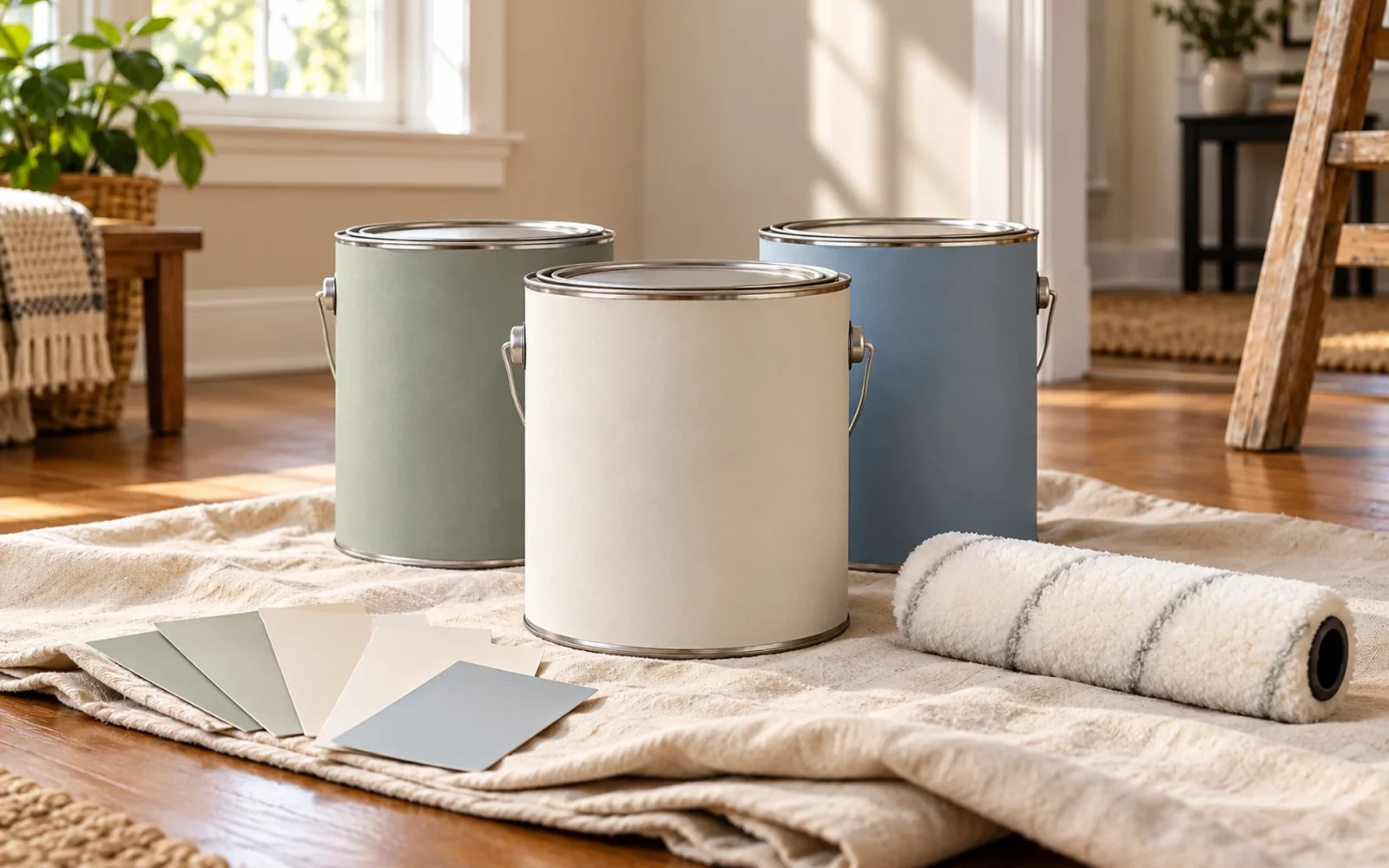
A gallon of paint can cost a few dozen dollars, with the exact product line making a substantial difference. In U.S. retail listings checked on October 29, 2026, one-gallon BEHR PREMIUM PLUS interior eggshell was $37.98, while one-gallon BEHR MARQUEE interior eggshell was $56.98. These are specific shelf-price examples, not an average for every paint or store.
For a room budget, the more useful calculation is the price per can multiplied by the quantity needed for the specified coats. Coverage, preparation, and package sizes can matter as much as the difference between two gallon prices.
Two checked prices, with the specifications attached
| Exact retail example | Size and finish | Displayed price |
|---|---|---|
| BEHR PREMIUM PLUS Ultra Pure White, model 205001 | 1 U.S. gallon, interior eggshell enamel | $37.98 |
| BEHR MARQUEE Ultra Pure White, model 245001 | 1 U.S. gallon, interior eggshell enamel | $56.98 |
Both are Home Depot U.S. listings checked on October 29, 2026. Prices exclude tax, any applicable paint-stewardship fee, delivery, and conditional discounts. Local availability, selected color or base, promotions, and future price changes may alter what you pay. The table compares two lines from one brand; it is not a brand ranking or a claim that every retailer charges the same amount.
Check the selected size before comparing search results. A quart, sample pot, one-gallon can, and five-gallon pail can appear together. A low starting price may refer to a smaller container or a different finish than the one you intend to buy.
What changes the price of a gallon?
Product line and intended use. Wall paint, cabinet enamel, exterior coating, masonry treatment, and specialty finishes have different jobs. Compare products suitable for the surface before comparing their prices. An inexpensive wall paint is not automatically a substitute for the finish specified for a cabinet or floor.
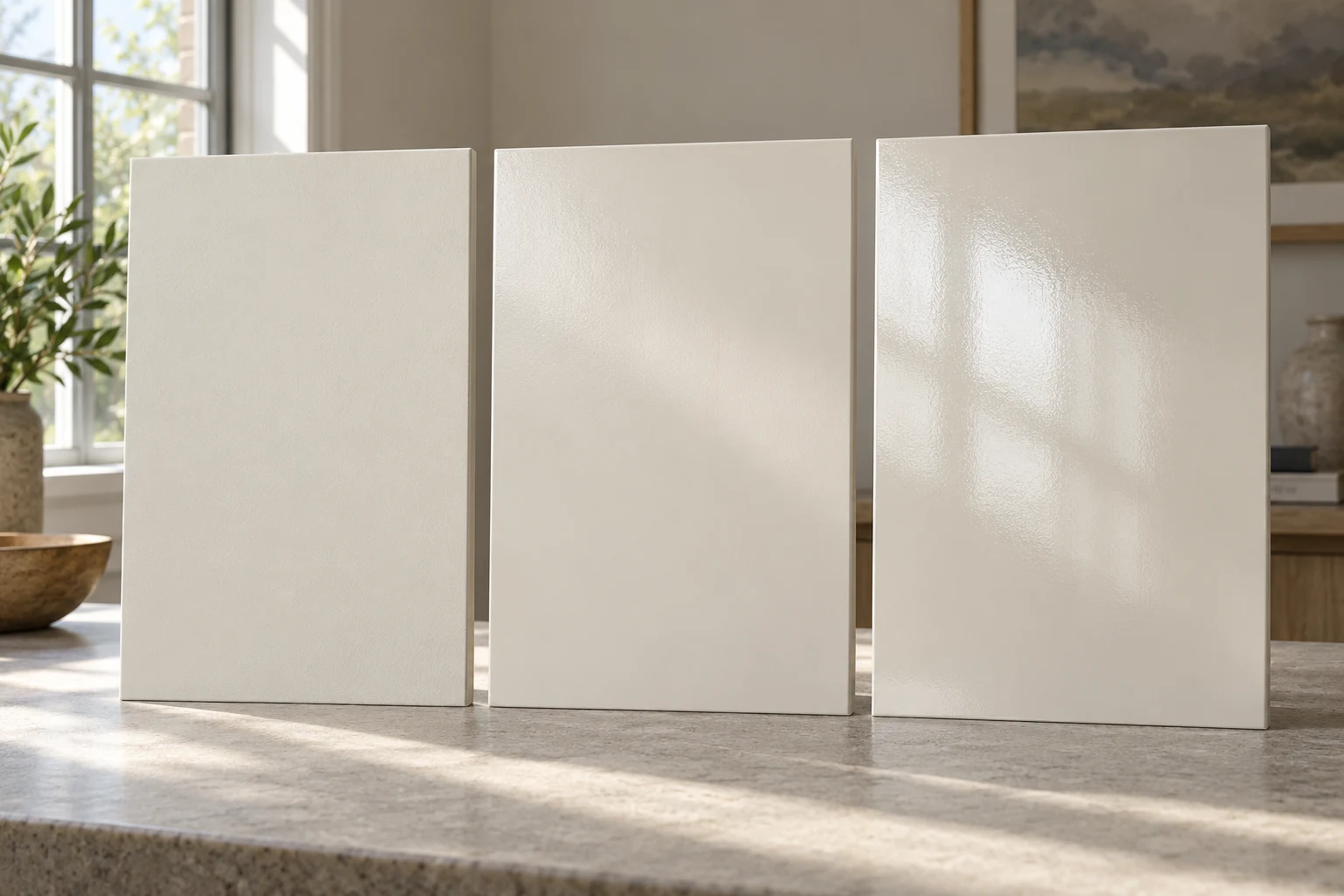
Sheen and formulation. Flat, eggshell, satin, and semi-gloss describe appearance, but performance also depends on the actual formula. Within a line, changing sheen can change the price. Across different lines, the same sheen name does not establish identical durability or application behavior.
Color, base, and purchasing terms. Confirm that the price applies to the tint base and color you need. A sale, contractor account, membership benefit, or bulk offer may have conditions. Compare the amount you can actually purchase at checkout rather than treating an advertised maximum discount as the normal price.
A larger pail may reduce the unit price, but only when you can use that quantity. Buying extra paint that eventually becomes unusable is not necessarily a saving. Check mixed-paint return terms before ordering.
Turn the can price into a room quantity
Measure paintable wall area, not floor area. Multiply each wall’s length by its height and account for openings and excluded surfaces. Add ceilings, trim, doors, or closets separately when they are part of the job. Then use the selected product’s coverage guidance and required number of coats.
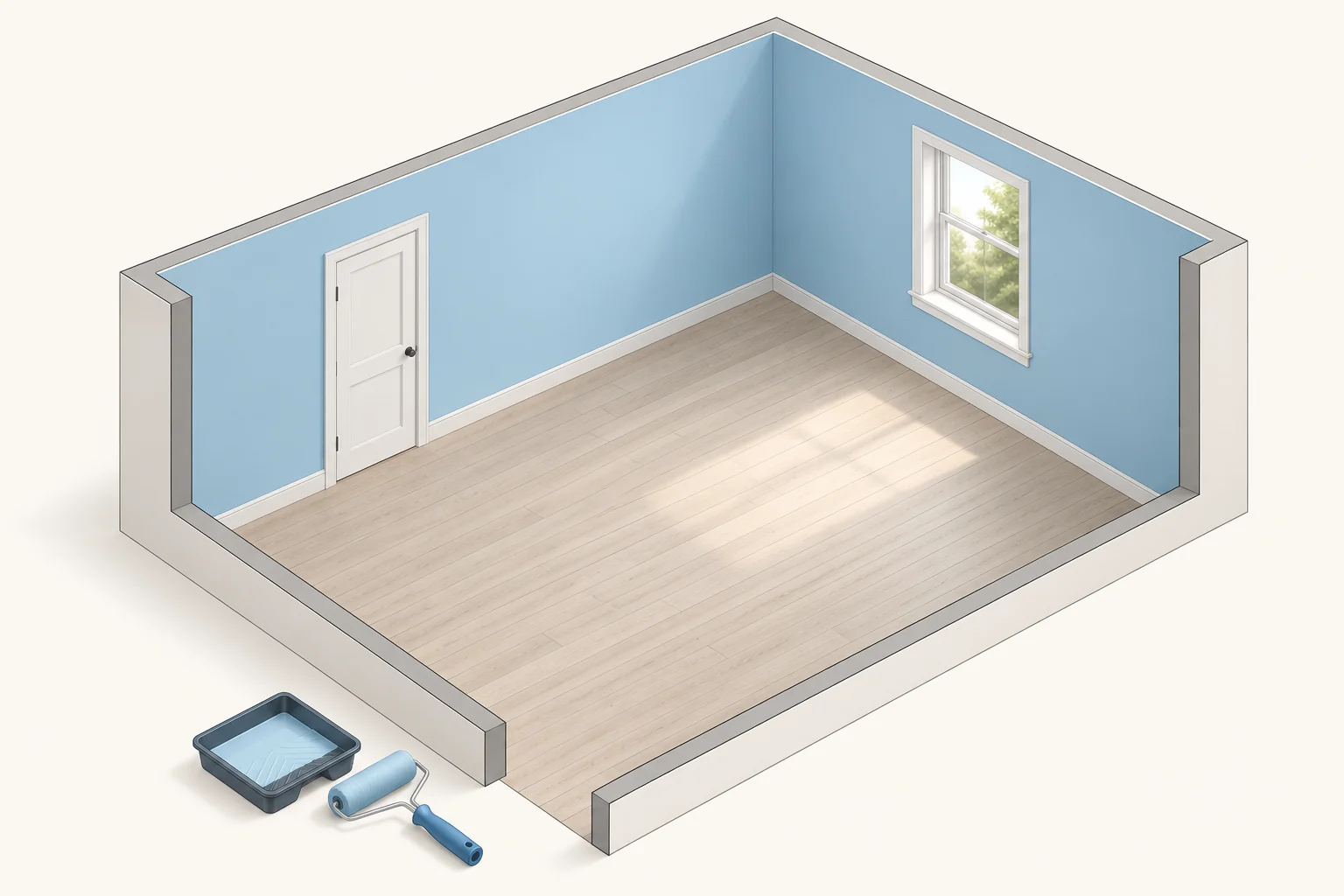
For example, a hypothetical 12-by-14-foot room with 8-foot walls has 416 square feet of gross wall area. If measured openings exclude 40 square feet, the paintable area is 376 square feet. Two coats represent 752 square feet of application.
If the chosen paint and surface support a planning coverage of 350 square feet per gallon per coat, 752 divided by 350 is about 2.15 gallons. Buying only whole one-gallon cans would mean three cans, before any separately justified allowance. At the two example prices above, three cans cost $113.94 or $170.94 before taxes and fees. This is quantity arithmetic using a stated assumption, not a quote or a prediction that both products perform identically.
Read coverage and one-coat claims carefully
BEHR lists 250 to 400 square feet per gallon for PREMIUM PLUS interior eggshell. A range is more useful than automatically assuming the maximum. Porosity, texture, application, and the required film affect consumption.
Color changes and difficult surfaces may need additional preparation or coats. “Paint and primer” on the can does not eliminate every separate priming requirement. Likewise, a one-coat hide claim can have color and surface conditions. Read the exact product directions rather than reducing the budget solely because the label promises fewer steps.
Keep paint purchases separate from the full painting bill
Include any required primer, repair material, brushes, roller covers, tape, and floor protection you do not already have. These costs do not become part of the gallon price. Professional preparation and labor are another scope again; our interior house painting cost guide explains how to compare those project estimates.
The lower-priced can wins only if it fits the job and produces the required result at a sensible total cost. Start with a suitable specification and measured quantity, then compare the actual purchase price. That keeps a cheap gallon from becoming an expensive extra coat or an unsuitable finish.

Ethan Miller
Ethan Miller writes about home improvement, interior design, cleaning, and everyday living at Home & Living Daily. He shares practical tips and simple ideas to help readers create more comfortable and functional homes.