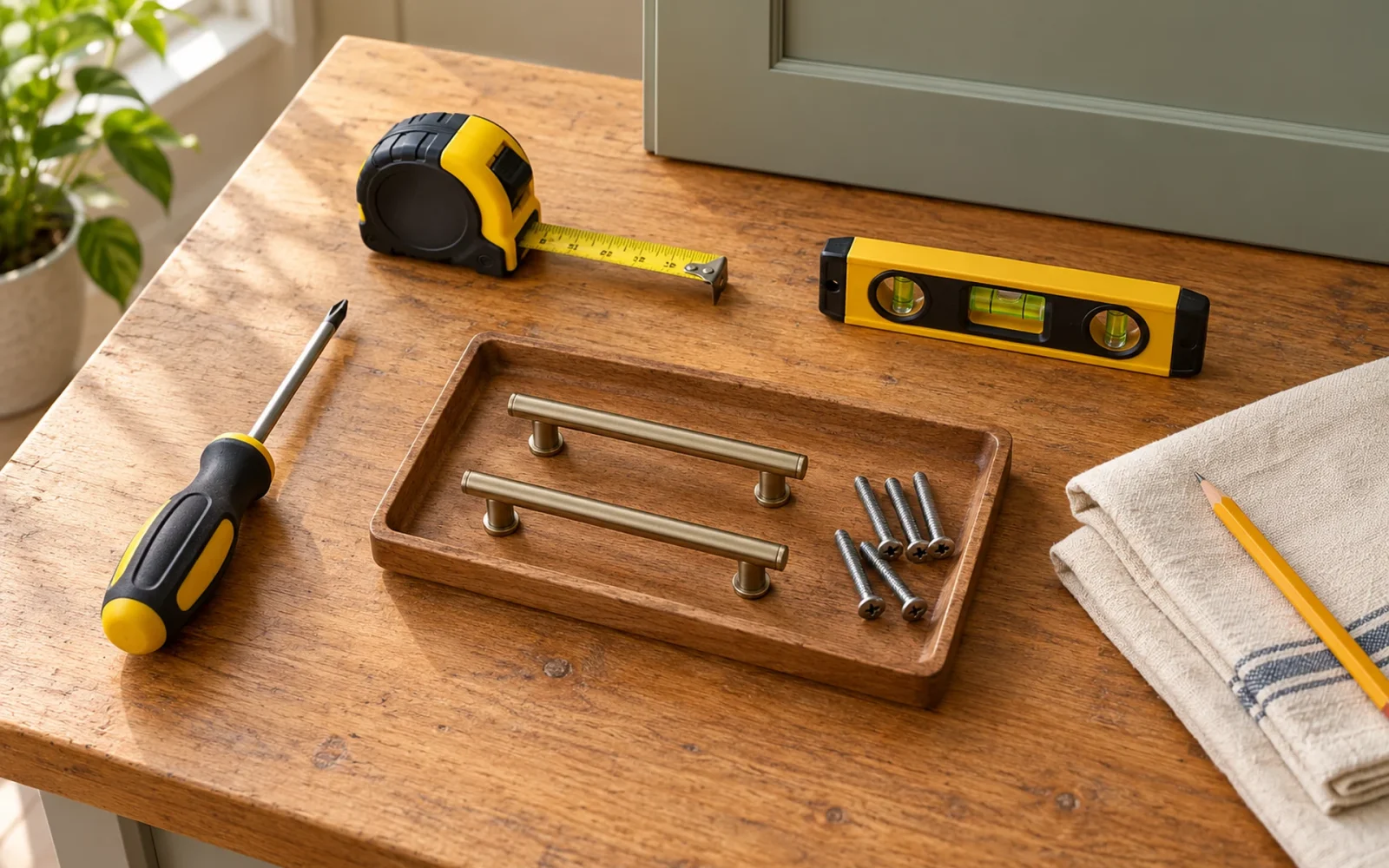
Good beginner home improvement projects solve a small, visible problem without opening up the house: replace cabinet pulls that fit existing holes, repair a removable window screen, patch an isolated wall dent, or improve storage in an existing unit. Choose one task whose parts, tools, and finished result you understand before buying supplies.
A project is not beginner-friendly simply because a video is short. Hidden wiring, uncertain materials, water shutoffs that do not work, or structural changes can turn an apparently small job into something quite different.
Pick a task you can pause without losing an essential room
Look for a contained work area and a useful stopping point. Replacing two loose cabinet pulls lets the kitchen keep working if you need another screw size. Removing a bathroom’s only faucet before checking the connections creates a more demanding deadline.
Write a plain finish condition: “the screen fits without tears,” or “the drawer opens without the pull wobbling.” Measure, photograph the existing arrangement, and read the replacement product’s complete instructions. If you rent, check permission for permanent changes first.
Replace cabinet pulls using the existing holes
This is a useful first project when hardware is uncomfortable, loose, or damaged and the door itself is sound. For a two-screw pull, measure the distance between the centers of its fixing holes. Overall handle length is a different dimension. Check screw diameter, thread, and usable length against the door or drawer thickness.
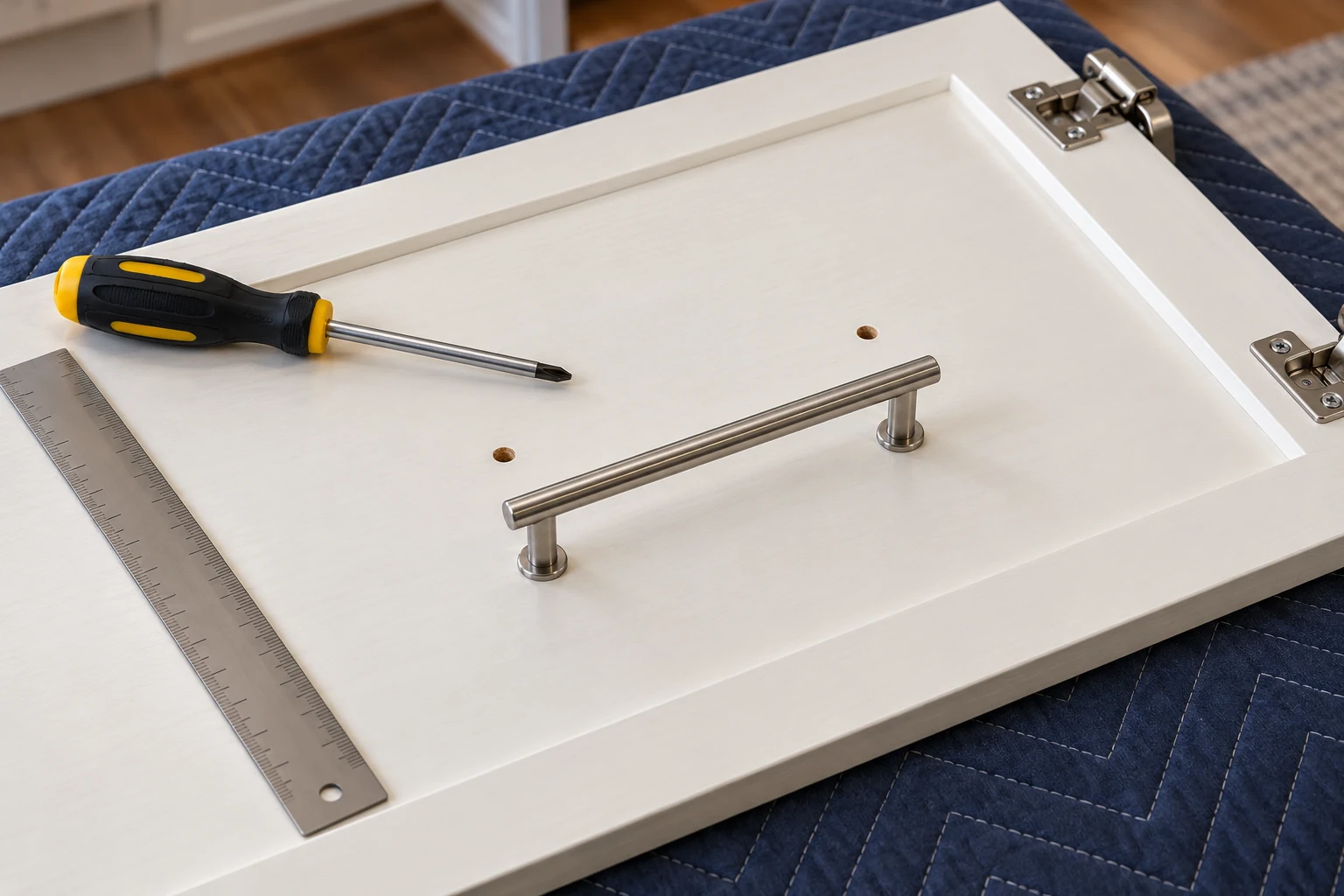
Try one replacement before ordering a whole kitchen’s supply. Use a correctly fitting hand screwdriver, support the pull while removing its screws, and keep the old parts in a container. Fit the new hardware according to its instructions and tighten evenly without crushing the surface or stripping the threads.
Open the door fully and check neighboring drawers and appliances. A larger handle may fit the holes yet collide with another front. If the fixing hole is damaged, stop and choose an appropriate repair; a longer screw driven harder is not a universal solution.
Repair a removable window screen on a worktable
A small mesh tear may accept a compatible patch. For widespread damage, a sound removable frame can often be rescreened. First identify how it comes out, its dimensions, the mesh type, and the spline size. Bent frames or unusual proprietary systems may need a different replacement approach.
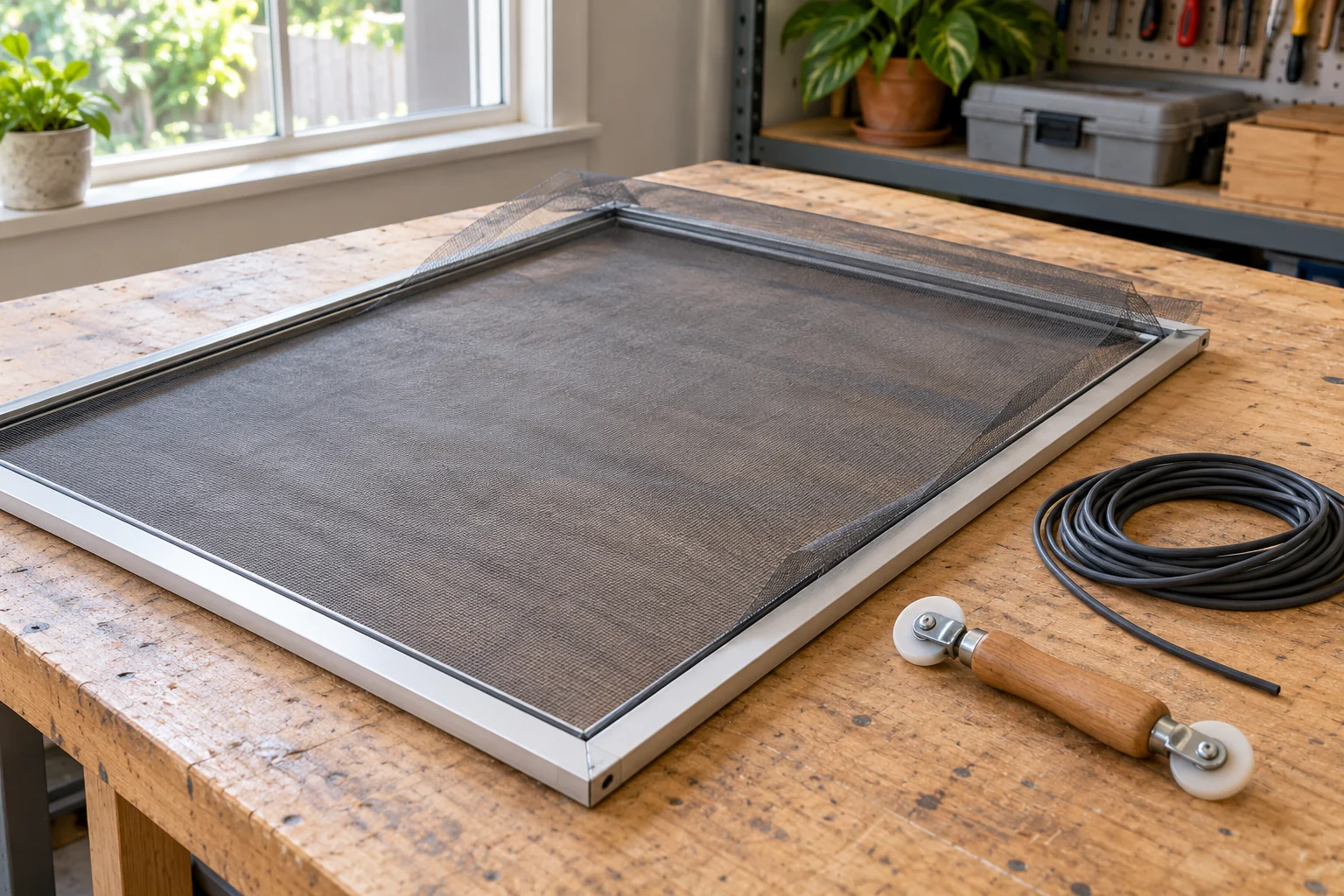
Follow the screen system’s method for removing the old spline and seating replacement mesh. Keep the frame square and use even tension; pulling the mesh excessively tight can bow a light frame. Trim only as directed, with the work supported and hands clear of the cutting path.
Refit the screen and check its clips and normal window operation. An insect screen is not a fall-protection barrier. Work from a safe position and avoid leaning out of an opening to remove or reinstall it.
Patch one small wall dent, then decide about painting
Start with a shallow, isolated defect in a dry, sound wall. Recurring cracks, soft drywall, staining, or a hole exposing services need an explanation before filling. Select a patching product rated for the substrate and size of the defect rather than assuming every opening needs the same filler.
Resolve material hazards before scraping or sanding. The EPA’s guidance for DIY renovators explains that disturbing lead-based paint in pre-1978 housing can create hazardous dust and recommends appropriate lead-safe help and practices. Do not dry-sand an unknown old coating as a casual preparation step.
For a suitable modern surface, follow the filler’s preparation, application, drying, and finishing directions. Work in modest applications where required. Inspect the patch with light coming across the wall so a ridge is visible before you paint over it.
A color match alone does not guarantee an invisible touch-up. Sheen, texture, aging, and application affect the result; repainting to a natural boundary may look better. Allow each coating stage its specified time. Our paint drying and curing guide explains why touch-dry is not the same as ready for cleaning or normal contact.
Make existing storage work before building more
Reposition adjustable shelves within their rated arrangement, add dividers that fit the stored items, or improve labels and access. Measure the objects and usable opening, including the space a door or hinge occupies. Keep heavier items where the unit’s design and load instructions permit.
If a bookcase already fits, a backing or finish refresh may be more manageable than a custom build. Our bookcase project guide distinguishes those options and explains why a structural back or required anchoring should not be removed for appearance. Follow anti-tip requirements for the actual unit.
Price the complete task and check it in use
Count the materials, consumables, protective equipment, and tools you do not already own. Include cleanup and curing time. A small first project should not require buying an entire workshop to achieve a modest saving.
Finish one item and use it before repeating it around the house. A pull that remains secure, a screen that fits, or a smooth patch teaches more than several half-completed upgrades. Increase the scope when the work gives you a reason to, rather than when an inspiration list runs out of easy-looking ideas.

Ethan Miller
Ethan Miller writes about home improvement, interior design, cleaning, and everyday living at Home & Living Daily. He shares practical tips and simple ideas to help readers create more comfortable and functional homes.