Yes, interior paint can become unusable in storage. There is no single expiration age that applies to every can. The formula, whether it has been opened, contamination, sealing, and exposure to heat or freezing all affect the decision. Check the manufacturer’s guidance and the condition of the paint before using it on a wall.
This is about paint stored in a container. How long an existing painted wall looks good is a separate question involving wear, cleaning, moisture, and the original application.
Use the product’s storage guidance as your starting point
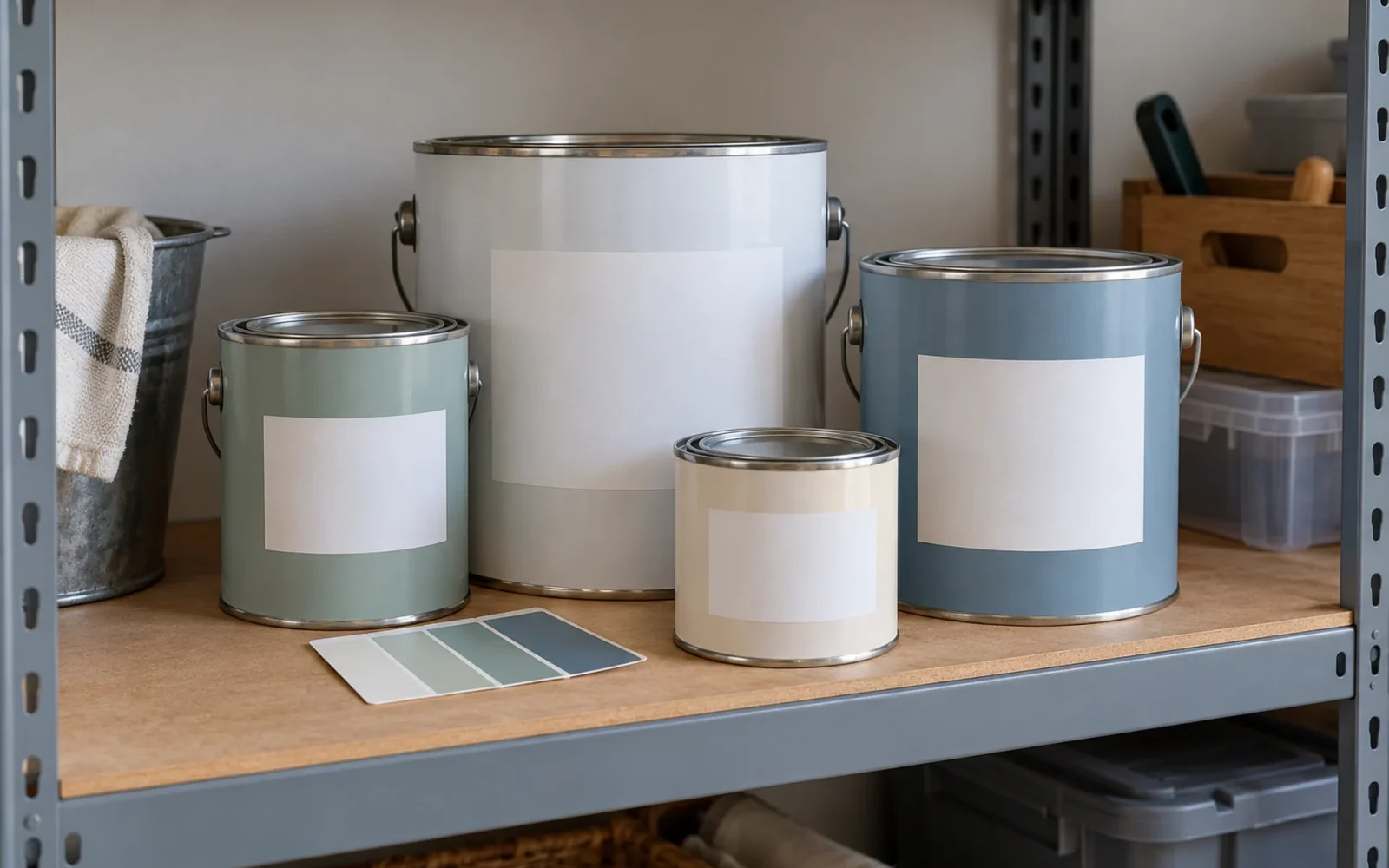
Find the product name, purchase information, and any batch or date code. A tint label can help identify the color and base, but its date may not be the manufacturing date. Ask the manufacturer or retailer to interpret an unfamiliar code instead of guessing.
Manufacturer examples show why conditions matter. Benjamin Moore’s leftover-paint guidance gives a general shelf life of two years once opened, with environment and temperature among the qualifications. Clare’s product FAQ says unopened paint can last around three years when stored properly and explains that opened-can life varies with temperature and air exposure.
Those statements describe different conditions and manufacturers. They are not interchangeable deadlines, nor proof that all older paint is usable until a stated birthday. Check the exact product’s current label or technical data. Specialty coatings, primers, and products with separate components can have different shelf-life or mixed-use limits.
Ask what happened to this particular can
A well-sealed container in a stable indoor environment has a different history from one left in a shed through summer heat and winter freezing. “Unopened” is helpful information, but it does not cancel temperature damage or a failed container seal.
For opened paint, consider how it was used. Was the rim cleaned and the lid resealed? Was used paint poured back from a dirty tray? Was water or an additive introduced? A recently purchased can can still be unsuitable after contamination or poor storage.
If the container is bulging, leaking, severely corroded, or otherwise unsafe, do not force it open or treat it as an ordinary mixing task. Ask the manufacturer or local waste program how to handle it. If the product cannot be identified, do not experiment by combining it with another leftover.
Distinguish ordinary settling from persistent deterioration
Some stored paint separates into layers that can be mixed back together. Separation alone therefore does not establish failure. On the other hand, a product that remains lumpy, gelatinous, or nonuniform after the recommended mixing is a poor candidate for use.
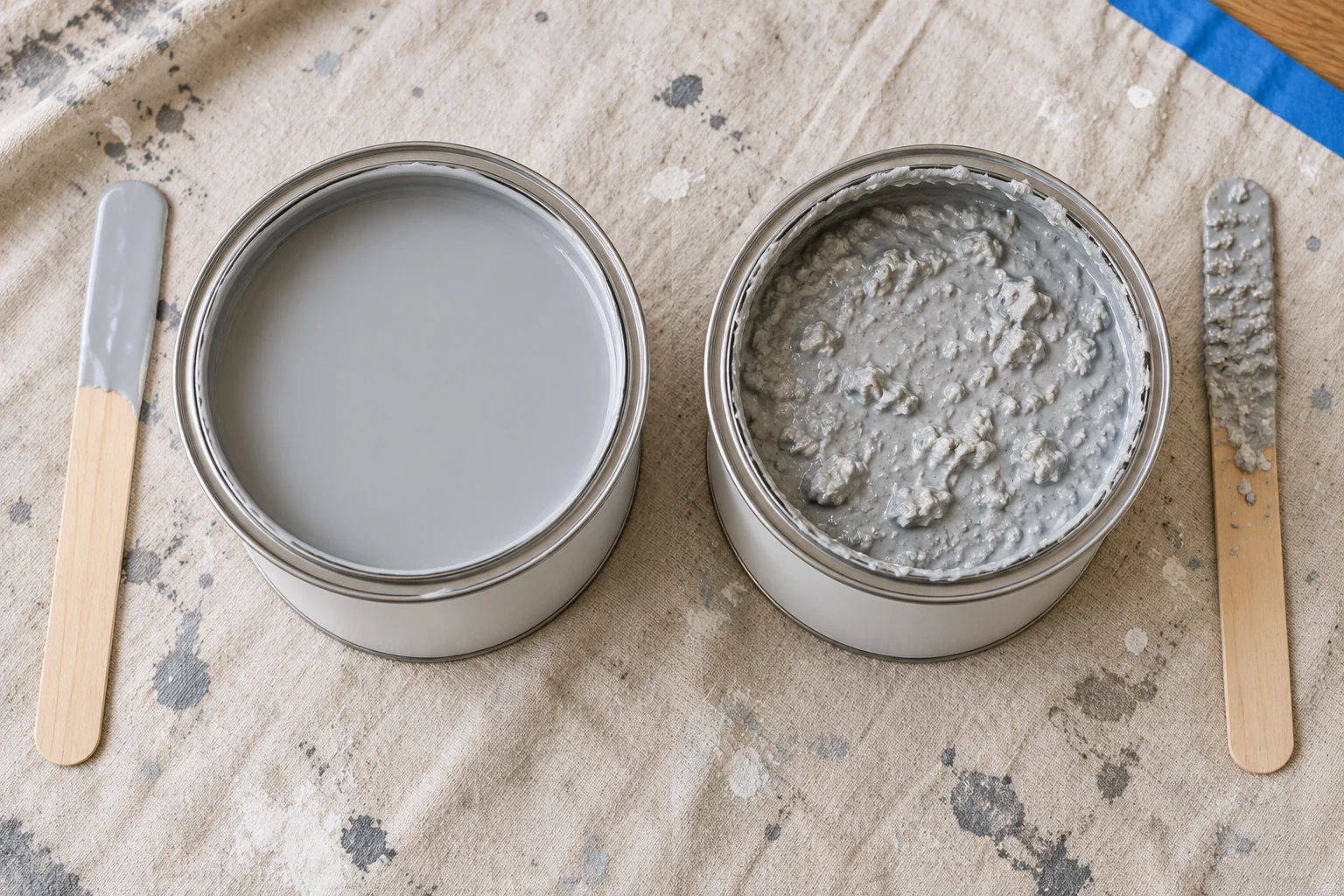
Unexpected sour or rotten odor noticed during normal handling is another reason to stop. Do not put your face over the can or deliberately inhale to test it. Visible mold or other contamination is not something to stir into the batch.
A dried surface skin signals air exposure. Removing a skin does not prove that the remaining material is sound, and straining cannot restore a spoiled binder or reverse all freeze damage. Get product-specific advice when the history or condition is doubtful.
Test plausible usable paint before committing the room
If the identified product is within its guidance and has no concerning signs, mix it as directed with clean equipment. Do not add water, thinner, fragrance, or household chemicals to revive it. A permitted application adjustment in a label is different from trying to repair degraded paint.
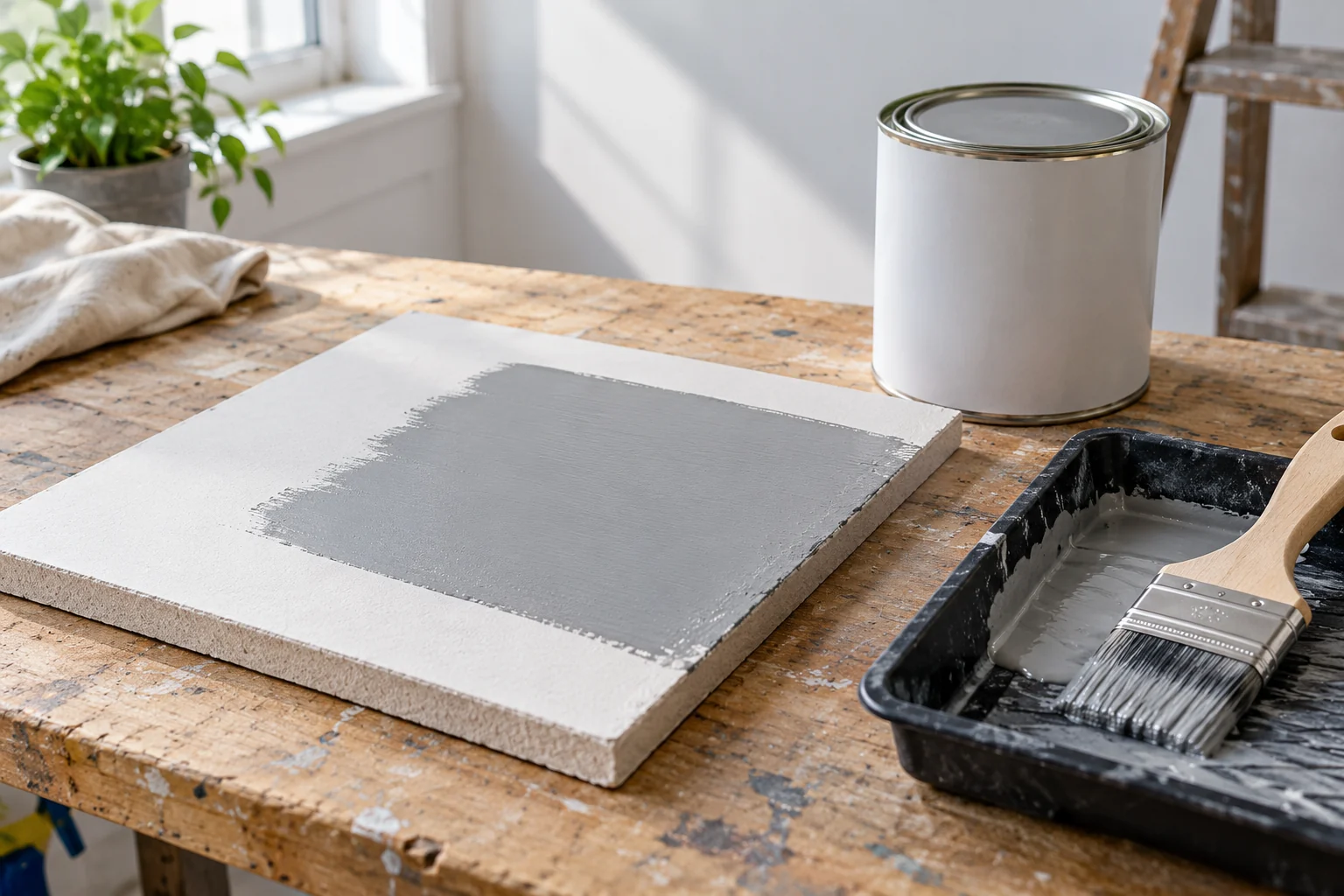
Apply a small test to a suitable prepared sample or an inconspicuous compatible area. Check whether it spreads evenly and dries as the product specifies, without persistent tackiness, particles, or unusual appearance. Follow the normal preparation and ventilation directions. A quick test cannot guarantee long-term adhesion or override manufacturer limits.
Usable paint may still make an obvious touch-up. Existing walls change with age and cleaning, and sheen or texture can differ even with the original color. Compare the fully dried test in normal room lighting. Our interior paint drying guide distinguishes recoat readiness from curing and normal service.
Keep useful leftovers identifiable, and dispose of the rest locally
Store retained paint in a compatible, tightly sealed container under the product’s specified conditions, away from children, food, and direct sun. Clean the rim, label the product and color, and record the room and opening date. Keep the original product and safety information even if the manufacturer permits transfer to a smaller container.
For disposal, check local instructions and the receiving program before preparing the container. PaintCare’s recycling guidance calls for original labeled containers, secure lids, no leaks, and advance confirmation with the drop-off site. Accepted products and disposal options vary; drying paint and putting it in the trash is not a universal rule.
Do not pour unwanted paint into drains or onto the ground. A doubtful old can is usually worth less than the preparation, application, and cleanup required to correct a failed finish. When the product history is unknown and the manufacturer cannot resolve it, replacement is a more defensible choice than using the wall as the experiment.

Ethan Miller
Ethan Miller writes about home improvement, interior design, cleaning, and everyday living at Home & Living Daily. He shares practical tips and simple ideas to help readers create more comfortable and functional homes.