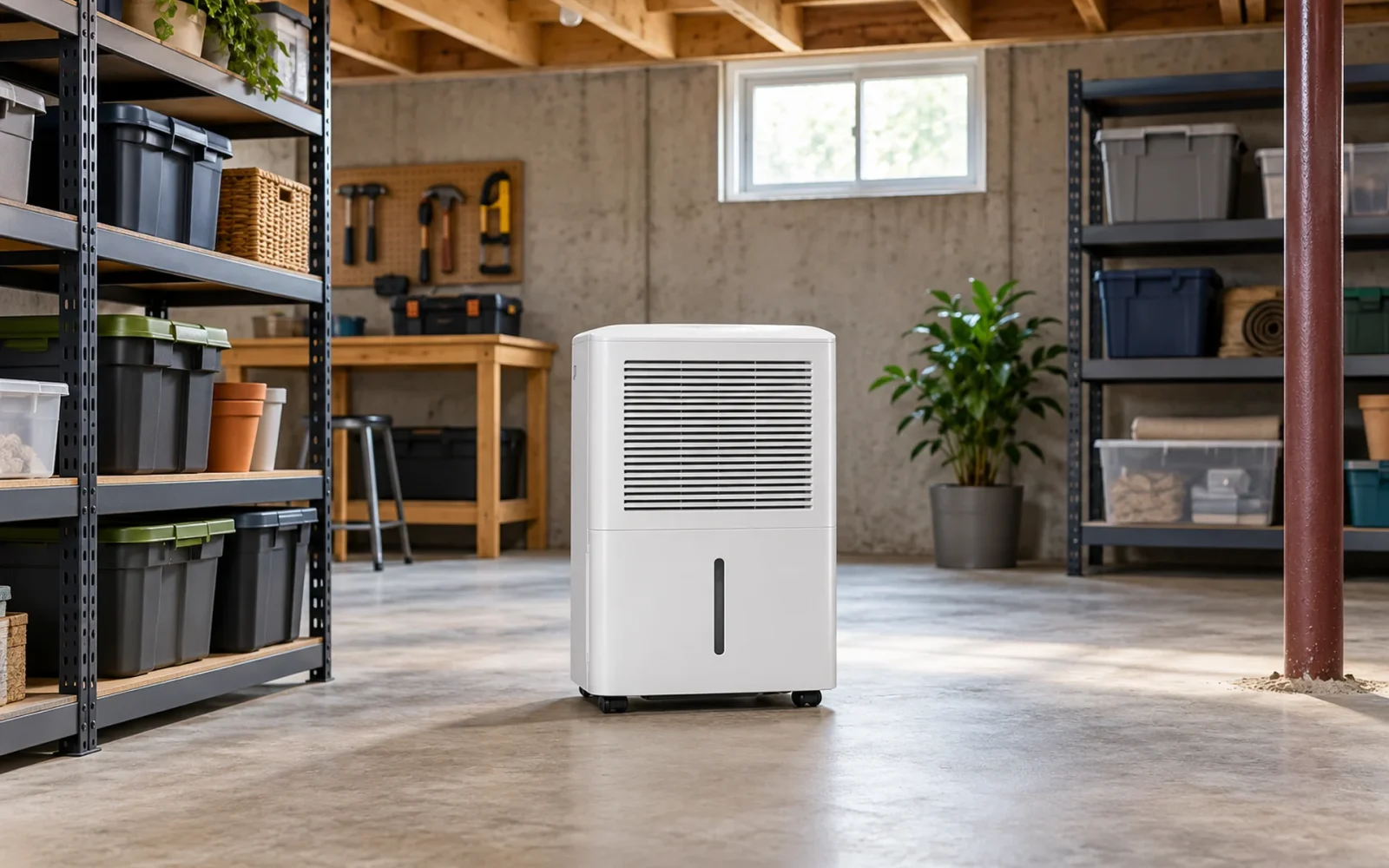
Control basement moisture by fixing water entry, reducing indoor moisture sources, and using dehumidification when the air remains too humid. A dehumidifier can make the room drier, but it cannot repair a leak or restore wood that has already lost strength to decay.
Start with a humidity record and an inspection of the room’s surfaces. A dry-looking floor does not rule out damp wood behind paneling, and a musty odor does not identify the source by itself.
Measure the room before changing the equipment
Use a hygrometer to track relative humidity and temperature over several days, including wet weather and normal laundry or shower use. Place it away from the dehumidifier’s discharge and direct contact with a cold wall. If one corner remains damp, compare conditions there with the room’s main area.
The EPA recommends indoor relative humidity below 60%, ideally between 30% and 50%. Treat that as a practical room-air target, not a guarantee that every hidden surface is dry. A cold pipe or wall can still develop condensation under conditions that differ from the center of the room.
Relative humidity is also different from wood moisture content. A good reading on the room hygrometer does not establish that a previously wet sill plate or joist is sound. Investigate persistent localized dampness separately.
Reduce the moisture load before asking a machine to handle it
Look for plumbing drips, appliance discharge problems, and dryer exhaust that does not reach outdoors. A basement bathroom or indoor clothes drying can add moisture even when the foundation is dry. Check accessible drain pans and condensate arrangements as part of appliance maintenance.
The EPA’s moisture-control guidance identifies fixing leaks and venting moisture-producing activities outdoors as source-control measures. Running a larger dehumidifier while a leak continues usually treats the symptom at an ongoing energy cost.
Do not assume open windows will help. On a warm, humid day, outdoor air entering a cool basement can increase condensation. Compare outdoor conditions with the basement rather than opening windows according to the calendar. Fresh-air and ventilation needs still matter, but they should be addressed without simply importing more moisture.
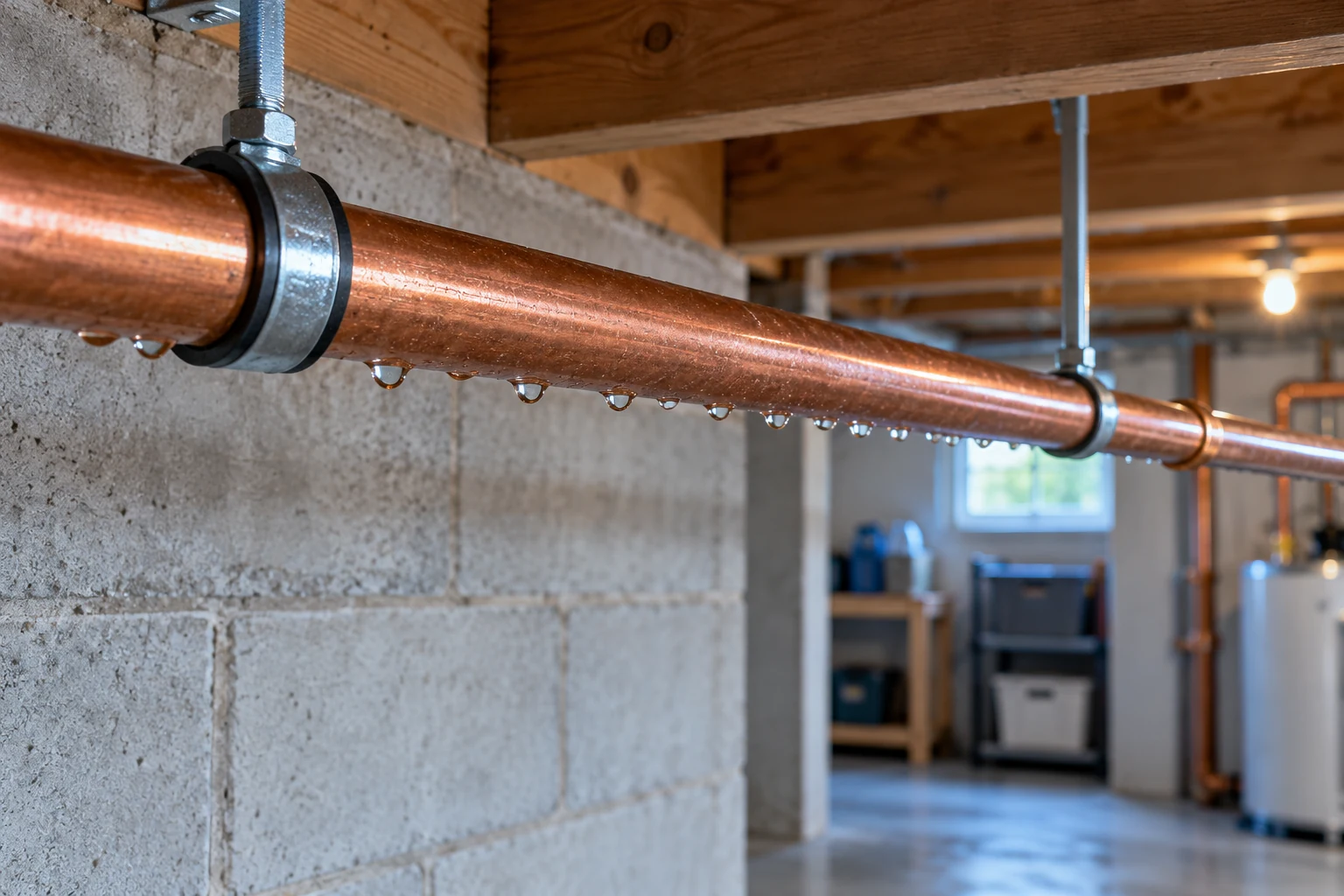
Repeated wet tracks or puddles after rain need a water-entry investigation. Our basement waterproofing guide explains how exterior runoff, cracks, drainage, and collection systems fit that work.
Make dehumidification reliable enough for everyday use
Choose equipment for the basement’s size, moisture load, and operating temperature using the manufacturer’s selection information. Check the rated operating range, not just the advertised collection capacity. A unit that works well in a warmer room may behave differently in a cool basement.
Follow the required clearances so air can reach the intake and leave the discharge. A machine hidden behind storage or shut inside a small closet cannot effectively serve the whole basement. Keep the filter clean and check that the bucket shutoff or drainage arrangement actually works.
If using continuous drainage, confirm the approved hose route and discharge destination. Check it periodically for blockages, leaks, or a pump that has stopped. A dehumidifier that has quietly shut off because its bucket is full is not controlling the room.
Moisture-absorbing tubs may suit a small enclosed storage space, but do not assume they can replace a room-sized moisture-control plan. An air purifier filters airborne particles; it is not a substitute for removing water vapor.
Protect wood by keeping it visible and addressing existing damage
Inspect accessible joist ends, sill plates, posts, paneling bases, and areas beside plumbing. Note recurring staining, softness, crumbling material, or a persistent odor. Those observations justify further evaluation; they do not establish the depth or structural significance of damage.
If a load-bearing member appears deteriorated, have it assessed before covering it or attempting a cosmetic repair. Drying can stop a moisture problem from continuing, but it does not replace missing or weakened wood. Repairs need to address both the cause and the affected material.
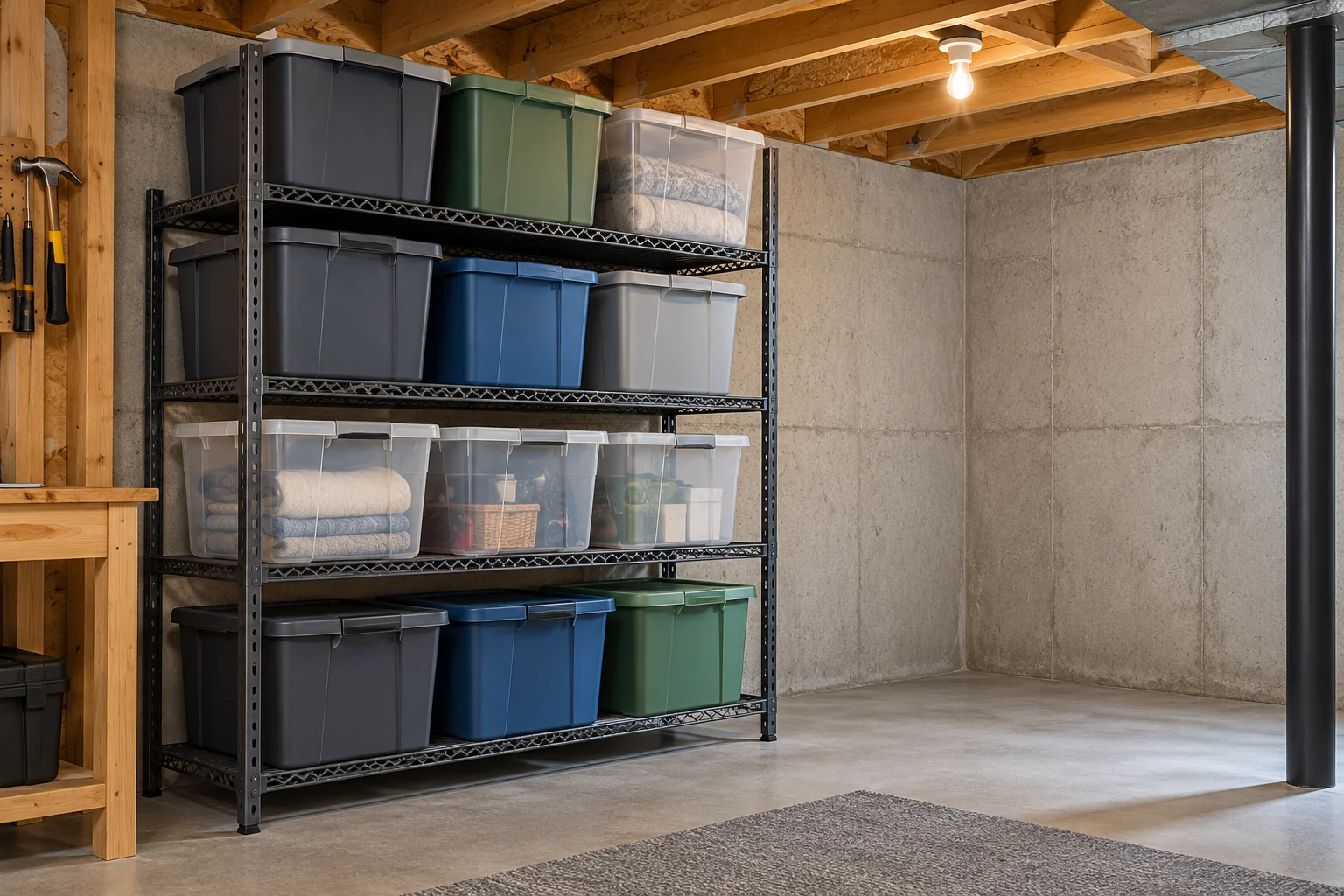
Keep belongings off the slab and leave access to foundation walls and service connections. Avoid packing absorbent materials tightly against cool masonry. New paneling or carpeting can conceal the very surfaces you need to monitor.
Let conditions determine the routine
There is no universal month to switch a basement dehumidifier on or off. Review the humidity record after seasonal changes, heavy rain, and changes in household use. If readings climb while the machine runs continuously, check its maintenance and the moisture sources before simply lowering the setpoint.
The useful result is stable conditions with no recurring wet surfaces or unexplained material damage. Keep a short record of what changed and what improved. That gives you a basis for deciding whether routine humidity control is enough or whether the building needs further investigation.

Ethan Miller
Ethan Miller writes about home improvement, interior design, cleaning, and everyday living at Home & Living Daily. He shares practical tips and simple ideas to help readers create more comfortable and functional homes.