Basement floor waterproofing starts with identifying what is making the concrete wet. A coating may be suitable for a prepared slab with a compatible moisture condition, but it will not automatically stop groundwater entering through a crack or the floor perimeter. Waterproof flooring can survive some exposure to water while still trapping moisture underneath it.
Before buying a sealer, decide whether you are trying to stop liquid entry, control moisture moving through the slab, or prevent condensation on its surface. Those problems can look similar and require different work.
Identify the moisture before specifying a floor treatment
A puddle that appears during heavy rain, especially at the wall-to-floor joint or a crack, calls for a water-entry investigation. Note where the water first appears, not just where it eventually collects. A low spot can receive water from somewhere else.
A slab can also look dry while releasing moisture vapor that affects an adhesive or floor covering. Conversely, humid indoor air can condense on cool concrete without water rising through it. Pipes, appliances, and drains add other possible sources. More than one condition may be present.
| Observation | Question to resolve | What it does not establish |
|---|---|---|
| Water at a crack or perimeter after rain | Where is liquid entering, and how will it be intercepted or excluded? | That painting the visible opening will solve the entire problem |
| No puddle, but flooring or adhesive has failed | Was the slab tested against that floor system’s limits? | That every replacement floor will fail |
| Surface dampness during humid weather | Is the slab cool enough for indoor moisture to condense? | That groundwater is the only explanation |
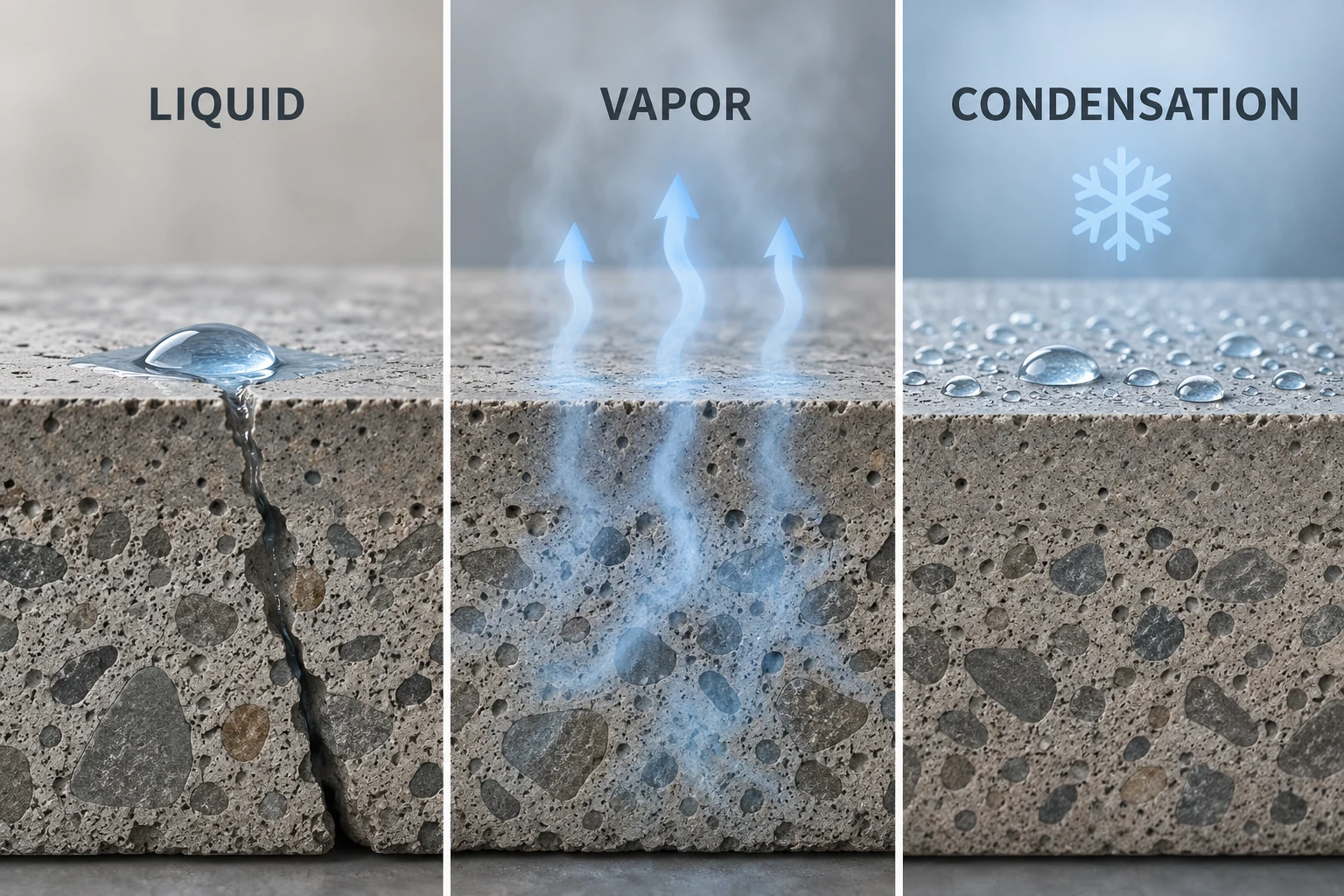
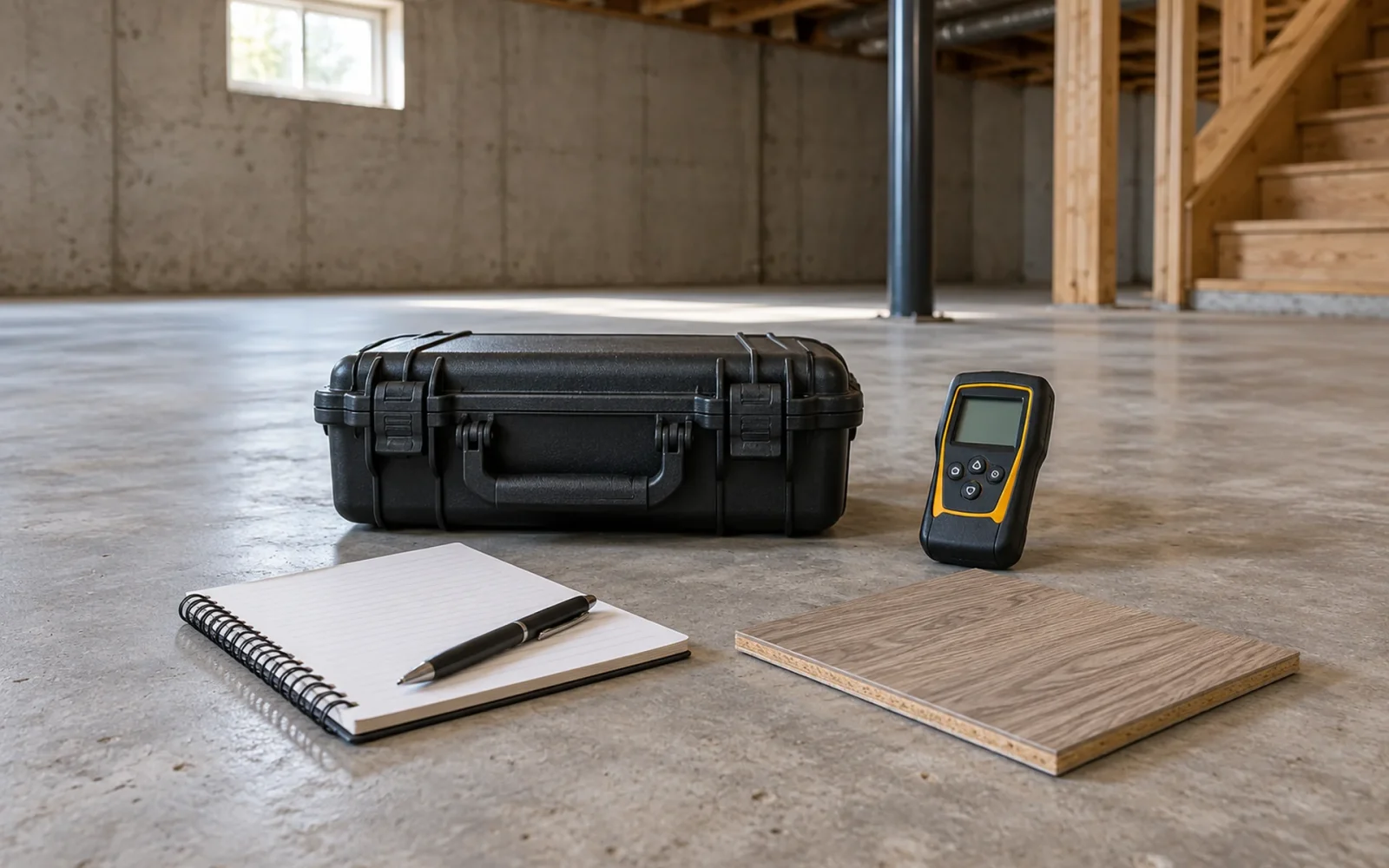
A taped plastic sheet can reveal a moisture concern, but it cannot replace the testing required by your selected flooring and adhesive manufacturers. A handheld meter reading is also not interchangeable with an in-slab relative-humidity test. Keep observations and installation acceptance criteria separate.
Choose a system for the job it actually performs
Liquid-water entry needs a water-management repair
Recurring seepage may involve exterior runoff, foundation drainage, cracks, plumbing, or an overloaded collection system. The appropriate repair depends on that diagnosis. Filling one opening without understanding the water path can leave the underlying condition unresolved.
For a broader sequence of source checks, see our guide to waterproofing a basement. Resolve active entry before concealing the floor or committing to a decorative finish.
A moisture-control coating is part of a specified assembly
A concrete moisture-vapor control system is different from an ordinary decorative sealer. For example, ARDEX MC RAPID is specified for controlling moisture vapor before underlayment and flooring installation. That application does not make it a general remedy for flooding or a leaking perimeter.
Ask the installer to name the complete assembly: concrete preparation, moisture-control product if needed, primer, patch or underlayment, adhesive, and finish. Compatibility must extend across those layers. Combining individually well-reviewed products does not establish that they work together.
Waterproof flooring does not waterproof the basement
A water-resistant or waterproof plank describes an aspect of the flooring product. It does not establish that the subfloor, underlayment, wall edges, or room can tolerate ongoing water intrusion. Read the installation instructions and warranty exclusions before interpreting the label.
Likewise, a loose-laid barrier or floating floor is not permission to cover a wet slab. The assembly may have specific vapor-control, flatness, expansion, and environmental requirements. Those requirements should guide the purchase.
Make the flooring proposal specific enough to check
Request the test method, test locations, dates, and recorded results. Then ask which published limit applies to the actual adhesive and floor covering. There is no single moisture number that approves every basement floor.
The ARDEX LBB technical data sheet, for example, identifies leaks, flooding, hydrostatic pressure, and other infiltration as conditions to identify and correct before installation. It also distinguishes its underlayment from a vapor barrier and refers installers to the applicable flooring-system requirements. The practical lesson is to read the limitations, not just the product’s headline moisture tolerance.
Preparation needs its own scope. Existing paint, adhesive residue, contamination, weak concrete, and uneven areas may affect what can bond successfully. Do not grind unknown old flooring or adhesive as a casual preparation step; establish what the material is and how it should be handled first.
Keep evidence before the slab disappears
Save the moisture results, product names, preparation details, and photographs of any repaired entry points. If rain triggered the original problem, monitor the corrected area under relevant wet-weather conditions rather than treating a dry afternoon as proof.
A bare concrete floor may be an acceptable temporary finish while you establish that the repair works. The useful milestone is a slab and room condition that meet the chosen floor system’s requirements. Buying the finish first can turn that decision into an expensive constraint.

Ethan Miller
Ethan Miller writes about home improvement, interior design, cleaning, and everyday living at Home & Living Daily. He shares practical tips and simple ideas to help readers create more comfortable and functional homes.