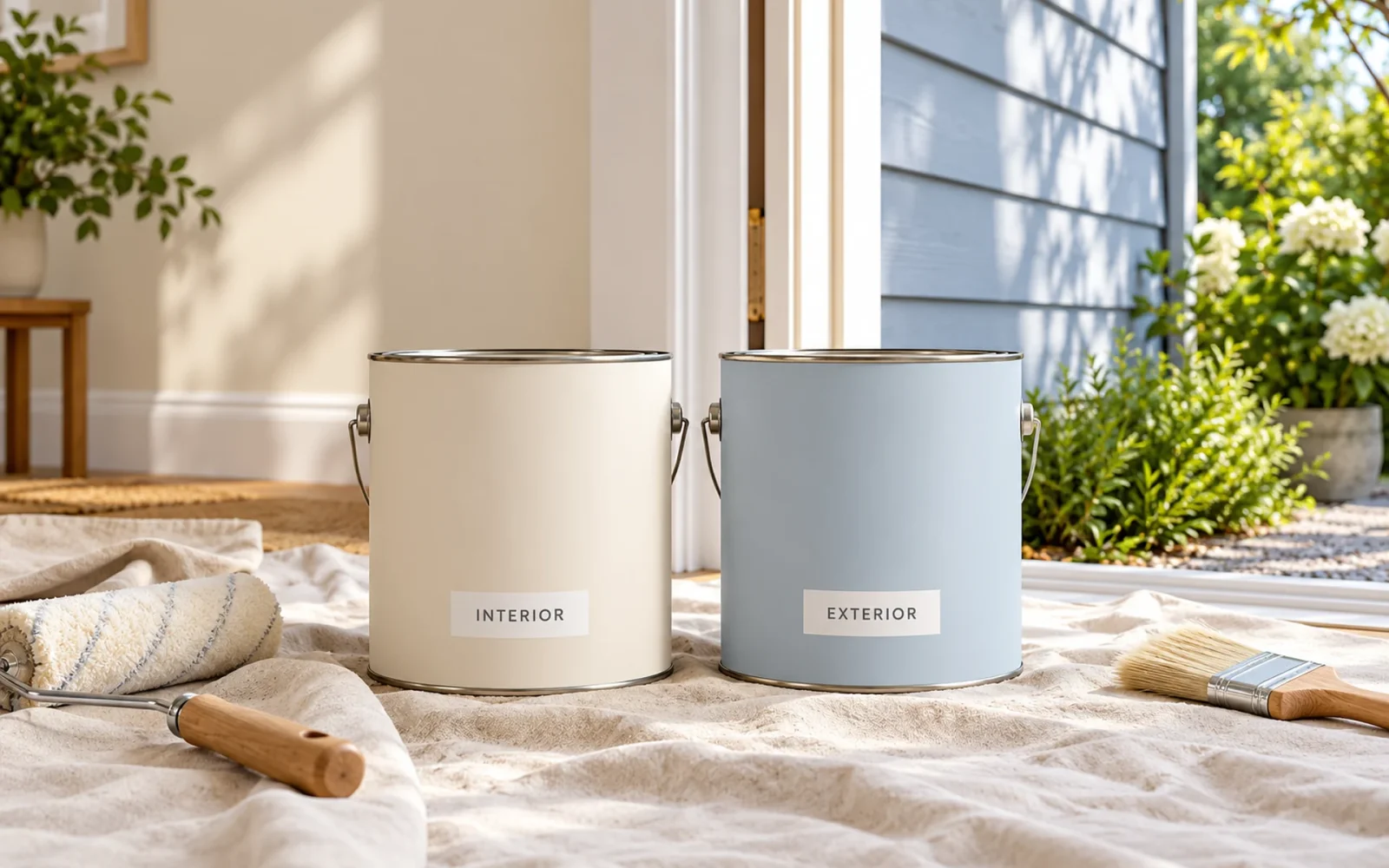
Do not use interior-only paint outside, or assume exterior-only paint belongs indoors. Choose a product approved for the surface and location. Some coatings are explicitly rated for both interior and exterior use, but that is a product-specific approval, not permission to swap any two cans with similar colors.
If you already used the wrong paint, identify the exact product and the condition of the coating before choosing a remedy. A sound new film and a peeling weathered surface do not need the same preparation, and applying another coat does not automatically resolve every underlying problem.
What changes between interior and exterior paint?
The intended service conditions shape the formulation. Interior finishes commonly emphasize household wear, cleanability, and the appearance of indoor walls or trim. Exterior finishes are developed for outdoor exposure, including weather and sunlight. Neither category is simply a stronger version of the other.
Benjamin Moore’s interior-versus-exterior explanation distinguishes outdoor weather resistance from indoor scuff, stain, and cleaning performance, and advises against using the categories interchangeably or blending them. Its guidance also specifically advises against using AURA Exterior inside.
| What you have | How to decide |
|---|---|
| Interior-only wall paint | Use only on the approved indoor substrates and conditions |
| Exterior-only coating | Follow its approved exterior uses; do not infer indoor suitability |
| Product labeled interior/exterior | Check the exact surface, preparation, and exposure limits |
| Primer or clear sealer | Check its own rating and the approved coating system; it does not automatically change a topcoat’s intended use |
The substrate matters too. A paint approved for an outdoor vertical surface is not automatically suitable for a walking surface, a constantly wet planter interior, or every plastic and metal. Read the product’s listed uses rather than extending “exterior” to every object outside.
A covered porch is still a location to check
Less direct rain does not turn an outdoor surface into a climate-controlled interior. A porch, shed, or piece of garden furniture can experience moisture, sunlight, and temperature changes even under shelter. Do not treat its roof or furniture cover as approval to use leftover indoor wall paint.
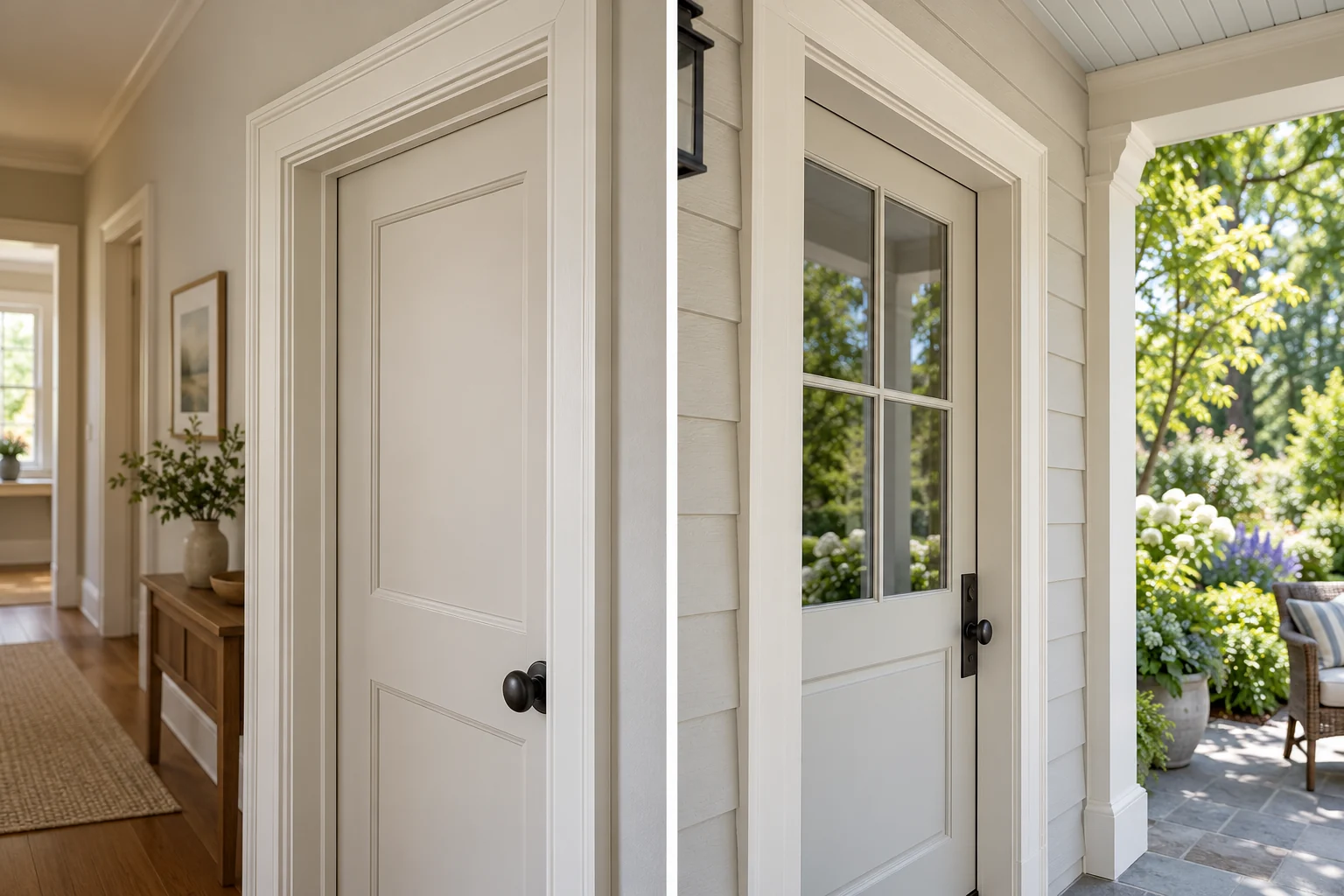
Describe the actual setting to the paint supplier: inside or outside, sheltered or exposed, vertical or horizontal, substrate, and existing coating. For an enclosed porch or garage, explain its real exposure and use. A room name alone can leave out the conditions that matter.
What about paint labeled for both uses?
Genuinely dual-rated products are an important exception to the category shortcut. For example, Sherwin-Williams describes All Surface Enamel Latex for interior and exterior use on specified surfaces. That establishes the intended use of that product, not of an unrelated interior wall paint.
Check the exact product name and technical data, not merely the brand or a similar-looking can. Confirm the substrate preparation, primer if required, application conditions, and any exclusions. A primer labeled for both settings does not give the finish coat the same rating.
If the reason for substitution is color, ask whether the color can be made in an appropriate product. If the reason is a leftover quantity, compare the cost of suitable paint with the preparation needed after a failed shortcut. Availability is a practical constraint, but it does not change what the coating is approved to do.
If interior paint has already been used outside
Stop before adding an improvised clear sealer or another uncertain layer. Photograph the area and record the product, application date, substrate, previous coating, and exposure. Check whether the film is sound, loose, blistering, peeling, or affected by an unresolved moisture problem.
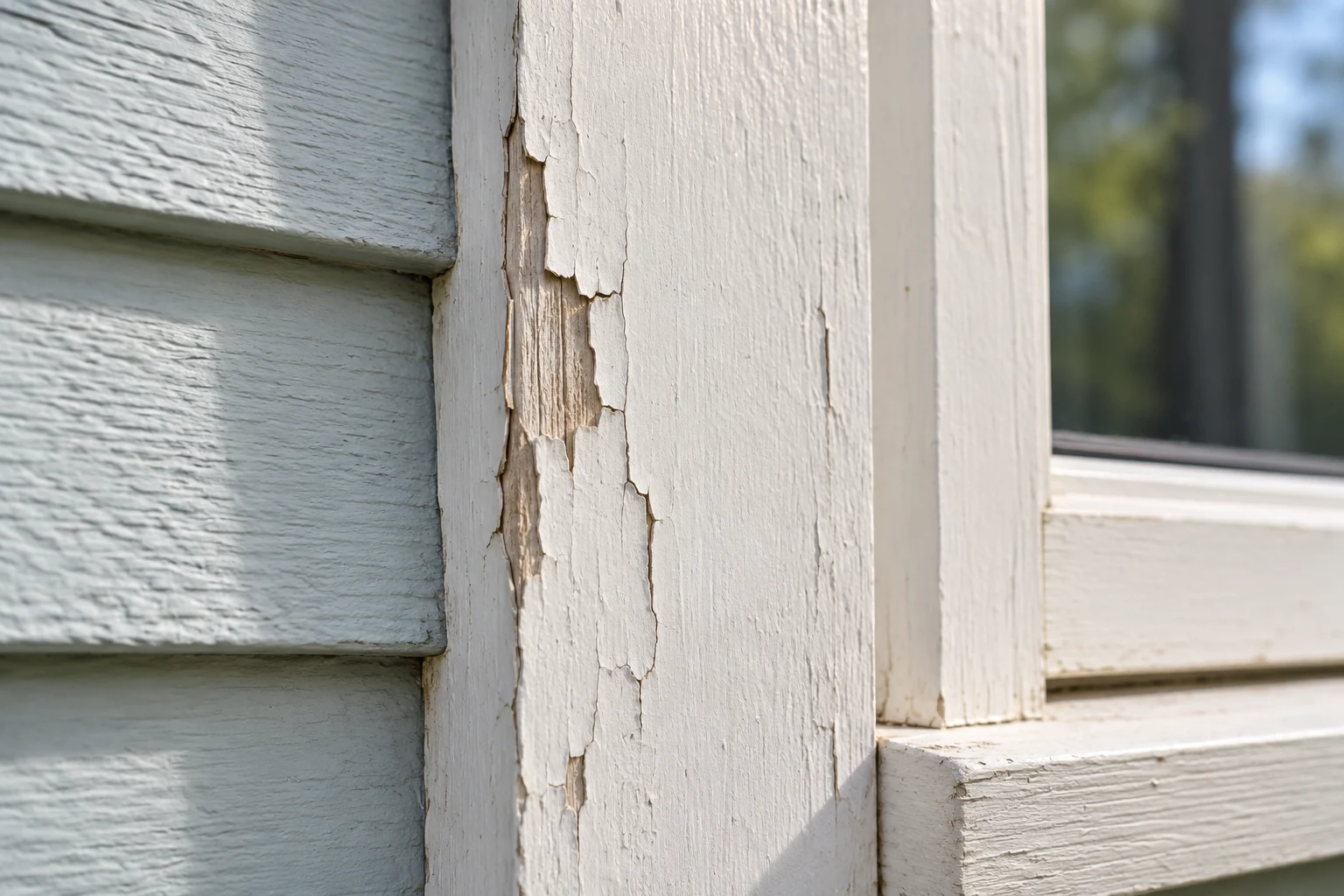
Ask the manufacturer or a qualified painting contractor for a compatible preparation and recoating plan. If the existing layer is well-adhered and the substrate is suitable, the recommended approach may differ from the work required for widespread failure. Do not assume that every mistake requires complete stripping, or that every mistake can be hidden beneath an exterior topcoat.
A topcoat still depends on what is beneath it. Resolve loose material, incompatibility, and relevant substrate problems as directed for the selected system. A generic sealer does not supply evidence that the entire combination is appropriate for outdoor use.
How long will interior paint last outdoors?
There is no dependable universal number. Product, surface, preparation, weather, and exposure vary. A sheltered sample looking acceptable after a season does not establish a supported service life for siding, trim, or furniture elsewhere. Use the product’s approved application instead of planning around an unsupported failure deadline.
If exterior-only paint has been used indoors
Identify the exact product and contact its manufacturer for advice on the room’s use, ventilation instructions, and any corrective work. Provide the painted area, substrate, application date, and other relevant details. Do not decide that the application is suitable merely because the odor has faded or the surface feels dry.
Likewise, “water-based,” “low odor,” and a VOC statement are not substitutes for the manufacturer’s intended-use directions. A bathroom’s humidity or a cabinet’s need for durability does not by itself make an exterior-only coating the appropriate choice.
Our interior paint drying and curing guide explains why touch-dry, ready to recoat, and ready for normal use are different stages. None of those stages changes an interior-only product into an exterior one.
Before opening a can, confirm three things: the exact product is approved for the location, it suits the substrate and existing finish, and you can meet its application conditions. That short check is more useful than trying to make the wrong coating fit the job afterward.

Ethan Miller
Ethan Miller writes about home improvement, interior design, cleaning, and everyday living at Home & Living Daily. He shares practical tips and simple ideas to help readers create more comfortable and functional homes.