To waterproof a basement, first identify where the moisture comes from and how it enters, then match the treatment to that route. Start with manageable runoff and drainage problems outside the house. Persistent seepage may require crack treatment, an interior collection system, exterior waterproofing, or a combination. A wall coating and a dehumidifier solve different problems, and neither is a universal substitute for controlling incoming water.
This is a planning sequence for an existing home. The aim is to decide what to investigate and what a proposed fix must accomplish before buying products or covering the walls with new finishes.
Map the evidence before choosing a treatment
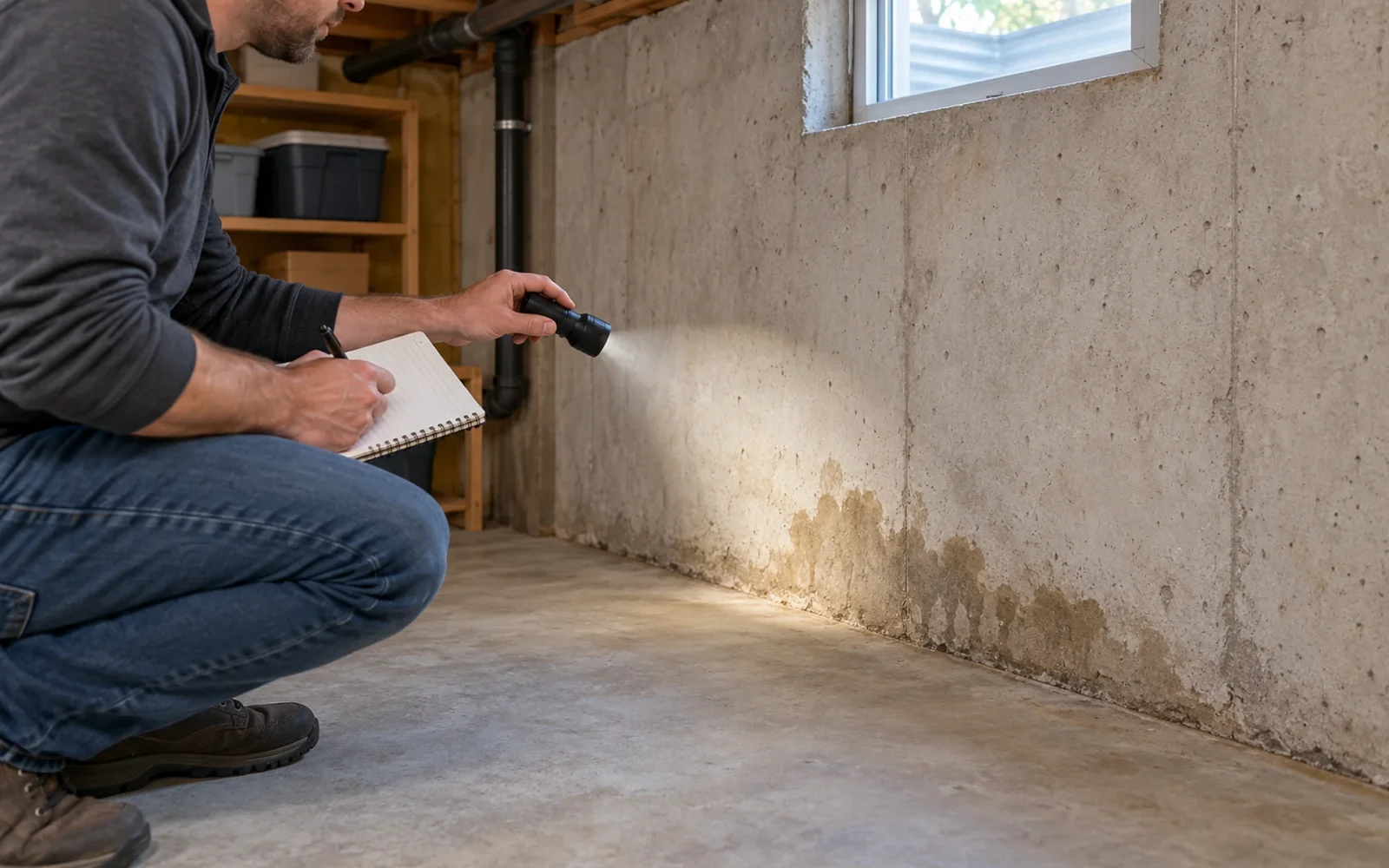
Record when the moisture appears, where you first see it, and what the weather and household activities were doing. Photograph the location and mark it on a simple basement sketch. Distinguish water entering at a window or wall joint from moisture on a cold pipe, a plumbing leak above, or a broadly humid room.
A wet patch is a clue, not a diagnosis by itself. Note whether it develops during rain, after prolonged wet weather, or during humid summer conditions. Check accessible plumbing and appliance connections as part of the investigation. Do not assume every basement puddle started outside the foundation.
University of Minnesota Extension distinguishes rain and groundwater, internal moisture, and humid outside air as different sources. It also explains that warm, humid air can condense on cool basement surfaces. Opening windows indiscriminately can therefore make a condensation problem worse rather than dry the room.
Look at the water arriving from the roof and yard
During a safe observation after rain, look for overflowing gutters, downspouts emptying beside the foundation, water trapped against steps, and ground that directs runoff toward the house. Observe from the ground; arrange help for inaccessible gutters or roof work.
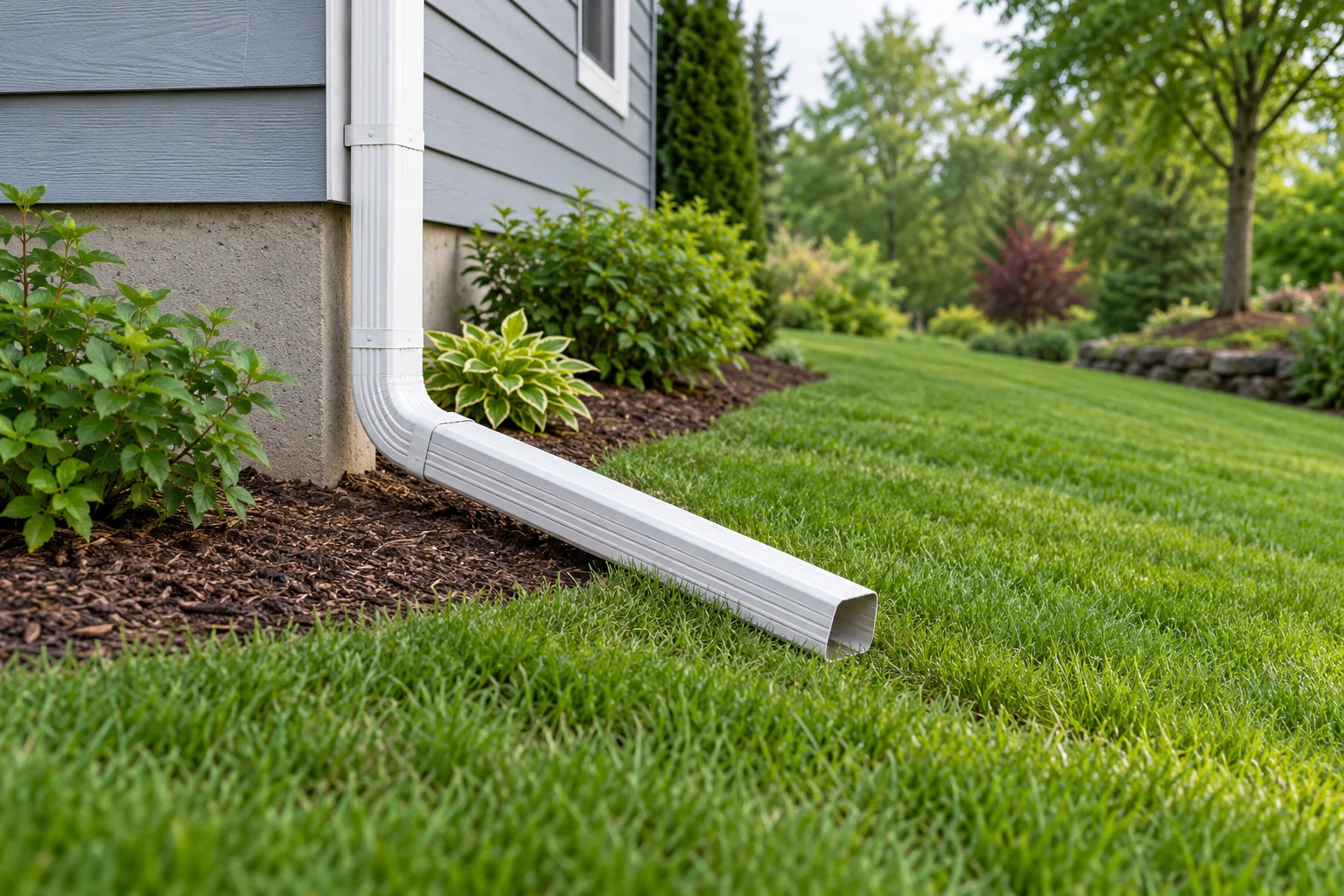
Correct an identified obstruction or discharge problem before assuming the entire foundation needs excavation. An extension is useful only if the water leaves the vulnerable area; sending it into another low spot beside the wall is not much of an improvement. Check local drainage requirements and avoid creating a problem on a neighboring property.
Window wells deserve their own look. If a well collects water or has an obstructed drain, ask how that part of the system is meant to drain. A cover may reduce some incoming rain or debris, but it does not prove that the drainage beneath it works.
Match the method to the route water takes
“Waterproofing” is used for several different scopes. Ask the contractor to describe the problem the method is intended to solve and where the water will go afterward.
| Proposed approach | Question it needs to answer |
|---|---|
| Localized crack or joint treatment | Is this the relevant entry path, and does the condition need separate structural evaluation? |
| Interior masonry coating | Is the substrate suitable, and is the product intended for the observed moisture conditions? |
| Interior collection and drainage | How will water be intercepted, routed, discharged, and maintained? |
| Exterior membrane and drainage work | Can the outside wall be accessed, and what drainage and restoration work is included? |
A crack repair is not a diagnosis of the whole foundation
One leaking crack can be a localized problem, but displacement, bowing, continuing movement, or other concerning conditions need assessment beyond simply sealing the surface. Ask whether the proposed treatment addresses water passage, structural performance, or both. Do not treat a new coating as evidence that movement has stopped.
Interior drainage collects water; exterior work addresses the outside face
An interior system can intercept water and lead it toward an appropriate outlet, often through a sump arrangement. Its success depends on the collection route, discharge, and ongoing operation. It does not mean that the exterior face of the wall no longer gets wet.
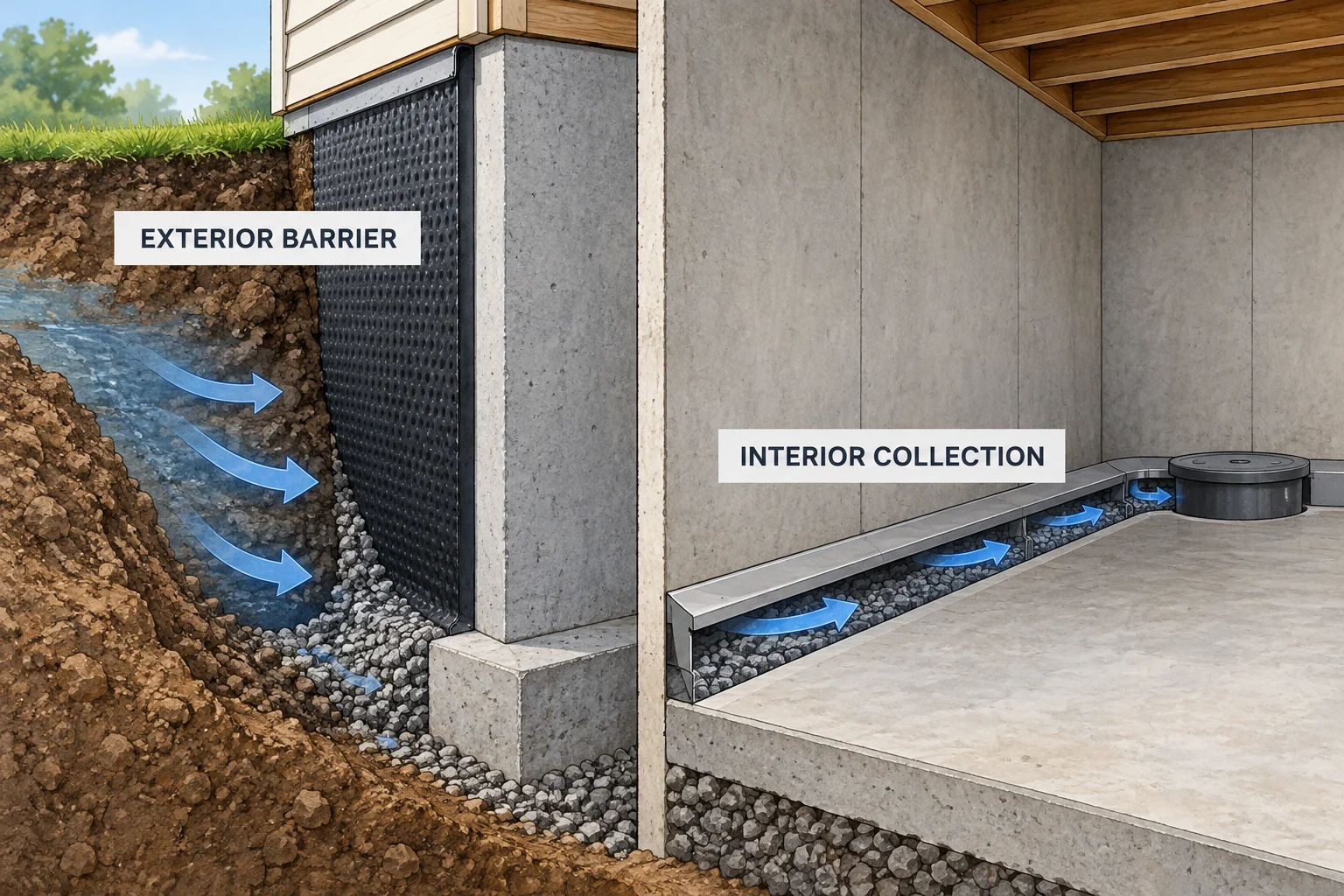
Exterior work can provide access to wall treatment and drainage, but landscaping, stairs, porches, and buried utilities affect the scope. Have a qualified contractor assess access and design the work. Digging beside a foundation is not an appropriate next step just because a general guide lists a membrane as an option.
A useful drainage proposal identifies the destination of collected water. Ask about the sump basin and cover, pump access, discharge route, power requirements, and what happens during an outage if pumping is necessary. A list of product names without an outlet plan leaves the central question unanswered.
What can a homeowner reasonably do?
Good homeowner tasks include documenting the pattern, clearing accessible debris, checking obvious runoff routes, arranging routine gutter maintenance, and maintaining installed equipment according to its instructions. These observations also make a professional visit more productive.
A compatible masonry coating may be manageable on a suitable surface after the cause has been assessed. Follow the exact product’s instructions for existing coatings, surface preparation, moisture conditions, coverage, and drying. DRYLOK’s application guide, for example, calls for preparation, patching, and product-specific application steps. Its coating procedure is not a design for every drainage or groundwater problem.
Do not use a dry-looking coat as the only test of success. Likewise, a dehumidifier can help manage indoor humidity but cannot carry away water entering through a joint. Choose equipment and finishes after the water problem is understood, rather than using them to hide the evidence.
Evaluate the proposed result before finishing the basement
Ask for a written diagnosis, measured scope, discharge arrangement, access and restoration work, maintenance requirements, and warranty remedy. If two companies identify different causes, resolve that disagreement before comparing their totals. Our basement waterproofing cost guide explains why a coating price, a drain-line price, and a complete exterior project are not interchangeable budgets.
After corrective work, keep observing under the conditions that previously caused trouble. Check whether the original entry points remain dry, whether the equipment operates as intended, and whether new symptoms appear elsewhere. One dry afternoon does not establish how the basement behaves through a wet season.
Before insulating, installing flooring, or closing walls, confirm moisture readiness with the relevant contractor and finish manufacturers. Preserving access while you verify the result is usually easier than reopening a finished room. The right plan leaves you able to explain the source, the route, the treatment, and the evidence that it is working.

Ethan Miller
Ethan Miller writes about home improvement, interior design, cleaning, and everyday living at Home & Living Daily. He shares practical tips and simple ideas to help readers create more comfortable and functional homes.