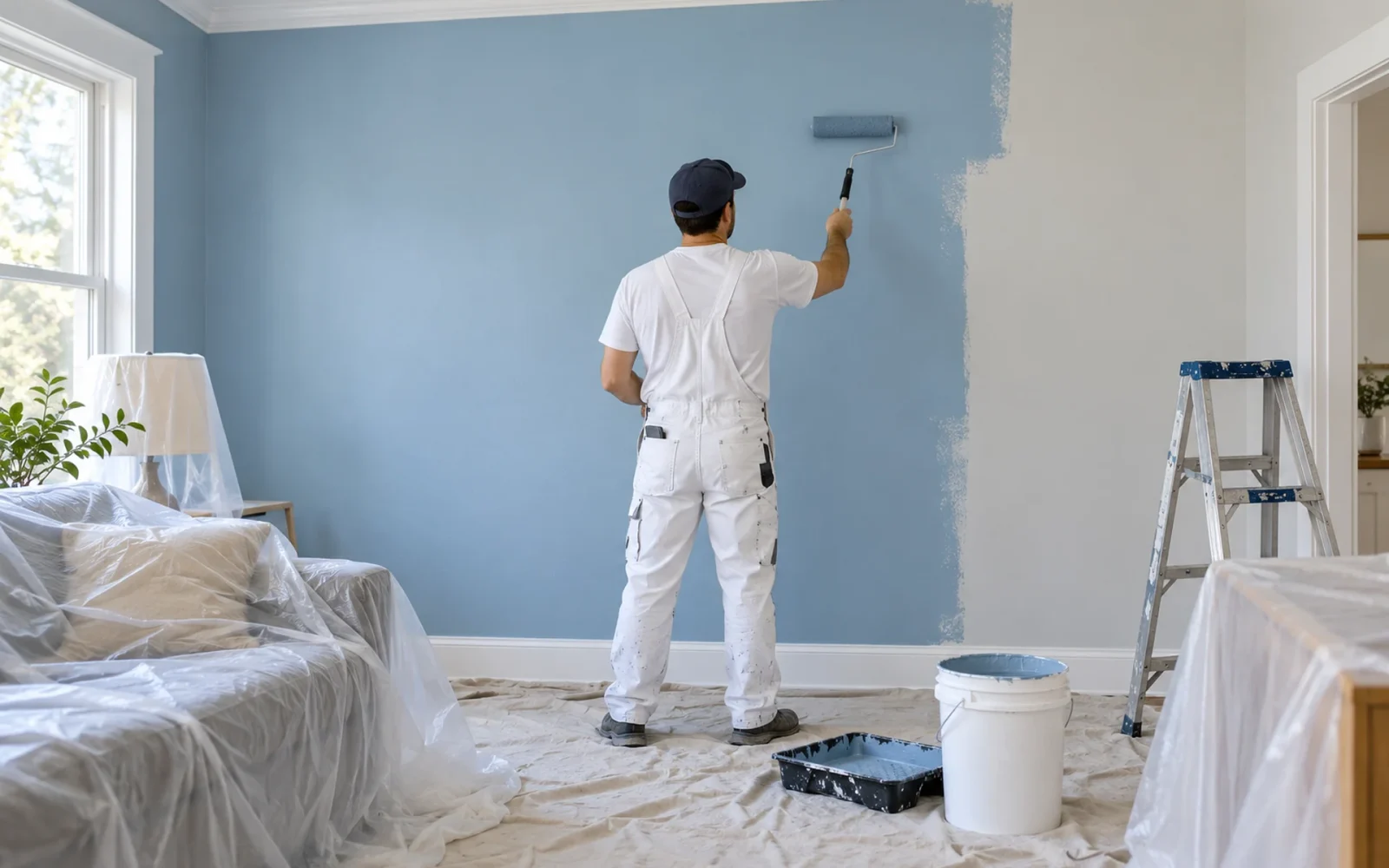
Professional interior house painting can run into several thousand dollars even when you keep the existing colors. As a broad starting point, Mr. Handyman’s published guide estimates $4,000 to $10,000 for a 2,000-square-foot home. The useful question is what that price covers: walls alone, or ceilings, doors, trim, repairs, and multiple colors as well.
For a usable budget, list the rooms and surfaces first. Then compare local quotes with the same preparation, paint specification, and finish expectations. Multiplying the home’s floor area by a rate without those details can produce a precise-looking number for the wrong job.
What a whole-house estimate does and does not tell you
A floor-area rate is a shortcut for describing an entire project. It is not the price to coat each square foot of wall. A house with high ceilings, many small rooms, and detailed trim can require a different amount of work from an open-plan house with the same floor area.
| Home floor area | Broad guide estimate | Before using it |
|---|---|---|
| 1,000 sq. ft. | $2,000 to $5,000 | Define the included rooms and surfaces |
| 1,500 sq. ft. | $3,000 to $7,500 | Confirm trim, ceilings, and repairs |
| 2,000 sq. ft. | $4,000 to $10,000 | Adjust through actual local bids |
These examples come from the same Mr. Handyman guide, so they describe one broad estimating approach rather than three independent market surveys. They are not guaranteed totals for every surface in a home.
A different scope produces a different benchmark. Homewyse’s May 2026 home-painting calculator starts at $4.79 to $9.04 per square foot of floor area. Its stated basic labor includes preparation allowances, two coats over lightly textured ceilings and walls, and up to two doors and door trim per room. It also lists exclusions, including hazardous-material remediation and work beyond the described scope. Its rate should not be blended with a walls-only quote.
A room’s floor area is not its paintable wall area
Consider a hypothetical rectangular bedroom measuring 12 by 14 feet with an 8-foot ceiling. Its floor area is 168 square feet. Its gross wall area is the 52-foot perimeter multiplied by the 8-foot height, or 416 square feet, before subtracting openings. The ceiling adds another 168 square feet if it is included.
Those measurements describe the same room but different quantities. A rate based on painted wall area cannot be multiplied by floor area and expected to produce the same result. Doors, baseboards, window trim, and closets also need an agreed method: some painters price these separately, while others include them in a room total.
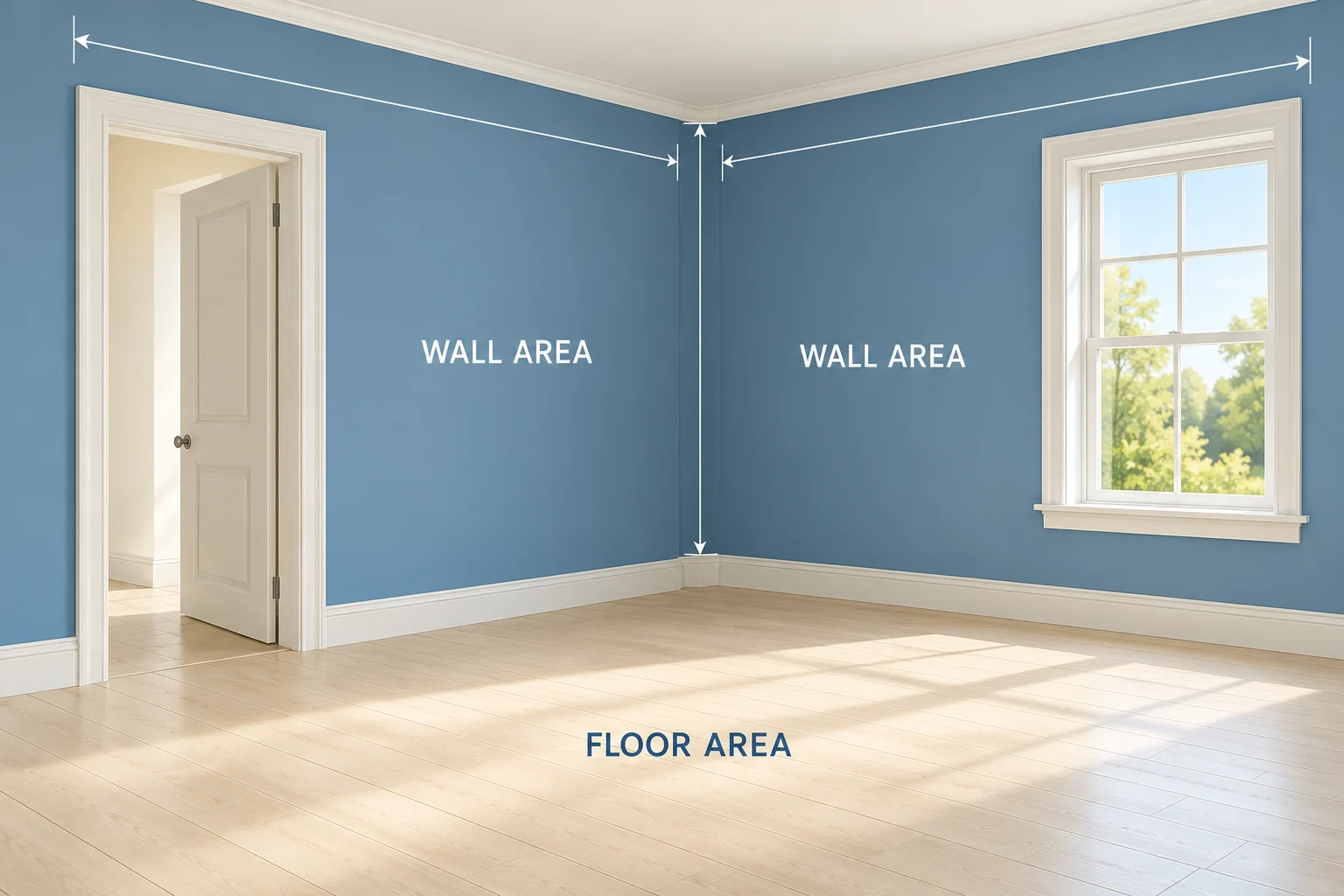
For a room quote, ask which walls, ceiling, closet surfaces, door faces, and trim pieces are included. If the contractor uses a fixed room price, you do not need to force it into a square-foot formula. You need a clear description of the result that price buys.
Why preparation changes the bill
Fresh paint follows the condition beneath it. Filling a few nail holes differs from repairing failed drywall tape, removing loose coating, addressing stains, or leveling a heavily patched wall. Ask the estimator to identify the actual repairs instead of leaving all of them under “standard prep.”
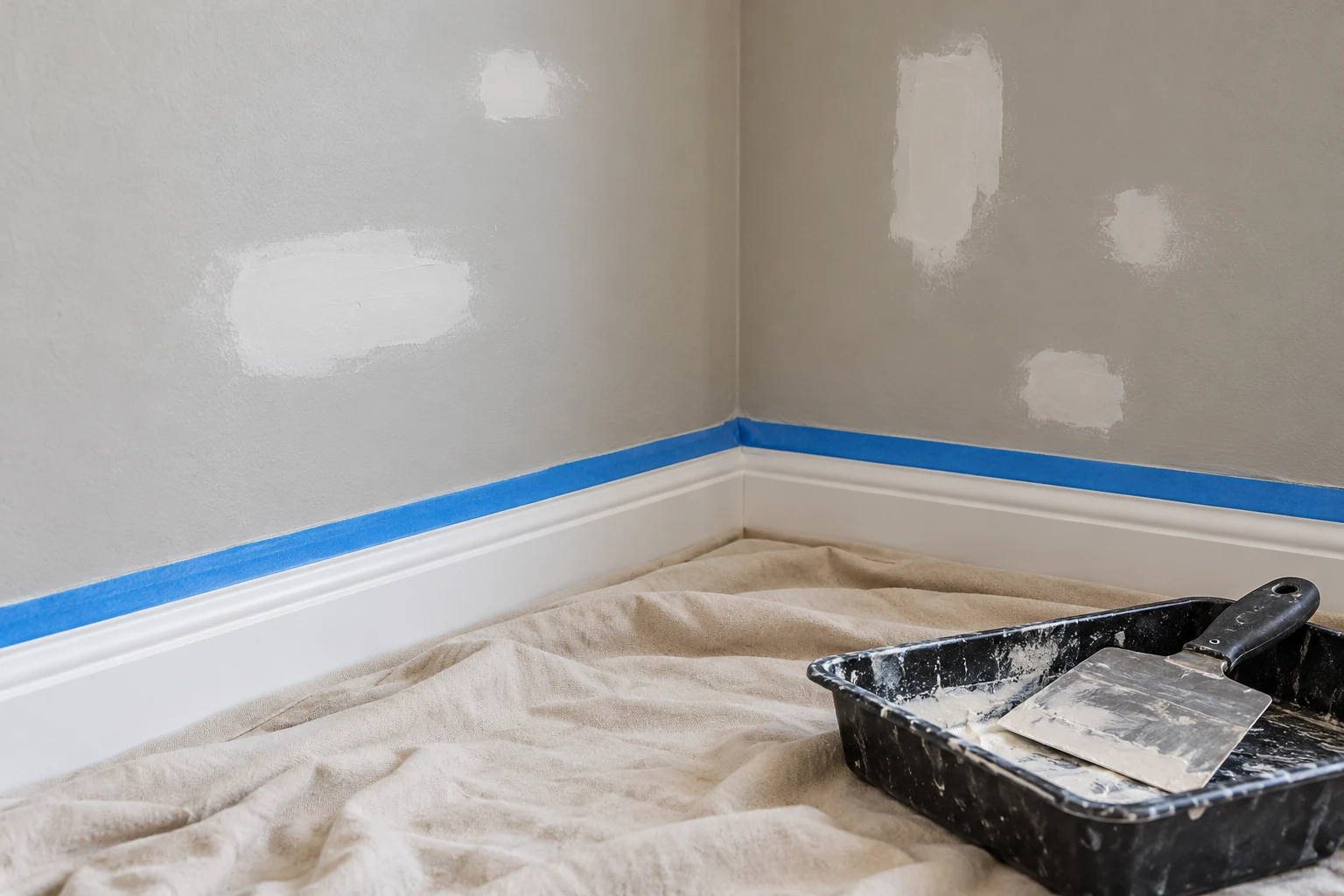
Describe the finish you expect under ordinary room lighting. A basic repaint over an existing texture is different from a smoother finish that requires broad skim coating. If prominent patches are a concern, have the painter explain what will remain visible after the proposed repair process. An extra coat alone is not a substitute for the right preparation.
Recurring water stains also need a separate conversation. Establish whether the cause has been resolved and what stain-blocking or surface repair is included. A painting proposal should not quietly stand in for a leak repair.
Older coatings can change the preparation scope
If preparation will disturb old paint in a pre-1978 home, discuss lead-safe work before anyone sands or scrapes it. EPA’s Renovation, Repair and Painting guidance explains the lead-dust issue and recommends lead-safe certified contractors for relevant projects. Confirm the applicable testing, containment, and cleanup scope instead of treating it as ordinary wall prep.
Labor depends on access and detail, not just gallons
A mostly empty room with straightforward walls gives a painter a different workday from an occupied home where furniture moves repeatedly and each room must return to use at night. Tall stairwells, extensive masking, numerous door openings, and intricate molding can increase handling and detail work without adding much floor area.
Trim and doors deserve particular attention. The preparation, edges, hardware, and selected coating can make them time-consuming even though their surface area is modest. State whether the door price covers one face or both, and whether frames, casings, and baseboards are part of the same line item.
There is no need to assume a fixed percentage of every painting bill is labor. Ask instead what conditions create extra work on this property and whether the quoted price includes materials. If you supply the paint, agree on who determines quantity and who pays when a product change or shortage causes another trip.
Specify the paint and the finished coverage
“Premium paint” is too vague for comparing proposals. Record the manufacturer, product line, sheen, and colors for each surface. Also identify where a separate primer is planned, especially for repairs, stains, bare areas, or a substantial color change.
Use the selected product’s coverage information to estimate gallons. Paintable area, number of coats, surface condition, and application method all affect the amount. A whole-home floor-area rate does not tell you how many gallons to buy.
Clarify both the proposed coat count and the expected finished appearance. If the chosen color needs more work to produce even coverage, establish how that will be priced before the first coat. This avoids a disagreement in which the painter has supplied the promised number of coats but the homeowner still sees the previous color.
Make the quotes comparable, then choose what to simplify
A short written scope is more useful than a low headline total. It should name the rooms and surfaces, repairs, primer and finish products, coats or coverage standard, protection, cleanup, and exclusions. Ask how concealed or additional repairs receive approval and what touch-up process applies at handover.
To reduce cost, request separate prices for optional surfaces rather than cutting every line indiscriminately. You might repaint worn walls now and retain sound ceilings, or defer a trim color change that requires extensive preparation. Ask whether clearing furniture yourself would reduce the quote, and agree on the required condition before moving anything.
The better value is the proposal that matches the surfaces you actually want refreshed and describes the preparation needed to make them look right. A cheaper rate with missing ceilings, unexplained repair limits, or a different paint specification is a different offer, not yet evidence of a saving.

Ethan Miller
Ethan Miller writes about home improvement, interior design, cleaning, and everyday living at Home & Living Daily. He shares practical tips and simple ideas to help readers create more comfortable and functional homes.