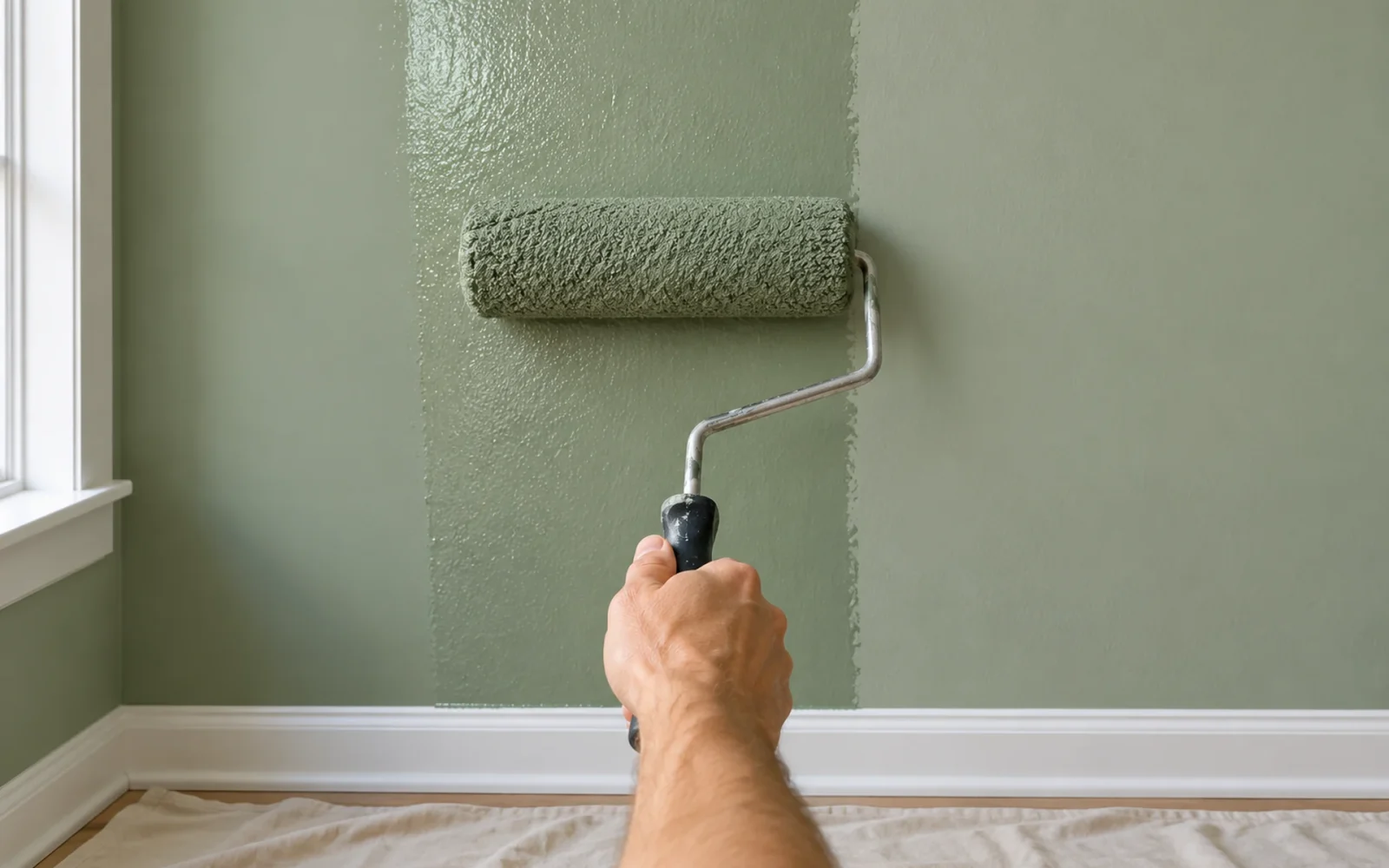
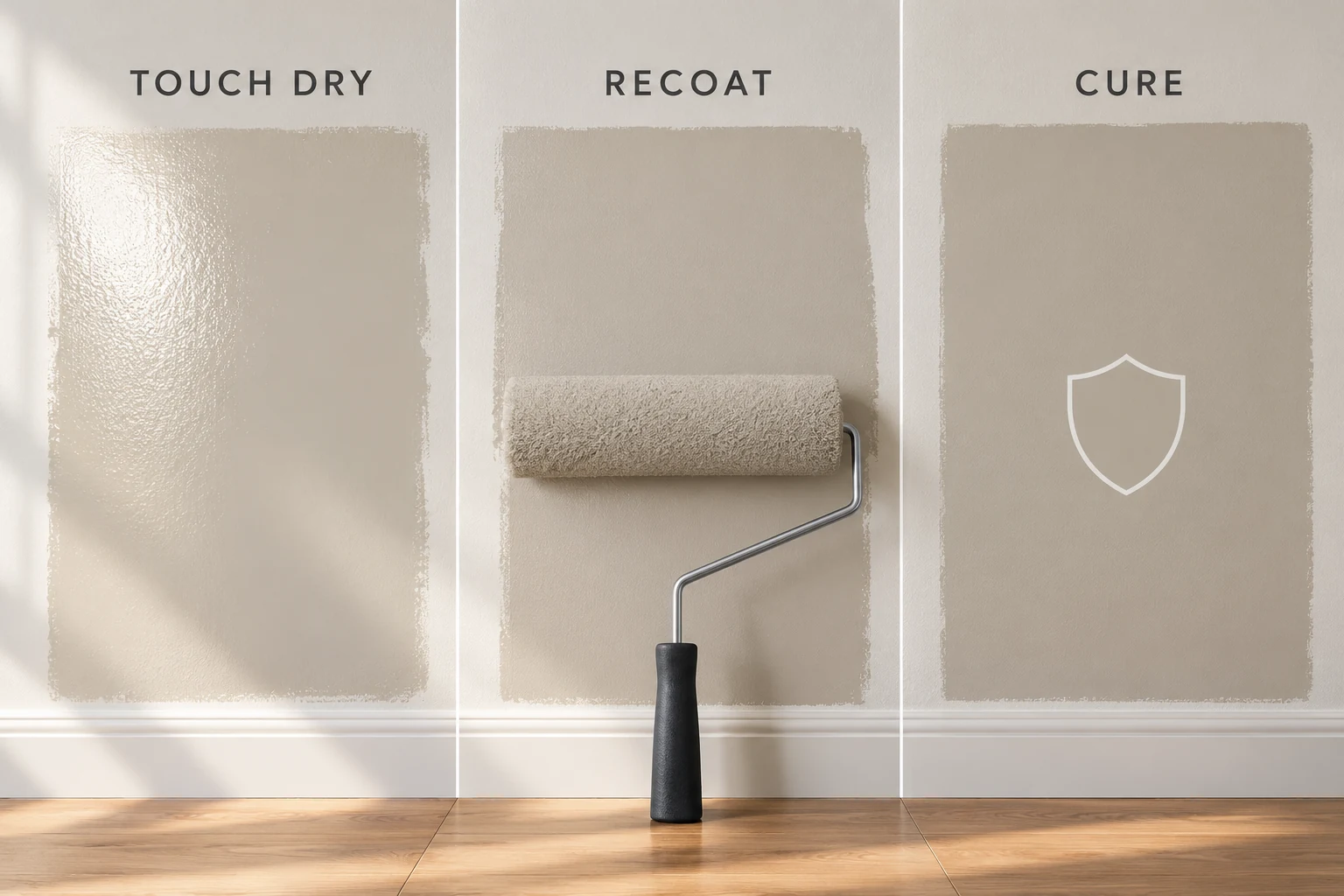
Many interior latex paints feel dry in about an hour and can be recoated after roughly four hours, but dry to the touch, ready to recoat, and fully cured are different stages. The exact product label and room conditions control the schedule. A surface that feels dry may still mark, stick, or soften under cleaning.
Start with the task you want to do next. Adding another coat, moving a sofa against the wall, closing a newly painted door, and washing a scuff all place different demands on a fresh paint film. One general “dry time” does not answer all four questions.
Which stage do you need to wait for?
| Stage | What it tells you | What it does not establish |
|---|---|---|
| Dry to the touch | The exposed surface has reached the product’s stated touch-dry condition | Readiness for another coat, scrubbing, pressure, or normal service |
| Ready to recoat | The product permits the next coat under its stated conditions | Full hardness or completion of the final coat’s curing period |
| Cured or ready for specified service | The film has developed the properties required for the specified use | A universal deadline shared by every paint, sheen, and application |
Read the current instructions for the exact paint, including any separate directions for cleaning, doors and trim, or cabinets. A primer’s recoat time also does not automatically become the topcoat’s time.
Published times are a starting point, not a substitute for the can
Glidden’s general drying guidance gives examples of about one hour to touch-dry and four hours to recoat for latex paint, versus six to eight hours and around 24 hours for oil-based paint. Those broad examples are useful for initial planning, but specific formulas can behave differently.
Water cleanup is not a promise of a quick second coat. Benjamin Moore’s ADVANCE high-gloss product listing, for example, specifies a four-to-six-hour dry time and a 16-hour recoat time. That distinction matters if you are painting trim or cabinetry with a waterborne alkyd and following a generic latex-wall schedule.
Full curing takes longer than the gap between coats. Rather than selecting one number from a general article, look for the manufacturer’s service and cleaning directions. If the instructions are unclear about the task you have planned, ask the manufacturer before pressing hardware, furniture, or adhesive against the finish.
Why your wall can take longer than the published time
Listed drying times normally assume specified application conditions. A cold wall, damp room, heavy coat, or poorly ventilated corner can behave differently from the sample conditions. Measure or assess the room you actually painted, including overnight conditions, instead of relying on the outdoor weather report.
Coat thickness and the surface underneath
A heavy application is not an efficient shortcut to coverage. Use the recommended spread rate, tools, and coat system. A previous coating, new repair, or differently absorbent patch can affect how the new layer behaves. If a wall has inconsistent preparation, simply waiting a little longer may not resolve an adhesion or surface problem.
Humidity, temperature, and air movement
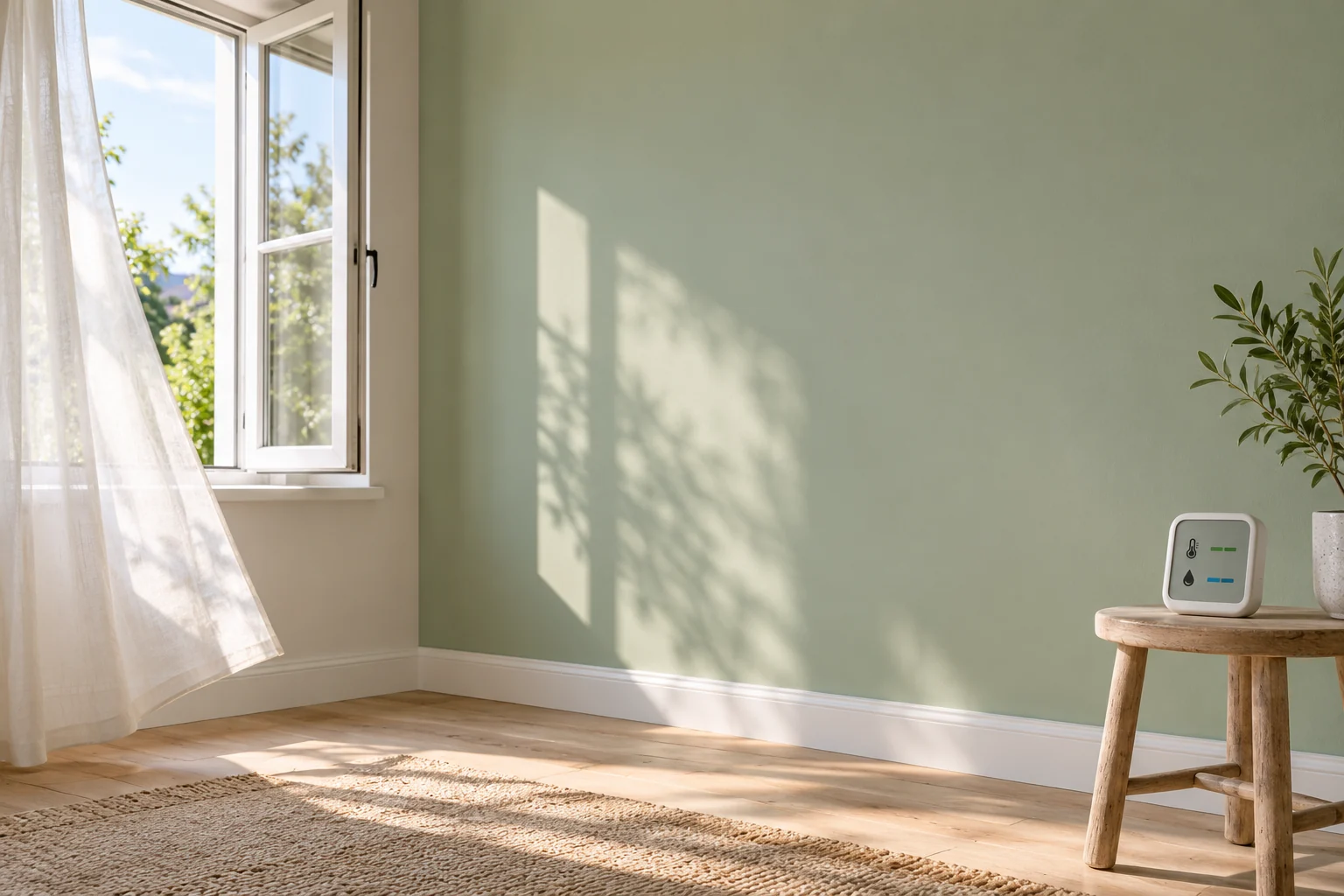
Stay within the product’s application and drying conditions. Moderate air movement and suitable humidity control may help, but do not point a heater at a wall or try to force the surface dry while assuming the film underneath is ready. Sherwin-Williams’ drying advice distinguishes improving drying conditions from accelerating the full curing process and advises against using heat as a shortcut.
Plan the next activity around the finish
For a second coat: start with the specified minimum recoat interval, then account for actual conditions. If the paint is still tacky or the manufacturer’s stated conditions have not been met, do not add another layer just because the clock has reached a number from a different product.
For doors, shelves, and furniture: distinguish light access from sustained pressure. A chair back, stacked object, closing door, or shelf item can stay in contact long enough to mark or bond to a film that feels dry in a brief touch. Follow the product’s return-to-service directions and keep newly painted surfaces separated where required.
For washing: use the product’s cleaning or cure guidance. Avoid testing a new wall by rubbing it repeatedly with a wet cloth. If a mark occurs before cleaning is allowed, ask how to handle it without damaging the finish.
A practical painting plan leaves the final coat time to develop before a room returns to its hardest use. Painting trim at the end of a busy moving day, for example, can create a pressure problem even when the walls were painted earlier.
Can you apply two coats in one day?
Sometimes, if the exact product’s recoat interval and actual conditions allow it. A quick-recoat wall paint may fit a morning-and-afternoon schedule. A product that needs 16 hours before recoating does not become a same-day two-coat product because it is water-based.
Include preparation, primer requirements, and the time the final coat is applied. “The painter finished today” does not mean every surface is ready for normal contact tonight.
Is dry paint enough to decide when you can sleep in the room?
No. Paint-film drying and room re-entry are separate questions. Follow the product’s ventilation and health instructions, not a touch test or odor alone. The EPA’s indoor-painting guidance addresses ventilation and exposure precautions as a separate part of the job.
There is no single room-use deadline that fits every coating, household, and ventilation setup. If you need a bedroom available on a particular night, choose the product and work schedule with that requirement in mind before starting.
The useful deadline is the one for your next activity on that particular coating. Keep the can or technical sheet available, note when the final coat went on, and give the finish the time its manufacturer specifies rather than treating a dry-feeling surface as permission for everything that follows.

Ethan Miller
Ethan Miller writes about home improvement, interior design, cleaning, and everyday living at Home & Living Daily. He shares practical tips and simple ideas to help readers create more comfortable and functional homes.