For a U.S. homeowner, $3,000 to $10,000 is a useful starting range for basement waterproofing, but a localized repair can cost less and a substantial exterior project can cost more. Fixr’s cost guide uses that range, while HomeGuide’s estimates put interior systems at $6,000 to $12,000 and exterior work at $10,000 to $18,000. These are published planning figures, not a quote for your house.
The first question is what the price includes. Sealing one leaking crack, installing an interior drain and sump pump, and excavating around the foundation are different jobs. A useful budget starts with the water problem and the proposed scope, then accounts for the work needed to put the house back together.
What does “basement waterproofing” mean in your quote?
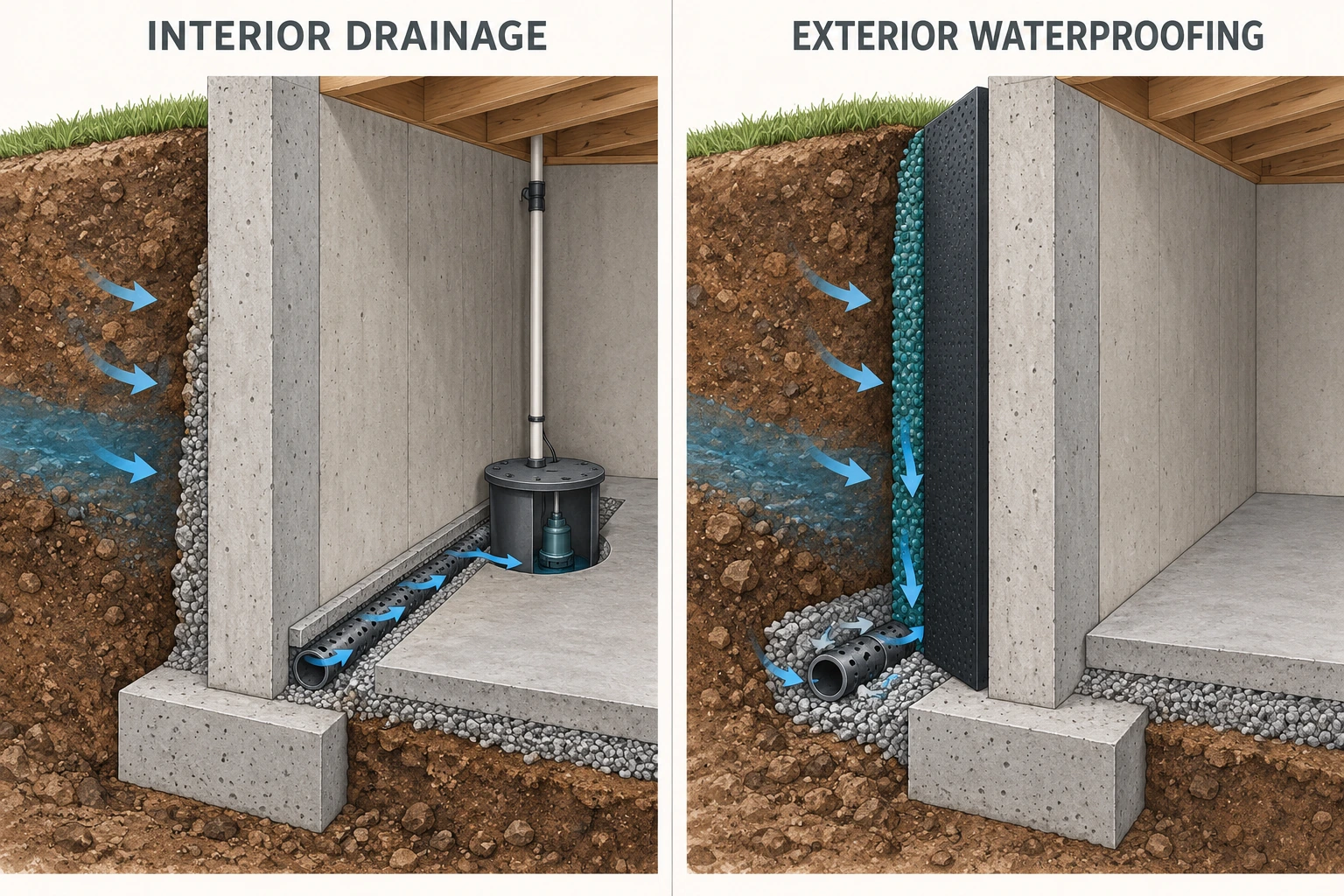
A contractor may use that term for a coating on an interior wall, a drainage system below the slab, or work on the outside of the foundation. Ask for the actual method before comparing totals.
With an interior drainage system, the purpose is to collect water and direct it to an outlet, often through a sump pump. That is different from coating the visible wall surface. Exterior waterproofing generally involves access to the outside of the foundation so the contractor can address the wall, its waterproofing layer, and drainage. Neither description tells you whether the price includes removing a patio or replacing a finished basement wall.
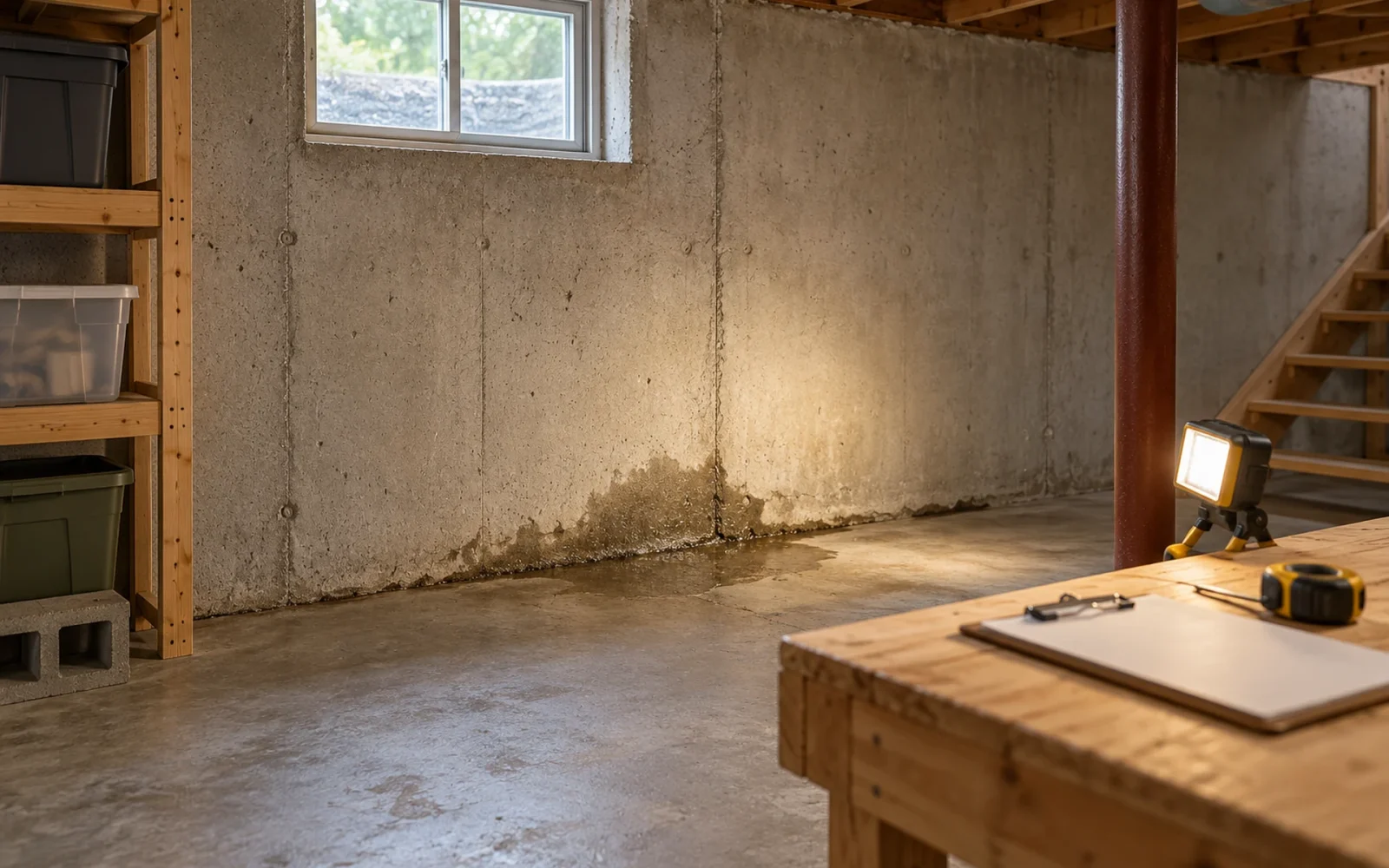
Also establish whether the problem is rainwater near the house, groundwater, a plumbing leak, or condensation. The University of Minnesota Extension’s basement-moisture guidance recommends checking gutters, downspouts, and grading before moving to drainage-system work when problems persist. That can change the scope of the job, although it does not mean every wet basement has an inexpensive fix.
Basement waterproofing cost by type of work
Use these figures to identify the scale and pricing unit of a proposal. They are not interchangeable, and a system price may already include components listed separately below.
| Work being priced | Published planning range | What to clarify |
|---|---|---|
| Crack injection | $250 to $1,000 per crack | Which cracks are included, whether sealing is appropriate, and whether structural evaluation is separate |
| Interior waterproof paint or sealant | $1 to $8 per square foot | The surface area being treated and the preparation included |
| Sump pump installation | $600 to $2,500 | Whether the basin, discharge piping, electrical work, and backup equipment are included |
| Interior perimeter drain | $40 to $120 per linear foot | The drain length, connection to an outlet, and concrete work |
| Exterior waterproof membrane | $4 to $7 per square foot | The wall area and whether excavation, drainage, and backfilling are separate |
| Exterior grading | $500 to $3,000 per project | The area being regraded and restoration of the surrounding yard |
| Interior waterproofing system | $6,000 to $12,000 | The combination of drains, pumps, wall treatments, and crack work included |
| Exterior waterproofing work | $10,000 to $18,000 | The depth and length of excavation, wall treatment, drainage, and site restoration |
A coating price is not a lower-priced version of a complete drainage system. It buys a different treatment. Before choosing the cheaper option, ask how the proposed work deals with the diagnosed water source and what happens if water finds another route into the basement.
Why square footage alone can give you the wrong budget
A 1,000-square-foot basement does not necessarily need 1,000 square feet of waterproofing work. A perimeter drain is usually measured along the wall, while a wall membrane is measured over the wall surface. Floor area is a third measurement.
For example, a simple rectangular basement measuring 25 by 40 feet has 1,000 square feet of floor area and 130 linear feet of perimeter. Using the published interior-drain range of $40 to $120 per linear foot gives an illustrative drain-line calculation of $5,200 to $15,600. That arithmetic is not a project quote: actual drain length may differ, and the contractor must state what the rate includes.
A quote for one wet wall can therefore look very different from a full-perimeter proposal for the same house. More corners, inaccessible wall sections, stairs, and finished rooms can also change the work. For exterior access, foundation depth and what sits above the excavation area matter as well.
Ask the estimator to mark the proposed drain or treatment area on a sketch. Then confirm whether the price is per crack, linear foot, treated square foot, or a complete package. Do not automatically add a pump allowance to a package that already includes one.
Costs that can sit outside the waterproofing price
Opening up and restoring finished space
Work inside a finished basement may require removing flooring, baseboards, or parts of a wall. Check whether the contractor’s promise to restore the area means patching concrete only or also replacing finished surfaces. Moving appliances, protecting belongings, hauling debris, and cleaning up should have a clear place in the scope.
Keep the water-management budget separate from the cost of new finishes. If you plan to replace the floor afterward, our guide to choosing flooring for different rooms explains why basement moisture conditions and the flooring manufacturer’s installation requirements need to be checked first. A water-resistant surface does not remove the need to resolve an ongoing moisture problem.
Excavation access and the yard afterward
Exterior access may be straightforward beside an open lawn and much more involved under concrete steps, a deck, or established landscaping. Ask whether removal, disposal, backfilling, grading, and replacing disturbed surfaces are included. Otherwise, a waterproofing quote and a separate restoration bill may describe only parts of the same project.
Pump discharge, electrical work, and local requirements
A pump needs somewhere suitable to send the water. Have the contractor identify the discharge route and explain any work needed beyond the basement. Confirm the power supply, whether a new electrical circuit or outlet is necessary, and who handles required permits or inspections. Local requirements and the installation determine what applies.
The Building America Solution Center’s drainage guidance emphasizes carrying runoff away from the foundation rather than allowing it to flow back toward the building. A pump or drain specification is incomplete without a workable destination for the water.
Repairs the waterproofing system does not cover
If an inspection identifies damaged materials, suspect structural movement, or contamination, establish who evaluates and prices that work. A wall coating or drain installation should not be treated as proof that every existing defect has been repaired. Ask for separate line items when the responsibilities belong to different trades.
How to compare waterproofing quotes on the same basis
Start with the diagnosis, not the discount. If one company proposes work along a single wall and another proposes a full-perimeter system, the difference in total price does not tell you which plan is better. Ask each contractor to explain the evidence for its proposed scope and what it expects the work to accomplish.

A useful written estimate should let you answer these questions:
- Where is the water coming from? Ask what observations support the diagnosis and whether simpler drainage corrections have been considered.
- Exactly what will be installed? Look for measured lengths or areas, named system components, and a discharge plan.
- What will be opened and put back? Identify the concrete patching, wall and floor restoration, yard work, and disposal included.
- What can change the price? Ask how hidden conditions and extra work are approved and billed.
- What does the warranty actually cover? Read the remedy, exclusions, maintenance obligations, and any transfer conditions rather than relying on the word “lifetime.”
Get more than one written proposal where practical, and ask contractors to price the same scope when their diagnoses agree. When the diagnoses differ, resolve that disagreement before treating the lowest bid as a saving. An independent assessment may be worth considering if the scope remains unclear or structural concerns are raised.
You may be able to reduce preparation costs by clearing storage or making access easier, if the contractor agrees. If the concern is roof runoff, correcting an identified gutter or downspout problem may be a more relevant first expense than buying an interior coating. Avoid cutting the required scope simply to reach a national average that was never a price for your particular house.
Will insurance pay for basement waterproofing?
Do not assume an insurance claim will fund a preventive waterproofing project. Coverage for a particular water-damage event and payment for a system intended to prevent future seepage are separate questions. The Maryland Insurance Administration’s consumer guidance explains that groundwater seepage is generally excluded under homeowners policies and is often treated as a maintenance issue.
Ask your insurer about the diagnosed cause, the relevant policy wording, and any applicable endorsements before subtracting expected insurance money from your budget. A contractor’s warranty also does not replace your insurance policy or establish that a claim will be covered.
The stronger proposal is the one that explains the water source, matches the treatment to it, and leaves you with a clear price for the house you will have afterward. A lower total is a meaningful saving only when the necessary work and responsibility are still there.

Ethan Miller
Ethan Miller writes about home improvement, interior design, cleaning, and everyday living at Home & Living Daily. He shares practical tips and simple ideas to help readers create more comfortable and functional homes.