Before buying, confirm four things: exterior-use approval, performance for your climate, suitable wet traction, and an installation system that drains water and accommodates movement.
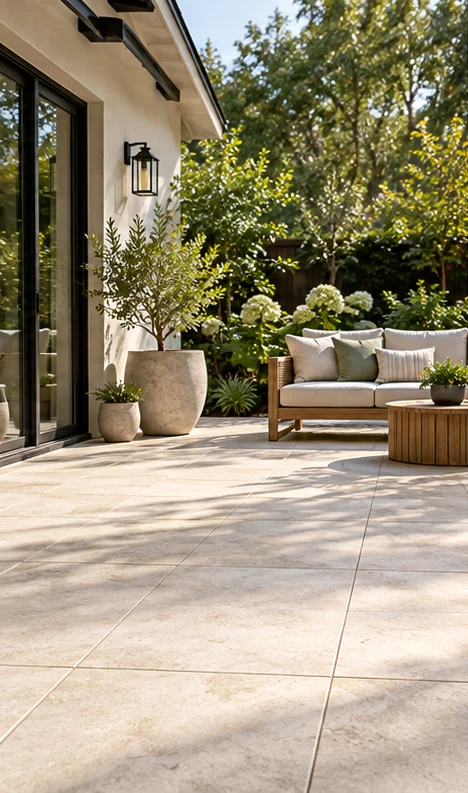
Does ceramic tile mean the same thing as porcelain?
Porcelain is a type of ceramic tile. In everyday shopping, “ceramic” often refers to glazed non-porcelain products, while porcelain generally has a denser body and lower water absorption. That distinction is useful, but it is not enough to choose a patio floor: outdoor performance depends on the specific tile and the whole assembly.
Do not assume an indoor floor tile is outdoor-ready because it is porcelain, matte, or thick. Read the manufacturer’s technical sheet and installation instructions. Look for an explicit exterior-floor recommendation and suitability for the climate and exposure where you live. In a freeze-thaw region, ask for the manufacturer’s freeze-thaw information and confirmation that the product is approved for that use.
What to check on a patio tile’s product sheet
- Exterior-floor use: The manufacturer should approve the exact tile for exterior floor applications, not only walls or covered indoor spaces.
- Freeze-thaw performance: If your patio can freeze, confirm the tile’s documented frost or freeze-thaw performance and follow the manufacturer’s installation requirements. A frost-resistant tile may still fail if water is trapped below it.
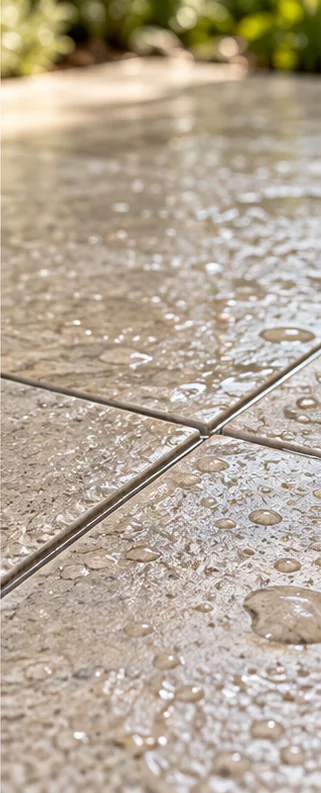
- Wet traction: Ask the manufacturer for the product-use classification under ANSI A326.3, especially Exterior, Wet (EW), and whether it suits the patio’s slope, exposure, and expected use. The often-quoted DCOF value of 0.42 is associated with level interior floors expected to be walked on when wet; it is not a universal outdoor-patio threshold. No traction number guarantees safety in every condition.
- Strength and intended traffic: Confirm the tile is rated for the expected foot traffic and any furniture or equipment loads. Do not use wall tile underfoot.
- Maintenance and surface: A highly textured surface can improve grip but may hold dirt. Review cleaning guidance and, if possible, inspect a sample when wet.
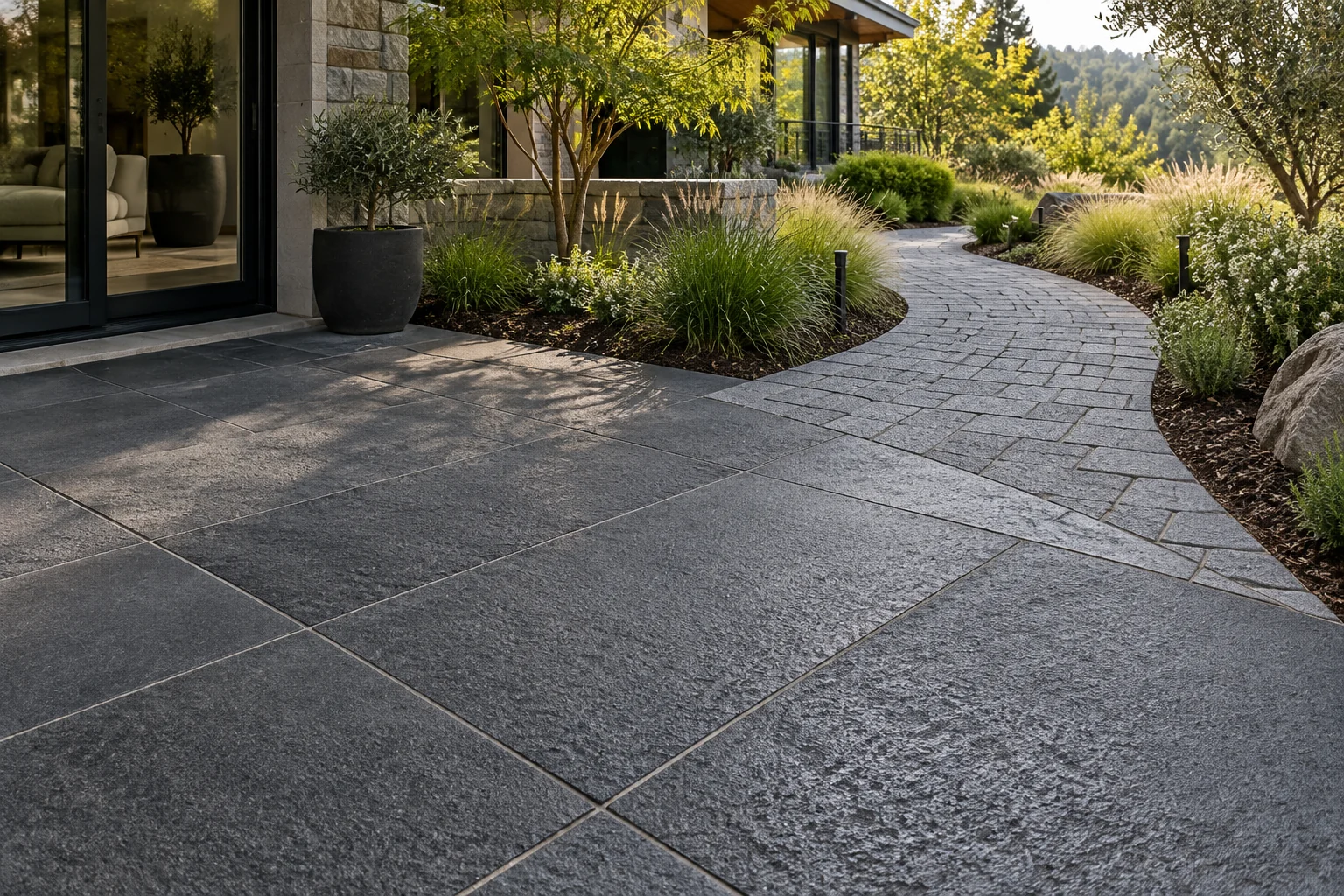
Why drainage and installation matter as much as the tile
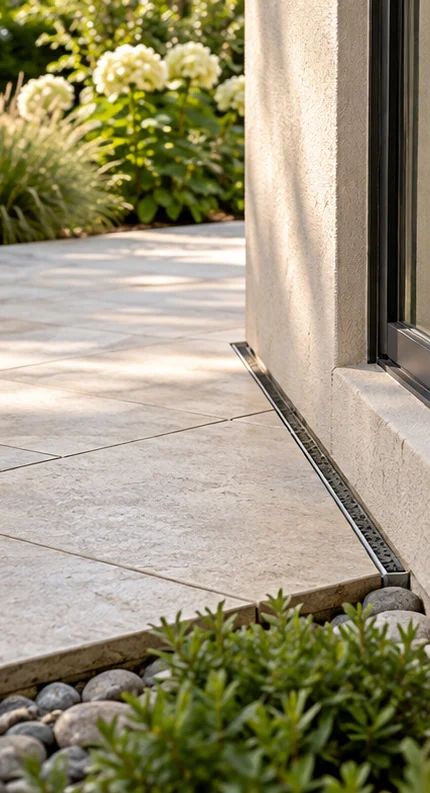
Rain can enter through grout joints and reach the setting bed or substrate. If the assembly stays saturated, freeze-thaw cycles and temperature changes can loosen or crack tile even when the tile itself has passed a frost test. The Tile Council of North America (TCNA) emphasizes drainage, appropriate exterior materials, and movement accommodation for outdoor installations.
For a bonded patio over concrete, have the installer assess whether the slab is sound, properly sloped to drain, and suitable for tile. Avoid creating a low spot against the house or directing water toward the foundation. Use mortar and grout approved for the exterior conditions, and plan for movement joints at the perimeter and through the tile field according to the project and industry guidance. A membrane does not eliminate the need for those joints.
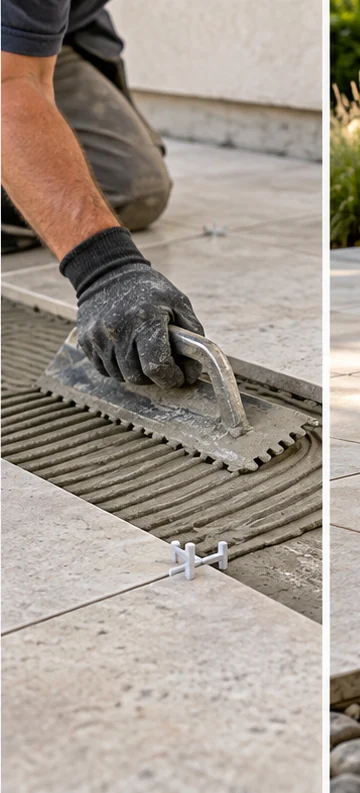
Good mortar coverage matters too. TCNA describes better than 95% mortar contact for exterior walkways. Hollow spots can collect water and leave tile less supported, so the setting technique and substrate preparation should follow the selected system’s instructions.
When outdoor ceramic tile may not be the right choice
Skip a tile if its label or technical sheet limits it to interior floors, walls, or covered spaces that do not experience freezing. Choose another material if the manufacturer cannot confirm exterior suitability, the surface is too slick for the site, or the patio cannot be built with reliable drainage and movement joints.
Also be cautious about tiling an old slab with cracks, movement, poor drainage, or unknown coatings. Tile follows the behavior of what is below it. An experienced tile contractor can check whether the slab and proposed system are appropriate before materials are ordered.
A quick decision checklist
- Does the manufacturer approve this exact tile for exterior floors?
- Is it suited to your local freeze-thaw exposure and expected traffic?
- Has the manufacturer identified it for Exterior, Wet use, and does the finish fit the site?
- Can the slab or base drain properly, with exterior-rated setting materials and movement joints?
- Can the installer follow the product and system instructions, including the required mortar coverage?
If the answer to each is yes, ceramic tile can be a practical patio finish. If one is uncertain, pause and get written product guidance or ask a qualified tile installer to review the site. The safest choice is the tile and installation system approved together for your particular patio—not a material label considered on its own.
Sources

Ethan Miller
Ethan Miller writes about home improvement, interior design, cleaning, and everyday living at Home & Living Daily. He shares practical tips and simple ideas to help readers create more comfortable and functional homes.