Better locks improve home security when they address the weaknesses in your existing doors. That might mean replacing an unreliable deadbolt, strengthening its connection to the frame, upgrading a vulnerable cylinder, or changing who has access to your home.
Start with the door you have before choosing new hardware. A certified lock fitted to a sound, properly aligned door is a stronger investment than an impressive-looking lock attached to damaged timber. Smart features can then help you manage access and keep doors locked consistently.
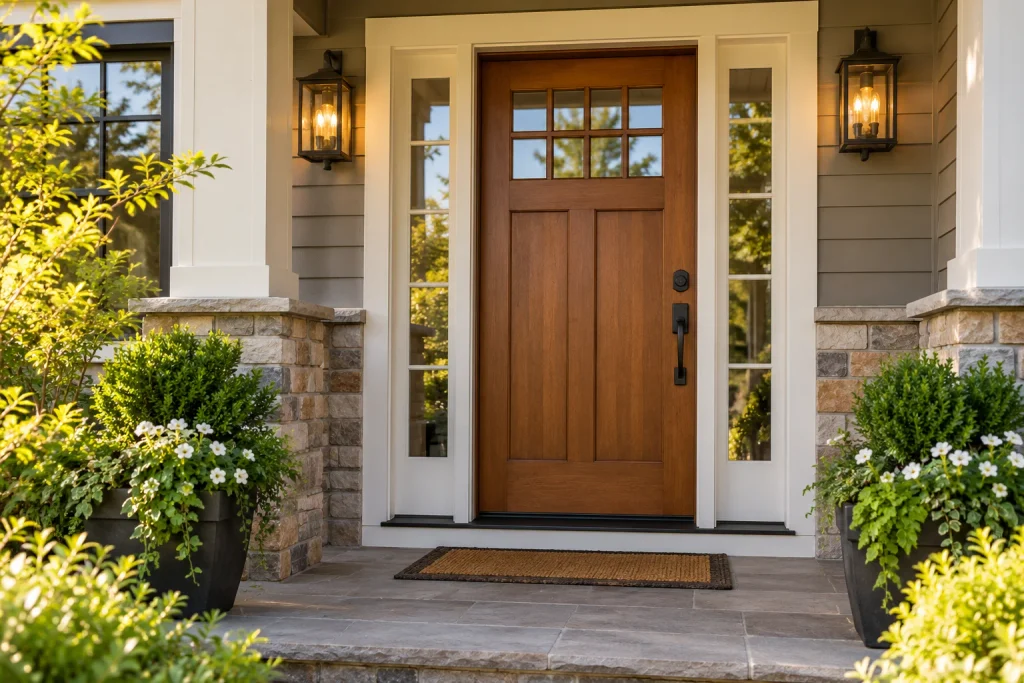
Inspect Your Exterior Doors First
Walk through each exterior entrance, including the back door, side door, and door connecting an attached garage to the house. Close and lock each one normally.
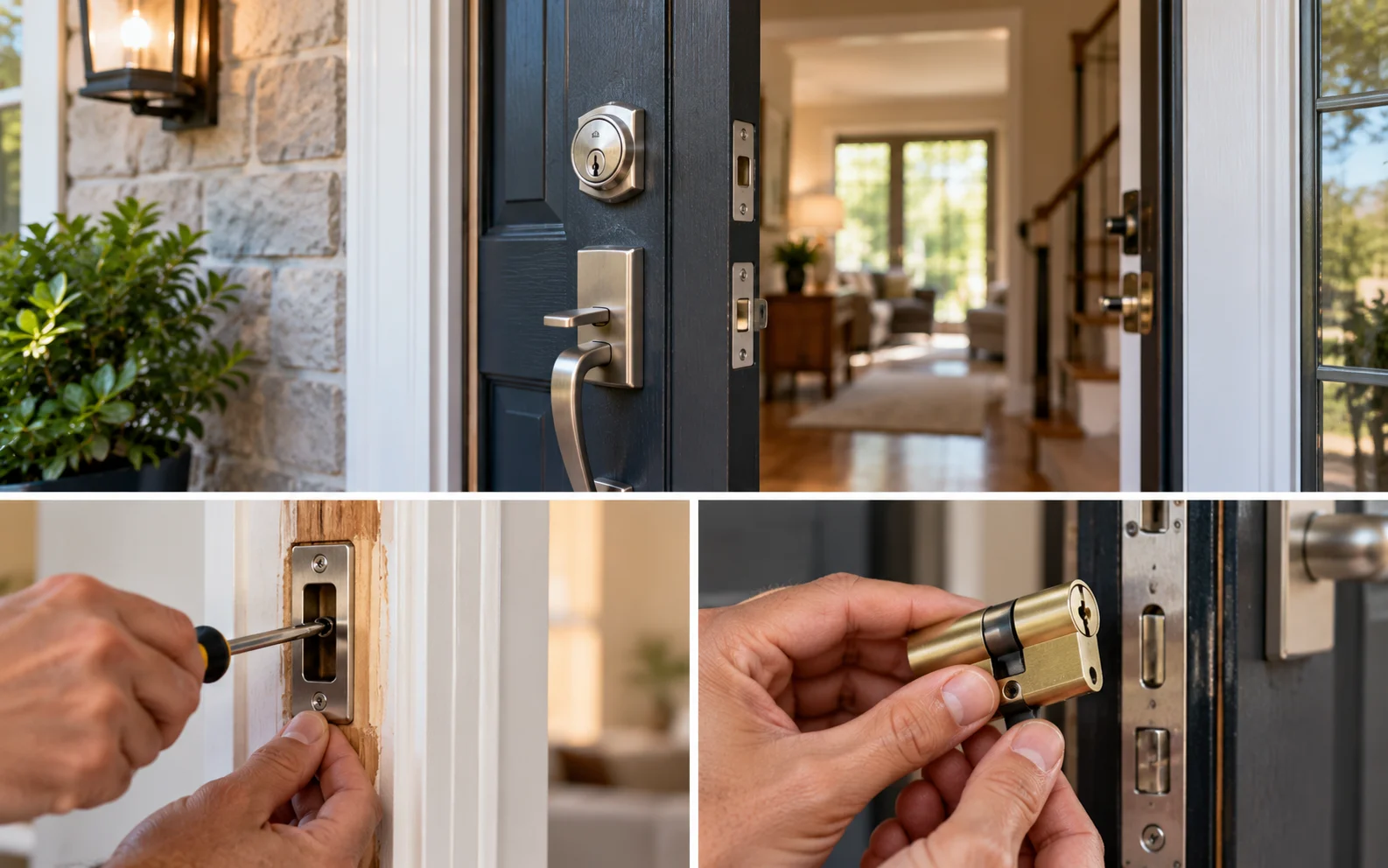
Look for loose hardware, damaged wood around the lock, a moving strike plate, or a door that needs to be lifted or pushed before the bolt engages. The strike plate is the metal fitting on the frame that receives the bolt.
Try the lock with the door open, then closed. If it operates smoothly while open but becomes difficult when closed, alignment may be the problem. Replacing the lock without correcting that alignment can leave the new hardware struggling in the same way.
Also identify the locking system. A conventional deadbolt, a mortise lock fitted into the door edge, and a multipoint mechanism need different replacement parts. Photograph the door edge and existing hardware before shopping so a supplier or locksmith can identify the appropriate upgrade.
Choose a Lock with Verified Security Performance
For an exterior door designed to accept a separate deadbolt, choose a certified model intended for that application. A basic keyed knob should not be your only security upgrade when the door can accommodate a suitable deadbolt.
Look for an identifiable certification on the exact model. Words such as “heavy-duty” and “high-security” are less useful without a named standard or test program.
In the United States, the BHMA Certified Secure Home label rates residential locks separately for security, durability, and finish. Each category receives an A, B, or C, with A representing the highest performance level within that category. An AAA product has achieved an A in all three.
For an exterior entrance, I would prioritize an A security rating, then consider durability and finish performance for the door’s usage and weather exposure.
Other markets use different standards. In the UK, examples include BS 3621 for relevant mortise locks and SS 312 Diamond certification for euro-profile cylinders. These apply to particular hardware types; they are not interchangeable ratings for every lock.
Match the Hardware to the Door
Before ordering, compare the lock’s installation specifications with:
- The door’s thickness.
- The existing hole dimensions.
- The backset—the distance from the door edge to the center of the lock opening.
- The lock type and any required door handing.
- The available space around handles, trim, and glazing.
For a multipoint door, select components compatible with the existing mechanism and doorset. Avoid adding a conventional deadbolt simply because it worked on another door; the door’s construction may not support that modification.
Strengthen the Strike Plate and Door Frame
The bolt needs a secure place to engage. If the strike plate is loose or the surrounding frame is damaged, upgrading only the lock leaves a significant weakness unresolved.
On a suitable timber-framed entrance, a compatible reinforced strike or frame-reinforcement system can improve the support around the bolt. Use the specified fasteners and fitting method so the reinforcement connects securely to sound material.
Screw length alone does not establish a good installation. The fasteners must suit the door assembly, and damaged or enlarged fixing holes may need repair. Driving longer screws into weakened timber is not a substitute for restoring the frame.
Have cracked, rotten, or substantially damaged sections assessed before installing new hardware. Hinges also need secure attachment and correct alignment.
For metal, uPVC, composite, or certified doorsets, use modifications approved for that construction. Their reinforcement and fixing requirements can differ from those of a conventional wooden frame.
Upgrade Vulnerable Cylinders and Control Old Keys
A euro-profile cylinder—the key-operated component used in many multipoint doors—can sometimes be replaced without replacing the entire mechanism. This is useful when the mechanism works well but the cylinder lacks suitable attack resistance.
Choose a certified replacement of the correct length. A cylinder that protrudes excessively beyond the exterior handle or protective fitting deserves attention. Have the cylinder and surrounding hardware assessed together rather than relying on an “anti-snap” description alone.
Separately, consider who may still possess a working key.
When to Rekey
Rekeying changes which key operates a compatible lock while retaining the main hardware. It is appropriate when the lock remains sound and sufficiently secure, but you need to remove access from old keys.
Consider it after moving into a home, losing a key, or discovering that copies may be held by people who no longer need access.
When to Replace
Replacement makes more sense when the hardware is damaged, unreliable, unsuitable for an exterior entrance, or below the security performance you want.
Rekeying does not strengthen a weak lock. Likewise, fitting stronger hardware while retaining uncontrolled key access solves only part of the problem. Choose the work that addresses both the physical condition and access history.
Use Smart Locks to Improve Access Management
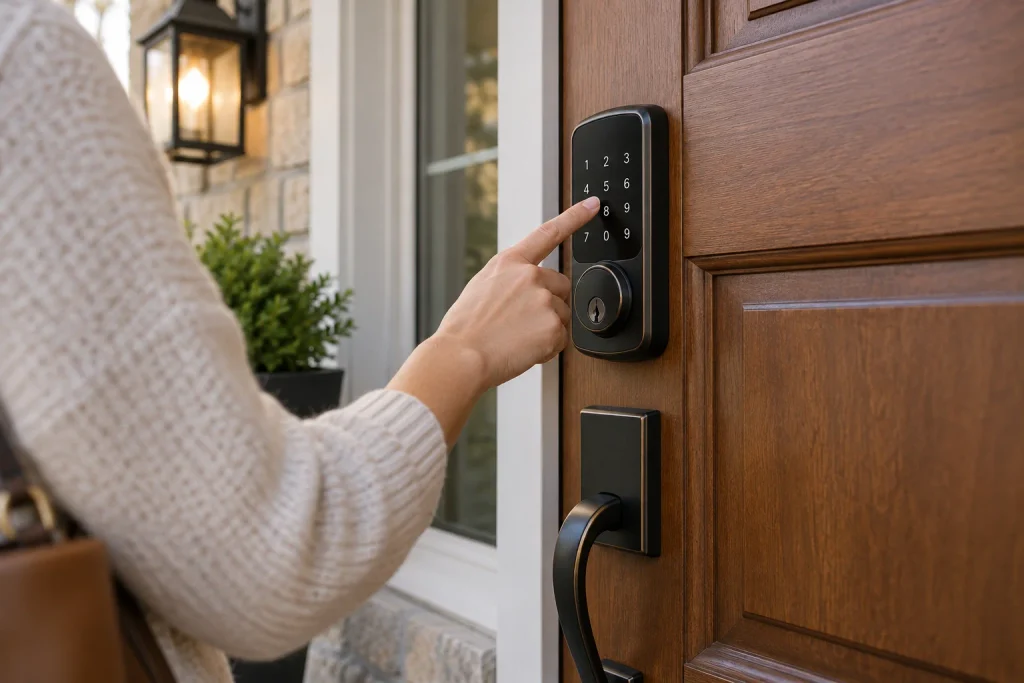
A smart lock is particularly useful when several people need entry at different times. Its value comes from making access easier to grant, review, and remove.
Look for functions that solve your household’s actual needs:
- Individual access codes, so family members and visitors do not share one permanent code.
- Scheduled or temporary access, where supported, for cleaners, dog walkers, or short visits.
- Activity records, to review use of particular credentials.
- Lock-status notifications, to help identify a door left unlocked.
- Automatic locking, to support a consistent locking routine.
For example, a scheduled code can allow a cleaner access during an agreed appointment without handing over a permanent key. Remove that access when the arrangement ends.
Read what the lock’s status information actually means. A report that the bolt is extended is different from confirmation that the door is closed. If door-position monitoring matters to you, choose a model that explicitly supports it.
Check Physical Security Before App Features
Assess a smart lock’s mechanical certification and installation requirements as carefully as those of a traditional lock.
If a retrofit device retains your existing bolt, cylinder, and strike, those components still determine much of the physical protection. Repair or upgrade weak hardware before relying on the connected features.
Also check the backup-entry method and low-battery warnings. Depending on the product, backup access may involve a physical key, external emergency power, or another specified procedure.
Plan for Connectivity and Account Security
Local operation and remote control can have different dependencies. Some battery-powered locks retain local access during an internet outage while losing remote functions. Confirm the behavior of the exact model, including any powered bridge or hub it requires.
Protect the associated account with a unique password and enable multifactor authentication where available. Install firmware and app updates promptly, and check how long the manufacturer plans to provide security updates.
Keep administrator access limited to people who need to change settings or manage users. Ordinary household access should not automatically include those privileges.
Give Secondary Entrances Equal Attention
After improving the main entrance, address the other doors leading into the house.
Sliding patio doors need a functioning lock and suitable protection against lifting, where applicable. Use hardware designed for the door’s construction and confirm that the rollers, frame, and closing alignment remain in good condition.
For doors with glass panels or adjacent glazing, assess the complete entrance. A stronger lock may leave another weakness nearby. Suitable glazing and doorset improvements may be part of the solution.
Preserve straightforward emergency escape. Choose locking arrangements that occupants can operate quickly from inside, and assess any additional bolts or keyed interior mechanisms against applicable requirements. Everyone in the household should know how to unlock the exit doors.
Test the Installation and Maintain It
A security upgrade is complete only when the door locks reliably during everyday use.
After installation, test the lock from both sides with the door open. Then close the door and repeat the test. The bolt should extend and retract smoothly without lifting the door, forcing the key, or pulling hard on the handle.
For a smart lock, also test permitted access codes, revoked codes, automatic locking, and the backup-entry method. Confirm what happens when connectivity is unavailable using the manufacturer’s recommended procedure.
Recheck the hardware when operation changes. New stiffness, loose fixings, or repeated locking errors are reasons to investigate alignment or wear. Maintain the lock with the manufacturer’s recommended products rather than applying a general lubricant indiscriminately.
Conclusion
I would begin with sound doors and frames, certified locking hardware, and control over every working key. Add smart access management where it makes family routines or visitor access easier to handle. That order gives each upgrade a clear purpose and produces a door you can secure reliably every day.

Ethan Miller
Ethan Miller writes about home improvement, interior design, cleaning, and everyday living at Home & Living Daily. He shares practical tips and simple ideas to help readers create more comfortable and functional homes.