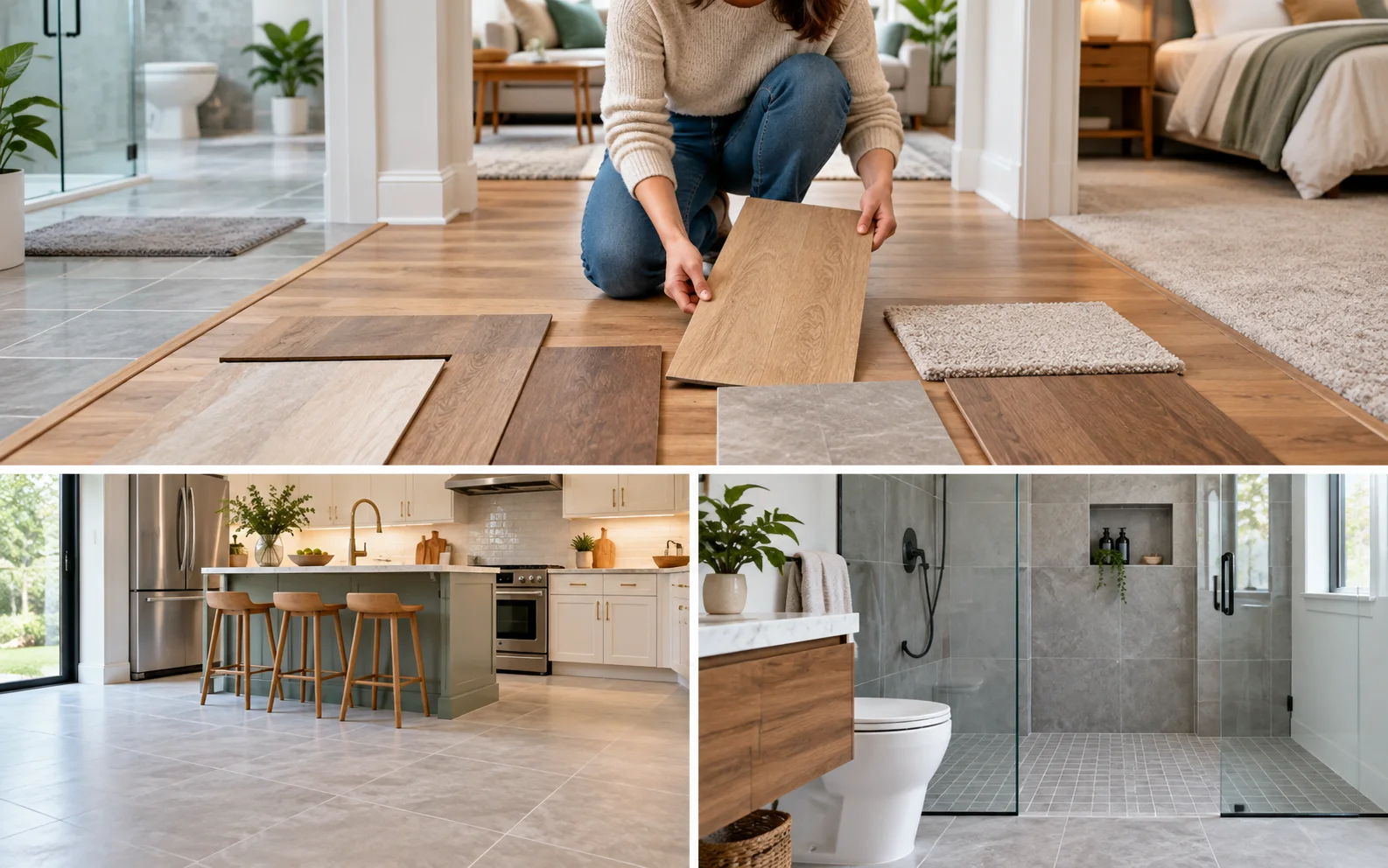
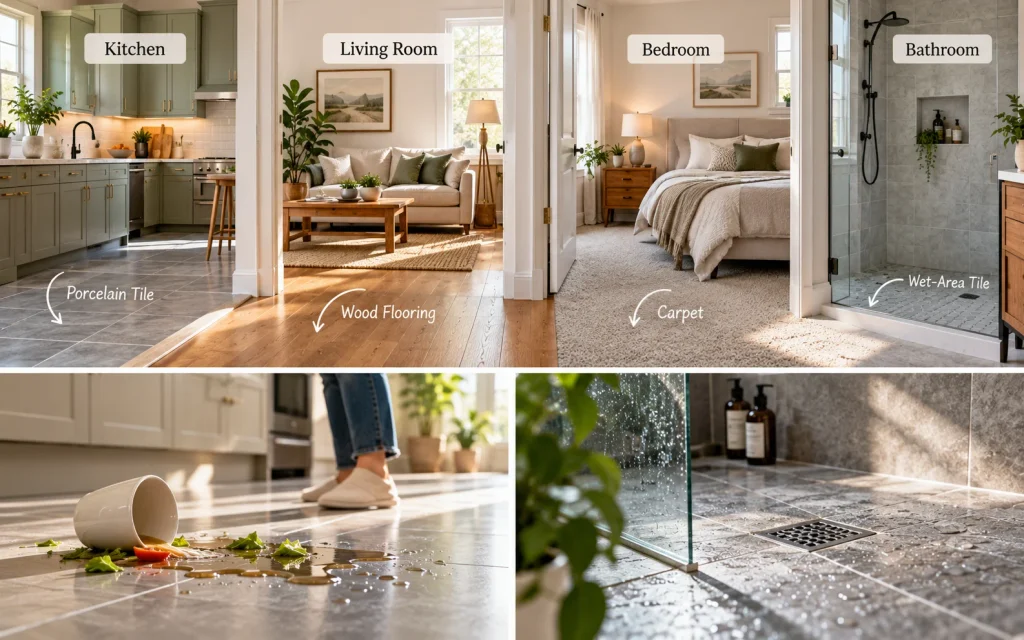
Choose flooring by matching the material to the room’s daily demands. Kitchens need surfaces that handle spills and frequent cleaning. Bathrooms need suitable wet-area flooring and careful moisture protection. Bedrooms benefit from softness and quiet, while entryways need to withstand wet shoes and tracked-in grit.
For many homes, a practical combination is porcelain tile in wet areas, wood or durable plank flooring in shared living spaces, and carpet in bedrooms. The right mix depends on how you use each room, the condition of the floor underneath, and the maintenance you are willing to do.
Start with the Room’s Most Important Requirement
Before comparing colors, identify the condition most likely to cause problems. In a bathroom, that is repeated water exposure. In a home office, it may be a chair rolling across the same patch of floor every day.
Then consider comfort and upkeep. A hard surface can make cleaning easier but may feel uncomfortable during long periods of standing. Carpet can make a room more comfortable, but it requires a different cleaning routine.
Also distinguish between the main plank materials. Engineered wood has a real wood surface over a layered construction. Laminate uses a decorative surface to reproduce the appearance of wood or other materials. Luxury vinyl plank, often called LVP, is a vinyl-based alternative. Similar-looking samples can have very different installation and care requirements.
Kitchen: Balance Spill Resistance with Comfort
For a busy kitchen, I would start by comparing floor-rated porcelain tile with luxury vinyl approved for kitchen use.
Porcelain is a strong choice when you want a durable surface that tolerates frequent cleaning. Choose a product intended for floors and suitable for the conditions near the sink and cooking area. A polished surface may look appealing in the showroom, but water and grease make traction an important consideration.
Vinyl is worth considering when you prefer a plank appearance or find tile too hard underfoot. Compare physical samples rather than assuming every vinyl floor feels cushioned; rigid-core products can still feel quite firm.
Wood can work in a kitchen when you value continuity with adjoining rooms and are prepared to clean spills promptly. It needs more attention around the sink, dishwasher, and refrigerator. Engineered construction does not make the wood surface immune to water.
Water-resistant laminate is another possible option, but the specific product must permit kitchen installation. Check how exposed edges and expansion gaps should be finished. The floor’s moisture performance depends partly on those details.
Bathroom: Choose for Water Exposure and Wet Feet
Porcelain tile is my first choice for a bathroom because it offers a wide range of floor products suited to wet conditions. Select the tile by its stated application and slip-resistance information, rather than judging it solely by how textured or matte it looks.
The shower floor needs particular attention. A tile suitable for the main bathroom floor may not be suitable inside the shower. Smaller tiles can make it easier to follow the slope toward a drain, but size alone does not establish that a product is appropriate.
The installation beneath the tile is equally important. Tile and sealed grout do not, by themselves, create a waterproof assembly. Shower areas need an appropriate waterproofing system, including properly treated joints, corners, and penetrations.
For a bathroom outside the shower enclosure, vinyl can be an alternative if the manufacturer approves it for that use. Follow the required treatment around the perimeter and fixtures. Do not extend a bathroom-approved plank product into a shower or wet room unless that exact application is permitted.
I would generally leave solid wood and ordinary laminate out of bathrooms with frequent splashing.
Living Room and Dining Room: Choose for Daily Use and Design Continuity
Wood is a compelling choice for living and dining rooms when its natural appearance is a priority. Solid wood offers opportunities for future sanding and refinishing. Engineered wood provides a real wood surface with a construction that generally moves less as humidity changes, although refinishing options depend on the product.
For a household with frequent spills, pets, or intensive cleaning, compare laminate and luxury vinyl alongside wood. Look at the particular floor’s scratch, stain, and moisture provisions. A broad “durable” label does not tell you how it will respond to dragging furniture or sharp objects.
In a dining room, moving chairs deserve attention. Fit suitable protectors to chair legs and keep them clean so grit does not become trapped underneath.
Carpet also works in a living room where softness is the main priority. For a space that regularly hosts meals or children’s snacks, I prefer a hard floor with a securely positioned area rug. That keeps the seating area comfortable while leaving the surrounding floor easier to clean.
Bedroom: Put Comfort and Quiet First
Carpet is a strong bedroom choice when you want a soft surface for bare feet and a more comfortable setting around the bed. Choose the carpet and cushion together: the thickest cushion is not automatically the correct one for the carpet.
A guest bedroom with light use can suit a softer construction. A child’s bedroom may benefit from a carpet intended for more activity, with clear instructions for cleaning spills.
If you prefer a hard surface, wood, laminate, or vinyl can all provide a useful starting point. A rug beside the bed adds softness without covering the whole room. Use a backing or rug pad compatible with the floor, and position it so its edges do not obstruct the walking route.
Entryway, Hallway, and Mudroom: Plan for Grit and Wet Shoes
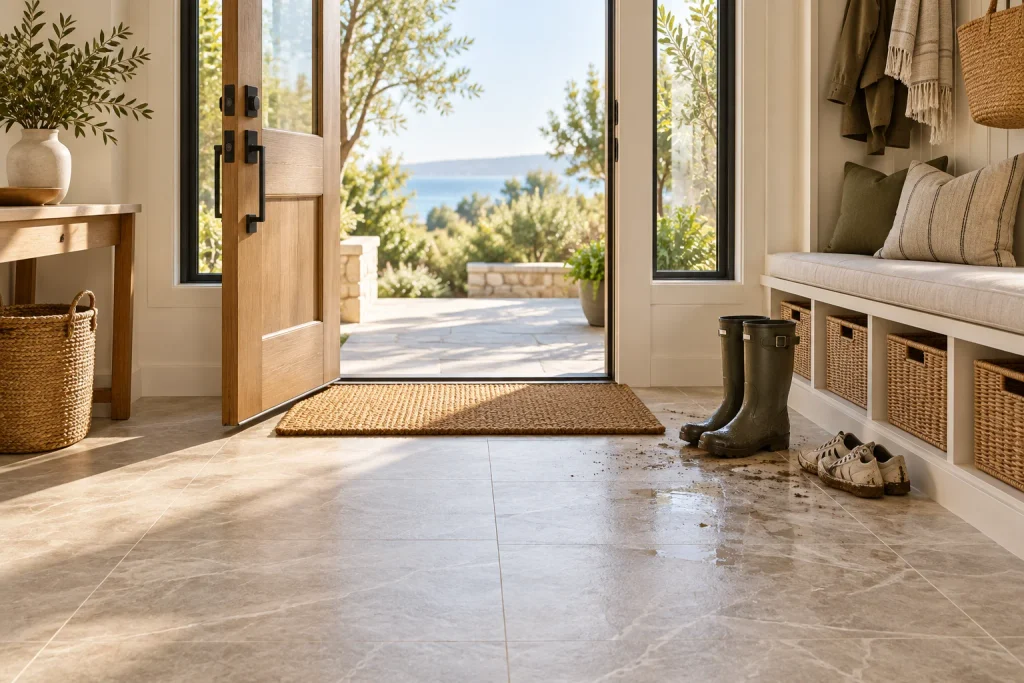
These spaces receive dirt before it reaches the rest of the house. Choose flooring that can handle frequent cleaning and the expected moisture exposure.
For a mudroom where boots regularly bring in water, floor-rated porcelain tile is a dependable starting choice. Vinyl approved for the conditions is another option, especially when you want it to connect visually with adjoining rooms.
A hallway farther from the exterior door can use the same wood or plank flooring as the living area. Protect the entrance with an appropriate mat and remove grit regularly.
Check mat compatibility before buying. Some rubber or latex backings can discolor particular vinyl floors. The mat should also stay in place and fit without interfering with the door.
Home Office: Check Rolling-Chair Performance
A home office floor needs to support repeated chair movement and concentrated furniture loads.
A smooth hard surface can make chair movement convenient, but wood, laminate, and vinyl can still suffer scratching or indentation. Check the flooring manufacturer’s recommendations for chair wheels and protective mats. Use protection designed for the actual surface rather than assuming any transparent mat will work.
If you prefer carpet, a low-profile product can make movement more manageable than a deep pile. Pair it with a suitable chair mat where needed.
Before selecting the floor, consider the desk legs, storage cabinets, and chair together. A room with little foot traffic can still place substantial wear on one small area.
Children’s Rooms and Playrooms: Make Cleanup Part of the Choice
For a playroom used for crafts, snacks, and toys, I would choose a durable hard surface and add a compatible play mat where children sit.
This arrangement makes it easier to clean around the play area and replace the softer surface if it becomes worn. Check the floor’s resistance to the kinds of marks likely to occur, along with the recommended cleaning method.
Carpet is a reasonable alternative when the room is mainly used for floor-based play and softness matters most. Choose it with realistic expectations about spills and regular cleaning. Stain-resistant treatment can help, but it does not remove the need to deal with accidents promptly.
Laundry Room: Account for Leaks and Appliance Installation
Porcelain tile and laundry-approved vinyl are useful options for a room exposed to splashes, detergent spills, and appliance movement.
Before choosing a floating plank floor, confirm that the product allows the intended installation around the washer and dryer. Appliance weight, placement, and leveling all matter.
A waterproof product label also needs careful reading. It may describe resistance to water on the surface under specified conditions, while excluding leaks, flooding, or moisture rising from beneath the floor.
If the laundry room has a floor drain, check that explicitly. Some plank products exclude rooms with drains. A tiled installation may be the more suitable route, with the necessary slope and waterproofing addressed as part of the design.
Basement: Resolve Moisture Before Choosing the Finish
A basement floor must work with the concrete slab and the room’s moisture conditions. Start by investigating dampness, leaks, and any history of flooding.
In a dry, conditioned basement, below-grade-approved vinyl or tile can be a practical choice. Certain engineered wood products also permit basement installation, provided the slab and indoor conditions meet their requirements. Solid wood is generally intended for installation on or above ground level.
Ask the installer to test slab moisture using the method required by the flooring manufacturer. The result determines whether the floor can be installed and whether an approved moisture-control system is necessary.
Do not cover a persistent moisture problem with new flooring. Even when the visible material tolerates water, the layers underneath may remain vulnerable.
Stairs: Select the Complete Stair System
Stairs need secure installation, suitable traction, and a properly finished edge on every tread.
Carpet can provide a comfortable stair surface, but it should be suitable for stair use and installed with the recommended cushion. A soft bedroom cushion may be inappropriate for this concentrated traffic.
For wood or other hard-surface stairs, choose a system with compatible treads or stair nosings. Confirm that the product permits the application; a floating floor installation used in a bedroom cannot simply be continued down the staircase.
Include stair components in the initial plan. Matching the landing floor is useful, but correct edge details and secure attachment come first.
Keep Connected Rooms Visually Consistent
You can meet different room requirements without introducing a new color at every doorway.
Choose a main floor for connected living spaces, then coordinate the wet-area flooring and bedroom finishes around it. Similar undertones can help different materials feel related. Place transitions where the layout gives them a clear purpose, such as a bathroom doorway.
For an open kitchen and living room, select a continuous product only if it satisfies the kitchen’s requirements as well as the living room’s appearance. Also check limits on installation area, expansion joints, and uninterrupted runs.
Bring samples home and examine them beside cabinets, furniture, and adjoining floors in daylight and evening light. View several planks or tiles together when possible; a small sample may not reveal the full pattern variation.
Check Installation Requirements Before Ordering
Once you have a shortlist, confirm that the actual products suit your home.
Ask the installer to assess subfloor flatness, moisture, and structural suitability. Confirm the approved underlay or adhesive, and avoid adding extra cushioning to a product that already has an attached pad unless its instructions allow it.
If you have underfloor heating, check compatibility with the heating system, the maximum permitted temperature, and the required underlay. Approval for one product does not extend to every floor made from the same material.
Request a complete installation quote covering preparation, removal of existing flooring, necessary moisture treatment, trims, transitions, and stair components. These details make competing quotes easier to compare and reveal whether the proposed installation addresses the room’s requirements.
Conclusion
My preferred starting plan is porcelain tile for bathrooms and muddy entrances, one coordinated wood or durable plank floor through the main living spaces, and carpet where bedroom comfort matters most. From that shortlist, choose the specific products that fit your subfloor, household habits, and installation conditions. A successful flooring plan should feel comfortable in everyday use and remain manageable to care for.

Ethan Miller
Ethan Miller writes about home improvement, interior design, cleaning, and everyday living at Home & Living Daily. He shares practical tips and simple ideas to help readers create more comfortable and functional homes.