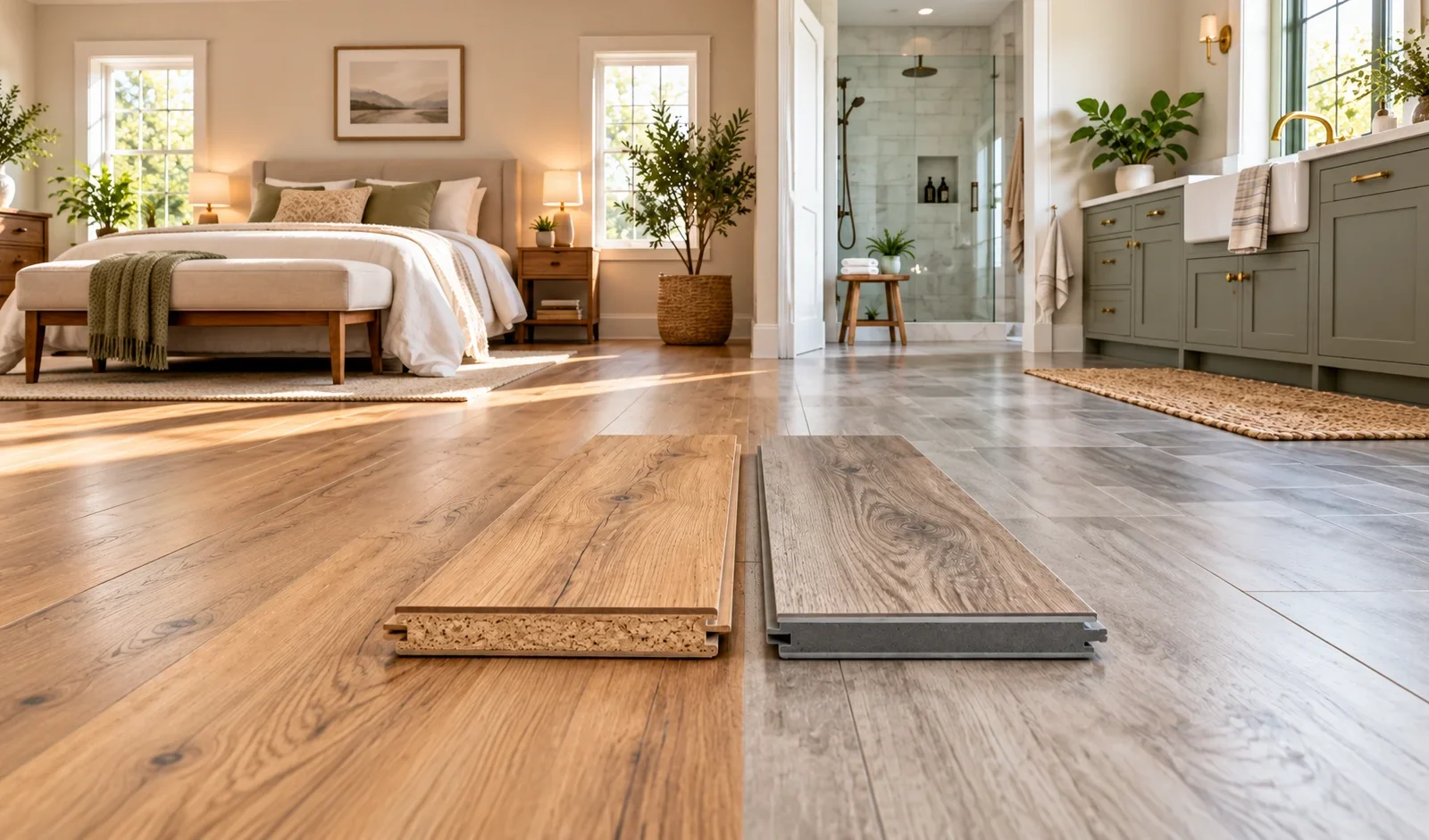
Once installed, laminate flooring and click-lock vinyl flooring can look remarkably similar. You may not even be able to tell the difference when standing on them. However, they respond differently to damage and moisture, and those differences can directly affect which type of flooring is better suited to different rooms in your home.
When properly installed, both types of flooring can look good and last for many years. The better choice mainly depends on the room environment, the type of subfloor, and the way you want the floor to feel underfoot.
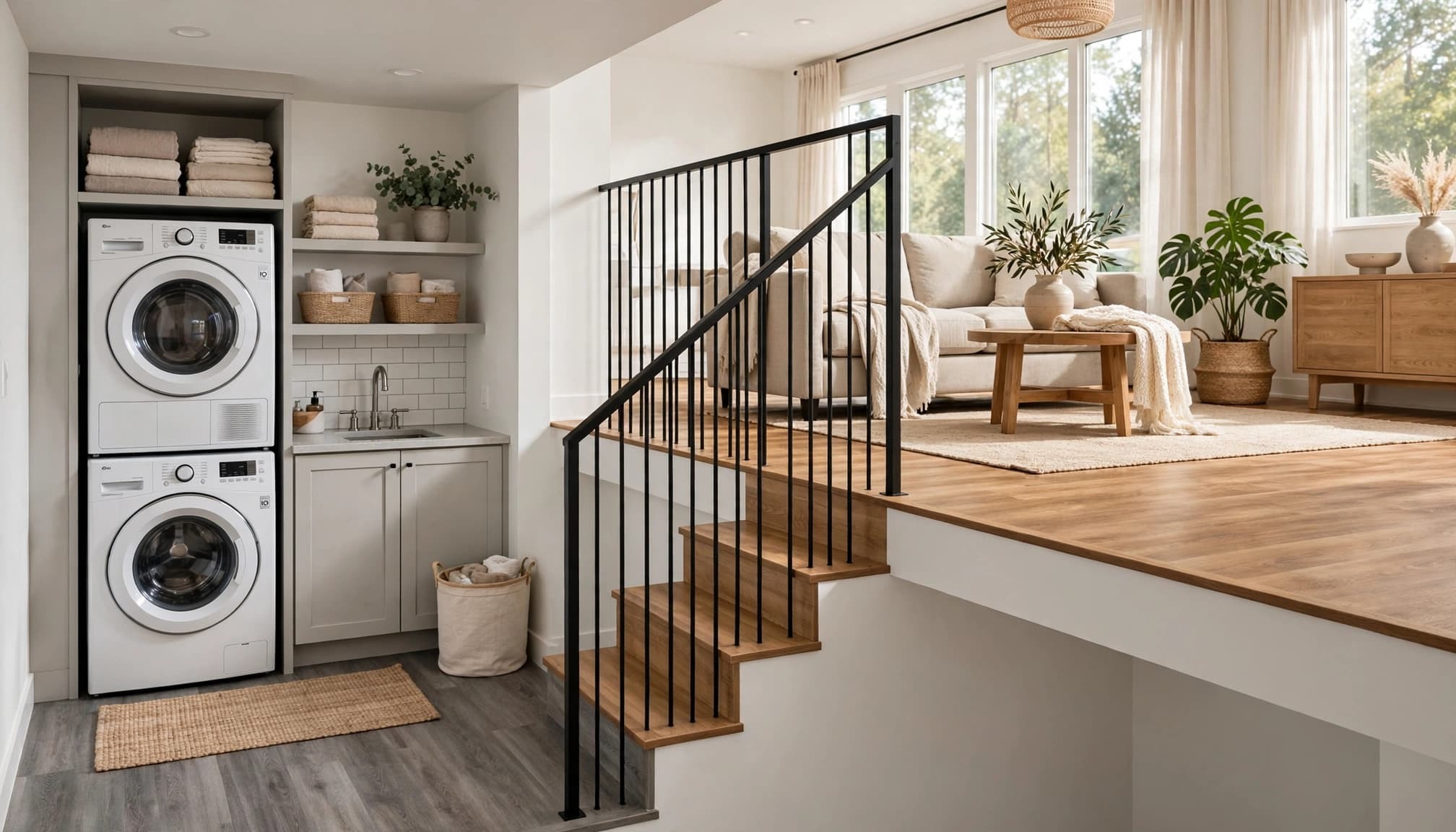
Why Laminate and Click-Lock Vinyl Flooring Look So Similar
Modern laminate and click-lock vinyl flooring are both designed to imitate the appearance of natural materials, especially hardwood.
The visible surface of either product is not actually real wood or stone. Manufacturers typically scan the surfaces of natural materials and print those patterns onto the decorative layer of the flooring.
Once the floor is installed, even people who work with these products regularly may have difficulty identifying which type it is based on appearance alone. It becomes much easier to tell the difference if you pick up an individual plank or look at a cut edge.
What Both Types of Flooring Require During Installation
Both laminate and click-lock vinyl flooring need to be installed according to the manufacturer’s instructions, including any requirements for moisture barriers and acclimation.
A moisture barrier is especially important when flooring is installed over concrete. Moisture vapor coming up through the concrete can affect the flooring and may eventually cause damage.
This requirement can still apply even though vinyl flooring itself is generally more water-resistant than laminate. Always follow the installation instructions for the specific product you choose, including moisture-barrier requirements and how long the flooring should acclimate before installation.
Installation quality is equally important. In my experience, both materials can be used in many areas of a home as long as they are installed correctly and the manufacturer’s instructions are followed carefully.
Even a good-quality product can develop problems if it is installed improperly.
How Vinyl and Laminate Handle Damage
Both materials are durable, but they have different weaknesses.
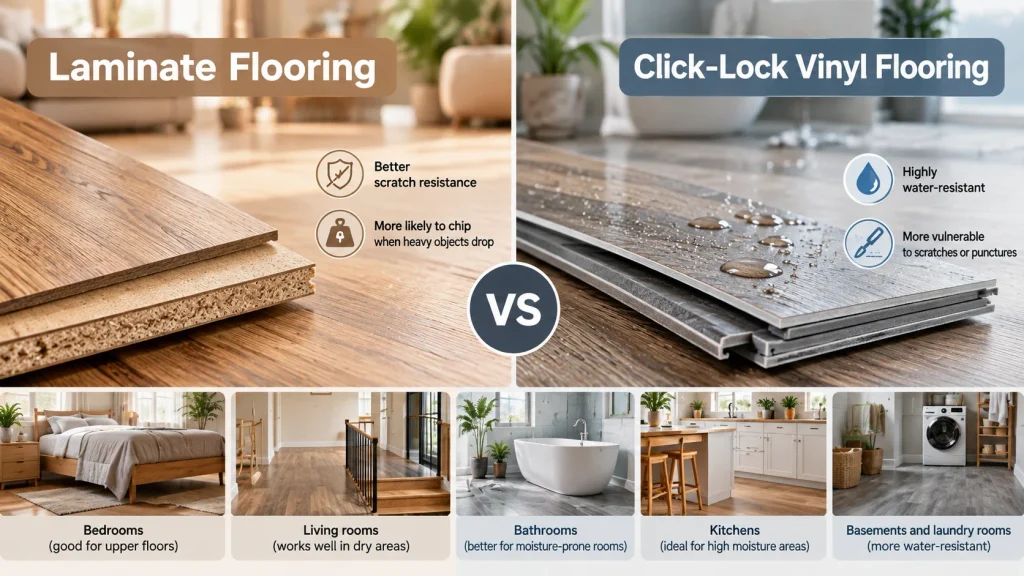
Vinyl flooring is generally more vulnerable than laminate to scratches or punctures caused by sharp objects such as nails or knives.
Laminate, on the other hand, can be more likely to chip or break if a heavy object is dropped on it.
Moisture is another major difference.
I once left a sample of vinyl flooring in a bucket of water for several days, even up to a week. The plank did not absorb water or show any noticeable change.
If you did the same thing with laminate, the wood-based particles inside the core could absorb moisture and swell. This can happen even with some laminate products marketed as “waterproof.”
However, the fact that vinyl flooring can sit in a bucket of water without absorbing it does not mean you can automatically skip a moisture barrier when installing it over concrete.
Water on top of the flooring and moisture vapor coming up through the subfloor are two different issues.
Flooring Thickness, Weight, and Cutting Methods
Click-lock vinyl flooring is made primarily from plastic-based materials.
SPC, or stone plastic composite flooring, is especially dense and heavy. Because of that density, manufacturers can make the planks relatively thin.
Laminate flooring contains wood particles along with other composite materials. It is lighter in weight, but the planks are usually thicker to improve strength and resistance to damage.
| Material | Relative Weight and Thickness | Typical Plank Thickness |
| Click-lock vinyl flooring | Denser and heavier, usually thinner | SPC: about 3–4 mm to 6–8 mm; WPC may be thicker |
| Laminate flooring | Lighter, usually thicker | About 8 mm to 12–14 mm, with some products even thicker |
Thickness also affects the installation process.
Installers can often cut vinyl flooring by scoring the surface with a utility knife and then snapping the plank along the cut.
Thinner laminate can sometimes be cut with a dedicated laminate flooring cutter. However, thicker products, such as 14 mm laminate, usually need to be cut with a table saw or miter saw.
When using a saw, the installer has to mark the laminate plank, carry it over to the saw, make the cut, and then bring it back to continue the installation. Cutting laminate also creates sawdust and fine dust.
Vinyl flooring, by comparison, can often be cut with a knife or flooring cutter without creating wood dust.
Where Vinyl and Laminate Flooring Work Best
As long as you follow the manufacturer’s installation instructions, both types of flooring can be used in a variety of rooms.
However, the type of subfloor and the amount of moisture in the room can influence which material makes more sense.
Why I Prefer Laminate Over Wood Subfloors on Upper Floors
I generally prefer laminate flooring on second-story wood subfloors, especially in older homes, because those subfloors may have a small amount of flex or movement.
Because laminate flooring is usually thicker, I believe its locking system is less likely to gradually separate when the subfloor moves slightly over time.
Laminate is also lighter than vinyl, so it adds less weight to an upper-floor structure.
This is simply my personal preference based on installation experience. It does not mean vinyl flooring cannot be installed upstairs.
Why Vinyl Is Better Suited to Moisture-Prone Rooms
For basements, laundry rooms, kitchens, and bathrooms, I generally prefer vinyl flooring.
Because vinyl has a plastic-based construction, it does not absorb water the way the wood-particle core of laminate can.
However, that water resistance does not necessarily eliminate the need for a moisture barrier.
Concrete can release moisture vapor from below, which may put stress on the flooring system and contribute to physical damage. Before installing vinyl over concrete, check the installation requirements for the specific product you are using.
How to Choose a Sample You Will Be Comfortable Living With
If both laminate and vinyl are suitable for your room and your budget, appearance alone may not be enough to make the decision.
I recommend touching the samples and standing on them barefoot.
Some people feel that vinyl flooring has a slightly plastic-like feel. Laminate feels different, although it is not the same as real hardwood either.
You can also hold samples under the light and look closely at the surface texture.
Some people prefer a smoother finish because they feel it is easier to clean. Others like a more heavily textured surface because it looks and feels more like natural wood.
Color is just as important.
Take samples home and place them next to your furniture, walls, and other finishes.
Some stores also offer larger samples or full flooring displays, which can make it easier to imagine how a particular product will look when installed across an entire room.
Once the flooring is installed, the things you will probably notice most every day are the color, texture, and feel underfoot—not whether the product is technically laminate or vinyl.
Product Prices and Installation Costs
Laminate and click-lock vinyl flooring are generally available in similar price ranges.
Many products cost around $2 to $6 per square foot, while some premium brands may cost approximately $10 to $12 per square foot.
These figures are only estimates based on my experience and do not represent the price of every flooring product on the market.
Installation costs should be compared separately.
You can ask several contractors for quotes and request separate installation prices for laminate and vinyl flooring.
However, laminate flooring installation usually costs more because the cutting process takes more time and effort and also produces sawdust. Installation rates can vary from one installer to another.
The Final Choice Depends on the Room and the Flooring Itself
Laminate and click-lock vinyl flooring may look almost identical once installed, but I generally prefer vinyl in rooms that are more likely to be exposed to water or moisture.
For second-story wood subfloors, I tend to prefer thicker, lighter-weight laminate flooring.
Whichever material you choose, follow the manufacturer’s installation instructions carefully and spend some time testing samples before making your final decision.
Once the floor is installed, what you will experience every day is its color, texture, and feel underfoot—not simply whether it is laminate or vinyl.

Ethan Miller
Ethan Miller writes about home improvement, interior design, cleaning, and everyday living at Home & Living Daily. He shares practical tips and simple ideas to help readers create more comfortable and functional homes.